




The global travel industry has long viewed the tours and activities sector as its final frontier. While airlines, hotels, and car rentals consolidated decades ago into highly organized, tech-driven global ecosystems, the world of day tours, food walks, and archaeological excursions has remained fiercely independent, localized, and stubbornly fragmented.
Now, a newly formed, private equity-backed player is betting that the time is finally right to change that narrative.
Flagship Group has officially entered the market with the simultaneous acquisition of three prominent operators: day tour and excursion provider Amigo Tours; food and culture specialist WalksDevour; and cultural and archaeological expert Askos Tours. Together, this inaugural trio gives the newly minted group an immediate, diversified footprint stretching across North America, Europe, and Japan.
The move marks the beginning of a highly anticipated structural shift in the travel sector. While the appetite for an experiences "roll-up"—a strategic consolidation of multiple small, localized businesses under a single corporate umbrella—has existed for years, the economic shock of the Covid-19 pandemic temporarily put such ambitious plans on ice.
Today, however, the landscape looks vastly different. With operator balance sheets fully recovered and traveler demand for real-world experiences reaching record highs, Flagship Group’s entry signals a new era of institutional investment in the experience economy.
The Spark of an Idea: From "Emily in Paris" to Global Scale
The strategic vision behind Flagship Group did not emerge in a traditional corporate boardroom, but rather from the logistical realities of modern pop-culture tourism.
Charaf El Mansouri, the managing partner of Flagship Group, first realized the immense scale of the industry’s fragmentation while running Dharma, a specialized travel company. When Dharma secured the rights to operate the official, highly publicized Emily in Paris themed tours in the French capital—and subsequently in Rome—El Mansouri tasked his team with compiling a list of local, high-quality ground operators they could partner with to execute the experiences.
"I expected six to eight names," El Mansouri recalled in an interview. Instead, his team presented him with a list of 120 distinct local operators in just those two cities.
"I think essentially that was the thread that led us to where we are today," El Mansouri said. "It’s a massive space, it’s a growing space but hyper-fragmented, which in the end is not in the interest of operators, distributors, or guests. And so the idea was, ‘Hey, is there an opportunity here?’"
This realization exposed a fundamental paradox in modern travel: while consumers are increasingly prioritizing unique, localized experiences over material goods, the businesses delivering these experiences are often too small to scale efficiently. By uniting these disparate operators, Flagship Group aims to build a centralized platform that can streamline operations, leverage purchasing power, and improve technology, all while preserving the unique local flavor of each individual tour brand.
Anatomy of the Inaugural Portfolio
Rather than focusing on a single niche, Flagship Group’s first wave of acquisitions represents a deliberate, multi-pronged approach to the experiences market, combining high-volume day excursions with premium, specialized cultural storytelling.
1. Amigo Tours: The High-Volume Day Tour Powerhouse
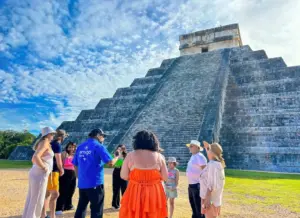
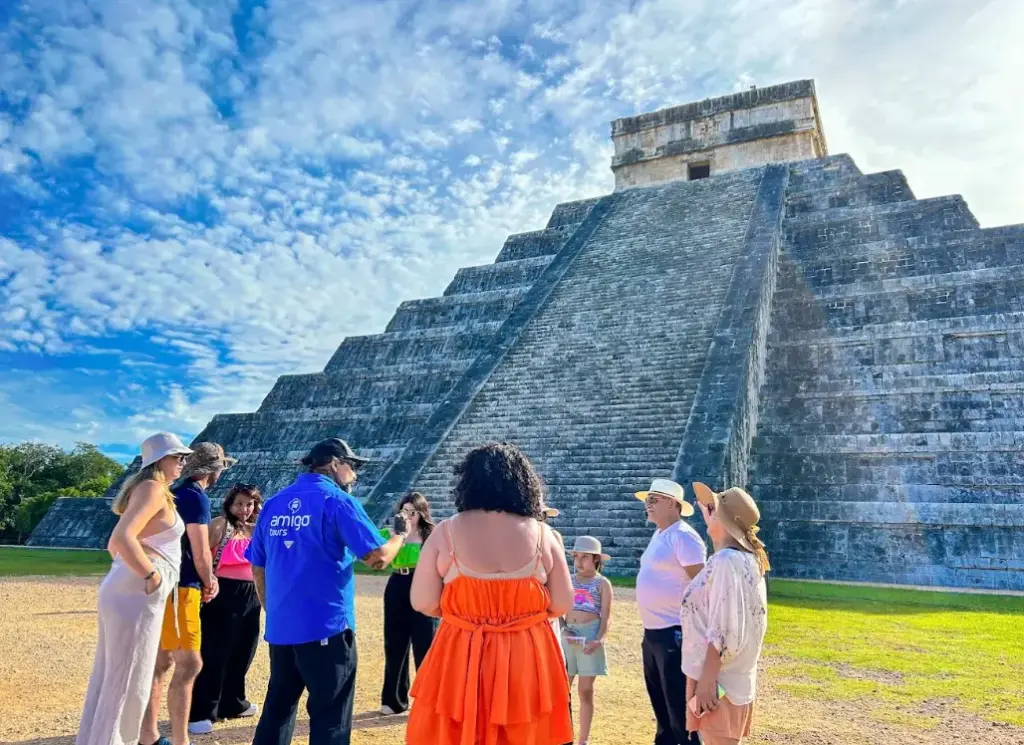
Amigo Tours is a well-established giant in the day-excursion space, known for operating high-frequency, reliable sightseeing trips in major global destinations. With a heavy presence in Latin America, Europe, and North America, Amigo provides the volume and operational baseline of the portfolio. Its inclusion gives Flagship immediate scale and established relationships with major online travel agencies (OTAs) like Viator, GetYourGuide, and Klook.
2. WalksDevour: The Culinary and Cultural Connector
Born from a passion for local gastronomy and neighborhood storytelling, WalksDevour specializes in food and cultural walking tours. Culinary tourism has transitioned from a niche hobby to a primary driver of travel decisions, making WalksDevour a highly strategic asset. Their tours focus on deep-dive community experiences, connecting travelers directly with local artisans, chefs, and historical neighborhoods.
3. Askos Tours: The Archaeological and Historical Specialists
Operating at the intersection of education and tourism, Askos Tours is a highly specialized provider of archaeological and historical excursions, particularly famous for its expert-led tours of ancient ruins and cultural heritage sites in Southern Europe, including Pompeii. By employing certified archaeologists and historians as guides, Askos caters to high-intent, intellectually curious travelers looking for deep contextual experiences rather than superficial sightseeing.
By grouping these three distinct brands together, Flagship Group instantly establishes a diversified portfolio that covers multiple traveler demographics, price points, and geographic regions, including the highly lucrative markets of North America, Western Europe, and Japan.
Why Now? The Post-Pandemic Rebound and the "Counter-AI" Moat
The concept of consolidating the tours and activities sector is not entirely new. Prior to 2020, several venture-backed startups and private equity firms toyed with the idea of building global experience brands. However, the sudden arrival of the Covid-19 pandemic, which grounded global aviation and shuttered local attractions for nearly two years, forced investors to pull back and focus on survival.
Four years later, the macroeconomic fundamentals have dramatically improved:
- Rebounded P&Ls: Local operators have experienced consecutive years of record-breaking summer seasons. Their profit and loss statements (P&Ls) are healthier than ever, providing clean, predictable historical data that allows private equity firms to value these businesses accurately and underwrite acquisitions with confidence.
- The Shift to Experience Spending: Consumer spending patterns continue to favor experiences over physical goods. Travelers are willing to economize on flights or accommodation to protect their budget for unique, memorable activities once they arrive at their destination.
Market Fragmentation Pain Points
│
├── For Operators: Lack of marketing power, high OTA commissions, limited tech budgets.
├── For Distributors: Managing thousands of individual APIs, inconsistent service standards.
└── For Travelers: Fragmented booking journeys, unpredictable quality on the ground.
Beyond these financial metrics, there is an even more compelling macro-thesis driving Flagship Group’s investment: the "counter-AI" play.
In an era dominated by generative artificial intelligence, large language models, and virtual reality, the physical, real-world experience has become a highly defensive asset class. While AI can instantly generate a customized travel itinerary, write a historical summary of Rome, or simulate a walk through Tokyo, it cannot replicate the physical sensation of tasting street food, the awe of standing in an ancient amphitheater, or the human connection of a local guide sharing a personal story.
By investing heavily in the physical execution of travel, Flagship Group is building a moat around assets that cannot be digitized, automated, or replaced by algorithmic advances. The more digital the world becomes, the more premium, scarce, and valuable authentic real-world experiences are projected to become.
Solving the Fragmentation Problem: Who Wins?
The hyper-fragmentation that El Mansouri identified during his Emily in Paris project creates friction at every level of the travel value chain. By rolling up these operators, Flagship Group aims to solve systemic pain points for three key stakeholders:
The Operators
Most tour companies are run by passionate locals who are excellent hosts but lack the capital, time, or expertise to manage complex digital marketing campaigns, optimize dynamic pricing, or negotiate favorable terms with global distribution platforms. Under Flagship Group, these founders can focus entirely on what they do best—delivering world-class hospitality—while a centralized corporate team handles back-office functions like HR, finance, search engine optimization (SEO), and technological integration.
The Distributors
For major online travel agencies (OTAs) and travel agents, managing relationships with thousands of tiny, independent operators is an administrative nightmare. It leads to fragmented inventory, inconsistent customer service, and technical integration challenges. A consolidated group like Flagship provides distributors with a single, highly professionalized point of contact, standardized service level agreements (SLAs), and unified API connections, making it significantly easier to sell experiences at scale.
The Guests
For travelers, the primary benefit of consolidation is consistency and trust. Booking a tour in an unfamiliar country can often feel like a gamble. By bringing diverse brands under a unified corporate standard, Flagship Group can ensure that whether a traveler books an archaeological tour in Italy, a food crawl in Tokyo, or a day trip in Mexico, they can expect the same high baseline of safety, reliability, and customer service.
The Path Ahead for Flagship Group
The acquisition of Amigo Tours, WalksDevour, and Askos Tours is just the opening chapter of Flagship Group’s broader strategy. With private equity backing, the group is expected to continue scouting for high-quality, profitable, and culturally significant operators in key global tourism hubs.
However, the road to successful consolidation is not without its challenges. Historically, the greatest risk in any hospitality roll-up is the potential loss of the "local magic." When a corporate entity acquires a beloved local business, there is a risk that standardized processes, cost-cutting, and institutional oversight can dilute the very authenticity that made the business successful in the first place.
Flagship Group’s leadership is acutely aware of this tension. The success of their ambitious venture will ultimately depend on their ability to strike a delicate balance: providing the institutional scale, financial discipline, and technological infrastructure of a global corporation, while fiercely protecting the independent spirit, local expertise, and human touch of the guides on the ground.
If Flagship Group can successfully walk this tightrope, they may very well create the blueprint for the future of the multi-billion-dollar global experiences industry.