







The delicate balance of European aviation faces a major operational test following the quiet expiration of a critical border safety measure. On Sunday, a transitional policy that allowed European Union member states to temporarily deactivate certain components of the bloc’s landmark Entry-Exit System (EES) during periods of intense passenger traffic officially lapsed.
The expiration of this policy leaves border control agencies across the continent without a formal "release valve" for the first time since biometric registration became mandatory across the bloc in April. Without the ability to selectively pause or ease these digital checks during peak holiday rushes or unexpected system outages, airports and airlines are bracing for potential bottlenecks at external EU borders.
The development has triggered immediate pushback from the aviation sector. Leading the charge is Ryanair, Europe’s largest low-cost carrier, which has issued an urgent appeal to the European Commission. The airline is demanding the immediate reinstatement of the temporary suspension mechanism, warning that enforcing the rigid biometric protocol without a fallback option threatens to throw European air travel into disarray.
Ryanair Demands Two-Year Grace Period to Prevent Airport Gridlock
In a sharp response to the policy’s expiration, Ryanair has formally called on European authorities to restore the ability of individual member states to pause EES checks. The airline argues that this flexibility must remain in place until at least April 2027.
According to the carrier, airports, national border forces, and port authorities require a multi-year runway to address persistent technical and structural deficiencies. Ryanair contends that the current infrastructure is simply not robust enough to handle the mandatory, uninterrupted flow of biometric data collection. Among the primary concerns cited by the airline are:
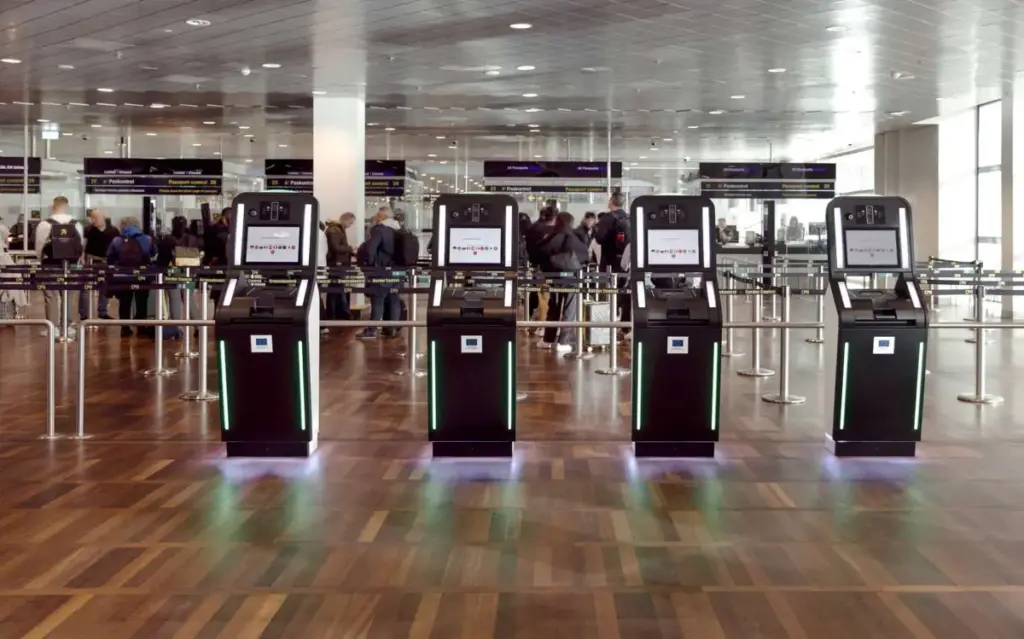
- Unreliable Hardware: Frequent malfunctions and software glitches in newly installed self-service biometric kiosks.
- Understaffing: An insufficient number of trained border control officers to assist passengers navigating the complex registration process.
- Infrastructure Deficits: Physical space constraints within terminal buildings that prevent the installation of enough kiosks to handle peak-hour passenger volumes.
Ryanair argues that a grace period extending to the spring of 2027 would provide the necessary time for national authorities to recruit and train additional personnel, upgrade faulty hardware, and optimize software systems to ensure they can operate reliably under full, continuous enforcement.
"A Shambles from Start to Finish" — Industry Frustration Boils Over
The airline’s leadership has not held back in its assessment of the European Union’s management of the biometric transition. Neal McMahon, Ryanair’s Chief Operating Officer, delivered a scathing critique of the rollout on Monday, reflecting the mounting anxiety within airline boardrooms.
"The EU’s handling of EES has been a shambles from start to finish," McMahon stated.
The Chief Operating Officer accused Brussels of systemic complacency, asserting that policymakers chose to ignore repeated, detailed warnings from prominent aviation and travel industry lobby groups. For months leading up to the implementation, industry stakeholders warned that the mandatory collection of facial scans and fingerprints would drastically increase passenger processing times at border gates.
McMahon emphasized that by removing the temporary "switch-off" mechanism before the system’s underlying technology has been fully proven in real-world, high-volume scenarios, the European Commission is effectively gambling with the travel plans of millions. Ryanair warned that the EU was "forcing passengers to pay the price" for what the airline characterized as a failed rollout strategy.
The Anatomy of the Entry-Exit System (EES)
To understand the severity of the aviation industry’s concerns, it is necessary to examine what the Entry-Exit System actually requires. Designed to replace the traditional, manual stamping of passports, the EES is an automated IT system that registers non-EU travelers—including both short-stay visa holders and visa-exempt travelers—each time they cross an external EU border.
Whenever a traveler from a third country (such as the United Kingdom, the United States, or Canada) enters the Schengen Area, they must provide:
- Biometric Data: A high-resolution facial image and four digital fingerprints.
- Travel Document Details: Full passport data, including alphanumeric codes.
- Temporal and Spatial Data: The exact date, time, and specific border crossing point of both entry and exit.
The primary objective of the EES is to modernize border management, prevent illegal migration, identify identity fraud, and systematically flag overstayers who exceed their permitted 90-day stay within a 180-day window.
However, while the system is designed to streamline security in the long run, the initial registration process is highly time-consuming. Unlike a simple passport scan, the initial capture of biometric data requires travelers to stand still for facial recognition cameras and place their hands on digital scanners. If a kiosk fails to read a fingerprint or capture a clear image due to lighting or hardware issues, the process must be repeated, or the traveler must be redirected to a manual desk, immediately compounding queue times.
The Threat of the "Cascading Delay" in Low-Cost Aviation
For ultra-low-cost carriers like Ryanair, operational efficiency is measured in minutes. The airline’s highly profitable business model relies on rapid aircraft turnaround times—often targeting just 25 to 30 minutes between landing and taking off again.
When border processing times stretch from seconds to minutes per passenger, the operational impact quickly cascades through an airline’s entire network:
Terminal Congestion
As queues lengthen at immigration zones, arriving passengers are backed up into corridors and gate areas. This congestion physically blocks departing passengers from reaching their gates, delaying boarding processes.
Missed Slots and Crew Hours
A delay of even 15 minutes at the gate can cause an aircraft to miss its air traffic control take-off slot, particularly in crowded European airspace. This can lead to hours of delay on the tarmac, pushing flight crews close to their legally mandated maximum duty hours and forcing flight cancellations.
Passenger Displacement
If passengers are held up in extraordinarily long immigration queues upon arrival or departure, they risk missing connecting flights or ground transportation, leading to increased customer service costs and terminal overcrowding.
By removing the ability to temporarily bypass or simplify biometric checks during peak travel hours, the EU has eliminated the only tool border guards had to clear sudden, massive bottlenecks. Without this safety valve, airlines fear that even minor technical glitches at a major hub could trigger delays that ripple across the continent.
A Call for Regulatory Pragmatism
The dispute highlights a fundamental clash between regulatory ideals and operational realities. While the European Commission views the strict, uninterrupted enforcement of the EES as a non-negotiable component of continental security and digital modernization, the transport sector views it as an inflexible policy implemented without adequate ground-level preparation.
Industry analysts point out that the timing of the policy’s expiration is particularly challenging. As European airports prepare for the complex logistics of the winter travel season and look ahead to the heavy traffic of next spring, the lack of an operational safety valve leaves no margin for error.
Whether the European Commission will heed Ryanair’s warnings and reinstate some form of emergency relief remains to be seen. What is certain, however, is that the performance of biometric kiosks and the efficiency of border personnel will remain under intense scrutiny by airlines, airports, and frustrated passengers alike.