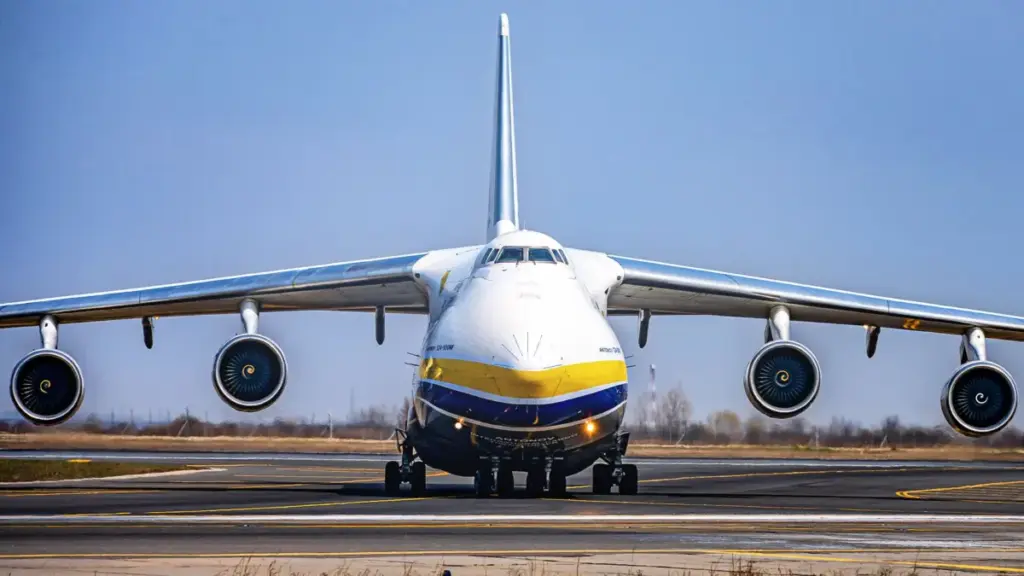
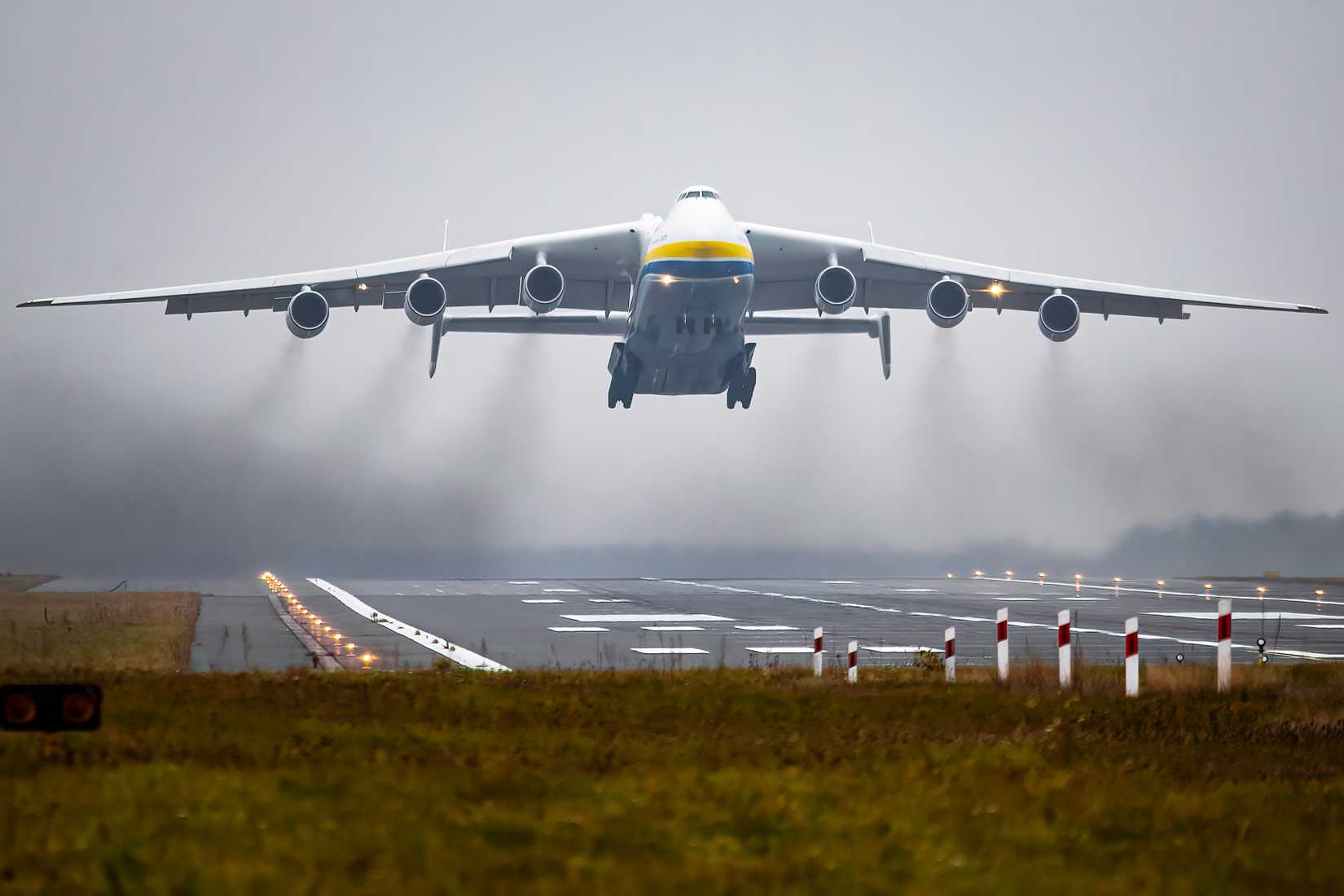
Few aerospace enterprises in aviation history have navigated a gauntlet as punishing, complex, and protracted as Ukraine’s Antonov State Enterprise. Renowned worldwide for designing and building some of the largest, most capable heavy-lift transport aircraft ever to grace the skies—including the gargantuan An-124 Ruslan and the one-of-a-kind, heavy-lifting titan An-225 Mriya—Antonov is an enduring symbol of Soviet-era aeronautical engineering. At its peak production velocity in the late 1980s, the company rolled out roughly 250 airframes annually, sustaining a dominant footprint across the global market for regional turboprops, civil airliners, and mid-sized military transports.
However, the three decades that followed the dissolution of the Soviet Union dealt Antonov a succession of generational shocks that would have driven almost any other Western aerospace corporation into permanent liquidation. From the sudden evaporation of state-subsidized demand and the severe fragmentation of deeply integrated cross-border supply chains in 1991, to the sudden rupture of relations with Russia in 2014, and finally the catastrophic devastation of the full-scale conflict in 2022, Antonov’s survival has been nothing short of miraculous.
Today, while the state enterprise is physically constrained from manufacturing new serial-production transport aircraft due to ongoing hostilities, Antonov is far from defunct. Instead, its focus has shifted toward degrading the production capacities of its historic Russian counterparts while keeping its engineering acumen, global outsized cargo business, and modernized designs alive. As the global aviation landscape watches closely, Antonov is quietly preparing for a prospective post-conflict renaissance—poised to re-emerge not only as a builder of tactical airlifters, but potentially as a formidable player in the modern unmanned aerial vehicle (UAV) and defense technology sectors.
Detailed Chronology: Three Decades of Geopolitical Upheaval
The 1991 Great Collapse: Fracturing the Soviet Aviation Complex
The disintegration of the Soviet Union in December 1991 sent terminal shockwaves through the highly centralized Soviet defense-industrial complex. During the Soviet era, aviation design bureaus operated as nodes within a massive, unified command economy spanning multiple republics. When the dust settled, Russia inherited the vast majority of these design bureaus—including Tupolev, Ilyushin, Yakovlev, Sukhoi, MiG, and Beriev—which Moscow eventually consolidated under the United Aircraft Corporation (UAC).
Antonov, however, found itself geographically situated in newly independent Ukraine. While Ukraine inherited a significant fraction of the former Soviet Union’s engineering talent, heavy industry, and population, the economic fallout was catastrophic. Ukrainian gross domestic product contracted by roughly 60% during the 1990s, and domestic funding for defense procurement evaporated.
Compounding this financial starvation was a severe structural handicap: Antonov’s supply chain was inextricably bound to Russia. Approximately 60% of the components required to build Antonov aircraft originated from Russian factories. Conversely, Russian military manufacturing was deeply reliant on Ukrainian enterprises, such as the Motor Sich engine manufacturing plant in Zaporizhzhia. For over two decades following the Soviet collapse, these two newly sovereign nations attempted an uneasy, friction-filled dance of industrial interdependence, developing upgraded platforms like the An-178 medium airlifter and the Beriev Be-200 amphibious aircraft that relied on cross-border supply lines.
The 2014 Rupture: The First Great Severing
By the early 2010s, political tensions between Kyiv and Moscow frequently bubbled to the surface, yet economic and military cooperation largely persisted. Neither side genuinely anticipated a total severance of economic ties. That illusion was shattered forever in 2014, when Russia annexed Crimea and initiated a hybrid insurgency in Ukraine’s eastern Donbas region.
Facing an undeclared state of war, Ukraine immediately cut off military and industrial cooperation with Russia. This sudden rupture was a cataclysmic blow to Antonov. The company was forced into an aggressive, emergency-driven campaign to "de-Russify" its aircraft designs. This was not a simple matter of swapping out parts; it required completely redesigning critical airframe systems, avionics suites, and mechanical interfaces to accommodate Western-sourced components.
Antonov successfully partnered with elite Western aerospace suppliers, integrating:
Advanced avionics from Honeywell.
Sophisticated navigation equipment from Rockwell Collins.
High-performance landing gear assemblies from Safran.
State-of-the-art powerplants, such as the Pratt & Whitney Canada PW150A turboprop engines selected for the upgraded An-132 program.
By the late 2010s, this painful pivot was bearing fruit. Antonov was actively assembling export-destined aircraft—such as the first An-178 medium transport ordered by Peru—embedded with a blend of domestic Ukrainian and newly engineered Western components. Just as the company appeared poised to emerge as an independent, globally competitive military transport producer, its momentum was abruptly frozen by history’s most violent escalation.
The 2022 Conflict: The Ultimate Test of Resilience
The full-scale escalation that began in February 2022 brought active combat directly to Antonov’s doorstep, most notably at its primary flight test and engineering facility at Hostomel Airport near Kyiv. The physical destruction of infrastructure—most tragically highlighted by the loss of the world’s only flying An-225 Mriya—inflicted deep emotional and material wounds on the enterprise.
Serial production of new airframes ground to a halt. Yet, much like it did following the 1991 and 2014 crises, the core intellectual property, engineering know-how, and strategic vision of Antonov endured. While Russian aerospace firms faced their own devastating waves of Western sanctions—which cut off access to Western commercial avionics and plunged Russian domestic airliner programs into systemic delays—Antonov shifted its institutional energy toward survival, repair services, outsized cargo charter operations via Antonov Airlines, and asymmetric defense capabilities.
Supporting Context & Metrics: Antonov’s Core Portfolio and Market Competitors
Despite decades of systemic shocks, Antonov has maintained a versatile catalog of proven aircraft designs. As the enterprise looks toward a post-conflict future, several key airframes form the foundation of its anticipated return to serial manufacturing.
Key Antonov Aircraft Primed for Post-Conflict Revival
Aircraft Model
Primary Role
First Flight
Payload / Capacity
Pre-2022 Status
Primary Global Competitors
An-178
Tactical medium airlifter
2015
39,500 lbs (18 tonnes)
First Peruvian export aircraft under assembly
Embraer C-390 Millennium, Lockheed Martin C-130J Super Hercules
An-70
Medium-heavy tactical airlifter
1994
103,000 lbs (47 tonnes)
Prototyping (effectively suspended)
Airbus A400M Atlas, Xi’an Y-20
An-148
Regional jet airliner
2004
68–95 passengers
Limited serial production
Embraer E-Jets, COMAC ARJ21/C909
An-158
Stretched regional jet
2010
97–99 passengers
Limited production
Embraer E190/E195, COMAC C909
An-140
Regional turboprop
1997
52 passengers
Limited production (including local builds in Iran)
ATR 42/72, Bombardier Dash 8
An-132D
Tactical transport / utility turboprop
2017
20,000 lbs (9.2 tonnes)
Flying technology demonstrator
Leonardo C-27J Spartan, Airbus C-295
Market Positioning and Niche Dominance
Prior to the 2022 conflict, Antonov projected a robust global demand for roughly 200 units of its An-178 medium airlifter—a figure that significantly outpaces the order book secured by its direct Western and South American competitors in certain developing market segments. Antonov historically carved out successful niches by offering rugged, austere-field-capable aircraft designed to operate in regions with poorly prepared infrastructure, extreme weather, and limited maintenance support.
Furthermore, the company’s specialized outsized cargo division, Antonov Airlines, has continuously generated vital revenue and maintained global brand recognition by utilizing its remaining fleet of An-124-100 freighters to transport massive, time-sensitive industrial and humanitarian payloads across the globe.
Perspectives and Official Industry Insights
The trajectory of Antonov cannot be viewed in isolation from the broader geopolitical struggles of the post-Soviet aerospace sector. Independent industry analyses, such as reports compiled by aerospace analytics firms like Dallas Analytics, highlight the profound structural difficulties facing Russian legacy bureaus as they attempt to maintain roughly 368 aging Antonov-series transport aircraft currently in service across various military and civil fleets. Without seamless access to Ukrainian engineering support, replacement parts, and overhaul facilities, Russia’s mid-sized military transport capability faces an escalating readiness crisis.
At the same time, official statements from Antonov management emphasize that the enterprise’s long-term mission remains unchanged:
"Antonov is built on resilient engineering traditions that have weathered systemic collapse and direct military aggression. Our priority today is safeguarding our intellectual property, supporting global logistics through our operating fleet, and ensuring that when peace returns, our modernized production lines—featuring advanced Western-standard systems—are ready to deliver world-class airlifters to the international market."
While Russian state corporations within the United Aircraft Corporation continue their uphill battles to achieve full serial production of indigenous civil airliners like the MC-21 and SJ100—efforts heavily hampered by domestic supply chain bottlenecks and Western sanctions—Antonov is deliberately transforming its operational identity.
Future Outlook: A Dual-Track Evolution
As the conflict stretches forward, Antonov’s corporate future appears poised to diverge into two distinct, highly strategic tracks:
The Revival of Serial Transport Production: Once security conditions permit, Antonov intends to leverage its de-Russified, Western-integrated designs—principally the An-178—to capture regional and tactical military transport market share across Eastern Europe, Latin America, Africa, and Asia. By utilizing avionics, engines, and sub-assemblies sourced from stable Western supply chains, Antonov aims to eliminate its historical vulnerability to political blockades.
Expansion into Unmanned Aerial Systems (UAS): Beyond traditional heavy-lift transport and outsized cargo operations, the harsh realities of modern conflict have forced Antonov to rapidly pivot its engineering capabilities. The enterprise is increasingly integrating its legendary aerodynamic expertise into the development and production of advanced military drones and long-range unmanned systems, positioning itself as a vital asset in Ukraine’s modern defense-industrial base.
Conclusion
Antonov’s story is a testament to the sheer resilience of human engineering in the face of insurmountable geopolitical shocks. Having survived the collapse of a superpower in 1991, the agonizing industrial divorce from Russia in 2014, and the unprecedented physical devastation of 2022, the Ukrainian aerospace icon refuses to fade into history. By fusing its rich legacy of heavy-lift innovation with modern Western component integration and an aggressive pivot toward emerging defense technologies, Antonov is ensuring that its iconic name will remain a fixture of global aviation for decades to come.