







For the discerning globetrotter and passionate golfer, New Zealand represents the ultimate frontier—a pristine sanctuary where world-class course architecture collides with some of the most dramatic, untouched topography on Earth. Far removed from the manicured, cookie-cutter layouts of traditional country clubs, a golf journey through Aotearoa is as much a dialogue with the elements as it is a test of athletic precision.
Whether navigating the cliffside fairways of Hawke’s Bay or contending with the alpine gales of the Southern Alps, players here quickly discover that standard yardage books are secondary to a deep respect for the wind, the terrain, and the raw, unbridled majesty of the Pacific. Curated expeditions by premier outfitters such as Aroha Luxury New Zealand Tours have elevated these excursions into high-art travel, combining championship-caliber play with the finest hospitality, local gastronomy, and bespoke logistical execution.
This comprehensive report examines New Zealand’s premier golf destinations—including the dual-personality marvels of Te Arai Links, the brute force of The Kinloch Club, the sheer cliffside drama of Cape Kidnappers, and the alpine amphitheater of Jack’s Point—while offering deep insights into course architecture, tactical play, and the evolving ecosystem of luxury golf tourism.
Detailed Chronology: The Evolution of New Zealand’s Golf Landscape
New Zealand’s ascension to the upper echelons of global golf tourism did not happen overnight. It is the result of a decades-long evolution driven by visionary developers, world-renowned architects, and a national commitment to preserving the integrity of the natural environment.
The Genesis of Destination Golf
Historically, New Zealand’s golf scene was defined by traditional, member-owned parkland courses—charming, highly playable, but largely unknown to the international elite. The shift began in the late 20th and early 21st centuries when visionary developers recognized that the country’s rugged coastline and dramatic interior possessed the ideal raw materials for world-class links and strategic design.
The arrival of master architects like Tom Doak, Jack Nicklaus, Bill Coore, and Ben Crenshaw transformed the landscape. They treated the land not as a blank canvas to be flattened, but as an oracle to be listened to. The result was a collection of courses that consistently rank among the top 100 in the world, shifting New Zealand from a secondary stop for intrepid backpackers into a primary pilgrimage site for the international golfing elite.
The Modern Era of Multi-Course Itineraries
Today, the standard paradigm of a New Zealand golf journey has matured. Rather than dropping in for a single round at a metropolitan course, travelers engage in multi-week itineraries spanning both the North and South Islands. Expert guides and luxury operators orchestrate seamless transitions between oceanic links and alpine layouts.
On a typical fortnight-long excursion through Aroha Luxury New Zealand Tours, guests might cross off five or more bucket-list courses. This modern era is characterized by a holistic approach to travel: the golf is intense and uncompromising, but it is seamlessly balanced with private helicopter transfers, luxury lodge accommodations, world-renowned wine tastings in Hawke’s Bay and Central Otago, and deep cultural immersion.
Supporting Context & Metrics: Course Architecture and Strategic Analysis
To truly understand New Zealand golf, one must analyze the geometry, pedigree, and psychological toll of its signature courses. Below is a detailed breakdown of the premier stops on the country’s luxury golf circuit.
1. Te Arai Links (North & South Courses) – Mangawhai, North of Auckland
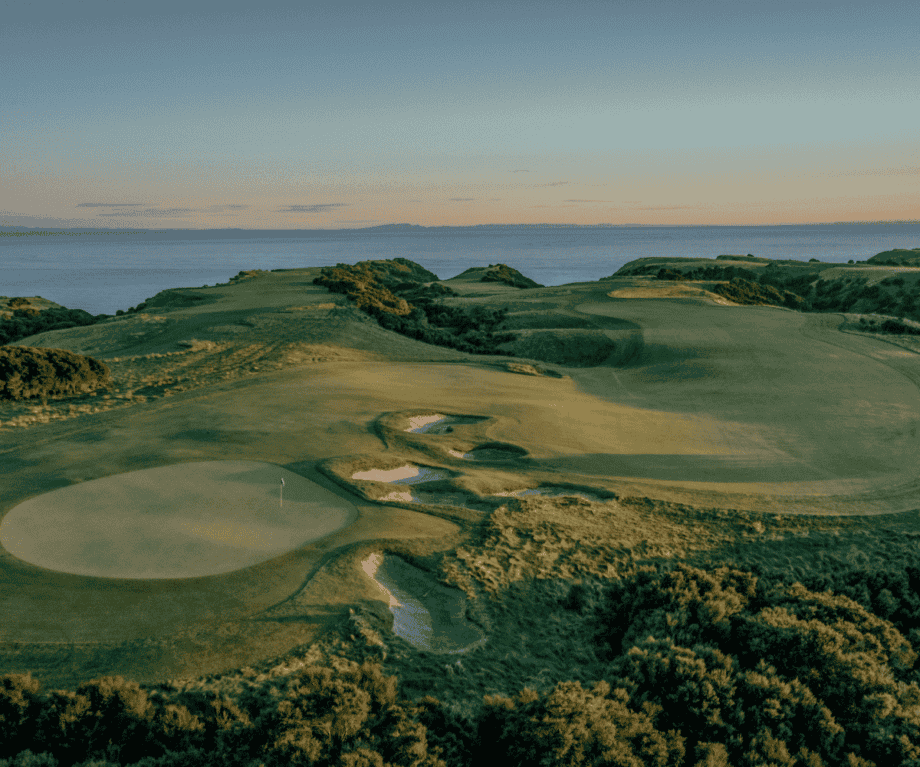
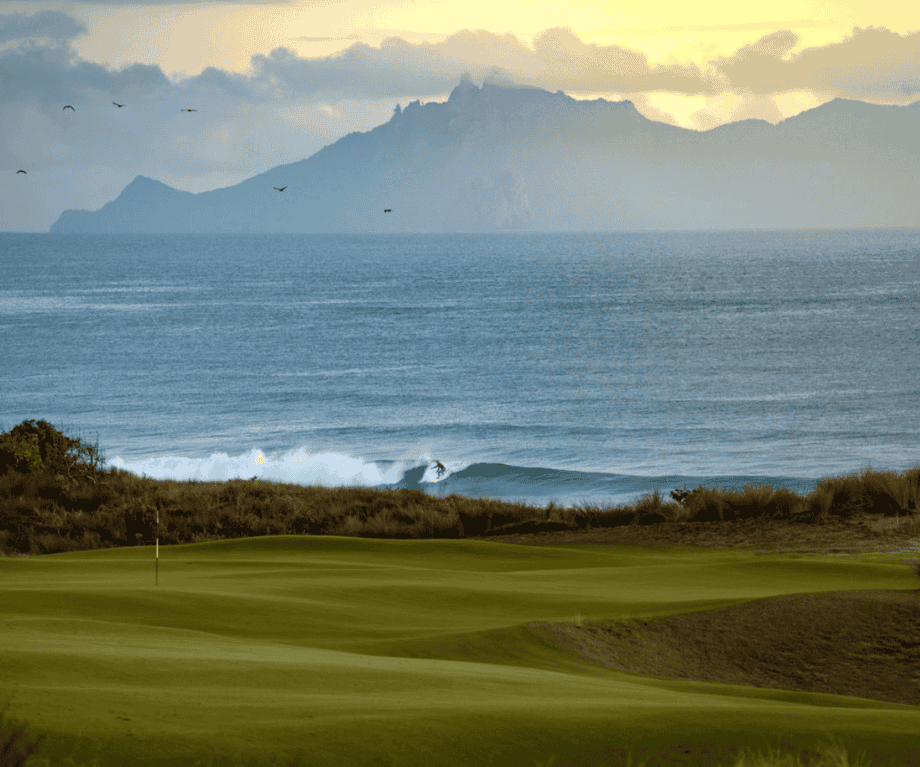
Situated along the pristine coastline north of Auckland, Te Arai Links offers a fascinating study in contrasts, presenting two distinct championship layouts crafted by different legendary design teams.
- The South Course (Bill Coore & Ben Crenshaw):
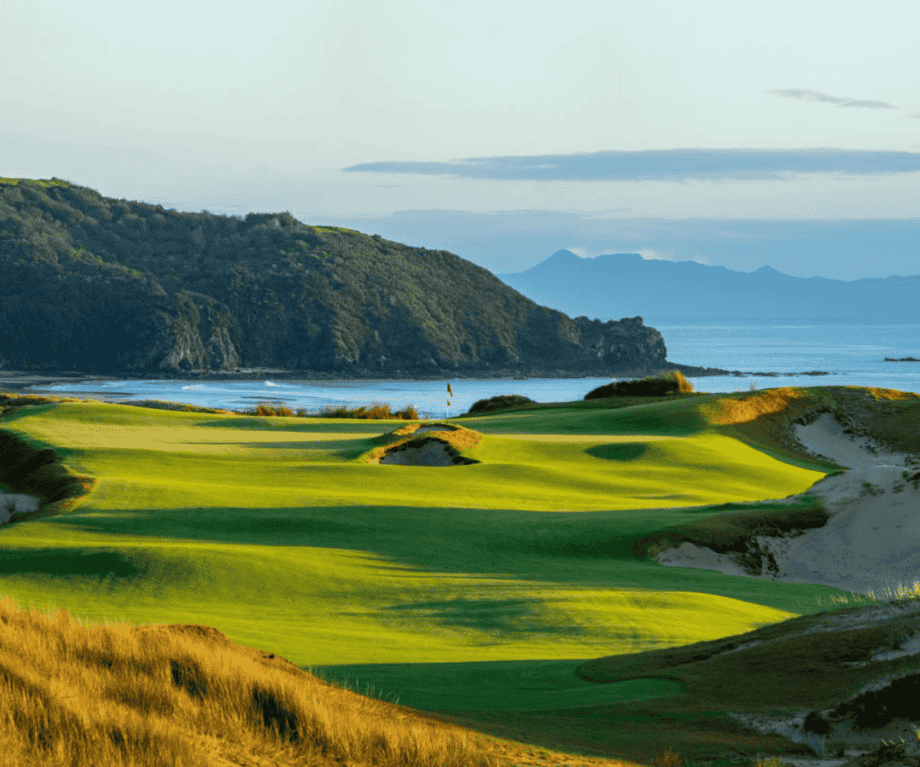
- Design Philosophy: Built with an emphasis on width and playability, featuring Pacific Ocean views on sixteen of its eighteen holes.
- Strategic Analysis: The generous fairways allow golfers of varying handicaps to enjoy themselves without hemorrhaging golf balls. However, the true defense lies in the subtle contouring of the greens and the relentless coastal breeze.
- The North Course (Tom Doak):
- Design Philosophy: Crafted a year after the South Course, the North layout spends only about a third of its routing directly on the ocean, diving inland through mature pine country carved into massive sand dunes.
- Strategic Analysis: Local members and caddies widely agree that the North Course plays four to five strokes harder than its sibling. It demands precision, imaginative shot-making, and a keen eye for elevation changes. First-time visitors are typically advised to tackle the South Course in the morning to find their sea legs before taking on the inland puzzles of the North.
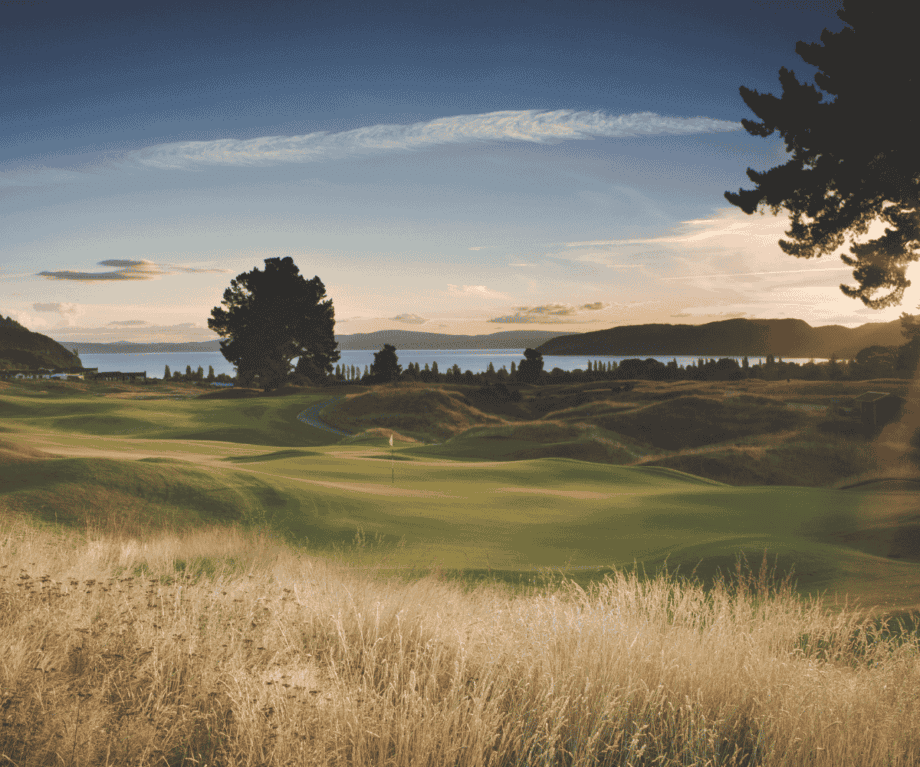
2. The Kinloch Club – Lake Taupō, Central North Island
- Pedigree: Jack Nicklaus’s only "Signature" design in New Zealand.
- Metrics: Par 72, stretching to an intimidating 7,365 yards from the championship back tees.
- The Challenge: Featuring approximately 172 strategically placed pot bunkers and waste areas, Kinloch is widely considered the toughest tactical test in the country.
- Architectural Lore: At the grand opening in 2007, Nicklaus was famously asked which hole constituted the course’s signature. His deadpan response—"all of them"—speaks to the unrelenting nature of the design. Among visiting golfers, however, the par-5 16th hole remains the primary conversational focal point, offering four distinct strategic avenues for the second shot depending on a player’s risk appetite.
3. Cape Kidnappers – Hawke’s Bay
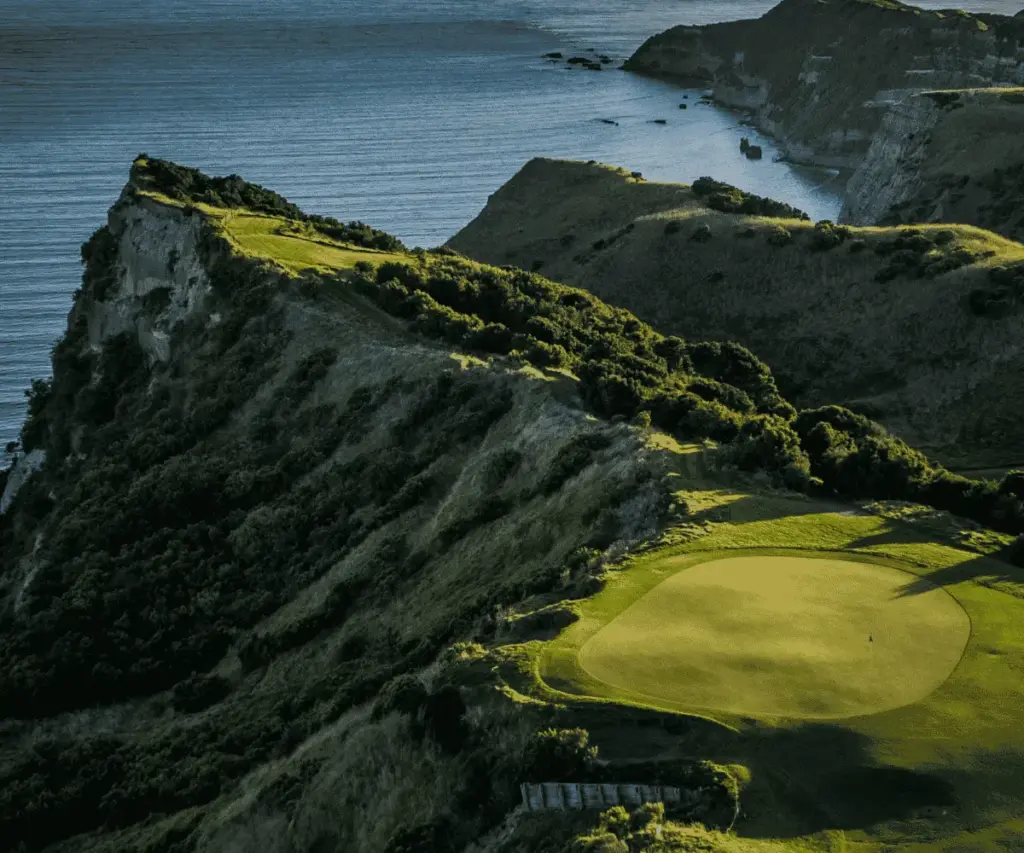
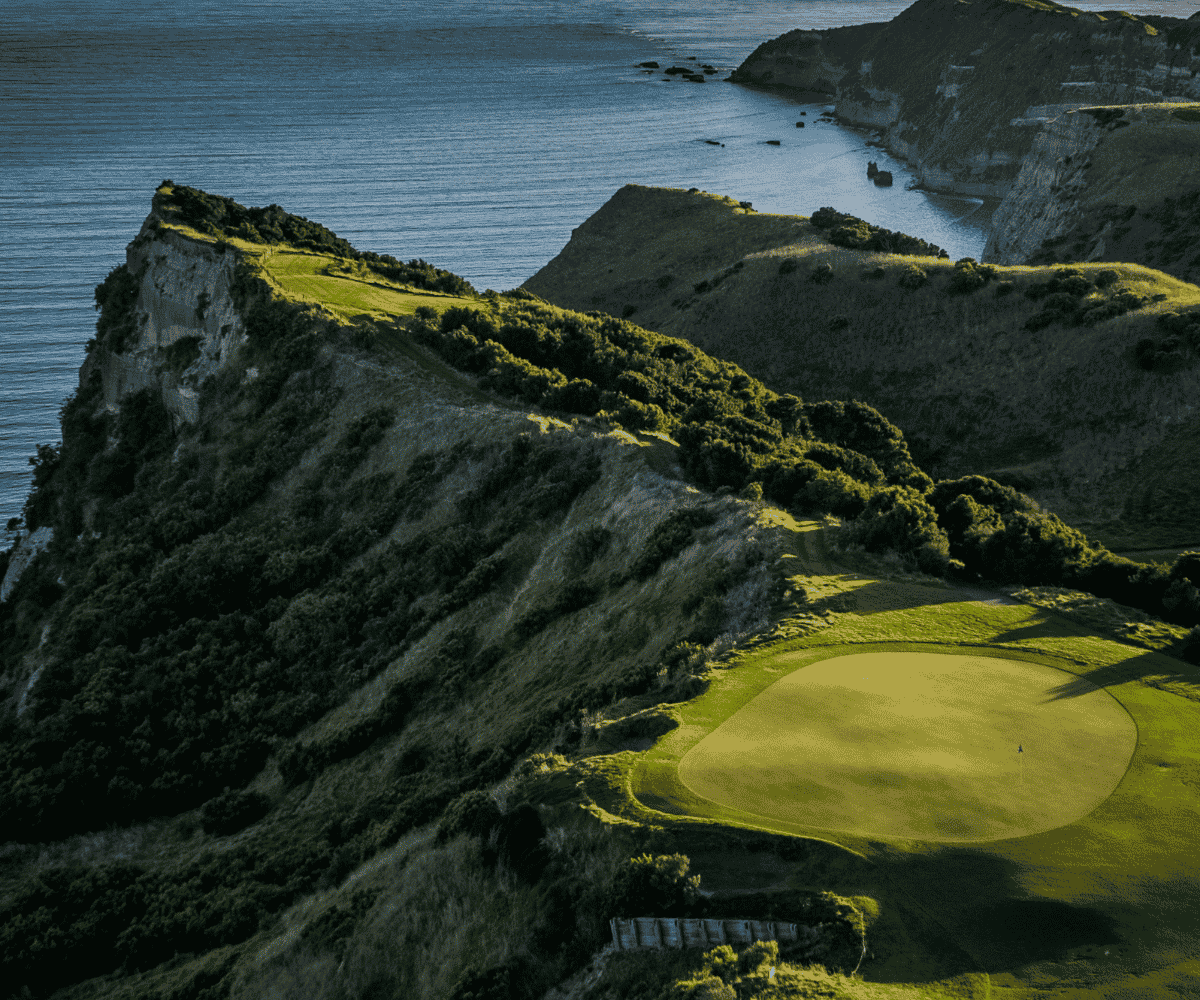
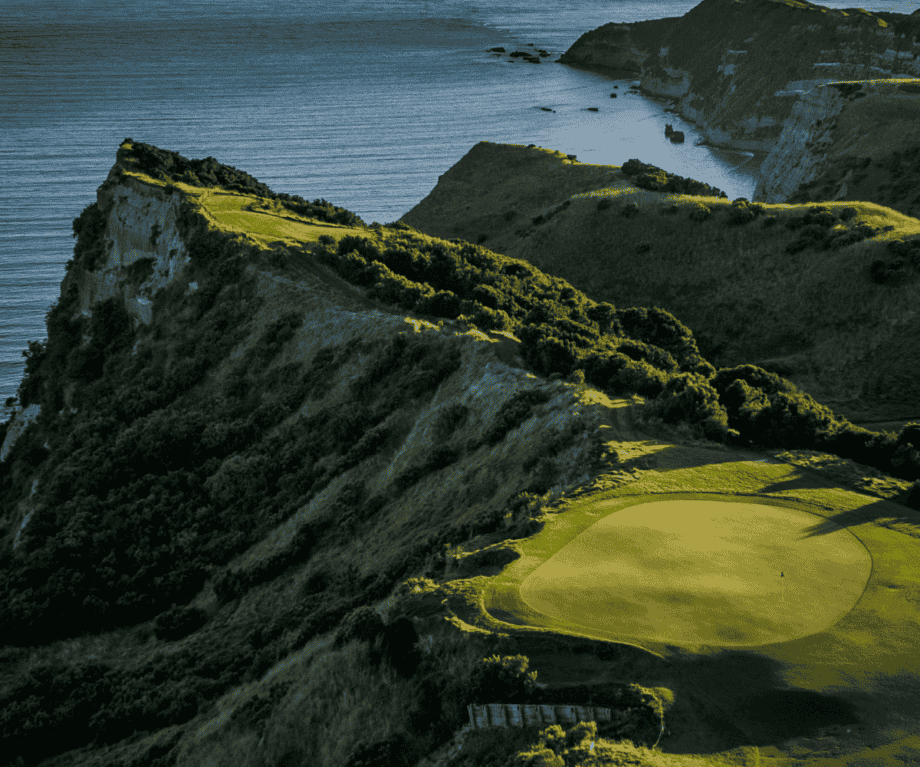
- Pedigree: Tom Doak’s maiden New Zealand design, situated across a sprawling 6,000-acre working sheep station perched high above the Hawke’s Bay.
- Topography: Fairways run along narrow fingers of land 400 feet above the crashing waters of the Pacific, flanked by sheer drops on either side.
- The Legendary 15th Hole: A par 5 that forces players to aim for a fairway measuring a mere 40 yards wide, squeezed precariously between a sheer cliff edge and a deep ravine. It is a psychological crucible where self-preservation frequently trumps ego, and laying up with an iron is viewed not as cowardice, but as profound wisdom.
4. Jack’s Point – Queenstown, South Island
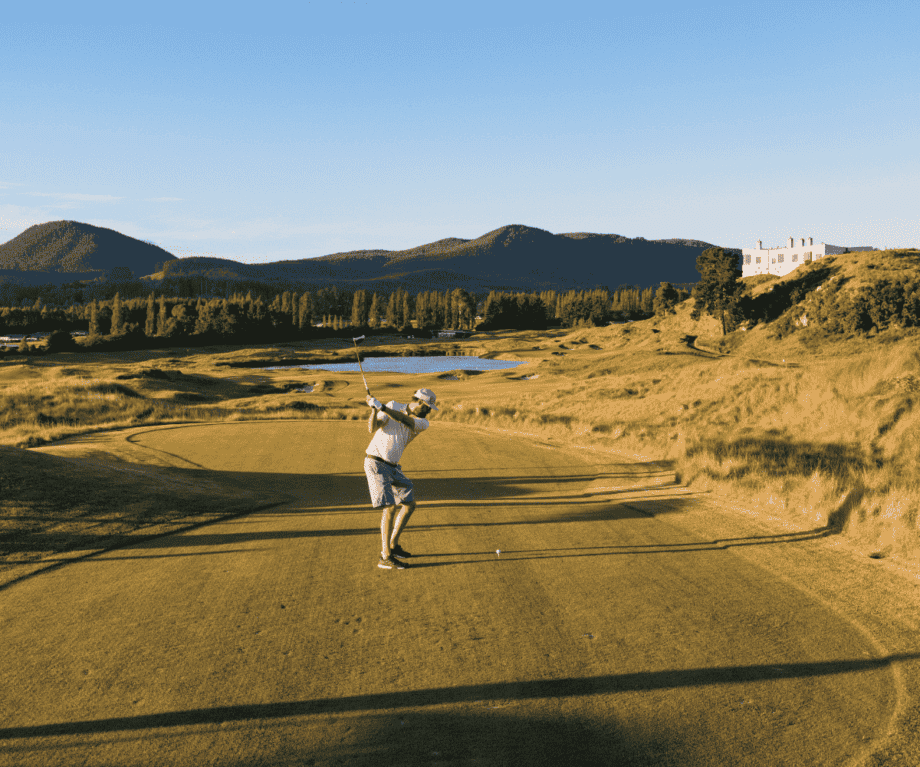
- Topography & Setting: Framed entirely by the Remarkables mountain range—one of the few mountain chains in the world running in a true north-to-south orientation—and bordered by the glacier-carved waters of Lake Wakatipu.
- Metrics: Designed by John Darby with minimal landscape disturbance, stretching to 6,986 yards from the championship markers.
- Visual Drama: The elevated par-3 7th hole points directly toward the crystalline alpine water, serving as one of the most photographed tee shots in global golf before a club is even swung.
Official Perspectives: The Role of the Elite Guide
In luxury travel, logistics can easily overshadow experience. However, when navigating New Zealand’s complex topography and microclimates, the role of a seasoned guide transcends simple transportation. It becomes an art form.
According to veteran tour operators and local hosts, the difference between a standard driver and an expert golf guide lies in their ability to read a group the way a master putter reads a green.
"A client once asked me, on the 14th tee at Cape Kidnappers, why nobody had mentioned his handicap all week. I told him I had stopped listening for it around day three. He looked almost relieved. That doesn’t mean golf is incidental on these trips. It isn’t. Tee times, slope ratings, signature holes all matter to the people who book a golf journey through New Zealand."
This philosophy underscores a fundamental truth about elite travel: while the physical metrics of a course (yardage, slope, rating) dictate the challenge, the human element dictates the memory. Expert guides curate the cadence of the day—knowing precisely which morning tee time will outrun the worst of the coastal gales, which clubhouse cellar holds the finest Central Otago Pinot Noir to celebrate a hard-fought round, and when to transition the conversation from swing mechanics to the breathtaking sightseeing that defines the region.
Furthermore, these journeys often strip away the posturing of the game. It is not uncommon for guests—having spent decades building a private mental inventory of international courses—to experience a moment of profound liberation. As one seasoned guide noted of a client who confessed his official handicap had been graciously inflated by six strokes for years: “I told him that explained a few things. He asked me not to put that in writing!”
Future Outlook: The 2026 Season and Beyond
As global luxury travel continues to pivot toward experiential, transformative, and remote destinations, New Zealand stands at the vanguard of high-end golf tourism. The upcoming 2026 season is projected to see record demand from international travelers seeking exclusivity, space, and uncompromised athletic challenges.
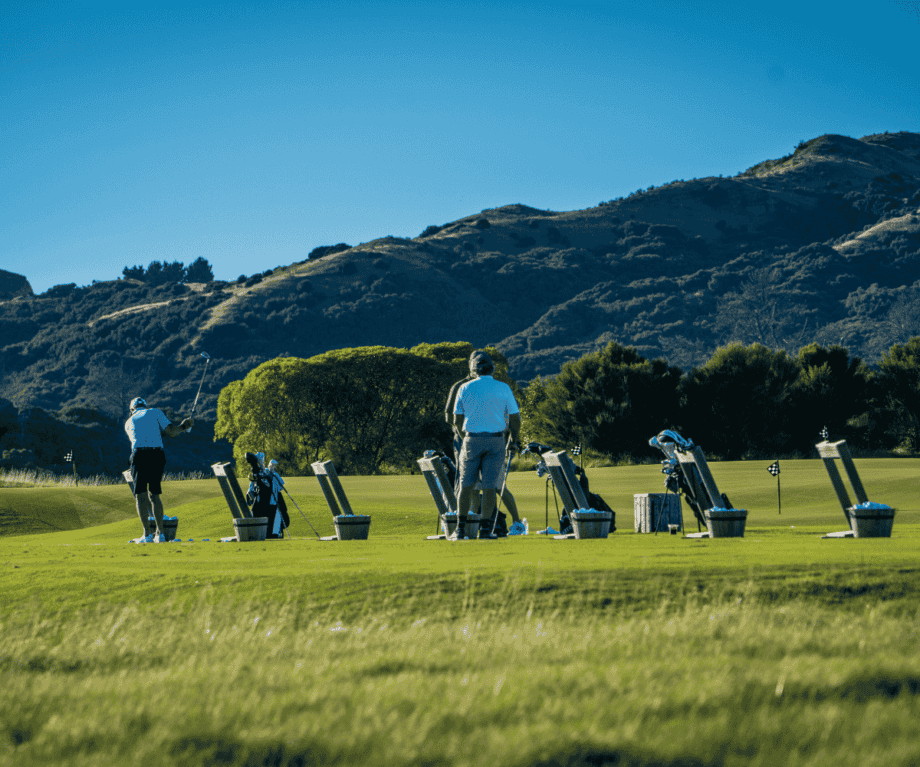
Key Trends Shaping Future Expeditions:
- Sustainability and Landscape Integration: As courses like Te Arai and Jack’s Point demonstrate, future developments will continue to prioritize minimal ecological disruption, ensuring that world-class architecture coexists harmoniously with native flora and working agricultural land.
- Holistic Wellness and Slow Travel: Golfers are increasingly rejecting rushed, high-volume itineraries in favor of slower, deeper engagements. A typical 2026 luxury package integrates multi-day stays at boutique lodges, spa recoveries, and culinary explorations between rounds.
- Technological Integration vs. Traditional Romance: While GPS yardage and advanced analytics have their place, the enduring appeal of New Zealand links lies in analog engagement—talking to the wind, leaning on local caddie wisdom, and embracing the unpredictable nature of oceanic weather.
For those willing to make the journey across the Pacific, New Zealand offers something increasingly rare in modern sport: an environment where the game humbles you, the landscape stuns you, and the memories forged in the clubhouse long outlive the numbers on the scorecard.