





For years, the "Risk Factors" section of lodging industry annual reports has featured a familiar refrain. Tucked between warnings about macroeconomic downturns and shifting consumer tastes, public hospitality companies have routinely warned investors that their coastal properties are vulnerable to severe weather. These warnings, often dismissed as boilerplate legal self-protection, have rarely come with a precise price tag. Historically, when natural disasters have struck, hospitality real estate investment trusts (REITs) have tended to quietly absorb the blow, bundling the costs of climate repair and structural damage into broader capital expenditure (capex) accounts, leaving shareholders to guess the true cost of extreme weather.
That era of financial opacity is coming to an end.
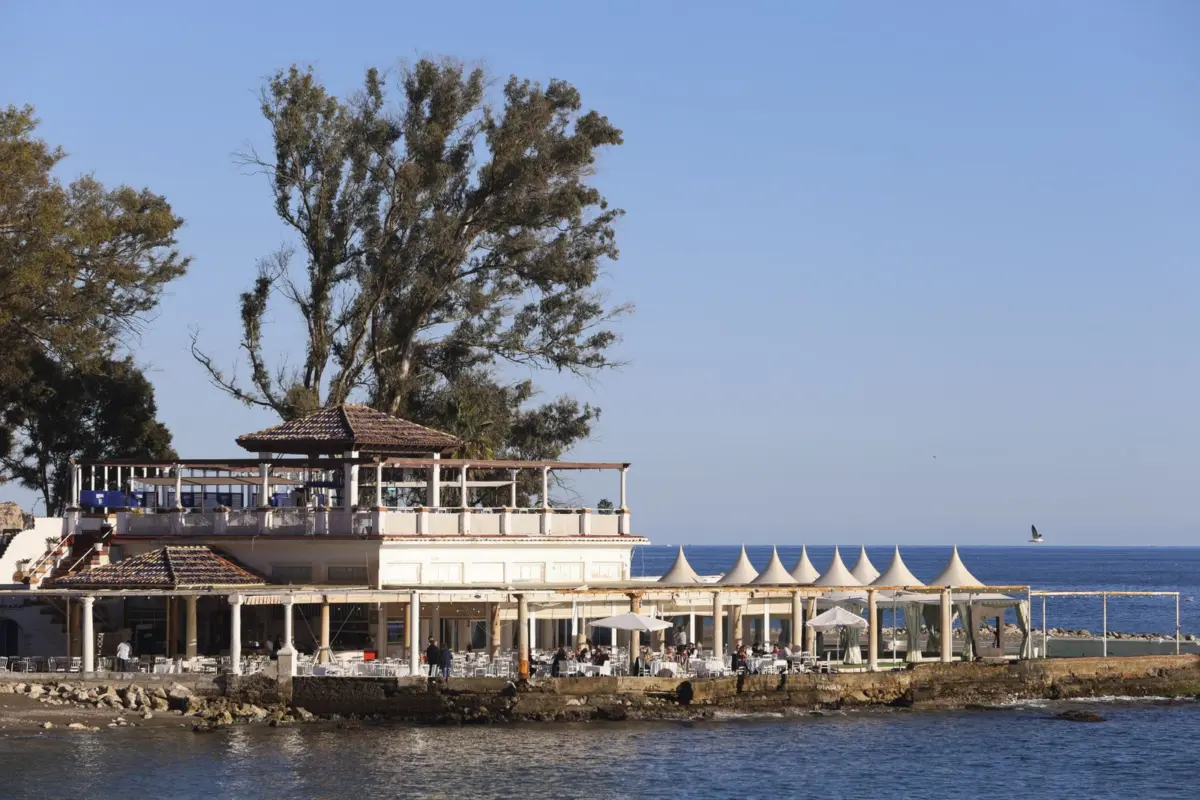
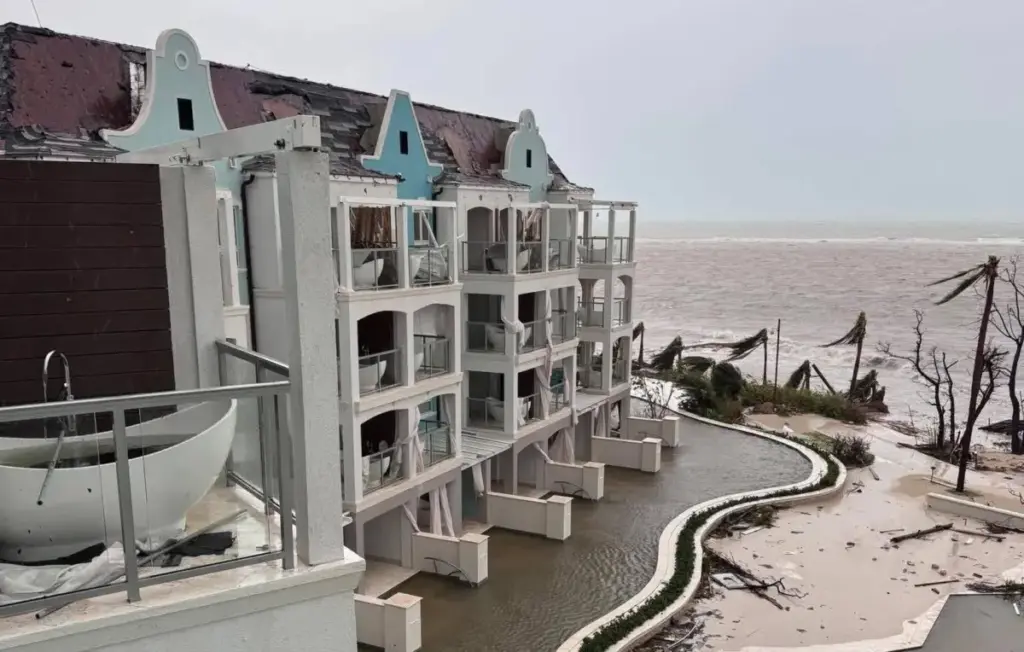
In its 2025 end-of-year financial filing, Host Hotels & Resorts—the nation’s largest lodging REIT—did something unusual: it put a stark, unvarnished price tag on the havoc wreaked by back-to-back natural disasters. The filing revealed that Hurricanes Helene and Milton, which battered the Florida coast in rapid succession in the autumn of 2024, inflicted an estimated $105 million in total damage on a single, iconic asset: The Don CeSar, the legendary "Pink Palace" situated on the white sands of St. Pete Beach.
This disclosure offers a rare, highly detailed window into the escalating financial toll that climate change is extracting from prime hospitality real estate. It also highlights the complex financial maneuvering required to restore a luxury historic asset, manage insurance recoveries, and redirect capital to protect properties against future environmental shocks.
The Anatomy of a $105 Million Disaster
To understand the scale of the damage at The Don CeSar, one must look at the unprecedented nature of the 2024 hurricane season. In late September 2024, Hurricane Helene swept past the Tampa Bay region, pushing a historic, destructive storm surge into coastal communities. Less than two weeks later, while the region was still reeling and debris remained piled on the roadsides, Hurricane Milton made landfall nearby as a Category 3 storm, bringing howling winds and torrential rains that compounded the initial destruction.
For a historic property like The Don CeSar, which opened its doors in 1928, the back-to-back assault was a worst-case scenario. According to Host’s 2025 end-of-year filing, the total estimated damage of $105 million represents one of the most significant single-property weather losses reported by a lodging REIT in recent history.
Of that $105 million total, approximately 30%—or roughly $31.5 million—was dedicated strictly to remediation. In the immediate aftermath of a coastal flood, remediation is a race against the clock. It involves pumping out millions of gallons of saltwater, stripping away waterlogged drywall, drying out historic plaster, and treating spaces to prevent the rapid onset of mold in Florida’s humid climate. Only after this intensive, highly specialized work is completed can the actual reconstruction begin.
The physical damage forced a complete operational shutdown of the resort during what should have been one of its busiest periods. The Don CeSar remained entirely closed to guests through the winter of 2024 and did not reopen its doors until late March 2025. Even then, the reopening was partial; it took until the third quarter of 2025 for all of the resort’s luxury amenities, restaurants, and recreational spaces to fully return to service.
The Capex Cannibalization: Rebuilding vs. Reinvesting
The financial fallout of Hurricanes Helene and Milton extended far beyond the physical boundaries of St. Pete Beach, rippling through Host Hotels & Resorts’ broader capital allocation strategy for 2025.
During 2025, Host spent $75 million on hurricane and other restoration work, a sum that went heavily toward bringing The Don CeSar back to life. To put that figure in perspective, this disaster-response spending accounted for roughly 11.6% of the company’s overall capital expenditures for the entire year.
This represents a classic challenge in hospitality asset management: the cannibalization of capex. Every dollar that a REIT is forced to spend on restoring a storm-damaged property is a dollar that cannot be spent on yield-generating initiatives, such as:
- Brand-new guestroom renovations to command higher average daily rates (ADR).
- The acquisition of new, high-growth assets in less vulnerable markets.
- Tech-driven operational upgrades to improve profit margins.
- Upgrading food and beverage concepts to attract local luxury spend.
While restoring a crown jewel like The Don CeSar is non-negotiable, dedicating nearly an eighth of an annual capital budget to putting a damaged property back together illustrates how climate events can disrupt a REIT’s long-term growth and modernization plans.
The Insurance Shield and the Reality of Rising Premiums
If there is a silver lining in Host’s 2025 filing, it is the crucial role played by the company’s risk management and insurance policies. At the time of the filing, Host reported that it had received $73 million in insurance payouts related to the 2024 hurricanes.
Significantly, this insurance recovery did not just cover the physical bricks-and-mortar damage to the resort; it also reflected compensation for lost business. Business interruption insurance is a vital lifeline for seasonal luxury resorts. When a property like The Don CeSar is forced to close from October through late March, it misses out on the lucrative holiday travel season and the peak winter migration of affluent travelers to the Gulf Coast. The lost room revenue, canceled weddings, abandoned corporate retreats, and shuttered food and beverage operations represent a massive cash flow void that insurance must help fill.
However, the delta between the $105 million in estimated damages and the $73 million in insurance payouts received by the end of 2025 highlights the friction points in modern climate risk management:
- Timing Lags: Insurance claims of this magnitude are notoriously slow to settle. Adjusters must painstakingly verify every dollar of damage and lost revenue, meaning cash inflows from insurers often lag far behind the immediate cash outflows required to pay remediation contractors.
- Deductibles and Limits: In high-risk zones like coastal Florida, named-storm deductibles have risen dramatically. Commercial property owners are increasingly forced to self-insure a larger portion of the initial loss before insurance coverage kicks in.
- The Long-Term Cost of Coverage: A $73 million payout is a short-term victory, but it inevitably leads to higher future premiums, stricter policy limits, and more demanding underwriting requirements for the entire portfolio.
Proactive Resilience: The New Capital Allocation Imperative
The devastation of the 2024 hurricane season did not occur in a vacuum. Host Hotels & Resorts had already been quietly preparing for a more volatile climate, recognizing that defensive capital spending is no longer optional.
According to the 2025 filing, Host spent approximately 8% of its total capital expenditures on making its properties more resilient to climate risks over the six-year period leading up to December 2025.
This proactive "resilience capex" represents a fundamental shift in how real estate companies view property upgrades. Rather than waiting for a storm to strike and using insurance money to rebuild to the original standard, forward-thinking operators are investing capital upfront to harden their assets. In coastal and storm-prone areas, this resilience spending typically takes several forms:
- Elevating Critical Infrastructure: Moving expensive electrical switchgear, backup generators, and HVAC systems from basements and ground floors to elevated platforms or upper levels to protect them from storm surges.
- Wind and Impact Mitigation: Installing impact-resistant glass, reinforcing roof structures, and deploying heavy-duty, temporary flood barriers that can be erected quickly when a storm approaches.
- Water Management Systems: Upgrading storm-water drainage, installing one-way valves to prevent municipal sewer backups, and utilizing permeable landscaping materials to absorb excess rainfall.
By dedicating nearly a tenth of its multi-year capital program to resilience, Host has acknowledged that defending its portfolio against the elements is just as critical to long-term shareholder value as upgrading lobbies or installing smart-room technology.
A New Era of Climate Transparency in Hospitality Finance
The detailed financial disclosures surrounding The Don CeSar in Host’s 2025 filing may well mark a turning point for the lodging industry. For years, institutional investors have pushed for more robust Environmental, Social, and Governance (ESG) data, often focusing on carbon footprints and energy efficiency. However, the immediate physical risks of climate change—and the precise dollar amounts required to recover from them—are now taking center stage.
As extreme weather events become more frequent and severe, the ability of a lodging REIT to navigate these crises will be judged not just by the quality of its guest service, but by the sophistication of its balance sheet. Host’s experience demonstrates that surviving a major climate event requires a three-pronged financial strategy:
- Aggressive Upfront Resilience Spending: Investing a consistent portion of capital to minimize the physical impact of inevitable storms.
- Robust and Expensive Insurance Programs: Maintaining deep relationships with underwriters to secure comprehensive coverage that spans both physical rebuilding and business interruption.
- Transparent Financial Accounting: Providing clear, asset-level disclosures that allow investors to accurately assess the risks and recovery timelines of coastal portfolios.
The legendary "Pink Palace" has stood on the shores of St. Pete Beach for nearly a century, surviving countless economic cycles and Gulf storms. Its successful, albeit costly, restoration in 2025 proves that historic luxury assets can endure the challenges of a changing climate—but only if their owners are willing to pay the rising price of admission.