









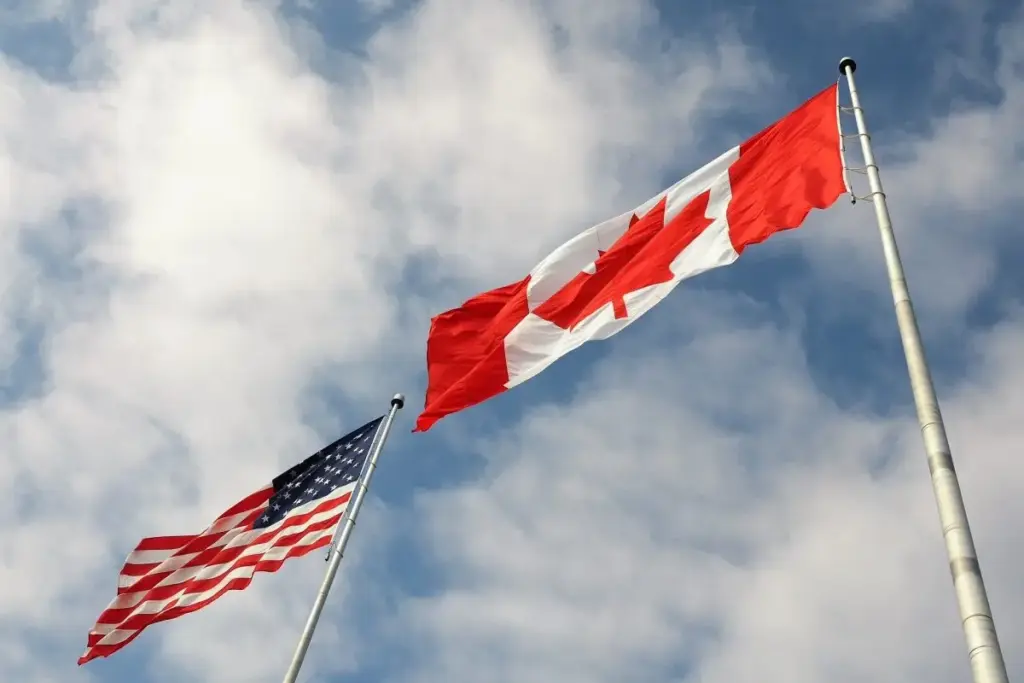
The long-standing, historically peaceful relationship between the United States and Canada is facing one of its most severe modern disruptions. A rapidly escalating trade conflict between Washington, D.C., and Ottawa has moved beyond standard economic disputes, morphing into a highly charged geopolitical confrontation. This deterioration in relations comes at a critical juncture for the travel and hospitality sectors, threatening to derail a nascent recovery in inbound Canadian tourism to the United States just as travelers were beginning to return in larger numbers.
With multi-billion-dollar tariffs flying in both directions and highly symbolic political maneuvers capturing headlines, the cooperative spirit that has historically defined the world’s longest undefended border is under immense strain. For the U.S. travel industry, which relies heavily on Canadian visitors as its largest source of international arrivals, the stakes of this diplomatic freeze could not be higher.
The Spark of a Transborder Economic Conflict
The current crisis erupted after a series of aggressive economic policy maneuvers initiated by the White House. The tension quickly spilled over from closed-door trade negotiations into public view, establishing a cycle of swift retaliation that has alarmed economists and industry analysts alike.
Tariffs and Counter-Tariffs: The $20 Billion Retaliation
The conflict escalated dramatically when the White House announced the imposition of sweeping 50% tariffs on Canadian goods entering the United States. Given the highly integrated nature of the North American supply chain, where raw materials and manufactured parts frequently cross the border multiple times during production, a tariff of this magnitude represents a massive disruption to continental trade.
Ottawa’s response was immediate and robust. Rather than seeking a prolonged diplomatic compromise, the Canadian government chose to match the economic pressure. Canada quickly retaliated with targeted tariffs on approximately $20 billion worth of American goods. This retaliatory package was strategically designed to maximize political and economic pressure on key U.S. manufacturing and agricultural regions, signaling that Canada was fully prepared to defend its economic interests.
Rhetoric of Defense: Ottawa’s Firm Stance
The rhetorical escalation accompanying these trade policies has been unusually stark. Commenting on the aggressive measures taken by the United States and Canada’s subsequent defensive response, Canadian Prime Minister Mark Carney did not mince words regarding the gravity of the situation.
"You’re at war when you’re attacked, and we got attacked," Carney stated, framing the trade dispute not merely as a policy disagreement, but as an existential economic conflict.
Carney’s combative language underscores a fundamental shift in Ottawa’s approach to its southern neighbor. By declaring that Canada is actively defending itself against economic aggression, the Canadian leadership has set a tone of national solidarity that directly influences public sentiment—and, by extension, the willingness of Canadian citizens to spend their leisure dollars in the United States.
The Battle of Lake Ontario: Symbols and Sovereignty
While the economic tariffs represent a tangible threat to corporate balance sheets and consumer prices, the political theater surrounding the dispute has introduced a new level of friction. In a move that has stunned observers on both sides of the border, the conflict has extended into the realm of geography and national identity.
Unilateral Renaming and Binational Friction
The diplomatic dispute reached a highly unusual peak on Thursday when President Donald Trump signed an executive order directing the U.S. Department of the Interior to officially change the name of Lake Ontario to "Lake America."
                       LAKE ONTARIO / "LAKE AMERICA"

       [   C   A   N   A   D   A   ]   <-- Northern Shore (Ontario)
     =====================================
     ~~~~~~~~~~~~~~~~~~~~~~~~~~~~~~~~~~~~~
     ~~~~~~~~~~~~~~~~~~~~~~~~~~~~~~~~~~~~~  <-- Shared Border
     ~~~~~~~~~~~~~~~~~~~~~~~~~~~~~~~~~~~~~
     =====================================
       [  U   N   I   T   E   D      S   T   A   T   E   S  ] <-- Southern Shore (NY)
Lake Ontario is one of the five Great Lakes of North America, sharing its waters between the Canadian province of Ontario to the north and the U.S. state of New York to the south. It serves as a vital shipping lane, a source of drinking water for millions of citizens in both countries, and a shared environmental treasure managed through decades of cooperative bilateral agreements.
By ordering the Interior Department to unilaterally rename a shared, international body of water, the White House has introduced a highly provocative symbolic gesture into an already tense trade war. While the practical jurisdiction of the U.S. Interior Department is legally limited to the American side of the border, the move is being interpreted in Canada as a direct challenge to its sovereignty and geographic heritage. This symbolic escalation has intensified public anger in Canada, transforming what began as a commercial dispute into a deeply personal issue for many Canadian citizens.
The Tourism Toll: A Fragile Recovery Put at Risk
For the U.S. travel and tourism sector, the timing of this bilateral fallout is particularly damaging. The dispute comes precisely as Canadian travelers were showing renewed interest in visiting U.S. destinations, offering hope for a full recovery of the lucrative cross-border travel market.
Reading the Data: The Longwoods International Findings
Recent data highlighted the beginning of a positive trend for U.S. inbound tourism. A July survey conducted by travel research firm Longwoods International revealed that 28% of Canadian travelers had visited the United States within the past six months. This represented a notable increase from the 23% recorded during the same period the previous year.
Canadian Travel to the U.S. (Past 6 Months)
===========================================
Previous Year:  [█████████████████████] 23%
Current Year:   [██████████████████████████] 28%
===========================================
Source: Longwoods International (July Survey)
This five-percentage-point year-over-year growth represented millions of individual trips and billions of dollars in potential revenue for U.S. hotels, restaurants, airlines, and retail outlets. The upward trajectory suggested that the post-pandemic recovery was finally gaining solid footing, driven by pent-up demand and the geographic convenience of cross-border travel.
From "51st State" to Trade War: The Cumulative Impact of Political Rhetoric
However, this recovery has been fragile from the start. In the Longwoods International report, Amir Eylon, President and CEO of Longwoods, noted that while Canadian travel intent has been improving, it has been doing so "albeit slowly."
According to Eylon, this slow and cautious recovery was already weighed down by previous controversial political remarks. Specifically, Canadian travelers had been reacting coolly to earlier comments made by President Trump regarding the potential of making Canada the "51st state" of the U.S.
For many Canadians, the suggestion that their sovereign nation could be absorbed as an American state was met with deep resentment. Eylon’s analysis indicates that such political rhetoric has a direct, measurable chilling effect on travel intent. When Canadian consumers feel that their country is being disrespected or targeted by U.S. leadership, they frequently choose to keep their discretionary vacation spending at home or redirect it to more welcoming international destinations.
The Psychology of the Canadian Traveler
To understand the threat this trade war poses to the U.S. economy, one must look at the unique psychology of the Canadian traveler. Unlike many other international markets, Canadian travel to the United States is characterized by high frequency, deep familiarity, and a significant reliance on vehicular border crossings.
- The Drive-To Market: A vast majority of Canada’s population lives within 100 miles of the U.S. border. This proximity makes weekend trips, shopping excursions, and short vacations incredibly easy. However, because these trips are often spontaneous, they are highly susceptible to sudden shifts in consumer sentiment and political tension.
- Alternative Destinations: Canadian travelers have highly viable alternatives to U.S. travel. Domestic tourism within Canada is heavily promoted, and competitive flight options make travel to Europe, Mexico, and the Caribbean highly attractive. If the political climate in the U.S. feels hostile, Canadians can easily pivot their vacation plans.
- The Impact of Currency and Costs: A trade war of this scale inevitably impacts currency exchange rates and consumer prices. If tariffs drive up the cost of goods and services in the United States, the purchasing power of the Canadian dollar decreases, making U.S. vacations less economically viable.
When geopolitical tensions are high, the decision to cross the border becomes more than a logistical choice; it becomes a political statement. The combination of 50% tariffs, a $20 billion retaliatory package, and the provocative renaming of Lake Ontario creates a psychological barrier that can be just as formidable as any physical border wall.
Broader Implications for the U.S. Travel and Hospitality Sector
The U.S. travel industry is highly vulnerable to fluctuations in Canadian visitor numbers. As the primary source of international visitors to the U.S., any sustained decline in Canadian arrivals will be felt across multiple sectors of the American economy.
| Impacted Sector | Primary Revenue Sources | Vulnerability Level |
|---|---|---|
| Border State Retail | Cross-border shopping, outlet malls, day-trips | High (immediate impact from drive-to market) |
| Sunbelt Hospitality | Winter "Snowbird" long-term rentals, RV parks | Medium to High (seasonal long-term stays) |
| Aviation & Transit | Transborder flights, car rentals, regional airports | Medium (reduction in business and leisure routes) |
| National Parks & Recreation | Entry fees, lodging, outdoor gear outfitters | Medium (summer travel declines) |
The Impact on Border States
States sharing a direct land border with Canada—such as New York, Michigan, Washington, Vermont, and Maine—rely heavily on Canadian visitors to sustain their local economies. Cities like Buffalo, Detroit, and Seattle feature retail centers, restaurants, and entertainment venues designed specifically to cater to Canadian day-trippers.
A sharp drop in cross-border traffic driven by political anger could lead to significant revenue shortfalls for local businesses in these regions. Furthermore, the symbolic battle over Lake Ontario directly affects New York State’s tourism brand, which shares the lake’s southern shoreline and relies on cooperative binational marketing campaigns to attract visitors to the Great Lakes region.
The "Snowbird" Effect
Beyond short-term leisure travel, the trade war threatens the crucial seasonal migration of Canadian "snowbirds"—predominantly retirees who spend the winter months in warmer southern states like Florida, Arizona, and California. These long-term visitors contribute billions of dollars annually to local economies, renting properties, purchasing groceries, utilizing local services, and paying local taxes.
If political tensions remain high and the Canadian public continues to perceive U.S. policies as hostile, a significant portion of these seasonal residents may choose to winter elsewhere, or shorten their stays, causing severe economic ripples through southern hospitality and real estate markets.
A Challenging Path Forward
The path forward for both nations remains highly uncertain. With Prime Minister Carney declaring that Canada is in a state of economic defense and the White House continuing to deploy highly nationalistic rhetoric and symbolic executive orders, a swift diplomatic resolution appears unlikely.
For the travel industry, the challenge will be to navigate this hostile political environment while attempting to maintain appeal to Canadian consumers. Destination marketing organizations (DMOs) in the United States may need to work twice as hard to reassure Canadian travelers that they remain welcome, separate from the ongoing political and economic disputes between Washington and Ottawa.
Ultimately, the escalating trade war serves as a stark reminder of how quickly geopolitical friction can disrupt economic recovery. As long as tariffs remain in place and symbolic provocations like the renaming of Lake Ontario dominate the headlines, the fragile recovery of Canadian travel to the United States will remain in serious jeopardy.