







In a major strategic escalation within the Pacific Northwest aviation market, Atlanta-headquartered Delta Air Lines has announced plans to reinstate nonstop service between its Seattle-Tacoma International Airport (SEA) hub and Tokyo Narita International Airport (NRT). Scheduled to launch in late March 2027, the move marks a dramatic return to a legendary transpacific corridor that Delta previously abandoned in the wake of the COVID-19 pandemic in 2020.
This resurrected route is far more than a routine network adjustment; it represents a direct challenge to Alaska Airlines, Delta’s chief rival in Seattle. By adding Narita to its schedule, Delta will supplement its existing daily service to Tokyo Haneda Airport (HND), thereby offering what the carrier describes as its “most comprehensive Seattle-Tokyo offering ever.”
However, this expansion sets the stage for a fierce battle over the Emerald City’s skies. Alaska Airlines—bolstered by its recent acquisition of Hawaiian Airlines and the introduction of long-haul widebody aircraft to its fleet—inaugurated its own nonstop service between Seattle and Narita in May 2025. With Delta’s re-entry, the Seattle–Tokyo Narita corridor cements its status as one of the most fiercely contested high-yield international routes in modern US aviation history. As both carriers jostle for dominance in the Pacific Northwest, passengers and industry analysts alike are watching closely to see how capacity, pricing, and product offerings will evolve.
Detailed Chronology: From Northwest Legacy to Modern-Day Rivalry
To fully appreciate the significance of Delta’s 2027 return to Narita, one must look back at the historical framework that birthed the route. The Seattle-Narita connection is not a new venture for Delta; rather, it is a historic asset inherited from its massive 2008 merger with Northwest Airlines.
The Northwest Legacy and the Pandemic Pivot
For decades, Northwest Airlines—and later Delta, following the integration of Northwest’s sprawling Asian network—utilized Narita International Airport as its premier Asian connecting hub. Flights from Seattle, Minneapolis, Detroit, and various other US gateways funneled passengers into Narita, where they could easily catch onward connections to destinations across Asia.
For years, this strategy was the bedrock of Delta’s transpacific presence. However, aviation dynamics shifted dramatically in the late 2010s. The Japanese government and various airlines successfully lobbied for increased access to Tokyo Haneda Airport (HND), which is located much closer to central Tokyo than Narita. As bilateral aviation agreements opened up more Haneda slots, major US carriers rapidly shifted their operations. Haneda quickly became the preferred airport for business and leisure travelers alike due to its proximity to the city center.
When the COVID-19 pandemic paralyzed global aviation in early 2020, Delta was forced to drastically prune its international schedules. The Seattle-Narita route was suspended indefinitely, casualties of a market contraction that prioritized cash preservation and core domestic routes. In the subsequent recovery years, Delta concentrated its Tokyo efforts exclusively on Haneda, operating daily flights out of Seattle using its flagship Airbus A350-900 aircraft.
Alaska Airlines’ Bold Intercontinental Leap
While Delta stepped back from Narita, its Seattle neighbor, Alaska Airlines, was quietly plotting a revolutionary transformation. Long known as a premier domestic carrier with a robust West Coast network, Alaska harbored grand ambitions to evolve into a global connector.

The turning point came when Alaska acquired Hawaiian Airlines. This merger did not just add leisure routes to the Hawaiian Islands; it inherited Hawaiian’s widebody fleet, specifically its Airbus A330-200 aircraft, which possessed the range and capability to operate intercontinental missions.
On May 12, 2025, Alaska Airlines officially inaugurated nonstop flights between Seattle and Tokyo Narita, utilizing Hawaiian’s A330-200s. It was a watershed moment for the carrier—its first-ever intercontinental long-haul route originating from the Pacific Northwest. Initially relying on the Hawaiian-branded widebodies, Alaska quickly scaled its ambitions. By January 2026, the airline began deploying its newly integrated Boeing 787-9 Dreamliners onto the route, signaling a permanent, serious commitment to long-haul international operations.
Delta’s Counter-Move for 2027
Recognizing that Alaska was successfully capturing high-yielding transpacific traffic and building a loyal base of international corporate flyers out of Seattle, Delta decided it could no longer cede the Narita market to its rival. On August 6, 2026, Delta officially announced that it would reactivate the Seattle-Narita route in late March 2027.
By re-entering Narita, Delta is not replacing its Haneda service; rather, it is supercharging its footprint. The airline aims to provide a dual-airport strategy in Tokyo, giving travelers the flexibility of flying into Haneda for ultimate convenience or Narita for alternative connecting opportunities and point-to-point access.

Supporting Context & Metrics: Fleet, Schedules, and Market Dynamics
The battle between Delta and Alaska over the Seattle-Narita corridor is underscored by fascinating operational differences, particularly regarding aircraft selection, flight schedules, and overall capacity deployment.
Flight Schedules and Operational Timings
Delta’s resurrected service will operate on a convenient daytime schedule designed to optimize connections across its expansive US domestic network.
- Outbound Flight (SEA to NRT): Departs Seattle-Tacoma International Airport (SEA) at approximately 1:35 PM, crossing the Pacific to land at Narita International Airport (NRT) at around 4:20 PM the following day.
- Inbound Flight (NRT to SEA): Departs Narita (NRT) at 6:30 PM, arriving back at Seattle-Tacoma (SEA) at 12:00 PM (noon) on the same day.
For comparison, Delta’s existing Seattle-Haneda (HND) flight operates on a slightly different schedule:
- Westbound (SEA to HND): Departs SEA at 11:55 AM, arriving at HND around 1:30 PM the next day.
- Eastbound (HND to SEA): Departs HND at 4:20 PM, landing back at SEA just before 10:00 AM.
Fleet Strategy: Airbus A330-900neo vs. Airbus A350-900
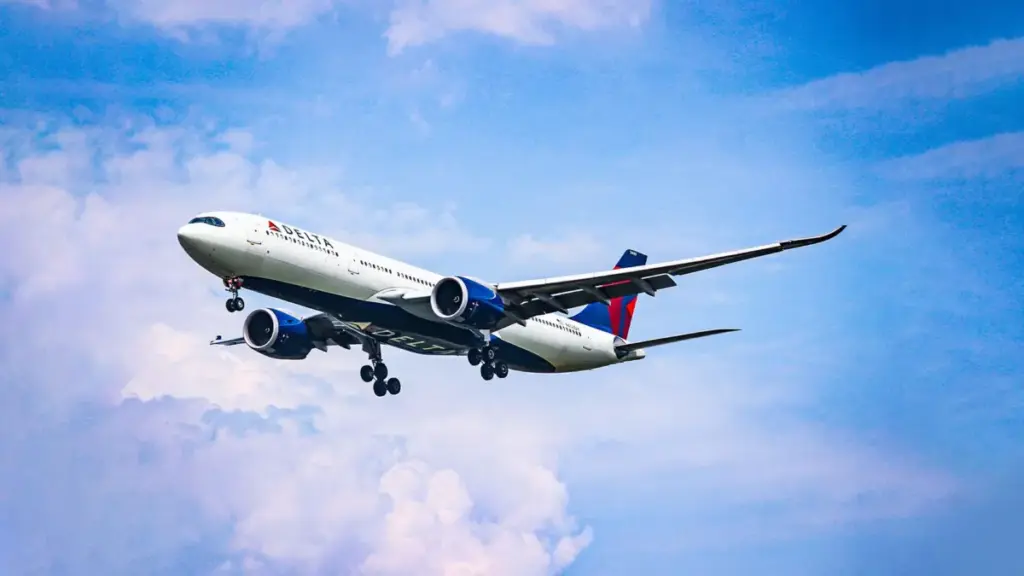
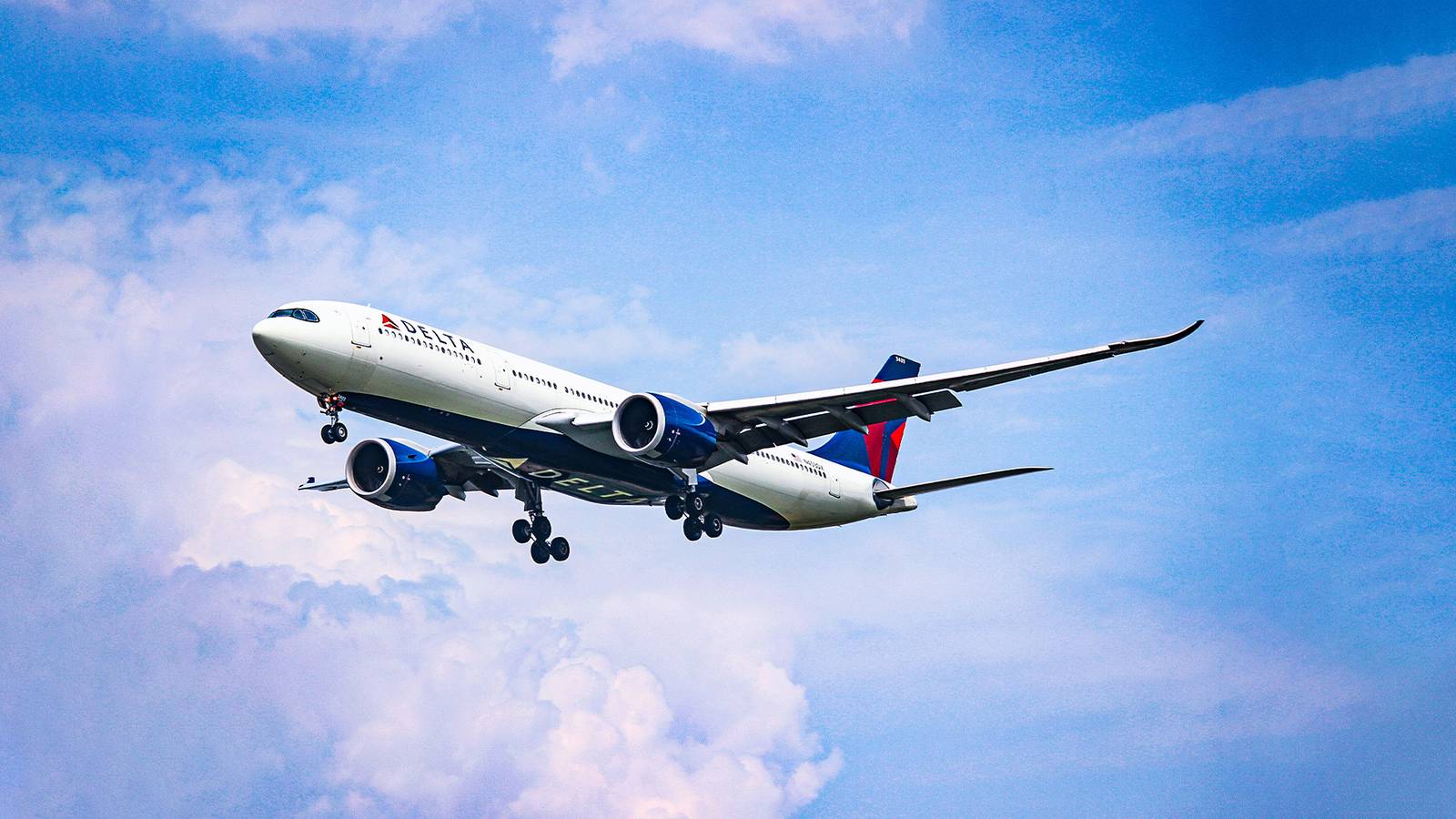
One of the most intriguing aspects of Delta’s dual-Tokyo strategy is its choice of aircraft. While Delta deploys its flagship Airbus A350-900 on the Seattle-Haneda route, it has chosen to allocate the Airbus A330-900neo to the newly revived Seattle-Narita service.

The A330-900neo is outfitted with Delta’s latest generation of long-haul cabins, offering a highly competitive product designed to lure premium leisure and business travelers. The aircraft features a total capacity of 281 passengers configured across three distinct classes:
- Delta One (Business Class): 29 fully flat-bed suites arranged in a private 1-2-1 layout, featuring direct aisle access, sliding privacy doors, and premium dining.
- Delta Premium Select (Premium Economy): 28 spacious seats arranged in a 2-3-2 configuration, offering greater recline, legroom, and enhanced service amenities.
- Main Cabin & Delta Comfort+: The remaining 224 seats make up the economy experience, including 56 seats in the center sections branded as Delta Comfort+, which offer additional legroom and priority boarding.
By deploying the A330-900neo to Narita and the A350-900 to Haneda, Delta ensures that its entire Seattle-Tokyo operation features top-tier modern widebody comfort, directly challenging the Boeing 787-9 Dreamliners and Airbus A330s utilized by its competitors.
Market Share and Regional Dominance
Seattle-Tacoma International Airport is a fiercely contested fortress hub. Delta proudly claims the title of the largest international carrier at SEA, boasting over 160 peak-day departures to more than 62 global destinations. Through years of strategic investment, Delta has successfully transformed Seattle into its premier Pacific gateway, designed to capture lucrative traffic flowing between the US interior and Asia.
However, Alaska Airlines remains the overall largest airline at SEA, commanding the highest total volume of local passengers and dominating domestic market share. The escalation of long-haul international competition means that Alaska is no longer content to merely feed domestic traffic to global partners. With the acquisition of Hawaiian Airlines and the expansion of its own widebody fleet, Alaska is actively seeking to capture the high-margin international ticket sales that were once the exclusive domain of legacy network carriers like Delta.

Official Statements and Industry Perspective
The strategic rationale behind Delta’s return to Narita was outlined by Jeff Arinder, Delta’s Vice President of International Network Planning. Emphasizing the enduring appeal of the Japanese market, Arinder highlighted how the reinstated route strengthens the airline’s overall Pacific network:
"Japan continues to be one of the most important and beloved destinations in Delta’s global network, and adding Seattle–Narita service gives our customers even more choice when planning their travel. With service to both Haneda and Narita, Delta will offer more capacity and two convenient ways to access Tokyo, supported by the strength of our U.S. network and our commitment to connecting customers to the places they want to go most."
Aviation analysts note that this move underscores Delta’s aggressive posture in competitive markets. By offering dual-airport access to Tokyo, Delta neutralizes any exclusive operational advantage that Alaska Airlines might have claimed by serving Narita. Furthermore, it forces corporate travel managers and frequent flyers to evaluate both airlines based strictly on schedule utility, product quality, and loyalty perks.
Future Outlook: Seattle’s Asccent as a Global Aviation Crossroads
The resurrection of Delta’s Seattle-Narita flight is emblematic of a broader trend: Seattle has firmly established itself as one of the most dynamic and fiercely contested international gateways in North America.

With the launch of Delta’s Narita flight in March 2027, Seattle and Tokyo Narita will become the fourth long-haul international route where Delta and Alaska Airlines go head-to-head in direct competition. The two carriers already clash fiercely on nonstop routes linking Seattle to:
- London Heathrow (LHR)
- Seoul Incheon (ICN)
- Rome Fiumicino (FCO)
- Now joining the list: Tokyo Narita (NRT)
Beyond these shared battlegrounds, Delta maintains an extensive portfolio of long-haul European routes from Seattle—including Amsterdam, Paris, and Barcelona—alongside Asian services to Shanghai and Taipei. Meanwhile, Alaska Airlines has laid out an ambitious roadmap, signaling its intention to operate at least 12 long-haul international routes out of Seattle by the turn of the decade.
What This Means for Travelers
For consumers, this corporate rivalry is an absolute win. The head-to-head competition between Delta Air Lines and Alaska Airlines (backed by Hawaiian Airlines) on the Seattle-Tokyo corridor is expected to drive competitive pricing, stimulate promotional fare sales, and spur continuous product enhancements in both business and economy cabins.
As Delta rolls out its Airbus A330-900neo onto the Narita route in the spring of 2027, passengers flying out of the Pacific Northwest will enjoy unprecedented choice, scheduling flexibility, and top-tier comfort when journeying to Japan. The battle for Seattle’s skies has officially entered a new, high-stakes era, and the passenger is poised to reap the rewards.