






Among the newly certified properties are two hotels constructed in the 1980s. This detail is particularly noteworthy, as it demonstrates that achieving net-zero operational emissions is not an exclusive privilege of newly built, state-of-the-art developments. Instead, it highlights the viability of deep green retrofits for legacy buildings, which represent the vast majority of global hotel inventory.
By successfully transitioning these older structures into verified net-zero operations, Radisson is establishing a replicable blueprint for the wider hospitality sector. The achievement proves that with targeted capital investment, operational discipline, and a supportive local energy infrastructure, the hospitality industry can successfully decarbonize its existing real estate footprint.
Bridging the Generational Gap: Retrofitting Legacy Properties of the 1980s
For decades, the prevailing assumption within the real estate and hospitality sectors was that achieving true net-zero emissions required ground-up, purpose-built architecture. Modern sustainable developments benefit from passive solar design, high-performance building envelopes, and integrated renewable energy systems from day one.
In contrast, buildings constructed in the 1980s present a formidable array of structural and mechanical challenges. During that era, energy efficiency standards were vastly different from today’s rigorous codes. Properties built during this period typically rely on outdated, carbon-intensive heating, ventilation, and air conditioning (HVAC) systems. They often feature poor insulation, single- or double-pane windows with high thermal transmittance, and pneumatic control systems that lack the precision of modern digital energy management.
To bring two 1980s-era hotels to verified net-zero status, Radisson had to oversee comprehensive operational and technological overhauls. These deep retrofits typically require a transition away from fossil-fuel-reliant heating systems toward high-efficiency electric heat pumps. They also demand the installation of smart building management systems (BMS) that leverage artificial intelligence to optimize heating, cooling, and lighting based on real-time occupancy data.
By proving that these decades-old properties can meet the strict criteria of its net-zero scheme, Radisson is tackling one of the most stubborn hurdles in real estate decarbonization: legacy embodied carbon and operational inefficiency. Retaining and retrofitting existing structures is far more environmentally friendly than demolishing them to build new ones, as it avoids the massive output of embodied carbon associated with new construction materials like concrete and steel.
The Power Grid Dilemma: Why the Nordics Lead the Clean Transition
The success of any hotel’s electrification strategy is ultimately tethered to the carbon intensity of the local electricity grid. While energy-efficiency measures can drastically reduce a property’s overall consumption, the final push to eliminate operational emissions relies heavily on the availability of clean, renewable energy.
This grid dependency explains why Radisson’s current net-zero portfolio is heavily concentrated in the Nordic region. Countries like Sweden, Norway, and Finland boast some of the cleanest electricity grids in the world, powered primarily by hydropower, wind, and nuclear energy. When a hotel in Stockholm transitions its heating, cooking, and hot water systems from natural gas or fuel oil to electricity, its operational emissions drop to near zero because the electricity feeding the property is already decarbonized.
However, this geographical concentration highlights a broader systemic challenge for global hotel chains. In markets where the local energy grid remains heavily reliant on coal, natural gas, or oil, even the most energy-efficient, fully electrified hotel cannot achieve operational net-zero status without substantial on-site renewable generation or direct investment in off-site Power Purchase Agreements (PPAs).
For Radisson, the Nordic properties serve as a vital testing ground. They allow the group to refine its operational standards, guest engagement strategies, and technological configurations in a favorable grid environment before exporting these lessons to more challenging energy markets worldwide.
Spotlight on the New Stockholm Inductees
The latest expansion of the Verified Net Zero Hotels scheme focuses heavily on Sweden’s capital, with three of the four newly added properties located in Stockholm. These additions represent diverse operational formats, from massive convention hubs to transit-focused airport lodging.
Radisson Blu Waterfront Hotel & Stockholm Waterfront Congress Centre
As one of Stockholm’s premier business and events destinations, the Radisson Blu Waterfront Hotel and the adjoining Stockholm Waterfront Congress Centre represent a major operational triumph for the net-zero scheme. Convention centers are notoriously difficult to decarbonize due to their massive, open architectural spaces and highly volatile occupancy patterns. A major conference can bring thousands of delegates into the venue for a few days, causing energy demand for heating, cooling, ventilation, and food service to spike dramatically. Managing these fluctuations without relying on fossil-fuel backup systems requires highly sophisticated load-balancing and energy-storage technologies.
Radisson Blu Royal Viking Hotel
Located in the heart of downtown Stockholm, the Radisson Blu Royal Viking Hotel is a high-traffic, urban property that caters to a mix of corporate travelers and leisure tourists. Decarbonizing a bustling city-center hotel requires optimizing high-volume laundry, kitchen, and guestroom services. The transition of this prominent property to verified net-zero status demonstrates that high-volume, luxury urban hospitality does not have to come at the expense of the environment.
Radisson Blu Arlandia Hotel
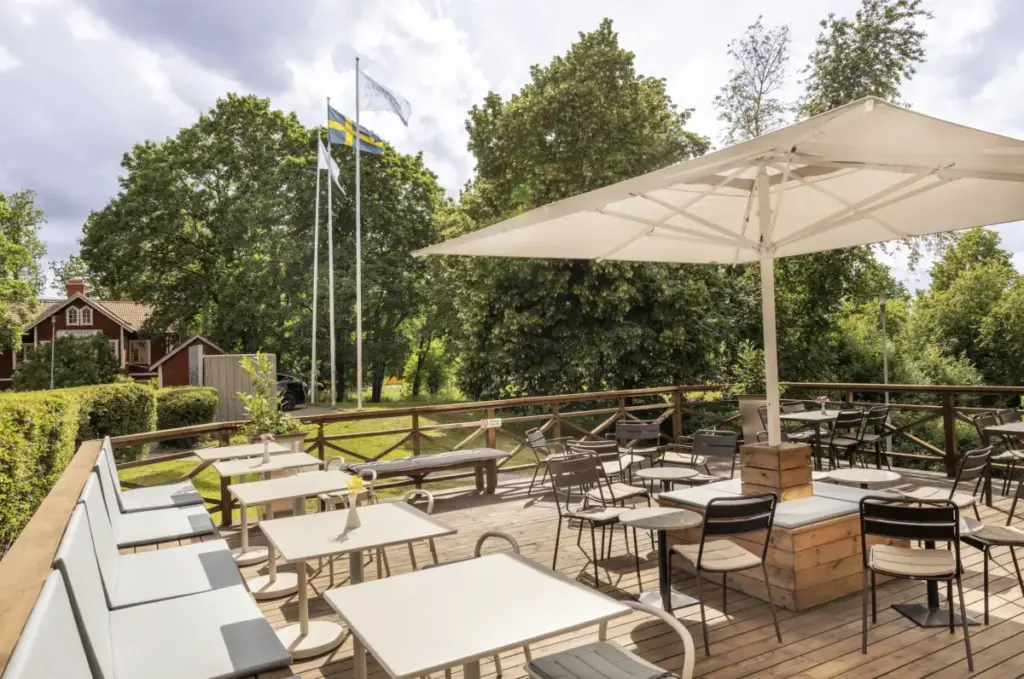
Situated near Stockholm-Arlanda Airport, this property serves as a vital transit hub for international travelers. Airport hotels operate on unique schedules, with high guest turnover and round-the-clock check-ins that demand constant climate control and lighting. The inclusion of the Radisson Blu Arlandia Hotel—featuring its popular Bar Terrace—into the verified net-zero portfolio proves that even the demanding logistics of airport hospitality can be successfully aligned with strict environmental standards.
Scaling to 100: Radisson’s Roadmap and the Path to 2030
With nine properties now verified under the scheme, Radisson has achieved nearly 10% of its target to establish 100 net-zero hotels by 2030. While the journey ahead remains steep, the group is using a structured, phased approach to scale the initiative.
Radisson's Net-Zero Progression
[ 2026: 9 Verified Hotels ]  --->  [ 2030 Target: 100 Verified Hotels ]
          ^                                     ^
   Current Milestone                    Scale-Up Phase:
   (Focus on Nordics &             Expanding to grid-challenged
    legacy retrofits)               markets & global regions
To accelerate progress, Radisson is focusing on several strategic pillars:
- Operational Standardization: Creating a standardized toolkit for hotel owners and general managers that outlines the exact steps required to transition a property to net-zero operations.
- Green Finance Alignment: Helping property owners access green bonds and sustainability-linked loans to fund the upfront capital expenditure required for deep energy retrofits.
- Owner Engagement: Since many Radisson properties operate under franchise or management agreements, convincing third-party property owners of the long-term financial benefits of decarbonization is critical. Reduced utility bills, compliance with tightening local carbon regulations, and increased demand from corporate clients are key selling points.
Meeting the Demands of Corporate Travel and Conscious Consumers
The business case for verified net-zero hotels is increasingly driven by commercial demand. Globally, corporate travel departments are under immense pressure to reduce their Scope 3 emissions—which include the emissions generated by employees staying in hotels during business trips.
Many multinational corporations have established strict science-based targets (SBTi) and are actively auditing their supply chains. Corporate travel buyers are increasingly prioritizing hotel brands that can provide transparent, third-party verified data regarding their environmental impact. By offering "Verified Net Zero" accommodations, Radisson positions itself as a preferred partner for corporate accounts looking to green their travel portfolios.
Furthermore, leisure travelers are showing a growing preference for sustainable tourism. However, as consumers become more aware of "greenwashing," generic claims of eco-friendliness are losing their efficacy. Independent verification, such as the auditing process used in Radisson’s scheme, provides the transparency and credibility that modern consumers demand.
By proving that even 40-year-old properties can meet these rigorous standards, Radisson is challenging the hospitality industry to rethink what is possible, demonstrating that the path to a sustainable future lies not just in what we build tomorrow, but in how we transform what we operate today.