







Executive Overview
The transcontinental corridor connecting Boston Logan International Airport (BOS) and Los Angeles International Airport (LAX) remains one of the most vital, highly contested, and economically significant domestic aviation routes in the United States. Spanning roughly 2,600 miles, this premier trunk route links two major hubs of commerce, education, and culture, attracting a constant stream of business executives, leisure travelers, and students alike.
In the hyper-competitive landscape of contemporary commercial aviation, airlines continuously calibrate their yield management systems to optimize revenue across varying segments of demand. A recent fare development on this route highlights the complex architecture of modern airline pricing: a regular economy round-trip or one-way structure priced at $397, juxtaposed against a steeply discounted basic economy offering priced at $287.
This pricing divergence is far more than a simple numerical markdown; it represents a fundamental shift in how legacy and network carriers market product utility. By unbundling traditional air travel amenities—such as advance seat selection, full-sized carry-on baggage allowances, and frequent flyer mileage accrual—carriers like United Airlines have transformed the baseline economy ticket into a highly modular, a la carte service.
For the modern traveler, navigating these fare differentials requires a sophisticated understanding of total trip costs. While a $287 basic economy ticket may initially appear to be a compelling bargain, ancillary fees for checked or overhead luggage, randomized seating assignments, and the forfeiture of loyalty program benefits can rapidly erode apparent savings. This report provides an exhaustive examination of current Boston-to-Los Angeles airfares, a detailed breakdown of fare class mechanics, strategies for booking optimal itineraries, and an authoritative assessment of how unbundled pricing models continue to reshape the domestic travel marketplace.
Detailed Chronology: The Evolution of Transcontinental Yield Management
To fully comprehend the mechanics behind the current $397 regular economy and $287 basic economy offerings between Boston and Los Angeles, one must examine the evolutionary arc of domestic airline pricing over the past two decades.

The Shift Toward Modular Pricing
Historically, domestic economy airfares functioned as an all-inclusive product. Passengers purchased a seat, checked up to two bags free of charge, brought a full-sized carry-on aboard, selected their preferred seating location months in advance, and earned redeemable miles and elite-qualifying credits regardless of the ticket tier. However, the rise of ultra-low-cost carriers (ULCCs) such as Spirit Airlines and Frontier Airlines forced legacy network carriers—including United, Delta, and American Airlines—to fundamentally restructure their inventory models.
To compete effectively against low-cost entrants without entirely sacrificing high-yield business traffic, legacy carriers introduced "Basic Economy." Initially rolled out as a defensive measure on select short-haul and highly contested domestic routes, basic economy has since matured into a permanent, pervasive fixture of airline distribution strategies. On transcontinental journeys like BOS-LAX, where operating costs are higher due to stage length and aircraft utilization requirements, the tension between maximizing yield and capturing price-sensitive leisure demand is particularly acute.
The Anatomy of the Current Fare Structure
In the current pricing environment for the Boston–Los Angeles market, airlines are deploying a dual-track pricing strategy:
- The Standard Economy Fare ($397): Positioned as the baseline traditional product, this fare tier provides the traveler with comprehensive peace of mind. It includes a guaranteed normal-sized carry-on bag for the overhead bin, a personal item to place under the seat ahead, the ability to select advance seat assignments during or immediately after the booking process, and standard mileage accrual for loyalty program participants.
- The Basic Economy Fare ($287): Designed explicitly for the ultra-price-sensitive consumer traveling light, this tier offers a $110 nominal discount relative to the standard fare. However, it strips away foundational flexibilities. Seat assignments are entirely automated and randomized by the airline’s reservation system during the check-in window, dramatically increasing the likelihood of middle-seat placement or party separation. Furthermore, overhead bin access for standard roll-aboard luggage is severely restricted unless specific waiver criteria are met.
This chronological shift toward hyper-segmented pricing has fundamentally altered consumer behavior. Travelers are no longer merely buying a seat from point A to point B; they are purchasing a bundle of specific privileges, each carrying an explicitly calculated marginal cost.
Supporting Context & Metrics: Unbundling, Ancillary Fees, and Loyalty Mechanics
Analyzing the true cost of a transcontinental flight requires peeling back the layers of airline ancillary fee structures. The $110 price gap between the standard economy fare and the basic economy fare on the Boston-to-Los Angeles route serves as a classic case study in risk management and consumer psychology.

The True Cost of Basic Economy
When evaluating a $287 basic economy ticket on United Airlines or competing network carriers, passengers must account for a series of potential hidden expenses and operational constraints:
- Carry-On Baggage Penalties: Under basic economy rules, passengers are restricted to a single personal item that must fit entirely under the seat in the front. If a traveler brings a standard-sized roller bag to the boarding gate without prior authorization, the airline enforces a strict $50 fee each way, compounded by applicable gate-check fees. For a round-trip journey, unexpected baggage penalties total $100 or more, entirely erasing the $110 initial savings of the basic economy fare.
- Exceptions to the Rule: Airlines mitigate backlash from their most loyal customers by exempting certain cohorts from basic economy restrictions. Passengers who hold elite status within the airline’s frequent flyer program or those who maintain co-branded credit cards (such as an authorized United co-branded card) are routinely granted waivers. These cardholders and elites retain their standard carry-on allowances and frequently receive relaxed boarding group priorities, blurring the lines between fare classes for loyalists while penalizing casual or infrequent flyers.
- The Seat Assignment Lottery: For families, couples, or business colleagues traveling together on a basic economy ticket, the lack of advance seat assignment introduces substantial anxiety. Because seats are assigned via automated algorithms at check-in, groups are frequently scattered across the cabin. Securing an adjacent seat after the fact often requires purchasing paid seat upgrades that match or exceed the price of upgrading to a standard economy ticket outright.
- Mileage and Elite Qualification Forfeiture: Perhaps the most significant long-term cost for frequent travelers is the forfeiture of mileage earning and Elite Qualifying Dollars (EQDs). Basic economy tickets on many network carriers either earn zero redeemable miles or are heavily discounted at fractional earning rates, and they frequently contribute nothing toward elite status qualification unless tied to specific co-branded credit card spend thresholds. For a high-mileage traveler, the loss of status-qualifying metrics can cost hundreds or thousands of dollars in lost future benefits.
Strategic Booking and Market Intelligence
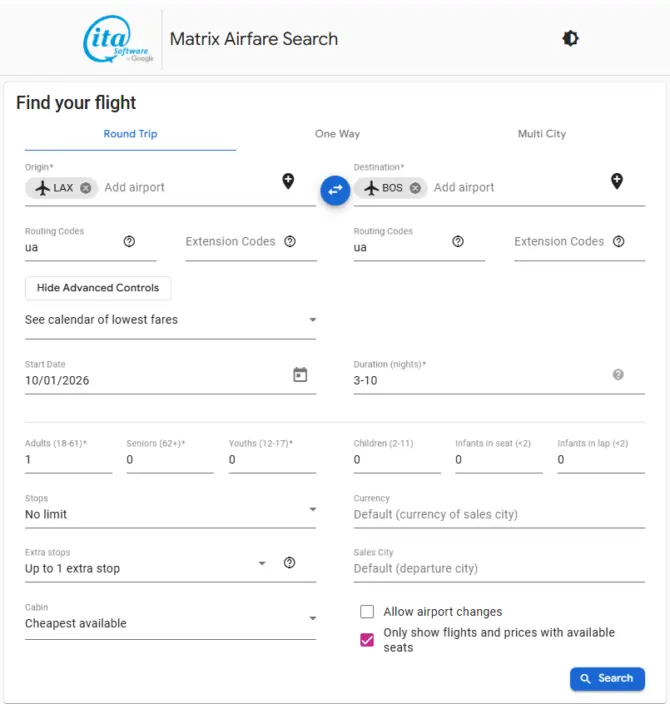
For travelers seeking to secure optimal pricing on competitive routes like BOS-LAX, relying solely on public search engines can result in missed opportunities. Sophisticated flyers utilize specialized flight-deal notification services to track fare drops in real-time. Platforms like The Flight Deal emphasize the importance of speed in modern booking environments, noting that high-value economy errors or promotional fare drops often vanish within hours of publication.
Subscription-based alert models—ranging from low-cost real-time economy newsletters to specialized premium feeds tracking Business, First, and Premium Economy inventory—illustrate the growing demand for data transparency in an increasingly opaque pricing ecosystem. By receiving alerts minutes or hours before deals are indexed by mainstream search aggregators, consumers can lock in standard economy fares before inventory buckets are exhausted.
Official Statements and Industry Perspectives
Airline executives, consumer advocacy groups, and aviation economists hold sharply contrasting views regarding the proliferation of unbundled basic economy fares.
Industry representatives from major legacy carriers defend the practice as a triumph of consumer choice and market efficiency. Speaking at industry conferences, network planning executives have consistently argued that basic economy allows airlines to effectively compete with low-cost carriers while maintaining the structural integrity of their core premium and standard economy products. From the airline’s perspective, travelers who do not value services like seat selection or overhead bin space should not be forced to subsidize those amenities for other passengers. By lowering the entry-level price point, carriers stimulate incremental demand from leisure travelers who might otherwise not have taken the trip.

Conversely, consumer advocacy organizations and travel regulatory bodies view basic economy pricing through a more critical lens. Critics frequently characterize unbundled pricing as "drip pricing" or deceptive marketing, arguing that the true cost of travel is obscured by artificially low headline fares. Consumer advocates point out that less-experienced travelers are often trapped by unexpected baggage fees at the departure gate, leading to a frustrating travel experience and strained customer relations. Furthermore, regulatory scrutiny regarding ancillary fee transparency has intensified in recent jurisdictions, with transport departments globally pushing for mandatory upfront disclosure of all mandatory and baggage-related fees prior to initial fare display.
Aviation economists note that basic economy serves as a sophisticated price-discrimination tool. By erecting artificial service barriers—such as the prohibition of advance seat assignments and overhead bag restrictions—airlines can successfully separate business travelers (who are time-sensitive, willing to pay for flexibility, and whose tickets are typically corporate-funded) from leisure travelers (who are price-sensitive and willing to tolerate inconvenience to save money). This precise market segmentation maximizes total revenue per available seat mile (RASM) across high-density transcontinental corridors.
Future Outlook: The Trajectory of Transcontinental Air Travel
As the aviation industry looks toward the future, several macro trends are poised to reshape the dynamics of routes like Boston to Los Angeles.
Fleet Modernization and Cabin Configuration
Airlines are investing heavily in narrowbody aircraft capable of operating transcontinental routes efficiently, such as the Airbus A321neo and Boeing 737 MAX families. These planes often feature highly dense cabin configurations outfitted with multiple tiers of service: Mint or First Class lie-flat suites, Premium Economy recliners, standard Economy, and Basic Economy sections. As cabin segmentation deepens, the physical differences between fare classes will become even more pronounced. Premium Economy, in particular, is experiencing explosive growth, capturing passengers who are willing to pay a moderate premium over standard economy for enhanced legroom and elevated dining, but who recoil at the prohibitive costs of domestic First Class.
The Convergence of Ancillary Services
In the coming years, industry analysts predict that unbundling will extend beyond basic economy into other aspects of the travel experience. Everything from expedited security screening access to priority boarding lanes and onboard Wi-Fi bandwidth is increasingly being integrated into dynamic, personalized a la carte menus. For travelers on long-haul domestic routes like BOS-LAX, this means the traditional concept of a "ticket" will continue to dissolve into a highly customizable digital itinerary.

Recommendations for the Transcontinental Traveler
Navigating this complex marketplace requires a disciplined, analytical approach:
- Calculate Total Trip Cost: Never evaluate a basic economy fare solely on its base price. Factor in the cost of checked bags, carry-on compliance risks, seat selection fees, and the lost value of frequent flyer mileage.
- Assess Flexibility Needs: If travel plans are rigid or if traveling with family members, the false economy of a basic economy ticket can quickly backfire. Investing in a standard economy fare ($397 in the case of the recent BOS-LAX market offering) frequently provides superior financial protection and peace of mind.
- Leverage Loyalty Infrastructure: Maintaining co-branded credit cards or mid-to-high-tier elite status remains the single most effective hedge against unbundled airline fees, neutralizing basic economy penalties while preserving overall travel comfort.
Ultimately, while the proliferation of complex fare classes introduces cognitive overhead for consumers, it also rewards the informed traveler. By understanding the precise rules governing each ticket tier, passengers can master the economics of modern aviation and secure exceptional value across America’s premier transcontinental skies.