








Executive Overview
For millions of travelers, the azure waters, sun-drenched beaches, and vibrant cultures of the Caribbean and the Bahamas represent the ultimate vacation escape. However, orchestrating the quintessential tropical cruise requires a delicate balance of timing, destination selection, and financial strategy. Amidst fluctuating global travel markets, shifting fuel costs, and varying seasonal demands, securing the best possible value for a cruise vacation has historically felt like navigating uncharted waters.
Fortunately, extensive empirical research has demystified the pricing mechanics of the cruise industry. A comprehensive data analysis—spanning actual pricing metrics from 26 major cruise lines, 144 distinct cruise ships, and over 7,500 individual sailings across the Caribbean and the Bahamas—offers unprecedented insight into the financial rhythms of the cruise market.
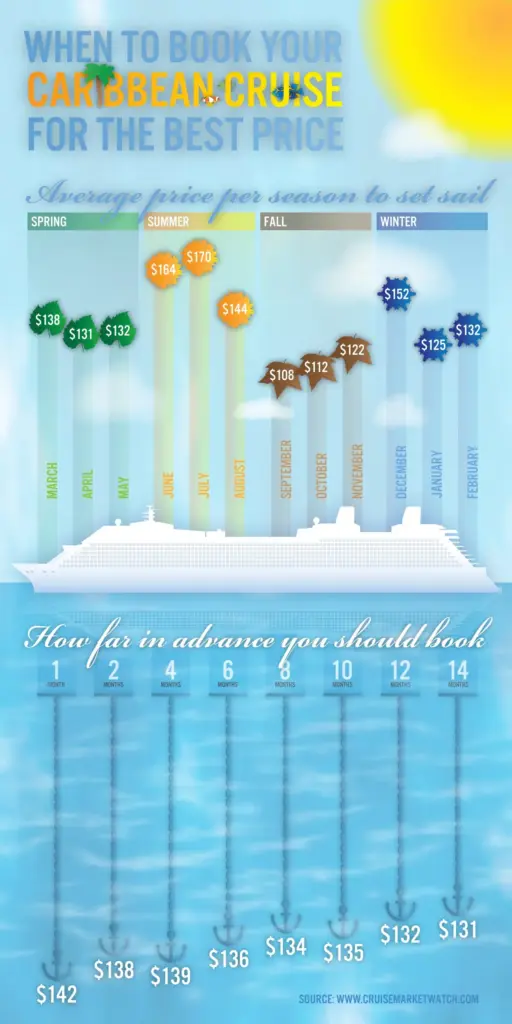
Unlike other global itineraries, such as European voyages where last-minute deals frequently yield steep discounts, Caribbean cruise pricing operates on a distinctly different trajectory. The data reveals a definitive rule for savvy travelers: early planning is not merely a recommendation; it is a vital financial strategy. Caribbean cruises consistently grow more expensive each month as the departure date approaches. Consequently, booking well in advance yields the lowest per-person, per-day rates, rewarding proactive planners with substantial savings.
This exhaustive guide explores the nuances of cruise market pricing, leveraging historical pricing models to provide a strategic framework for your next tropical voyage. By understanding the interplay between booking windows, seasonal variations, and ship segmentation, travelers can transform complex pricing data into actionable savings.
Detailed Chronology: The Evolution of Caribbean Cruise Pricing Windows
To fully grasp how and when to secure the best deal on a Caribbean voyage, one must examine the chronological progression of cruise ticket pricing. The pricing lifecycle of a cruise ship cabin is a dynamic mechanism managed by sophisticated revenue management systems. These systems continuously adjust fares based on supply, demand, historical booking curves, and inventory velocity.
The Early Bird Advantage: 9 to 18 Months Out
In the ecosystem of Caribbean cruising, the pricing timeline begins nearly a year and a half before departure. Historical pricing data indicates that the absolute lowest price points—measured in weighted average cost per person, per day across all cabin categories—are secured when travelers book well in advance.
During this initial booking window (typically 9 to 18 months prior to sail date), cruise lines are eager to establish a baseline inventory and stimulate initial cash flow. To achieve this, lines release inaugural itineraries with introductory pricing tiers and lucrative promotional incentives, such as complimentary onboard credit, free gratuities, or reduced deposit requirements. For the consumer, entering the market during this foundational phase guarantees access to the widest selection of staterooms—from coveted aft-facing balconies to mid-ship suites—at the most advantageous baseline rate.
The Mid-Term Plateau: 3 to 8 Months Out
As the departure date draws closer and inventory begins to deplete naturally, revenue management systems initiate the first wave of price adjustments. Between eight and three months before departure, the data shows a steady, incremental rise in per-diem costs.
During this mid-term window, promotional perks often diminish, and baseline fares creep upward to reflect the shrinking pool of available cabins. While travelers booking in this window can still secure decent availability for specific itineraries, they forfeit the deep discounts associated with early-bird booking. Furthermore, highly sought-after cabin categories—particularly single-occupancy staterooms, family-connecting rooms, and luxury suites—are frequently sold out by this stage.
The Late-Stage Surge: 0 to 2 Months Out
Perhaps the most critical finding for prospective cruisers is the behavior of late-stage pricing. In industries such as aviation, hospitality, and European river or ocean cruising, "last-minute" deals are legendary. Travelers often wait until a few weeks before departure in hopes that cruise lines will slash prices to fill empty cabins.
However, the empirical data for the Caribbean and Bahamas market decisively shatters this myth. Unlike its European counterpart—where inventory stagnation can trigger aggressive price drops in the final weeks—Caribbean cruises become progressively more expensive the closer the departure date gets.
As the final payment deadlines pass (typically 75 to 120 days before sailing) and remaining inventory dwindles, cruise lines leverage the high demand for tropical destinations to command premium rates. Desperate travelers attempting a last-minute escape are met with inflated per-diem costs, limited cabin choices, and diminished promotional incentives. The takeaway is unequivocal: waiting until the final weeks to book a Caribbean cruise incurs a severe financial penalty.
Supporting Context & Metrics: Decoding the Data
To substantiate these findings, it is essential to examine the underlying metrics and contextualize how cruise pricing functions on a micro and macro economic level.
The Methodology Behind the Data
The insights presented in this guide are derived from a comprehensive dataset compiled by Cruise Market Watch, tracking actualized pricing structures across a broad spectrum of the industry. The parameters of the underlying study include:
- Duration & Scope: Realized pricing data collected over a multi-year period (specifically tracking high-volume operations from September 1, 2010, through November 30, 2013).
- Fleet Representation: 26 distinct cruise lines, encompassing contemporary, premium, and luxury segments.
- Vessel Volume: 144 individual cruise ships operating regularly in the Caribbean and Bahamian basins.
- Sample Size: Over 7,500 distinct sailings, ensuring statistical significance and eliminating anomalies caused by isolated promotional events or localized market disruptions.
- Metric Standard: Total weighted average price calculated on a per-person, per-day (PPPD) basis, encompassing all cabin categories (interior, oceanview, balcony, and suites).
The Contrast: Caribbean vs. European Pricing Models
Understanding why Caribbean cruises behave differently from European itineraries requires analyzing the underlying consumer behavior and operational logistics of the respective regions.
European cruises—encompassing the Mediterranean, the Baltic, and the Norwegian Fjords—frequently rely on international air travel. Because transatlantic flights can be cost-prohibitive and subject to sudden price spikes, European cruise bookings often experience periods of stagnation. When European sailings fail to meet occupancy forecasts closer to the departure date, cruise lines routinely introduce steep last-minute discounts to stimulate demand from regional travelers or those willing to book dynamic flight packages.
Conversely, the Caribbean and Bahamas market benefits from geographical proximity to the United States, the world’s largest source market for cruise passengers. With numerous accessible embarkation ports situated along the Gulf and Atlantic coasts of Florida, Texas, Louisiana, and Georgia, millions of travelers can drive to port or secure short-haul, competitively priced domestic flights. This structural advantage sustains high, consistent demand for Caribbean itineraries year-round, eliminating the necessity for lines to discount inventory at the eleventh hour.
Categorizing Your Cruise: Beyond the Base Fare
While timing represents the foundational pillar of securing the best deal, a truly optimized booking strategy incorporates a multi-tiered decision-making framework. Once the optimal booking window has been identified, travelers must navigate three additional variables:
- Destination Specifics: The Caribbean is vast, stretching from the Western Caribbean (Cozumel, Belize, Roatan) to the Eastern Caribbean (St. Thomas, St. Maarten, San Juan) and the Southern Caribbean (Aruba, Curaçao, Barbados). Each sub-region experiences distinct weather patterns and seasonal demand spikes that subtly influence pricing.
- Cruise Duration: Short itineraries (3 to 4 nights to the Bahamas or Western Caribbean) cater heavily to weekend travelers and tend to have higher per-diem rates due to intensive turnaround logistics. Conversely, 7-night and 14-night voyages often offer superior per-diem value, spreading fixed operational overhead across a longer duration.
- Ship Segmentation: The cruise industry is sharply segmented into contemporary (mass-market lines focusing on entertainment, family activities, and scale), premium (upscale amenities, enriched enrichment programs, and sophisticated dining), and luxury (all-inclusive experiences, high crew-to-guest ratios, and intimate vessels). Knowing how to time your booking applies universally, but the baseline cost will inherently align with your chosen ship segment.
Official Industry Statements & Expert Perspectives
To gain a deeper appreciation of the revenue management principles governing the cruise sector, industry executives and maritime market analysts frequently emphasize the science of predictability and capacity management.
According to senior revenue management strategists within major cruise holdings, contemporary cruise pricing is entirely data-driven, utilizing automated algorithms that monitor market demand in real-time. "The days of unpredictable discounting and arbitrary price slashing are largely behind us," notes an industry logistics analyst. "Cruise lines have refined their yield management models to maximize revenue per available passenger cabin day (APCD). Because the Caribbean remains our bread-and-butter market with predictable, high-volume consumer interest, the pricing curve is naturally upward-sloping. As inventory decreases, the perceived value—and therefore the price—rises accordingly."
Furthermore, travel consumer advocates and cruise industry journalists consistently reinforce the dangers of the last-minute booking myth in the Caribbean. Leading consumer travel publications regularly advise readers that while flash sales can occasionally occur for shoulder-season repositioning cruises, standard Caribbean itineraries reward early commitment.
"Travelers who wait for a last-minute bargain in the Caribbean are almost always disappointed," states a prominent cruise industry commentator. "Not only do they pay higher per-diem rates, but they also compromise on stateroom location, miss out on preferred dining times, and face inflated airfare costs for last-minute flights to Florida ports."
Cruise line executives also point to the evolution of ancillary spending as a reason base fares remain firm. With modern mega-ships featuring specialized specialty restaurants, expansive spas, private island destinations (such as CocoCay or Castaway Cay), and extensive beverage packages, early booking allows consumers to allocate their total vacation budget more effectively across both the base ticket and onboard experiences.
Future Outlook: Navigating the Next Decade of Cruise Travel
As the global travel and leisure industry continues to evolve, the dynamics of cruise pricing will inevitably face new pressures and technological transformations. Looking ahead over the next decade, several key trends will shape how travelers secure the best value for their Caribbean cruise vacations.
The Rise of Artificial Intelligence in Revenue Management
Cruise lines are increasingly integrating artificial intelligence and machine learning into their pricing architectures. These advanced systems analyze broader economic indicators—including consumer confidence indices, fuel futures, historical booking velocity, and even weather patterns—to predict demand with pinpoint accuracy. For the consumer, this means that pricing curves will become even more rigid. Automated systems will identify high-demand sailings months in advance and adjust prices instantaneously, making early planning more critical than ever. As algorithms become more adept at preventing under-pricing, the likelihood of finding unexpected last-minute discounts will approach zero.
Fleet Expansion and New Destination Infrastructures
The coming years will see dozens of new, highly anticipated mega-ships and expedition-style vessels enter service across major contemporary and premium lines. Concurrently, cruise lines are investing heavily in exclusive private destinations throughout the Caribbean and Bahamas. These private island and resort developments create localized spikes in demand for specific itineraries. As cruise lines curate more immersive, controlled onshore experiences, demand for these routes will intensify, further reinforcing the necessity of securing bookings well before the 9-month window closes.
Sustainable Tourism and Capacity Management
Environmental regulations and port capacity limitations are also reshaping the Caribbean cruise landscape. Ports of call throughout the region are increasingly implementing caps on daily cruise passenger arrivals to combat over-tourism and preserve local ecosystems. As ship capacities are artificially regulated by port authorities, overall supply to certain high-demand islands will tighten. This regulatory constraint on inventory will place upward pressure on ticket prices, making early booking the ultimate defense against inflationary pricing in the cruise sector.
Strategic Recommendations for the Modern Cruiser
Synthesizing historical data, current market realities, and future projections, the modern traveler can adopt a foolproof methodology for booking their next Caribbean voyage:
- Commit Early: Initiate your search and finalize your booking between 9 and 18 months in advance. This secures the lowest weighted average per-diem price and grants unfettered access to premier stateroom categories.
- Monitor Seasonal Variations: Align your travel dates with your financial and experiential goals, keeping in mind that shoulder seasons (such as late spring and early autumn, excluding major holiday weeks) offer attractive entry points, provided you still adhere to the early booking rule.
- Utilize Professional Expertise: Leverage specialized cruise travel advisors who have direct access to historical pricing databases, unadvertised group space promotions, and comprehensive cancellation policy insights.
- Disregard the Last-Minute Myth: Recognize that Caribbean pricing fundamentally diverges from European models. Never gamble on a last-minute price drop for a tropical itinerary; doing so guarantees higher costs and compromised options.
By embracing a disciplined, data-backed approach to vacation planning, travelers can unlock unparalleled value, ensuring that their dream Caribbean cruise is as financially sound as it is breathtaking.