Planning a milestone celebration in Ibiza or an executive offsite in Mallorca is an intricate logistical balancing act. It is, in essence, two distinct operational responsibilities disguised as a single holiday: securing a breathtaking accommodation and orchestrating an immaculate, clockwork-precision operation once the group arrives. While the visual appeal of a luxury villa often commands the entirety of the planner’s attention, the real friction lies in the periphery—managing staggered airport transfers, curating bespoke dining experiences, and keeping twenty distinct personalities synchronized across different schedules.
For years, the standard vacation rental market has relied on anonymous booking platforms. These intermediaries hand over a set of keys, wish the host good luck, and vanish behind offshore call centres when operational failures arise. However, industry leaders like Privadia—a premier Balearic luxury villa supplier boasting over a decade of direct-to-owner partnerships—are rewriting the playbook. By combining rigorously vetted, exclusively contracted properties with hands-on, localized concierge teams, high-end travel providers are bridging the chasm between a gorgeous house and a flawless, stress-free event.
Detailed Chronology: The Evolution of Group Travel in the Balearic Islands
To understand the current state of luxury group rentals in Ibiza and Mallorca, one must examine how the market has evolved over the past decade.
Phase One: The Rise of the Anonymous Marketplace (Early 2010s)
In the early days of online vacation rentals, platforms promised democratized access to sun-drenched estates. Consumers could browse thousands of properties globally, trusting user-generated photographs and vague textual descriptions. For individual families, this decentralized model worked well enough. However, as the demand for large-group gatherings—such as 50th birthdays, family reunions, and corporate retreats—surged, the cracks in the anonymous broker model began to show. Planners discovered that a digital marketplace could not guarantee acoustic privacy, accurate topography, or functional amenities for large parties.
Phase Two: The Direct-Contract Revolution (Mid-to-Late 2010s)
Recognizing the inherent vulnerabilities of third-party aggregators, forward-thinking operators shifted toward direct-to-owner contracts. Rather than listing every available property on the internet, companies began hand-selecting estates, walking through them in person, and establishing direct legal and operational relationships with the property owners. This eliminated double-bookings, eradicated misleading marketing, and ensured that properties met uncompromising architectural and spatial standards.
Today, the luxury travel sector demands far more than four walls and a pool. Modern group planners require end-to-end event production, frictionless arrivals, localized security, and bespoke culinary programming. The contemporary paradigm—championed by firms operating across Ibiza, Mallorca, Mykonos, and Kalkan—fuses high-end real estate curation with hyper-localized hospitality management. The focus has decisively shifted from merely renting a home to hosting an unforgettable, fully supported experience.
Supporting Context & Metrics: The Hidden Complexities of Large-Group Travel
Organizing a collective escape for fifteen to thirty individuals involves complex variables that rarely register during the initial booking phase. Industry data highlights several critical pressure points in group travel logistics:
Staggered Arrival Windows: In a group of twenty travellers, it is statistically rare for more than four people to land on the same flight. Managing disparate arrival times across multiple terminals without leaving guests stranded in airport taxi queues requires dedicated transportation infrastructure.
Spatial Dynamics & Privacy Fatigue: Sociological studies on group dynamics indicate that sustained proximity without spatial relief triggers interpersonal friction by day four. Single, monolithic mega-villas often lack micro-environments for quiet retreat, whereas clustered estate models successfully mitigate cabin fever.
The "Distance-to-Amenity" Discrepancy: Digital listings frequently misrepresent geographic realities. A property marketed as a "five-minute walk to the beach" often translates to a deceptively steep incline on the return journey—a significant hurdle for multi-generational groups or corporate attendees looking to unwind.
The Twin-Villa Estate Model: A Case Study in Spatial Architecture
Addressing spatial fatigue requires innovative architectural configurations. Traditional luxury hotels scatter attendees down endless, anonymous corridors, completely destroying the communal spirit of a retreat. Conversely, packing twenty people into a single open-plan villa strips away essential personal privacy.
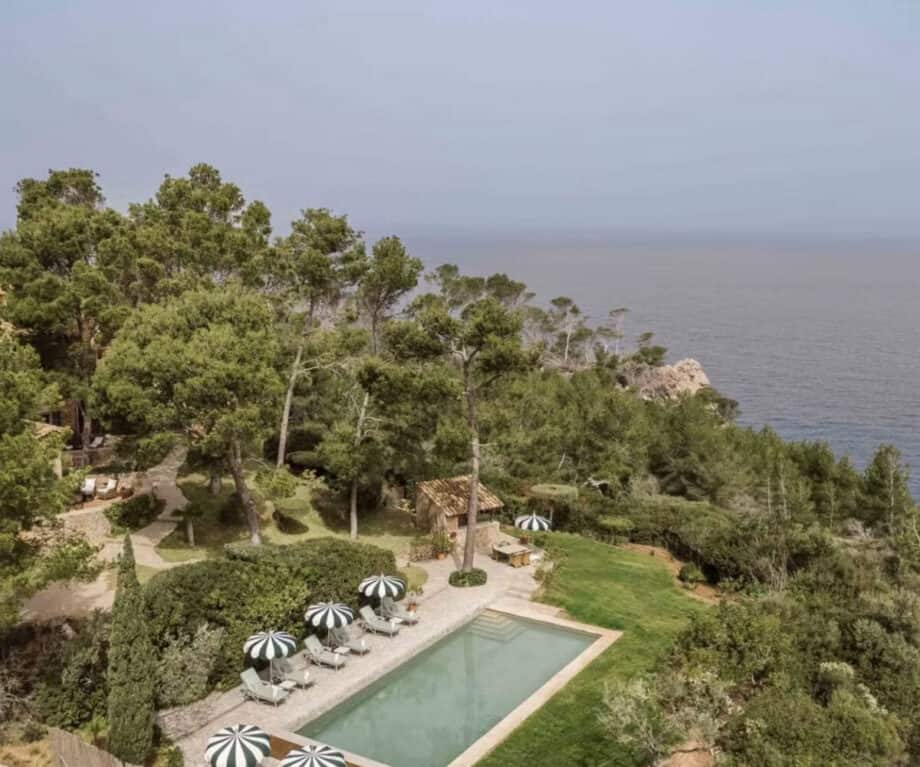
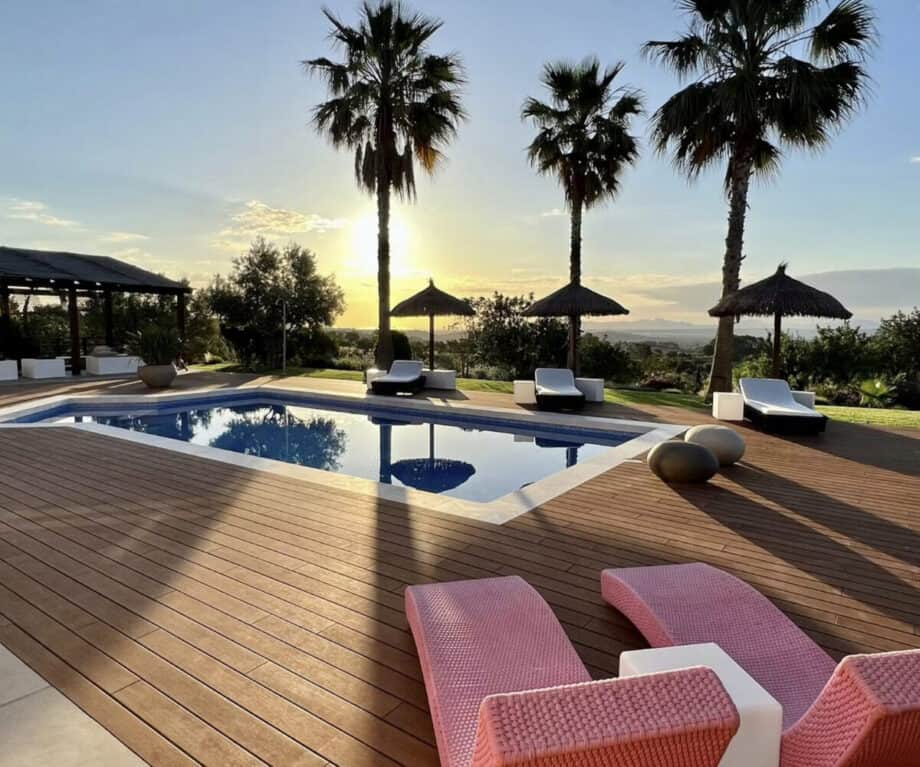
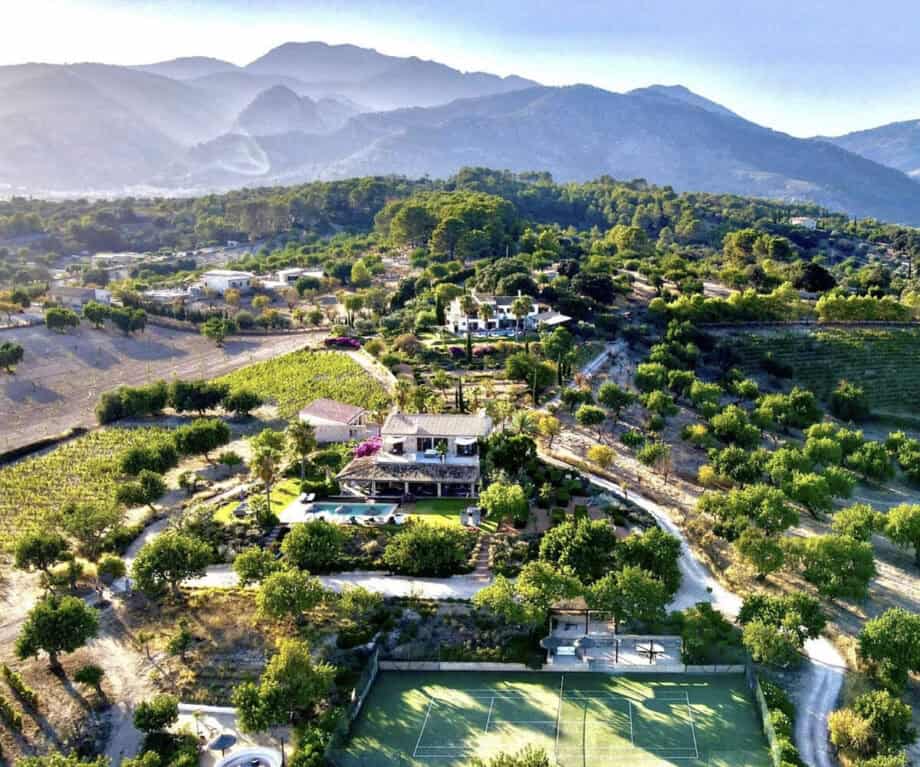
The industry solution gaining the most traction is the neighboring-villa cluster. A prime example of this layout is the Can Goyo and Can Gabriela twin-villa estate situated near Moscari in rural Mallorca. Featuring ten collective bedrooms and accommodating up to twenty guests across two distinct, side-by-side residences, this configuration achieves an ideal balance:
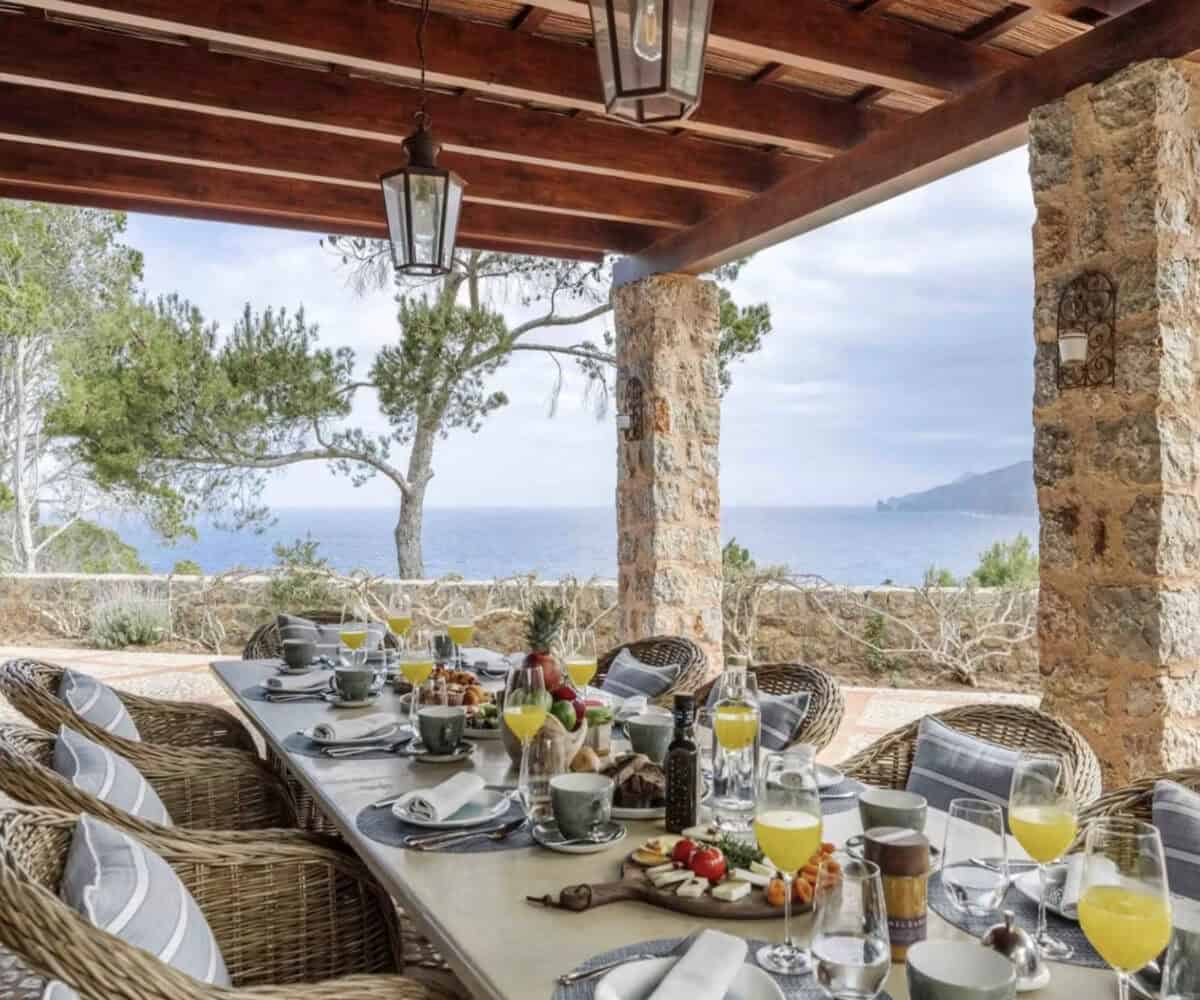
Communal Integration: Centralized dining areas, expansive outdoor terraces, and shared pool decks provide ample room for collaborative workshops, celebratory banquets, and unhurried evening socializing.
Sanctuary and Solitude: When the evening winds down, guests retreat to their own independent quarters. Colleagues do not share thin interior walls, and extended family members retain their personal boundaries.
Scalability: When group sizes expand beyond twenty, operators can seamlessly integrate adjacent estates, scaling the footprint of the event without fracturing the party across distant corners of the island.
Official Industry Perspectives and Operational Philosophy
To maintain the highest standards of hospitality, leading operators reject the remote, transactional nature of mass-market platforms. Stuart Glen, Founder of Privadia, underscores the philosophy driving direct-model luxury rentals:
"A milestone birthday in Ibiza or a company offsite in Mallorca is really two jobs wearing one coat. You need somewhere beautiful for everyone to stay, and you need the whole thing to actually run once they arrive. The villa is the part people focus on, and honestly it is the easy part. The hard part is everything around it, the transfers and the meals and the twenty-odd people who all need collecting from the airport at different times of day."
Glen emphasizes that eliminating middlemen is non-negotiable for maintaining quality control:
"Every property has been walked through in person by someone on our team, so what you book is what you arrive to. No anonymous broker sits in the middle relaying messages, and there is no guessing about whether the description was honest. If something needs sorting, the person sorting it is on the island rather than in a call centre in another country."
The Infrastructure of Hospitality: On-the-Ground Execution
Transforming a luxury rental into a fully realized, frictionless event requires a specialized local team. The operational responsibilities managed by ground teams typically include:
Chauffeured Arrivals: Orchestrating multi-vehicle transit fleets to greet guests individually as they emerge from different flights, bypassing public taxi queues entirely.
Discreet Security Protocols: Arranging professional, low-profile protective details for high-profile public figures, corporate executives, or high-net-worth families seeking absolute privacy.
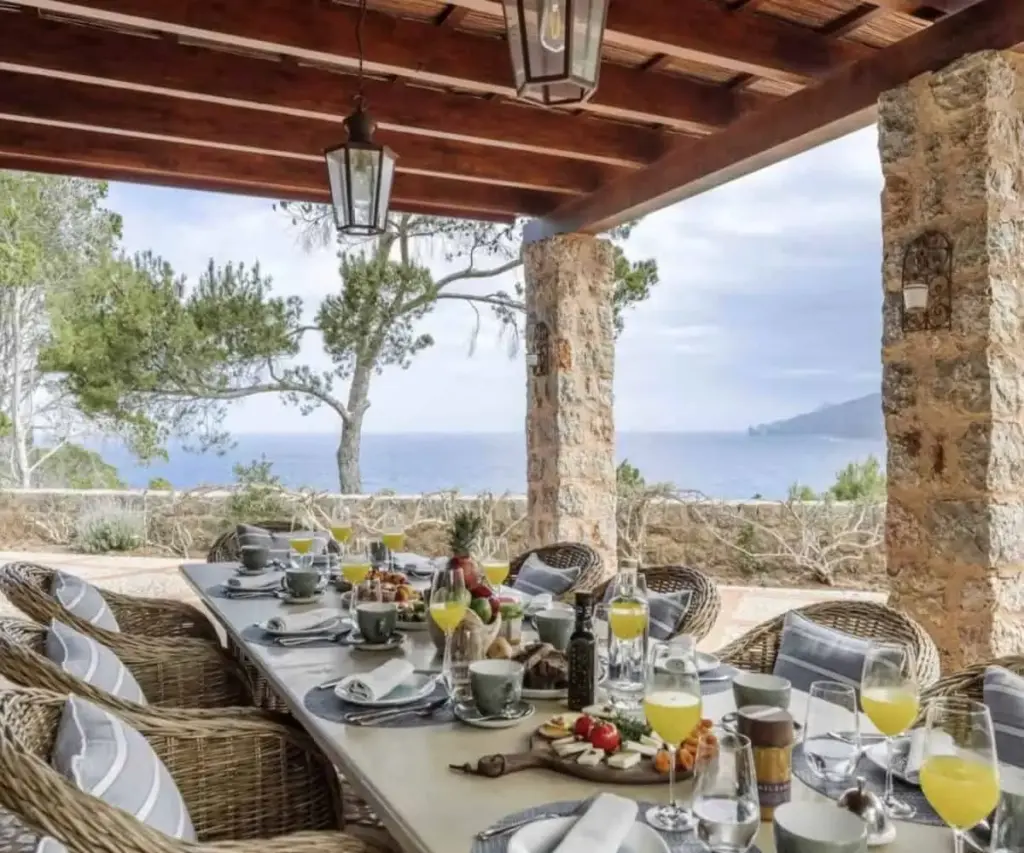
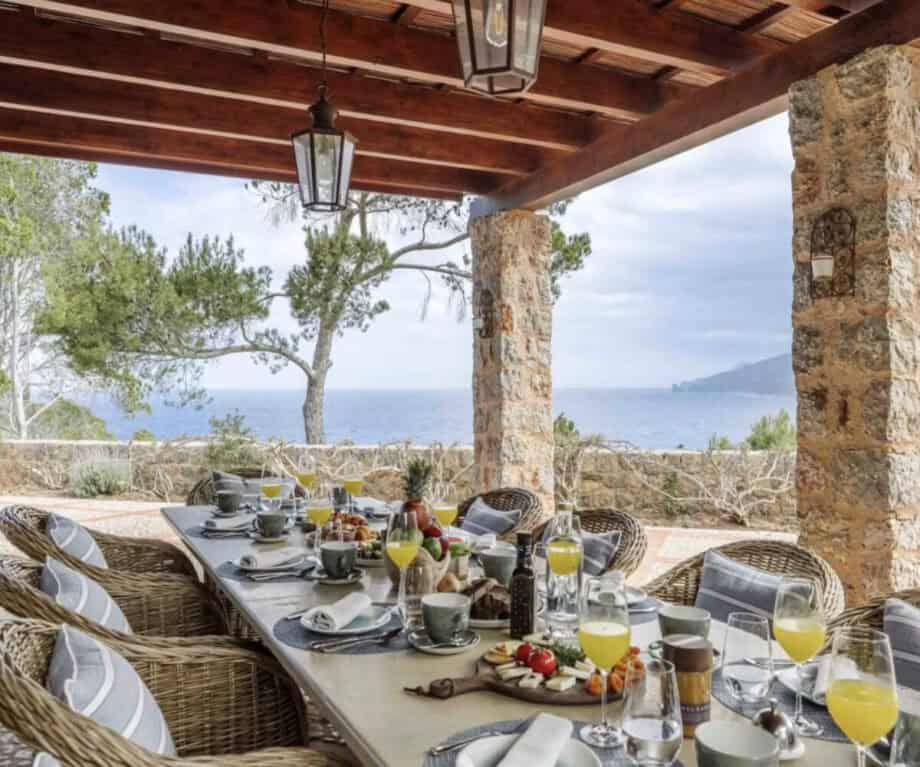
Bespoke Culinary Programming: Engaging resident private chefs to design hyper-localized menus sourced from regional Balearic markets. From casual poolside lunches to formal multi-course birthday galas, the dining experience is tailored entirely to the group’s precise schedule.
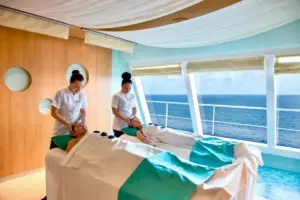
Wellness & Recreation: Coordinating sunrise yoga sessions on the terrace, in-villa massages, or private yacht charters for coastal excursions without requiring the client to navigate local vendor negotiations.
Future Outlook: The Next Decade of Luxury Group Escapes
As traveller expectations evolve, the intersection of bespoke real estate and high-touch concierge services will define the upper echelon of the vacation rental market. The era of blind bookings and detached customer service desks is rapidly fading, replaced by an expectation of hyper-personalization, operational transparency, and localized accountability.
For planners eyeing Ibiza and Mallorca for upcoming milestone celebrations, corporate offsites, or family reunions, the calculus is clear. The true value of a luxury escape does not rest solely in square footage or infinity pools; it resides in the invisible infrastructure that ensures every transition is seamless, every meal is exceptional, and every guest feels genuinely hosted.
When curating your next Balearic group itinerary, the standard moving forward must be absolute: demand properties verified by those who actually know the land, and insist on support teams stationed on the island, ready to turn vision into flawless reality.