


Executive Overview
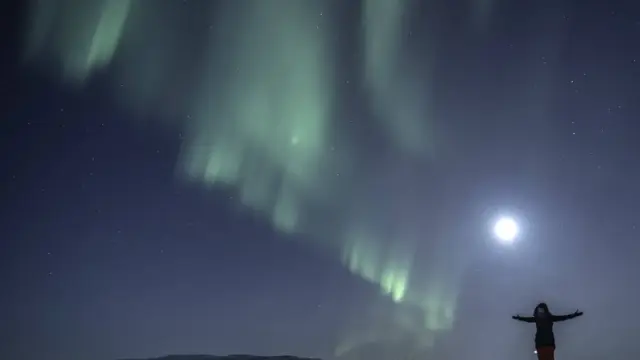
By day, the landscape of Wyoming operates as an unfiltered playground of untamed topography—a vast expanse where outdoor enthusiasts cycle rugged trails, hike precipitous ridges, cast lines into alpine lakes, navigate rugged terrain via all-terrain vehicles, or picnic upon sweeping meadows blanketed in seasonal wildflowers. Yet, the definitive identity of the Equality State is not solely defined by diurnal recreation. When the sun dips below the horizon, Wyoming transitions into a theater of celestial grandeur virtually unmatched within the continental United States.
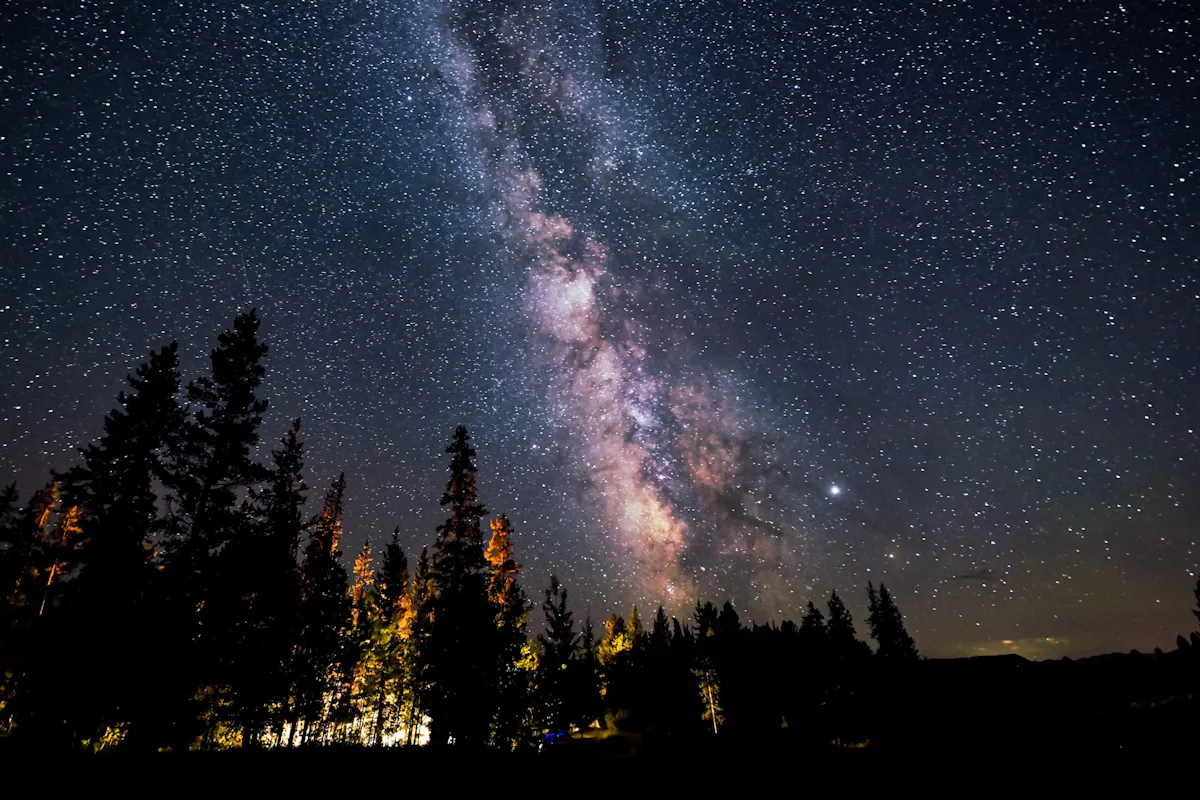
In a region where pronghorn antelope frequently outnumber human residents and modern light pollution remains largely absent for miles at a time, the nocturnal sky transforms into a luminous velvet expanse. Here, travelers find themselves immersed in an environment where the Milky Way is not a faint smudge of light, but a brilliant, highly-defined celestial highway.
Boasting some of the darkest, most pristine skies in the Lower 48, Wyoming serves as a premier destination for astrotourism. Whether outfitted with sophisticated astronomical equipment or simply seeking a visceral connection to the night skies witnessed by humanity centuries prior to the advent of electrical illumination, RV travelers will find an array of world-class stargazing corridors. This report provides an authoritative examination of Wyoming’s top dark-sky RV camping destinations, supported by logistical metrics, ecological context, expert strategies, and a forward-looking perspective on the burgeoning movement of dark-sky preservation.
Detailed Chronology and Geographical Breakdown of Dark-Sky Corridors
To fully appreciate the astronomical caliber of Wyoming, one must examine the specific geological and geographical sanctuaries that shield stargazers from urban light trespass. The following six locations represent the pinnacle of dark-sky RV camping within the state, each offering distinct topographical features and tailored amenities for mobile travelers.
1. Sinks Canyon State Park: The Wind River Range’s Amphitheater
Nestled within the rugged contours of the Wind River Range near Lander, Sinks Canyon State Park derives its name from a unique geological phenomenon: the Popo Agie River dramatically plunges into a subterranean limestone cave system known as "The Sinks," only to resurface miles downstream at "The Rise."
Beyond its hydrology, Sinks Canyon holds the distinction of being Wyoming’s first designated International Dark Sky Park. The towering limestone canyon walls function as a natural acoustic and visual amphitheater, effectively blocking stray light while framing the celestial sphere.
- RV Accommodations: Developed campsites are available at The Sawmill and Popo Agie campgrounds, accommodating standard recreational vehicles.
- Programming: The park frequently organizes ranger-led astronomy programs. Summer visitors frequently align their excursions with the annual Perseid meteor shower, maximizing opportunities for deep-sky observation.
2. Devils Tower National Monument: A Monolith Beneath the Cosmos
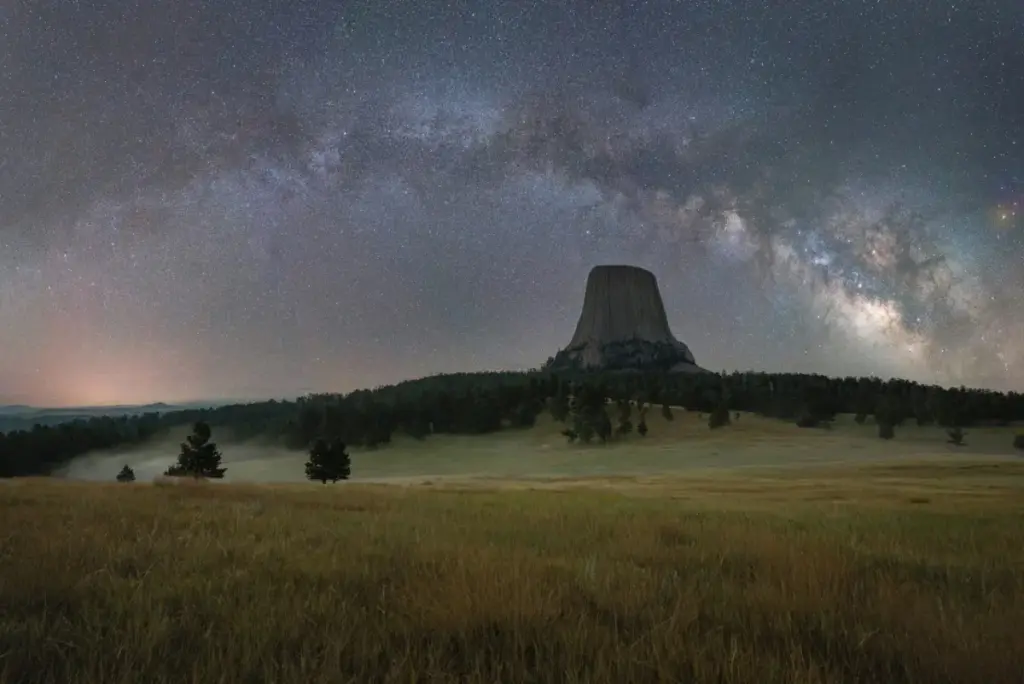
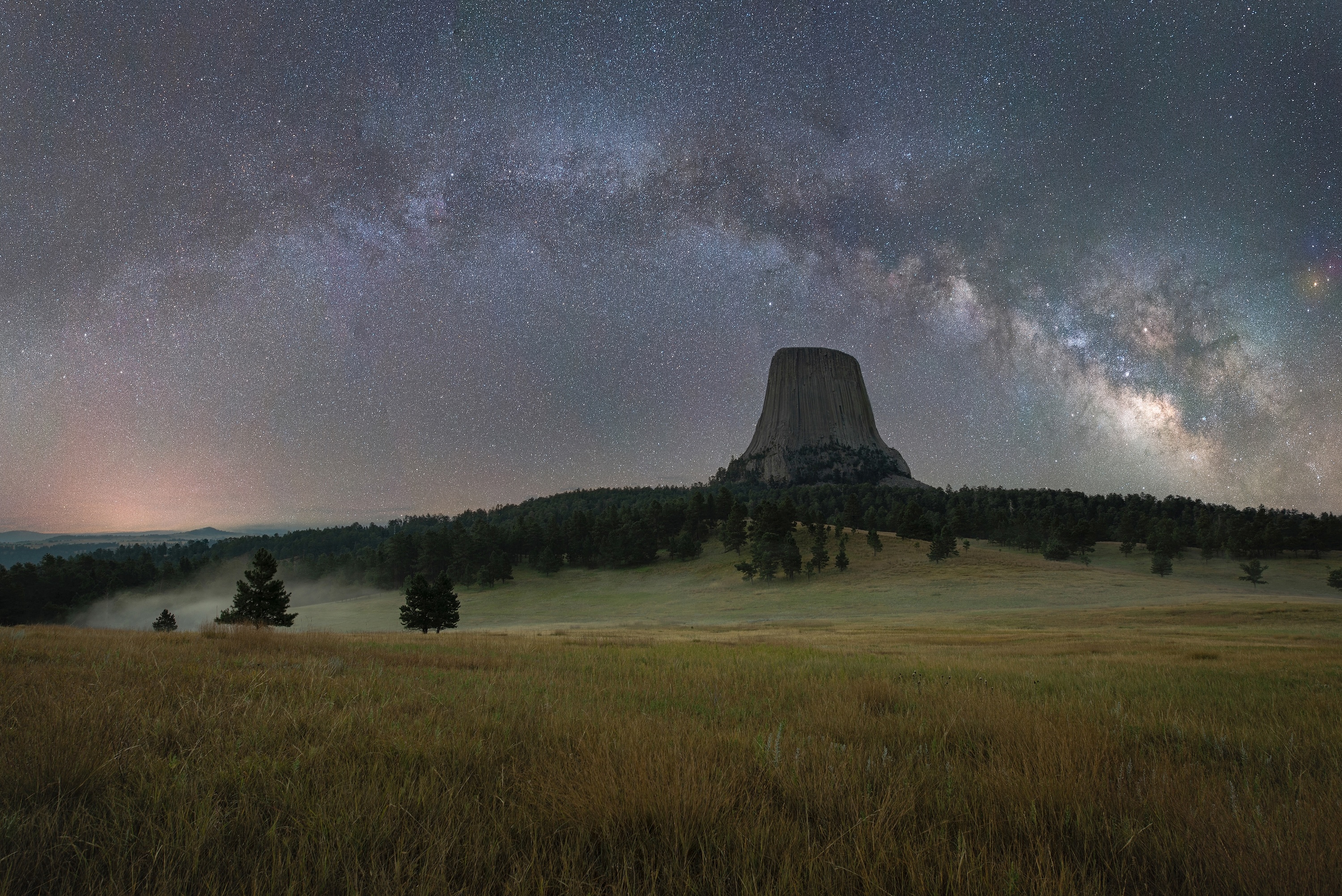
Rising 867 feet above the rolling plains of northeastern Wyoming with a summit roughly the size of a football field, Devils Tower is an imposing geological marvel by daylight. Sacred to numerous Northern Plains Tribes, the monolith takes on an ethereal quality after dusk, serving as a striking focal point against a backdrop of rotating constellations and planetary alignments.
As America’s first national monument and a certified International Dark Sky Park, Devils Tower offers exceptionally clear, unobstructed viewing angles.
- RV Accommodations: The Belle Fourche River Campground sits directly at the base of the monument, providing full electrical and utility hookups capable of accommodating RVs up to 35 feet in length.
- Programming: National Park Service rangers host regular evening astronomy sessions, complete with professional-grade telescopes. Stargazers are universally advised to utilize red-spectrum flashlights to preserve night vision during these events.
3. Curt Gowdy State Park: High-Altitude Accessibility Near the Capital
Situated a mere 24 miles west of Cheyenne, Curt Gowdy State Park proves that exceptional dark-sky viewing does not require complete isolation from civilization. Straddling the granite spires of the Laramie Mountains, the park honors the legacy of legendary sports broadcaster Curt Gowdy, an avid angler who championed the region’s natural beauty.
- RV Accommodations: The park is exceptionally well-suited for RV travelers, featuring three distinct reservoirs and 12 dispersed and developed camping zones. Sites at Granite Springs and Lakeview campgrounds offer electric hookups and spacious layouts capable of accommodating large rigs up to 50 feet.
- Landscape: Open shoreline areas provide expansive, unobstructed horizons ideal for tracking moonrises and meteor activity without sacrificing modern conveniences.
4. Medicine Bow–Routt National Forest: Pristine Wilderness and High Elevation
For travelers seeking utter solitude and uncompromised atmospheric clarity, the Medicine Bow–Routt National Forest delivers Wyoming wilderness in its purest state. Spanning elevations between 8,000 and 12,000 feet, this high-altitude sanctuary places stargazers above a significant portion of the Earth’s atmospheric moisture and particulate light scatter.
- RV Accommodations: The breathtaking Snowy Range Scenic Byway provides access to numerous dispersed camping corridors where self-contained RVs are permitted. For travelers preferring developed infrastructure, campgrounds such as Pelton Creek, North Fork, and Silver Lake offer established sites capable of supporting larger rigs.
- Environmental Advantage: The combination of high elevation and minimal particulate interference results in some of the sharpest telescopic viewing conditions in the American West.
5. Killpecker Sand Dunes: The Silence of the Red Desert
Encompassing the largest living dune system in North America, the Killpecker Sand Dunes are renowned for their acoustic "singing" properties—a phenomenon where shifting sands emit a resonant, booming hum. Located within the heart of Wyoming’s Red Desert, this remote expanse offers 360-degree horizons free from anthropogenic light pollution.
- RV Accommodations: The Bureau of Land Management (BLM) operates the Open Play Area Campground, which is completely free to access and fully accommodating to RV travelers.
- Daytime Integration: Visitors often pair nocturnal stargazing with daytime explorations of nearby archaeological and geological landmarks, including the White Mountain Petroglyphs and the imposing volcanic neck known as Boar’s Tusk.
6. Fremont Lake: Alpine Mirror of the Stars
Positioned at an elevation of 7,400 feet directly at the foot of the Wind River Range near Pinedale, Fremont Lake is the second-largest natural body of water in Wyoming. The surrounding municipality of Pinedale has actively branded itself as a premier astrotourism hub due to the exceptional purity of the local atmosphere.
- RV Accommodations: Lakeside campgrounds offer secluded, private sites equipped for RV access.
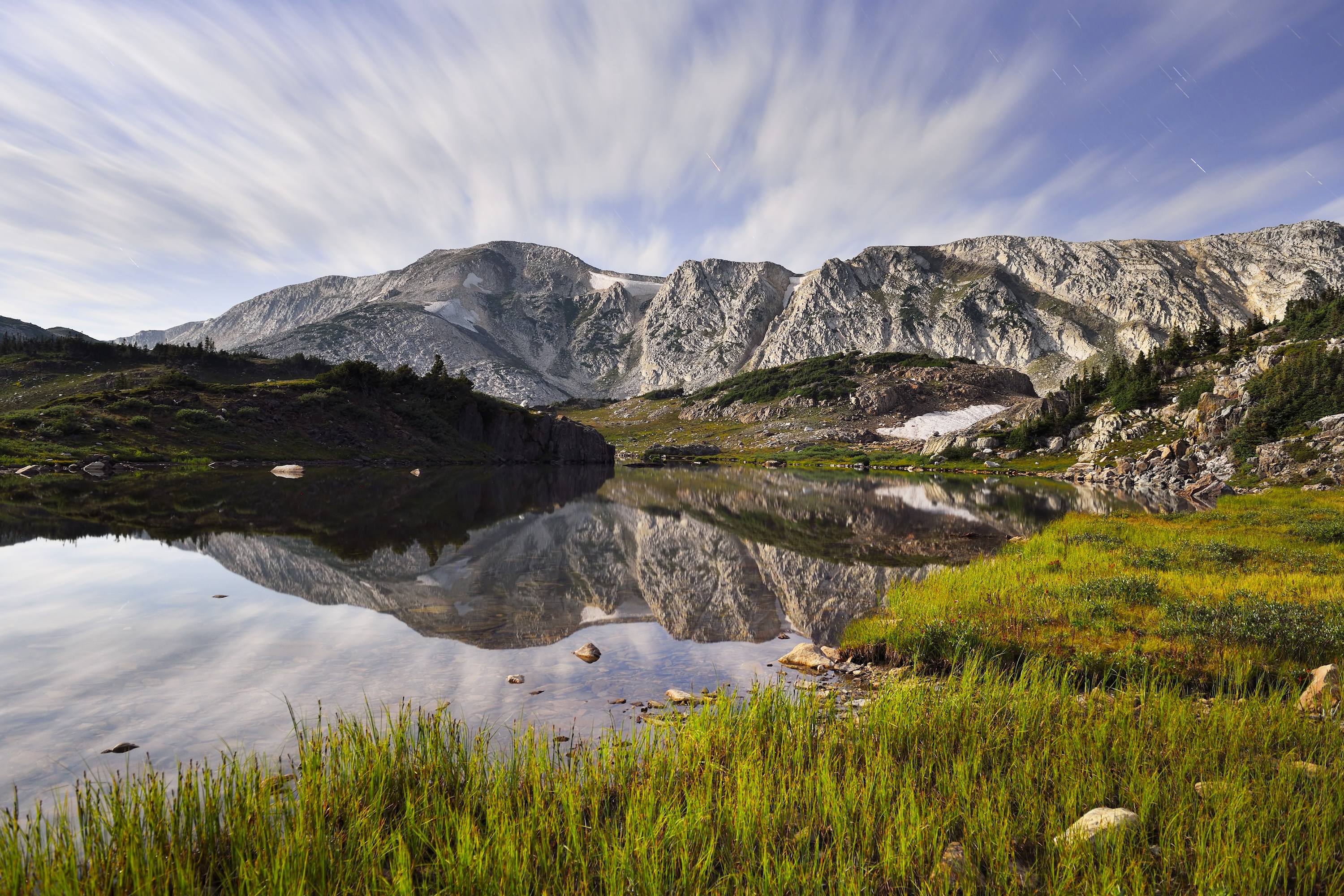
- Viewing Strategy: The glassy expanse of Fremont Lake acts as a natural mirror, reflecting the celestial overhead panorama. For panoramic, unimpeded views, visitors frequently gather at the Fremont Lake Lower Boat Dock for twilight observations.
Supporting Context, Environmental Metrics, and Economic Impact
The rise of astrotourism in Wyoming is not merely a recreational trend; it represents a significant economic driver and a triumph for environmental conservation.
Light Pollution Metrics and Bortle Scale Classifications
To understand why travelers flock to Wyoming, one must examine the Bortle Dark-Sky Scale, a nine-level numeric rating that measures the night sky’s brightness, the observability of celestial objects, and the impact of light pollution.
- Urban Environments (Bortle 8–9): Most metropolitan areas allow for the visibility of only the brightest planets and stars.
- Wyoming Corridors (Bortle 1–3): Vast swaths of public land in Wyoming fall into Class 1 (Excellent Dark-Sky Site) and Class 2 (Typical Truly Dark Site). In these zones, zodiacal light is visible, the Milky Way casts distinct shadows, and deep-sky objects such as the Andromeda Galaxy are discernible to the naked eye.
The Economic Value of Astrotourism
According to data compiled by the Wyoming Office of Tourism, outdoor recreation and nature-based tourism account for billions of dollars in state revenue. Astrotourism specifically extends the traditional summer tourism shoulder season, drawing photographers, amateur astronomers, and nature enthusiasts well into the autumn months. National parks and state parks that achieve International Dark Sky certification routinely report increased overnight stays, directly benefiting local gateway communities through fuel, grocery, and equipment expenditures.
Official Statements and Industry Insights
The deliberate preservation of Wyoming’s nocturnal environment requires coordinated stewardship among state agencies, federal land managers, and tourism boards.
State tourism representatives emphasize that the night sky is as much a protected natural resource as the state’s rivers and mountain ranges. "People always talk about Wyoming’s wide open spaces, but the widest of them all is straight up," noted a spokesperson for the Wyoming Office of Tourism. "When visitors experience a true dark-sky environment from the comfort of their RV, they form an irreplaceable connection to the American West as it existed centuries ago."
Park rangers across facilities like Sinks Canyon and Devils Tower consistently advocate for responsible outdoor ethics under the "Leave No Trace" framework, stressing that light pollution is a form of habitat disruption. Wildlife biologists note that artificial light can disorient nocturnal fauna, making dark-sky conservation a critical component of broader ecological health. Astronomy educators further stress the educational value of these parks, noting that hands-on telescope programs bridge the gap between abstract scientific concepts and tangible wonder for younger generations.
Future Outlook: Preservation, Infrastructure, and the Next Frontier
As light pollution continues to encroach upon rural environments across North America through unchecked suburban expansion and commercial development, Wyoming stands as a vital bulwark for nocturnal conservation.
Future Outlook and Strategic Initiatives
- Expansion of Dark-Sky Designations: State and federal agencies are currently evaluating additional public lands—particularly within remote sections of the Red Desert and the Bighorn Basin—for official International Dark Sky Park or Sanctuary status.
- Infrastructure Upgrades for RVers: Recognizing the surge in self-contained vehicle travel, land management bureaus are increasingly incorporating eco-friendly infrastructure into public campgrounds. This includes the implementation of shielded, amber-spectrum lighting fixtures that illuminate pathways for safety without degrading the overhead night sky.
- Educational Integration: Future tourism initiatives will likely feature enhanced digital applications, virtual reality planetarium tie-ins at visitor centers, and expanded community outreach programs designed to educate local businesses on retrofitting outdoor lighting.
Traveler Best Practices for Maximum Impact
To ensure these pristine environments remain untainted for future generations, travelers embarking on a Wyoming dark-sky RV expedition are encouraged to adhere to established protocols:
- Timing the Excursion: Plan travel around the new moon phase (the two-week window surrounding the lunar new moon) to eliminate lunar light interference. Even a quarter moon can wash out faint nebulae and meteor trails.
- Digital Adaptation: Utilize astronomy software (such as Stellarium or SkySafari) pre-configured with "Night Mode" (red light display settings) to navigate star charts without ruining night-adapted vision.
- Thermal Preparation: High-altitude desert and mountain environments experience drastic thermal drops after sunset. Temperatures frequently plummet by 30 to 40 degrees Fahrenheit, necessitating comprehensive cold-weather gear even during mid-summer excursions.
- Visual Acuity: Allow a full 20 to 30 minutes for human eyes to completely adjust to absolute darkness. Refrain from activating smartphone screens or white flashlights during this adaptation window.
By blending rugged accessibility with unmatched celestial visibility, Wyoming solidifies its reputation as the premier frontier for modern astrotourism. For the RV traveler willing to venture beyond the pavement and switch off the headlights, the universe awaits.
This article is supported by contextual reporting and sponsored in part by the Wyoming Office of Tourism.