







Executive Overview
In an era defined by frequent reports of misplaced, delayed, or lost luggage, modern travelers are increasingly adopting a "carry-on-only" philosophy. This minimalist approach not only bypasses baggage carousel queues and eliminates checked-bag fees, but it also provides peace of mind against airline mishandling. However, transitioning exclusively to cabin luggage introduces a notoriously complex hurdle: navigating the Transportation Security Administration’s (TSA) stringent regulations regarding liquids, aerosols, gels, creams, and pastes.
At the center of this packing puzzle is the ubiquitous question: Can you bring shampoo on a plane?
While the short answer is affirmative, the devil is in the details. Air travelers must meticulously manage container sizes, volume limits, and clear-bag configurations—most notably governed by the famous 3-1-1 rule. Beyond hair care, passengers face a labyrinth of restrictions covering everything from makeup and sunscreen to alcohol and medical liquids. This comprehensive guide provides an authoritative, deep-dive analysis of airline security protocols, offering professional strategies to streamline your packing process, avoid confiscations at the checkpoint, and ensure your next journey is completely stress-free.
Detailed Chronology: The Evolution of Aviation Security and Liquid Bans
To understand why a half-empty, eight-ounce bottle of shampoo is routinely confiscated at airport security while a three-ounce container passes through with ease, one must examine the historical framework governing commercial aviation security.
The Pre-2006 Era of Loose Restrictions
For decades following the advent of commercial air travel, passengers enjoyed relative freedom regarding what they could pack in their cabin bags. Liquids, beverages, and standard-sized personal care items were rarely scrutinized unless they presented an overt chemical or physical hazard. Toiletries were packed according to personal preference, and the concept of a restricted volume threshold for everyday items was virtually nonexistent.
The August 2006 Transatlantic Terrorist Plot
The regulatory landscape shifted permanently on August 10, 2006. British authorities, working in coordination with intelligence agencies, disrupted a sophisticated terrorist plot orchestrated by Al-Qaeda. The plan involved smuggling liquid explosives disguised as soft drinks onto multiple commercial airliners traveling from the United Kingdom to the United States and Canada. The perpetrators intended to detonate the devices mid-flight using improvised electronic triggers.
In immediate response to this credible, imminent threat, aviation authorities worldwide—including the UK Department for Transport and the US Transportation Security Administration—implemented emergency bans. Passengers were temporarily prohibited from carrying virtually all liquids onto aircraft cabins.
The Birth of the 3-1-1 Rule
As security agencies assessed the operational realities of a permanent liquid ban, they developed a risk-mitigation framework that allowed travelers to carry essential personal items without compromising aircraft safety. This gave rise to the standardized protocols still in use today:
- 3.4 Ounces (100 Milliliters): Scientific analysis determined that the threshold volume required to detonate liquid explosives of concern was higher than 3.4 ounces. Consequently, individual containers of liquids, aerosols, and gels were capped at this maximum volume.
- 1 Quart-Sized Bag: To limit the aggregate volume of potentially hazardous materials a single individual could bring into the cabin, all permitted containers had to fit comfortably inside a single, transparent, resealable plastic bag.
- 1 Bag Per Passenger: Limiting each traveler to precisely one bag streamlined the physical screening process for TSA agents, allowing for rapid visual and technological inspection.
Over the ensuing decades, while screening technology has advanced—incorporating sophisticated 3D X-ray imaging and computed tomography (CT) scanners at major hub airports—the foundational 3-1-1 rule remains the global baseline for carry-on security compliance.
Supporting Context & Metrics: Decoding the TSA 3-1-1 Rule for Toiletries
Navigating airport security successfully requires strict adherence to quantitative metrics. Understanding how security personnel measure and interpret these rules prevents costly and frustrating losses at the checkpoint.
The Anatomy of the 3-1-1 Rule
The acronym is designed for effortless memorization, but its application requires precision:
- 3: Containers must hold 3.4 ounces (100 milliliters) or less. Crucially, this limit applies to the rated capacity of the container, not the actual volume of product remaining inside. A standard 8-ounce shampoo bottle containing only 1 ounce of liquid will be confiscated because the vessel exceeds the legal threshold.
- 1: All containers must fit inside a single 1-quart-sized (approximately 1 liter) clear plastic, resealable bag. Ziploc-style freezer bags are the industry gold standard.
- 1: Each passenger is restricted to 1 bag total. Oversized bags, paper bags, or multiple smaller bags violating this parameter will be rejected.
Comprehensive Product Breakdown
| Product Category | Carry-On Status | Checked Bag Status | Key Compliance Notes |
|---|---|---|---|
| Liquid Shampoo & Conditioner | Yes ($le$ 3.4 oz / 100 ml) | Yes | Must fit in the 1-quart bag; container size dictates compliance, not contents. |
| Full-Size Liquid Shampoo | No | Yes | Strictly prohibited in cabins; must be checked or left behind. |
| Shampoo & Soap Bars | Yes (Unrestricted) | Yes | Solid formulations bypass liquid restrictions entirely. |
| Aerosol Dry Shampoo | Yes ($le$ 3.4 oz / 100 ml) | Yes | Must feature a secure cap or cover to prevent accidental discharge. |
| Liquid/Cream Makeup | Yes ($le$ 3.4 oz / 100 ml) | Yes | Includes foundation, mascara, liquid eyeliner, and nail polish. |
| Solid Makeup | Yes (Unrestricted) | Yes | Powders, lipstick bullets, and mineral makeup face no volume caps. |
| Deodorant (Stick) | Yes (Unrestricted) | Yes | Solid sticks are exempt from size rules; gels and sprays are not. |
| Deodorant (Gel/Spray) | Yes ($le$ 3.4 oz / 100 ml) | Yes | Subject to the standard 3-1-1 bag and volume limitations. |
| Sunscreen (Lotion/Spray) | Yes ($le$ 3.4 oz / 100 ml) | Yes | Highly scrutinized due to high volume usage during trips. |
| Contact Lens Solution | Yes (Any size if medically necessary) | Yes | Medically necessary quantities exceeding 3.4 oz must be declared. |
| Alcoholic Beverages | Yes ($le$ 3.4 oz in sealed containers) | Yes ($le$ 70% ABV) | Consumption of personal alcohol on board is strictly illegal. |
Official Statements and Jurisdictional Realities
When preparing for travel, seasoned flyers recognize that security guidelines are subject to interpretation and geographical variation.
The Ultimate Authority: TSA and International Counterparts
The Transportation Security Administration emphasizes that while general guidelines are published online, the final determination rests entirely with the individual security officer on duty at the checkpoint. As stated by TSA representatives:
"The final decision rests with the TSA agents at your airport, and additional screening is sometimes required. Always consult the official TSA website for real-time updates regarding permitted and prohibited items before heading to the airport."
Furthermore, international travel introduces complex jurisdictional layers. The TSA is a United States federal agency whose jurisdiction is primarily domestic. When flying out of foreign international airports, local aviation authorities enforce their own regulatory frameworks. For example, European Union (EU) security checkpoints have historically maintained strict liquid controls, though technological rollouts at select European hubs are gradually lifting the 100ml limit for passengers using advanced CT scanners.
Travelers transiting through international airports must remain acutely aware that connecting flights may subject them to re-screening under local, unfamiliar laws. Duty-free liquids purchased abroad, for instance, are permitted in cabins only if they remain sealed in tamper-evident secure bags accompanied by a valid receipt dated within the previous 48 hours.
Strategic Packing Solutions for the Modern Minimalist
Adapting to carry-on-only travel without sacrificing personal hygiene requires thoughtful preparation and strategic gear selection.
1. Embracing Solid Alternatives
One of the most effective ways to circumvent the 3-1-1 liquid restriction is to transition from liquid toiletries to solid formulations. Because solid items are not classified as liquids, aerosols, gels, or pastes, they are entirely exempt from volume caps.
- Shampoo and Conditioner Bars: High-end beauty retailers and specialty pharmacies offer concentrated shampoo and conditioner bars that lather effectively, last for dozens of washes, and eliminate plastic bottle waste.
- Solid Body Soaps and Deodorants: Traditional bar soaps and solid deodorant sticks bypass the quart-sized bag constraint, freeing up valuable space for items that must remain liquid.
2. Investing in Premium Travel Containers
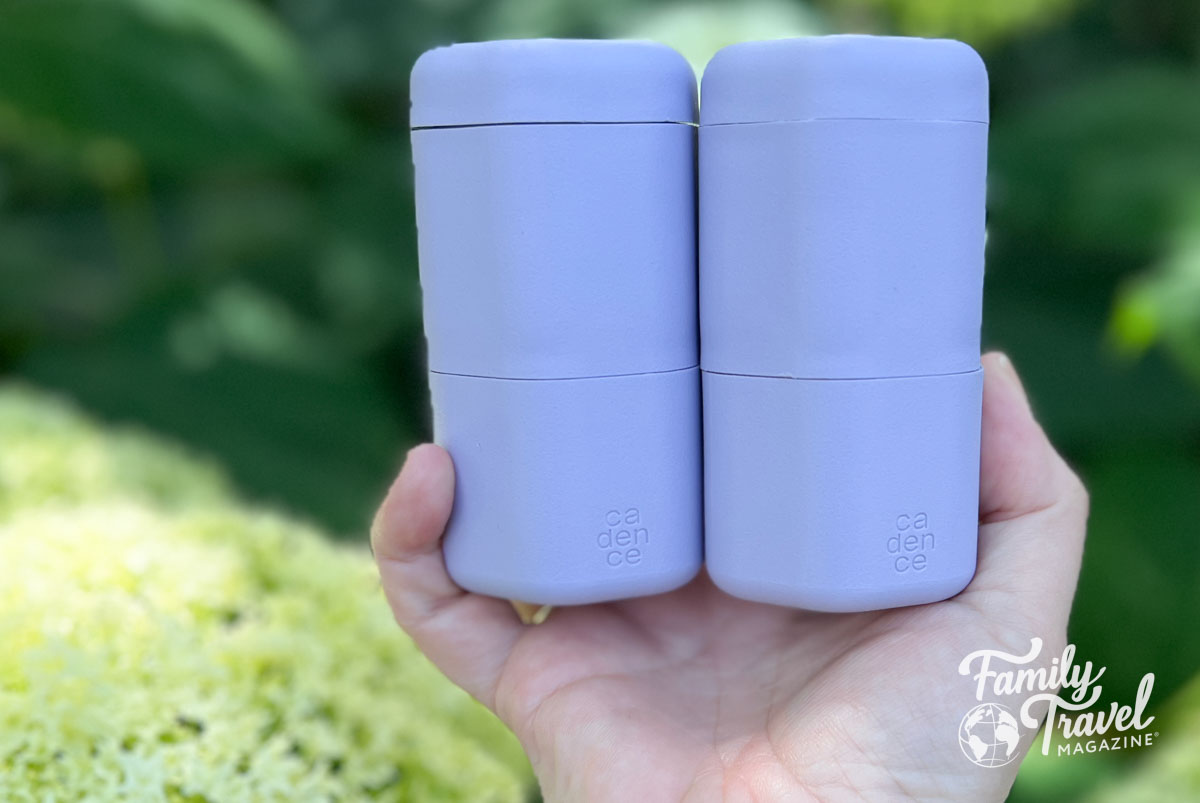
If you prefer your personal brand of liquid hair care, avoid single-use plastic travel bottles prone to leaks caused by cabin pressure differentials. High-end, reusable silicone or modular travel containers—such as leak-proof capsules by brands like Cadence—offer durable, organized, and aesthetically pleasing solutions. While initial investments in specialized travel containers are higher than disposable pharmacy options, their longevity and spill-proof designs pay dividends over time.
3. Destination Sourcing
For extended trips exceeding one week, attempting to pack enough sunscreen, body wash, and shampoo into a single quart-sized bag is mathematically impractical. In these scenarios, the most efficient strategy is to pack travel-sized quantities sufficient for the first 48 hours, then visit a local pharmacy or retailer upon arrival to purchase full-sized essentials. This approach eliminates checkpoint anxiety and lightens your cabin load.
Future Outlook: The Intersection of Technology and Travel Regulations
As commercial aviation continues to evolve, the passenger experience at security checkpoints is undergoing a technological revolution that promises to reshape carry-on packing rules.
The Rise of Computed Tomography (CT) Scanners
Major international and domestic airports are rapidly deploying advanced 3D Computed Tomography (CT) X-ray scanners at security checkpoints. Originally utilized in checked baggage screening, these high-resolution imaging systems generate clear, rotatable 3D digital images of bag contents.
The implementation of CT scanners holds profound implications for liquid restrictions. At airports equipped with this next-generation technology, security protocols are increasingly being relaxed to allow passengers to leave liquids, gels, and aerosols—as well as large electronics like laptops—inside their carry-on bags during screening. Several European airports have already successfully eliminated the 100ml container limit for passengers screened through advanced CT lanes.
Harmonization and the Global Outlook
While the United States and international aviation bodies are moving toward technological harmonization, a universal global removal of the liquid ban remains years away. Security infrastructure upgrades require massive capital investments, meaning legacy 2D X-ray systems will remain operational at smaller regional airports for the foreseeable future.
Consequently, savvy travelers must adopt a dual-track mindset: enjoy the streamlined screening experiences offered by modern CT-equipped hubs when available, but always retain a TSA-compliant quart-sized bag packed with 3.4-ounce (100ml) containers as a reliable fallback. By mastering these regulations and embracing innovative solid and modular packing solutions, travelers can ensure their journeys remain efficient, compliant, and thoroughly enjoyable.