









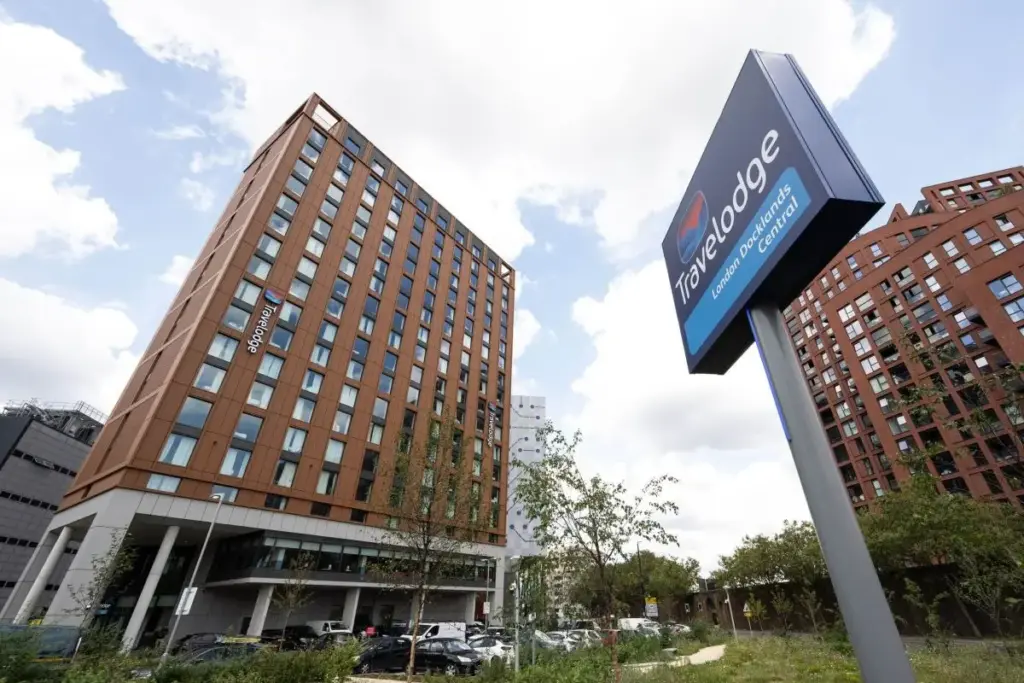
LONDON — UK budget hotel giant Travelodge has announced the departure of Chief Executive Officer Jo Boydell. The high-profile exit follows months of intensifying pressure on the company’s executive leadership regarding its response to a serious sexual assault case that exposed significant security vulnerabilities within its properties.
The announcement, made alongside the publication of Travelodge’s first-half financial results, marks a critical turning point for one of the UK’s largest hospitality operators as it struggles to repair its reputation, reassure investors, and address systemic safety concerns across its portfolio.
A Sudden Transition in Executive Leadership
In the wake of Boydell’s resignation, the Travelodge board has turned to its Chief Financial Officer, Ray Reidy, to steer the company through the immediate operational and reputational fallout. Reidy has been appointed as interim CEO, effective immediately, while the board initiates a comprehensive external search for a permanent successor.
The decision to elevate a financial officer to the helm during a non-financial crisis highlights the delicate balancing act Travelodge faces. The company must reassure lenders, institutional investors, and franchisees of its financial resilience while simultaneously executing a drastic, potentially costly overhaul of its guest safety and security protocols.
In a statement accompanying the group’s interim financial reporting, Reidy sought to project stability, resolve, and transparency.
"We remain focused on the safety and well-being of our guests and will continue taking the actions necessary to strengthen the business," Reidy said. "We will also continue to engage proactively and constructively with industry partners, regulatory bodies, and safety advocates to ensure our operational standards meet the highest expectations."
The Catalyst: Security Failures and Public Pressure
Boydell’s departure is the direct result of mounting scrutiny over how Travelodge managed a high-profile sexual assault incident at one of its properties. The case, which drew widespread public attention and media coverage, raised urgent questions about the physical security measures and emergency response protocols in place across Travelodge’s extensive network of budget hotels.
For months, victim advocates, industry observers, and corporate clients have criticized the hotel chain’s initial handling of the incident and its broader approach to guest protection. Security experts pointed out that budget hotel operations, which often rely on automated check-ins, minimal night-shift staffing, and centralized monitoring, face distinct safety challenges that demand rigorous oversight.
The executive team, led by Boydell, found itself increasingly on the defensive as details emerged suggesting that preventable security failures may have contributed to the environment in which the assault occurred. Despite initial efforts to manage the fallout through public relations channels, the sustained pressure from the public, media, and internal stakeholders made Boydell’s position untenable, ultimately leading to the leadership change.
The Mandate of the Ongoing Independent Review
While the departure of a chief executive often serves as a symbolic reset for a troubled corporation, industry analysts warn that Boydell’s exit is only the beginning of a long road to recovery. An independent review, commissioned to investigate the specific security breaches and evaluate Travelodge’s overall safety infrastructure, remains ongoing.
This independent probe, conducted by external legal and security specialists, is expected to scrutinize several critical operational areas:
1. Night-Shift Staffing Levels and Lone Worker Safety
The review will examine whether cost-cutting measures and budget-focused staffing models have led to understaffed properties, particularly during late-night and early-morning shifts. In many budget hotels, a single employee may be responsible for reception, security, and guest services overnight, leaving them poorly equipped to monitor large properties effectively or respond to emergencies.
2. Access Control and Keycard Security
Investigators are auditing the physical security of guest rooms, corridors, and entry points. This includes assessing the robustness of keycard systems, the ease with which unauthorized individuals can access guest floors, and the effectiveness of physical barriers separating public lobby areas from private guest quarters.
3. Surveillance and Monitoring Infrastructure
The review will evaluate the coverage, quality, and monitoring of closed-circuit television (CCTV) cameras across Travelodge properties. Analysts will look at whether blind spots contributed to the security failure and whether real-time monitoring capabilities need to be upgraded.
4. Incident Response and Staff Training
A key focus will be how quickly and effectively on-site staff respond to security alerts or guest distress calls. The review will assess the adequacy of current staff training modules regarding conflict resolution, emergency escalation, and cooperation with local law enforcement.
The findings of this review will likely dictate the permanent CEO’s operational agenda. Implementing the necessary recommendations could force Travelodge to invest heavily in physical security upgrades, technology integration, and staff retraining, potentially impacting its profit margins in the medium term.
Sector-Wide Repercussions: The Budget Hospitality Industry on Notice
The crisis at Travelodge has resonated far beyond the company’s own boardroom. The broader UK budget hospitality sector has been put on notice, triggering industry-wide safety talks aimed at establishing more rigorous standards for guest protection.
Budget hotels have historically optimized their business models for cost efficiency, frequently utilizing technology to reduce overheads. Self-service check-in kiosks, digital keys, and centralized customer service have allowed budget brands to operate with minimal on-site staff. However, the Travelodge incident has sparked a critical debate about whether this lean operational model compromises basic safety.
Industry bodies, trade unions, and safety campaigners are increasingly calling for mandatory minimum staffing levels, particularly overnight, and better protections for lone workers. The ongoing safety talks are expected to focus on creating standardized safety benchmarks that all operators must meet, regardless of their price point.
For budget brands, this shift represents a significant structural challenge. Implementing high-level security measures—such as 24/7 manned security desks, enhanced CCTV integration, and advanced access controls—requires substantial capital expenditure. However, failing to do so carries immense reputational and legal risks, as the Travelodge situation has demonstrated.
Rebuilding Trust in a Highly Competitive Market
As Ray Reidy assumes the interim leadership role, his immediate priority will be dual-pronged: maintaining the operational and financial health of the business during a period of economic uncertainty while demonstrating a genuine, measurable commitment to corporate reform.
The search for a permanent CEO will be a critical test for the Travelodge board. The ideal candidate will need to possess not only strong operational and financial acumen but also a proven track record in crisis management, corporate governance, and brand rehabilitation. Rebuilding trust with the traveling public, particularly female travelers and corporate clients who prioritize safety in their booking decisions, will be a multi-year endeavor.
The budget hotel sector has long thrived on the promise of clean, affordable, and convenient lodging. However, the fallout from this security crisis serves as a stark reminder that safety is a non-negotiable component of hospitality. As Travelodge navigates this leadership transition and awaits the final recommendations of the independent review, the entire industry will be watching closely to see how the group balances its low-cost commercial model with its fundamental duty of care to its guests.