








Executive Overview
In the dynamic and continuously fluctuating landscape of transpacific commercial aviation, finding a competitively priced flight between North America and major secondary economic hubs in mainland China remains a primary objective for value-conscious travelers and frequent flyers alike. A newly surfaced airfare sale featuring routing from Los Angeles International Airport (LAX) to Nanjing Lukou International Airport (NKG) has captured the attention of budget travelers, aviation enthusiasts, and mileage accumulators. Operated via key network partnerships involving major international carriers, this promotional fare structure highlights broader shifts in capacity, alliance-based connectivity, and the strategic positioning of secondary Chinese destinations for international tourism and commerce.
Nanjing, the capital of Jiangsu Province and a historic cultural powerhouse situated in the Yangtze River Delta, serves as a vital economic and educational center. Historically, securing cost-effective, seamless itineraries from the United States West Coast to destinations outside the primary hubs of Beijing and Shanghai required navigating complex multi-stop itineraries or paying premium fares. However, recent developments in flight inventory tracking indicate periodic windows where airlines deploy aggressive pricing strategies to stimulate demand.
This comprehensive report examines the mechanics of the recent LAX-to-NKG fare offering, breaking down the operational routing through primary connecting gateways, the intricacies of alliance partnerships—specifically focusing on Korean Air and its relationship with Delta Air Lines—and actionable strategies for maximizing frequent flyer mileage accrual. Furthermore, this analysis explores broader economic trends in transpacific travel, offering travelers an authoritative guide on how to identify, verify, and secure similar high-value international flight deals in an increasingly competitive marketplace.
Detailed Chronology: The Emergence and Mechanics of the LAX-NKG Airfare Offering
The identification of promotional airfares typically begins with automated fare-filing analysis and real-time inventory monitoring systems. In the case of the recent Los Angeles (LAX) to Nanjing (NKG) routing, tracking tools detected a notable dip in baseline pricing, signaling a promotional push by participating carriers.

Phase 1: Fare Filing and Initial Detection
Airlines frequently adjust pricing structures based on seasonal demand forecasts, load factors, and competitive pressures. The route connecting Los Angeles—one of North America’s primary gateways to East Asia—with Nanjing represents a strategic corridor linking Southern California’s robust commercial and cultural network with eastern China. When automated flight deal monitors flagged the initial pricing anomalies, analysts cross-referenced the availability against global distribution systems (GDS) to verify that the rates were broadly accessible rather than isolated ticketing glitches.
Phase 2: Route Architecture and Transit Hubs
Transpacific travel between the U.S. West Coast and mainland China often relies on single-connection hub models. While direct services exist between select West Coast cities and primary Chinese megacities, journeys to regional powerhouses like Nanjing typically involve a strategic layover.
- Departure Gateway: Los Angeles International Airport (LAX), serving as a major nexus for transpacific departures with extensive domestic and international feeder networks.
- Connecting Hub: Depending on the operating carrier, itineraries often route through major East Asian megahubs. For instance, carriers such as Korean Air leverage Incheon International Airport (ICN) near Seoul as a high-efficiency transfer point, offering streamlined transit facilities, extensive duty-free amenities, and short connection times to secondary mainland destinations like Nanjing.
- Arrival Destination: Nanjing Lukou International Airport (NKG), strategically positioned to grant travelers direct access to the economic dynamism of the Jiangsu province without the mandatory domestic rail or air transfers traditionally required when arriving solely via Shanghai Pudong (PVG).
Phase 3: Verification via Global Distribution Systems
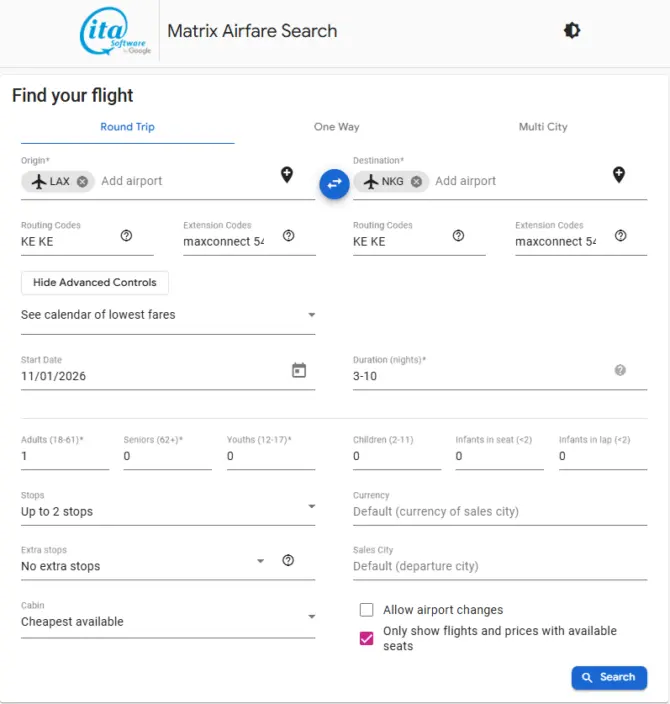
For savvy travelers looking to replicate or build upon these findings, confirming fare availability requires utilizing advanced itinerary builders and search engines such as ITA Matrix or airline-direct booking platforms. The recent LAX-NKG offerings demonstrated notable flexibility in baseline booking classes, allowing travelers to secure competitive economy cabins while maintaining eligibility for alliance-wide frequent flyer credit.
Supporting Context & Metrics: Airline Alliances, Mileage Accumulation, and Financial Value
Understanding the true value of an international flight deal extends far beyond the base ticket price. Factors such as baggage allowances, change policies, and—most importantly—frequent flyer mileage accrual play a definitive role in calculating the net value of a journey.

The SkyTeam Alliance and Transpacific Synergy
The involvement of carriers such as Korean Air within the broader framework of international aviation alliances creates significant advantages for U.S.-based travelers. Although Korean Air operates independently as a powerhouse carrier renowned for its onboard service and operational reliability, its deep commercial ties and historical alignment with SkyTeam partners—most notably Delta Air Lines—create lucrative opportunities for loyalty program members.
When booking promotional fares on partner-operated metal, frequent flyers must carefully evaluate how revenue-based or distance-based mileage earning charts apply to their accounts.
Delta SkyMiles Accrual Mechanics for Partner Flights
When crediting flights operated by partner airlines like Korean Air to a Delta SkyMiles account, the accumulation of redeemable miles (RDMs) and Medallion Qualification Dollars (MQDs) or equivalent tier-qualifying metrics typically depends on the fare class purchased and the distance flown (measured in miles), rather than solely on the cash price of the ticket.
- Distance-Based Earning: Unlike purely revenue-based models applied strictly to tickets issued and operated directly by Delta, partner-marketed or partner-operated flights often calculate earnings based on a percentage of the distance flown, multiplied by the fare class multiplier.
- Fare Class Considerations: Deeply discounted promotional economy tickets (often booked in higher-restriction inventory buckets such as Q, T, or V classes) may accrue at a reduced percentage of the actual flight distance—frequently ranging from 25% to 50% of flown miles. Conversely, flexible economy or premium cabin fares scale upward significantly.
- Elite Status Benefits: Travelers holding elite status within SkyTeam (such as Delta SkyMiles Medallion tiers) may enjoy reciprocal benefits, including priority check-in, additional baggage allowances, and preferred seating options, depending on the operating carrier’s specific partnership agreements.
Comparative Financial Metrics of Transpacific Airfares
To contextualize the recent LAX-NKG pricing, market analysts look at historical cost averages for economy travel between California and eastern China:

- Historical Baseline: Standard economy round-trip tickets between Los Angeles and secondary Chinese destinations traditionally fluctuate between $1,200 and $2,200 USD, depending on seasonality (with peak travel occurring during summer months, Golden Week, and the Lunar New Year).
- Promotional Thresholds: Significant airfare sales typically compress these figures substantially, occasionally bringing baseline costs down to competitive thresholds that rival domestic travel expenses when calculated on a per-mile basis.
- Cost-Per-Mile Efficiency: With a round-trip distance exceeding 12,000 statutory miles between Los Angeles and Nanjing, securing a discounted fare yields an exceptionally low cost-per-mile ratio, enhancing the appeal for mileage runners and cost-conscious explorers.
Official Industry Perspectives and Expert Analysis
Navigating the volatile pricing models of modern commercial aviation requires insights from industry analysts, consumer advocates, and travel technology experts. As airlines balance fluctuating jet fuel costs, post-pandemic recovery metrics, and shifting geopolitical trade corridors, fare sales serve as an essential tool for managing capacity.
The Strategic Role of Secondary Gateway Promotions
Aviation economists note that major international carriers frequently utilize promotional pricing on routes involving secondary hubs like Nanjing to stimulate demand during shoulder seasons or to absorb newly added capacity. According to transport logistics researchers, airlines operating high-frequency long-haul routes into primary mega-airports often face severe slot constraints and high operational fees. By routing passengers through efficient connecting hubs and distributing traffic to regional economic centers like Nanjing, airlines optimize their fleet utilization while offering consumers more competitive pricing structures.
Consumer Advocacy and Transparency in Fare Distribution
Independent travel publishing platforms emphasize the ephemeral nature of these promotional windows. Because airlines utilize dynamic pricing algorithms powered by automated yield management systems, a fare identified in the morning can easily disappear or increase in price by hundreds of dollars by evening.
Industry experts strongly advise consumers to act decisively when verified sales appear, utilizing flexible date search matrices to pinpoint the exact days on which promotional inventory remains active. Furthermore, travel advisors recommend booking directly through official airline channels or reputable online travel agencies (OTAs) that provide transparent cancellation and customer support frameworks, mitigating the risks associated with third-party ticketing discrepancies.

Future Outlook: Trends in Transpacific Travel and Smart Booking Strategies
Looking ahead toward the remainder of the decade, the market for transpacific travel between the United States and mainland China is expected to undergo continued evolution. Several key trends will shape how travelers discover and secure affordable airfares:
1. Technological Advancements in Fare Tracking
The proliferation of real-time notification services, instantaneous push-notification mobile applications, and algorithmic fare-alert networks has democratized access to travel deals. Platforms that charge nominal subscription fees (often fraction-of-a-dollar daily costs for premium newsletters) have transformed how consumers source flights, shifting the paradigm from passive searching to proactive, real-time acquisition. Travelers who subscribe to targeted alert feeds gain a distinct competitive advantage, frequently securing seats hours or days before promotions are broadcast on mainstream social media channels.
2. Evolving Alliance Dynamics and Loyalty Programs
As airline alliances continue to refine their joint-venture agreements and codeshare pacts, the fluidity of earning and redeeming miles across partner networks will remain a focal point for frequent flyers. Strategic partnerships between transpacific carriers will likely yield more integrated booking experiences, allowing passengers to seamlessly combine segments operated by U.S. legacy carriers and East Asian partners on a single ticket without sacrificing loyalty earnings.
3. Actionable Best Practices for Secure International Travel Booking
For travelers aiming to capitalize on upcoming international flight sales—whether to Nanjing or other global destinations—following a disciplined booking methodology is essential:
- Maintain Date Flexibility: Shifting departure or return dates by even 24 to 48 hours can dramatically alter ticket pricing during promotional campaigns.
- Leverage Comprehensive Search Tools: Utilize advanced fare-matrix engines to view monthly calendars and instantly identify the lowest-priced departure windows.
- Understand Credit Card and Insurance Protections: When purchasing international tickets, utilize travel rewards credit cards that offer robust trip interruption, baggage delay, and emergency medical insurance coverage. Additionally, familiarize yourself with international credit card usage tips, such as opting out of dynamic currency conversion (DCC) when paying abroad to avoid unfavorable merchant exchange rates.
- Stay Informed: Subscribing to curated, real-time deal alerts ensures immediate notification of fleeting inventory drops, giving you the best possible chance of securing exceptional value on your next international journey.