






The domestic airline industry in the United States continues to experience a high-stakes balancing act between capacity expansion, fare structure fragmentation, and consumer demand elasticity. In the latest market fluctuation impacting travelers originating from the mid-Atlantic and the Southeast, a notable airfare reduction has emerged for routes connecting Raleigh-Durham International Airport (RDU) and Portland International Airport (PDX).
This pricing adjustment, highlighted by carriers operating out of key hubs, showcases the widening chasm between standard economy offerings and ultra-restrictive "Basic Economy" products. For business and leisure travelers alike, understanding the nuances of these fare classes has never been more critical.
At the center of this pricing event is a standard round-trip fare priced at $386, contrasted sharply by a heavily restricted $276 Basic Economy alternative offered by American Airlines. While headline-grabbing low fares often dominate consumer attention, a granular examination of ancillary fees, mileage accrual policies, and flexibility restrictions reveals that the true cost of air travel extends far beyond the initial ticket purchase.
This report provides an exhaustive investigation into the RDU-to-PDX fare structure, examining the operational strategies behind tier-based pricing, the mechanics of modern fare rules, and how travelers can optimize their itineraries in an increasingly complex ticketing ecosystem.
Detailed Chronology: The Evolution of Tiered Transcontinental Pricing
The emergence of sub-$400 transcontinental fares between Raleigh/Durham and the Pacific Northwest is not an isolated market anomaly; rather, it is the latest chapter in a multi-year evolution of airline revenue management.

The Shift Toward Unbundled Pricing
Over the past decade, major legacy U.S. carriers—including American Airlines, Delta Air Lines, and United Airlines—have systematically restructured their inventory models to compete directly with ultra-low-cost carriers (ULCCs) such as Spirit and Frontier. By introducing Basic Economy, airlines created a bifurcated product line designed to capture price-sensitive consumers who might otherwise opt for budget alternatives, while protecting revenue from business travelers willing to pay a premium for flexibility and comfort.
In the case of the RDU-PDX route, this strategy is vividly illustrated by the current pricing tiers:
- The $276 Basic Economy Tier: Designed purely on price competition, this tier strips away foundational passenger rights. Travelers purchasing this option are subjected to strict non-changeable, non-refundable conditions. Furthermore, they are barred from selecting seats in advance—a policy that frequently results in involuntary middle-seat assignments or the separation of traveling companions—and they are completely disqualified from earning frequent flyer mileage or elite status qualifying credits.
- The $386 Standard Economy Tier: Positioned as the baseline for a civilized travel experience, this regular economy fare restores the core amenities that passengers historically took for granted. It includes advance seat assignment capabilities, standard carry-on baggage allowances alongside personal items, and the full accumulation of redeemable mileage and loyalty program metrics.
Market Dynamics and Capacity Management
The timing of these fare adjustments reflects broader seasonal capacity shifts. As airlines fine-tune their fall and winter flight schedules, transcontinental trunk routes and connecting itineraries face fluctuating load factors. Yield management algorithms constantly reassess seat inventory, leading to tactical price drops to stimulate demand on secondary hubs and competitive city pairs like RDU and PDX.
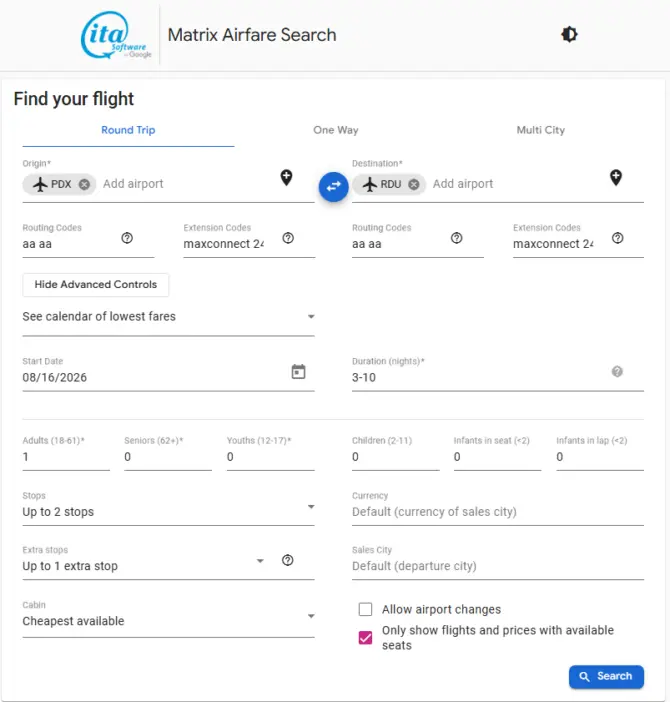
When carriers load these lower fare classes into Global Distribution Systems (GDS), savvy travelers and automated fare-tracking platforms immediately flag the discrepancy. However, the operational reality of securing these prices requires navigating a maze of fare class codes, routing rules, and ticket restrictions that can easily trap the uninitiated consumer.
Supporting Context & Metrics: Decoding the True Cost of Air Travel
To fully comprehend the financial implications of the current RDU-PDX fare offerings, one must look beyond the sticker price and analyze the underlying metrics of modern air travel economics.

The True Cost of Basic Economy
At first glance, a $110 price differential between the $276 Basic Economy fare and the $386 standard fare appears to present a significant savings opportunity for budget-conscious flyers. However, behavioral economics and travel risk assessment suggest that the basic fare often carries hidden costs:
- Inflexibility Penalties: Life is inherently unpredictable. The absolute non-changeable nature of Basic Economy means that if a meeting runs late, a personal emergency arises, or a flight is missed due to unforeseen traffic on Interstate 40 heading into RDU, the entire value of the ticket is forfeited. By contrast, standard economy fares—while sometimes requiring change fees or fare differences—typically offer credit retention or more flexible modification options.
- Loyalty Devaluation: For frequent flyers striving to maintain elite status with the American Airlines AAdvantage program, the forfeiture of Loyalty Points and redeemable miles on Basic Economy tickets represents a tangible financial loss. Depending on a traveler’s valuation of airline miles (conservatively estimated at 1 to 1.5 cents per mile) and the perks of elite status (such as complimentary upgrades, priority boarding, and waived baggage fees), bypassing standard economy can erode the perceived savings.
- Ancillary Fee Creep: While both tiers generally permit a normal-sized carry-on bag and a personal item on domestic mainline routes, the psychological and physical toll of seat assignment restrictions cannot be quantified solely in dollars. Families, couples, and travelers with specific ergonomic or health-related seating needs face heightened anxiety when subjected to random seat assignment at the gate.
Routing and Mileage Infrastructure
Transcontinental journeys originating from Raleigh/Durham typically involve complex routing dynamics. Because RDU is a vital focus city and secondary hub for several major carriers rather than a primary mega-hub (such as Atlanta, Chicago, or Charlotte), flights to West Coast destinations like Portland often incorporate a domestic connection.
- Routing Analysis: Passengers on these itineraries may route through central hubs like Dallas/Fort Worth (DFW), Chicago O’Hare (ORD), or Charlotte (CLT) before making the transcontinental leg to Portland International Airport (PDX). Each connecting point introduces operational variables, including minimum connect times (MCT) and potential exposure to weather-related delays.
- Mileage Yields: A standard round-trip journey between RDU and PDX covers approximately 4,500 to 5,000 baseline flight miles, depending on the exact connecting routing. For standard economy ticket holders, this translates into a substantial boost in mileage balances, reinforcing the value proposition of paying the slightly higher $386 baseline fare.
Official Industry Perspectives and Stakeholder Insights
Representatives from consumer advocacy groups, airline revenue management sectors, and travel distribution networks have increasingly voiced concerns over the opaque nature of modern fare structuring.
Airline Industry Rationale
From the perspective of network carriers, unbundling is framed as a consumer-friendly innovation. Airline executives frequently argue that Basic Economy enables low-income or infrequent travelers to access the skies at the lowest possible price point, leaving optional services to those who value them. In investor relations briefings, legacy carriers have consistently reported that Basic Economy products have successfully recaptured market share from ultra-low-cost carriers while driving incremental ancillary revenue through seat selection fees and baggage purchases made downstream in the booking funnel.
Consumer Advocacy and Transparency Concerns
Conversely, consumer protection organizations and travel analysts point out that the presentation of these fares—particularly on third-party online travel agencies (OTAs) and metasearch engines—often obscures the restrictive nature of Basic Economy. The prominent display of the lowest possible headline price ($276) draws consumers into a booking flow where the restrictions are buried in fine print, leading to widespread consumer friction at the check-in counter when passengers realize they cannot select seats together or modify their travel dates without purchasing a completely new ticket.

Furthermore, industry watchdogs emphasize that the widening gap between standard and basic fares reflects an aggressive push to monetize every facet of the passenger journey. As airlines refine their dynamic pricing algorithms, the historical baseline of air travel—which included a seat assignment, a carry-on, and change flexibility—has effectively been reclassified as a luxury add-on.
Future Outlook: What Travelers Can Expect Moving Forward
As the aviation sector navigates shifting economic landscapes, inflationary pressures, and evolving passenger expectations, the trajectory of domestic airfare pricing points toward even greater segmentation.
1. Increased Personalization and Dynamic Bundling
Airlines are rapidly moving away from rigid, static fare classes toward hyper-personalized, dynamically bundled offers. In the near future, ticketing systems will likely leverage artificial intelligence and passenger history to present customized fares that sit between traditional Basic and Standard Economy. Travelers may see bespoke bundles that allow them to purchase seat selection and mileage accrual without paying for full change flexibility, or vice versa.
2. Regulatory Scrutiny on Ancillary Fees
The U.S. Department of Transportation (DOT) and international regulatory bodies have intensified their focus on airline fee transparency, ancillary disclosure, and refund rights. As regulatory pressure mounts, airlines may be forced to display the total cost of travel—including mandatory seat selection or baseline baggage fees if basic tiers become untenable—earlier in the booking search process. This could temper the aggressive marketing of headline-grabbing low fares and force a more transparent apples-to-apples comparison for consumers.
3. Strategic Advice for RDU-PDX Travelers
For consumers eyeing the current Raleigh/Durham to Portland market window, strategic planning is paramount. Travelers must evaluate their personal risk tolerance and trip rigidity before selecting a fare class:

- Choose Basic Economy ($276) ONLY IF: Your travel dates are 100% immutable, you are traveling alone (or do not mind being separated from companions), you hold no loyalty aspirations with the operating carrier, and you are prepared to absorb the total financial loss if your plans change.
- Choose Standard Economy ($386) IF: You require peace of mind regarding schedule changes, wish to sit alongside travel companions, need to secure elite qualifying miles, or want the baseline security of a flexible, full-service ticket.
By looking past the initial price tag and understanding the structural mechanics of modern airline economics, travelers can make empowered, cost-effective decisions that align with both their budgets and their travel realities.