








Texas has long been the undisputed territory of American Airlines and Southwest Airlines, with United Airlines holding a massive footprint of its own in Houston. For decades, the skies over the Lone Star State have been defined by these deep-rooted carrier networks. However, a major competitive shift is underway. Delta Air Lines is aggressively ramping up its ambitions in Texas, positioning itself to capture a larger share of one of the fastest-growing aviation markets in the United States.
With a rapidly expanding footprint in Austin and targeted growth in San Antonio, Delta is signaling that it no longer views Texas merely as a destination to feed its primary hubs in Atlanta, Salt Lake City, or Minneapolis. Instead, the Atlanta-based carrier is building the foundation for what could soon become its next major hub, challenging its rivals on their home turf.
Speaking on the "Airlines Confidential" podcast, Delta Air Lines Chief Executive Officer Ed Bastian made the company’s strategic intentions clear. Bastian emphasized that the carrier wants to be significantly bigger in Texas, specifically pointing to targeted development efforts in both Austin and San Antonio.
"Whether it’s the buildout in Austin or the expansion in San Antonio, we see tremendous opportunity," Bastian noted, highlighting the carrier’s commitment to capturing the economic tailwinds of the region.
The Infrastructure of a Budding Hub: Inside Delta’s Austin Expansion
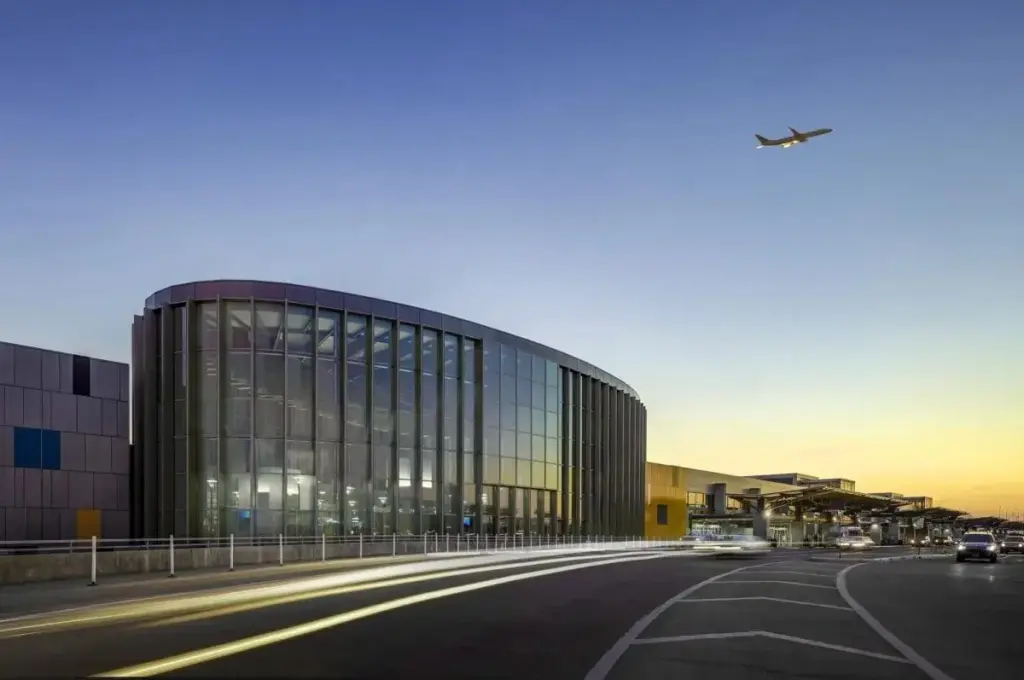
An airline does not build a hub overnight; it requires a massive commitment of capital, physical infrastructure, and personnel. In Austin-Bergstrom International Airport (AUS), Delta is systematically assembling the puzzle pieces required to run a high-volume, self-sustaining hub operation.
Securing the Gates
The most valuable currency at any capacity-constrained airport is gate space. Without gates, an airline cannot increase its flight frequencies or add new destinations. Delta has successfully secured 15 gates at Austin-Bergstrom International Airport. This substantial real estate footprint gives the carrier the operational flexibility to coordinate banks of arriving and departing flights—the defining characteristic of a hub-and-spoke system. By controlling these gates, Delta can minimize turn times and offer more reliable schedules to both local travelers and connecting passengers.
Establishing a Local Crew Base
In another clear sign of long-term commitment, Delta has established a localized flight attendant base at the Austin airport, starting with 100 flight attendants. Creating a crew base is a significant operational milestone. Rather than flying crew members in from other cities—a practice that can lead to cascading delays during severe weather or system outages—having 100 locally based flight attendants allows Delta to start its morning flight schedules more reliably. It also represents a direct investment in the local Austin economy, signaling to municipal leaders and airport authorities that Delta is in Central Texas to stay.
Premium Amenities and the Sky Club Footprint
To capture high-yielding corporate travelers and premium leisure passengers, Delta is expanding its lounge presence. The carrier is opening another premium lounge at Austin-Bergstrom, adding to its existing Sky Club footprint. In modern commercial aviation, lounge access is a critical tool for driving customer loyalty and securing high-value business contracts. By investing in premium ground amenities, Delta is positioning itself as the carrier of choice for Austin’s booming technology, finance, and creative sectors.
From Central Texas to the World: The Paris Connection
Perhaps the most dramatic indicator of Delta’s Austin ambitions is its upcoming international route expansion. Delta is launching Austin-Bergstrom International Airport’s first-ever nonstop service to Europe with a route to Paris. The highly anticipated service is scheduled to begin operations on March 27, 2027.
This direct connection to Paris-Charles de Gaulle (CDG) is a strategic masterstroke. Paris is not only a premier global destination for leisure and business travelers, but it also serves as the primary hub for Air France, a founding member of the SkyTeam alliance alongside Delta. By flying directly from Austin to Paris, Delta offers Central Texas travelers seamless, one-stop connectivity to hundreds of destinations across Europe, Africa, the Middle East, and India.
Historically, Austin travelers looking to cross the Atlantic had to connect through domestic megahubs like Dallas-Fort Worth (DFW), Houston Intercontinental (IAH), or Chicago O’Hare (ORD). By bypasssing these traditional gateways, Delta is offering a highly competitive product that appeals directly to time-sensitive business executives and affluent vacationers.
The Cultural Coronation: Merchandising the Austin Hub
While gate allocations and crew bases represent the hard infrastructure of an airline hub, brand identity represents the soft power. Delta is already welcoming Austin into its inner circle of hubs through a subtle but highly telling marketing campaign.
In Delta’s official merchandise store, under a specialized section reserved for products themed around its primary hubs—such as Atlanta, Detroit, and Minneapolis-St. Paul—the carrier has added a dedicated line of Austin-themed merchandise. Employees and aviation enthusiasts can now purchase Austin-themed pint glasses, keychains, and t-shirts.
While a keychain or a pint glass may seem minor in the grand scheme of corporate aviation strategy, it reflects a deliberate internal culture shift. Delta is publicizing Austin as a cornerstone of its domestic network, aligning the city’s identity with its most historic and profitable operational bases.
Navigating the Texas Aviation Battleground
Delta’s aggressive push into Central Texas is set to trigger a fierce competitive response from the state’s incumbent airlines. Texas is home to some of the largest and most profitable airline operations in the world, and the established players will not yield market share easily.
- American Airlines: Headquartered in Fort Worth, American operates its largest hub at Dallas-Fort Worth International Airport (DFW), just a short distance north of Austin. American has historically dominated the Texas air travel market, offering unmatched domestic and international connectivity.
- Southwest Airlines: Based at Dallas Love Field, Southwest has long considered Texas its heartland. The carrier has a massive presence in Austin, Houston, and San Antonio, utilizing a point-to-point network model that appeals to budget-conscious travelers and frequent short-haul commuters.
- United Airlines: Operating a massive hub at Houston’s George Bush Intercontinental Airport (IAH), United commands a powerful share of the corporate and international travel market in East Texas and the Gulf Coast.
Delta’s strategy is to position itself as the premier alternative to these carriers by focusing on high-quality service, operational reliability, and premium amenities. By focusing its growth on Austin and San Antonio, Delta is targeting the geographic and economic sweet spot of the state—the Central Texas corridor—where population growth and corporate relocations are outpacing almost every other region in the country.
The Economic Engine: Why Delta is Betting on Central Texas
The underlying driver of Delta’s expansion is the extraordinary economic transformation of the Austin-San Antonio corridor. Often referred to as the "Texas Innovation Corridor," this region has become a magnet for corporate headquarters, technology startups, and manufacturing facilities.
Austin’s rise as "Silicon Hills" has brought in massive campuses for companies like Tesla, Oracle, Apple, and Samsung. These corporations require constant, reliable air travel for executives, engineers, and clients. San Antonio, meanwhile, boasts a robust economy anchored by healthcare, military operations, cybersecurity, and tourism.
As these two metropolitan areas continue to grow toward one another along the Interstate 35 corridor, they are creating a combined mega-region with immense purchasing power. Delta’s dual-pronged focus on expanding in both Austin and San Antonio is designed to capture the travel demand of this integrated economic powerhouse.
By building up its infrastructure, securing vital gate capacity, establishing local crew bases, and offering direct transatlantic service to Europe, Delta is making a long-term, high-stakes bet on the future of Texas. As the March 27, 2027 launch of the Paris route approaches, the aviation industry will be watching closely to see how Delta’s rivals respond to this bold challenge in their own backyard.