







Private aviation represents a colossal, multi-billion-dollar ecosystem that spans from single-engine turboprops utilized by regional utility operators to sprawling, widebody airliners converted into bespoke airborne palaces. Globally, the private aircraft market was valued at $36.8 billion last year and is projected to skyrocket to $68.4 billion by 2034. While the baseline metrics of this industry are driven by corporate fleets, charter brokerages, and fractional ownership programs, its absolute apex belongs to a tiny fraction of the global population.
At the ultra-luxury end of the spectrum, business tycoons, royal families, and A-list celebrities command private aircraft designed not merely for transit, but as fully functional, intercontinental flying apartments and boardrooms. These customizations transform standard commercial-grade airframes into masterpieces of interior design, acoustic engineering, and technological integration.
To understand the sheer scale of wealth concentrated in this niche, one need only look at the five most expensive celebrity private jets currently operating in global airspace. From custom-painted Bombardier ultra-long-range jets to widebody commercial airliners gifted by cargo carriers, the following investigation breaks down the aircraft, the modifications, and the staggering valuations defining modern celebrity aviation.
Detailed Breakdown: The Top 5 Most Expensive Celebrity Private Jets
5. Kylie Jenner’s Bombardier Global 7500 (Valued at $72M – $75M)
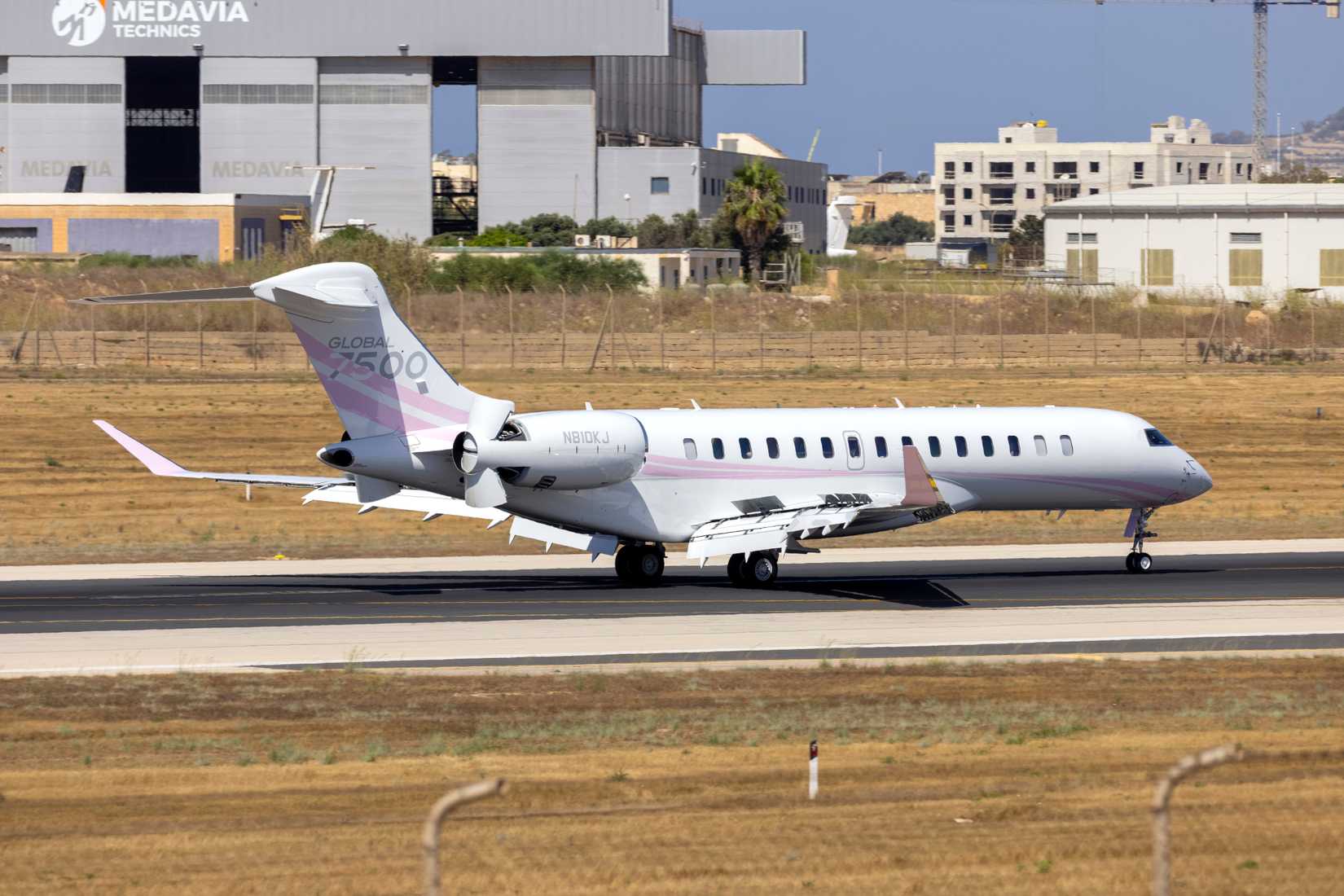
Coming in at number five on the list is media personality and beauty mogul Kylie Jenner’s Bombardier Global 7500, widely recognized by aviation enthusiasts as "Kylie Air." Procured in 2020 through the shell company Rise and Shine Air LLC, the ultra-long-range business jet is estimated to command a market value between $72 million and $75 million.

The Bombardier Global 7500 is already one of the most capable business jets in production, offering a seating capacity of up to 19 passengers and an astounding range of 7,700 nautical miles (14,260 kilometers). However, Jenner’s iteration departs significantly from factory configurations. Externally, the airframe features a distinct pale pink stripe running along a crisp white fuselage, directly echoing the color palette of Kylie Cosmetics. The aircraft carries the custom tail number N810KJ, cleverly incorporating her initials and birthday.
The interior layout takes full advantage of the aircraft’s four distinct cabin zones:
- The Aft Suite: Features a full-sized permanent bed and a stand-up shower facility, shielded from the forward cabins for maximum privacy.
- The Main Lounge: Positioned immediately ahead of the master suite, offering plush entertainment setups.
- The Mid-Cabin: Configured with a six-seater conference, meeting, and dining space upholstered in custom leather.
- The Forward Area: Equipped with additional custom seating, integrated mood lighting, a fully functioning galley kitchen, and a dedicated crew rest suite adjacent to the cockpit.
4. Jeff Bezos’s Gulfstream G700 (Valued at $80M)
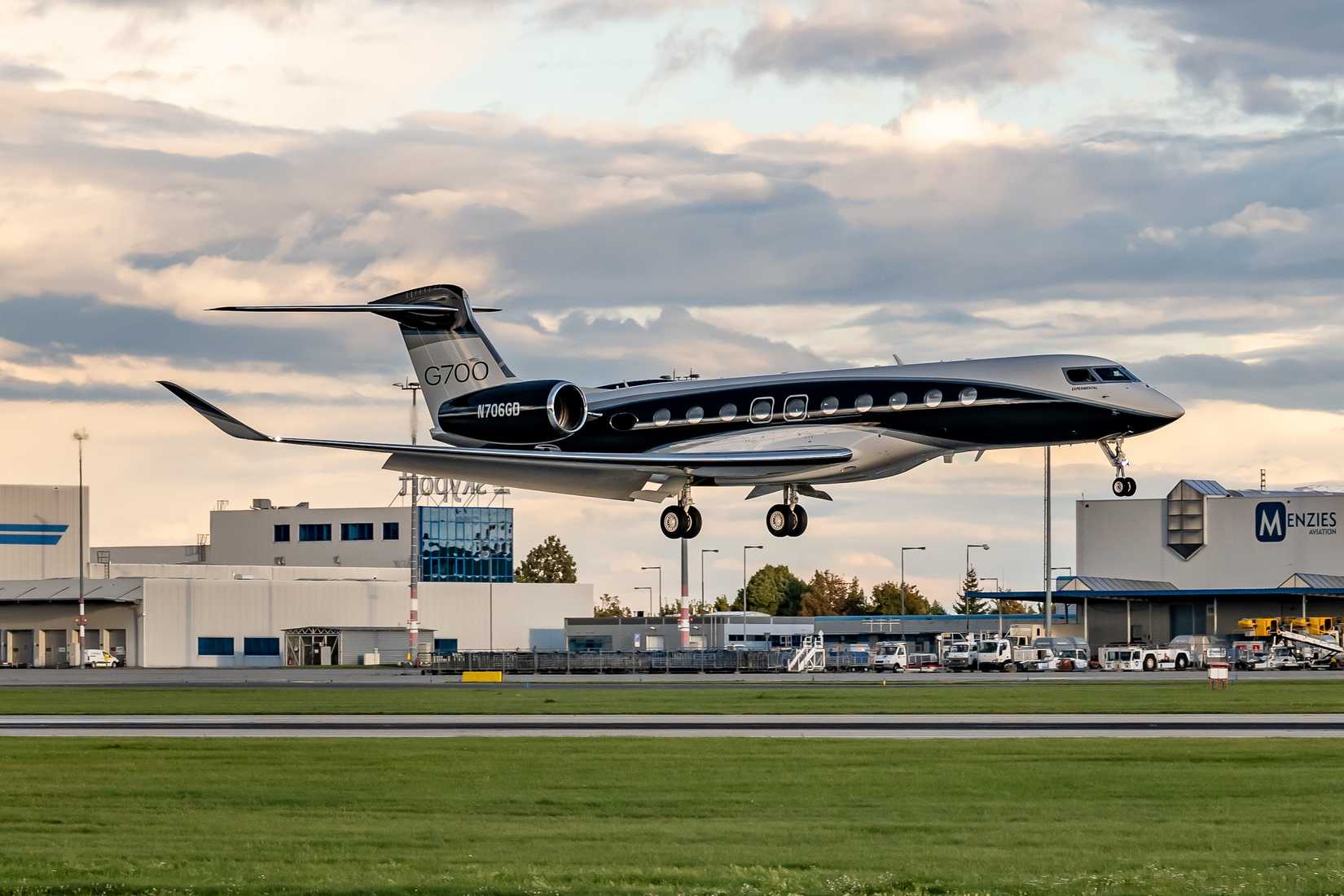
While Amazon founder Jeff Bezos may not fit the traditional Hollywood mold of a celebrity, his towering global profile and massive net worth place him firmly at the center of ultra-luxury aviation. In 2024, Bezos took delivery of a brand-new Gulfstream G700—reportedly the 20th production model to roll off the assembly line—valued at approximately $80 million.
Operated via specialist management firm Executive Jet Management and registered under the tail number N11AF, this aircraft joined an extensive private fleet. According to global aviation tracking data, Bezos’s personal stable has historically included multiple Gulfstream G650ERs and a Pilatus PC-24. His cumulative private fleet valuation has frequently exceeded $150 million, with older models systematically listed for sale upon the arrival of next-generation upgrades (such as his former G650ER, which was listed at $38 million).

The Gulfstream G700 is an engineering marvel, capable of pushing near the speed of sound at Mach 0.935 and stretching its legs across 7,750 nautical miles (14,353 kilometers). While specific interior design choices for Bezos remain closely guarded, the G700 platform is certified to host up to five distinct living areas. These configurations can accommodate up to 19 seated passengers or 13 sleeping occupants across ultra-wide cabins featuring panoramic oval windows, circadian lighting systems, and pristine master bedrooms with en-suite lavatories.
3. Donald Trump’s Boeing 757 (Valued at $100M)
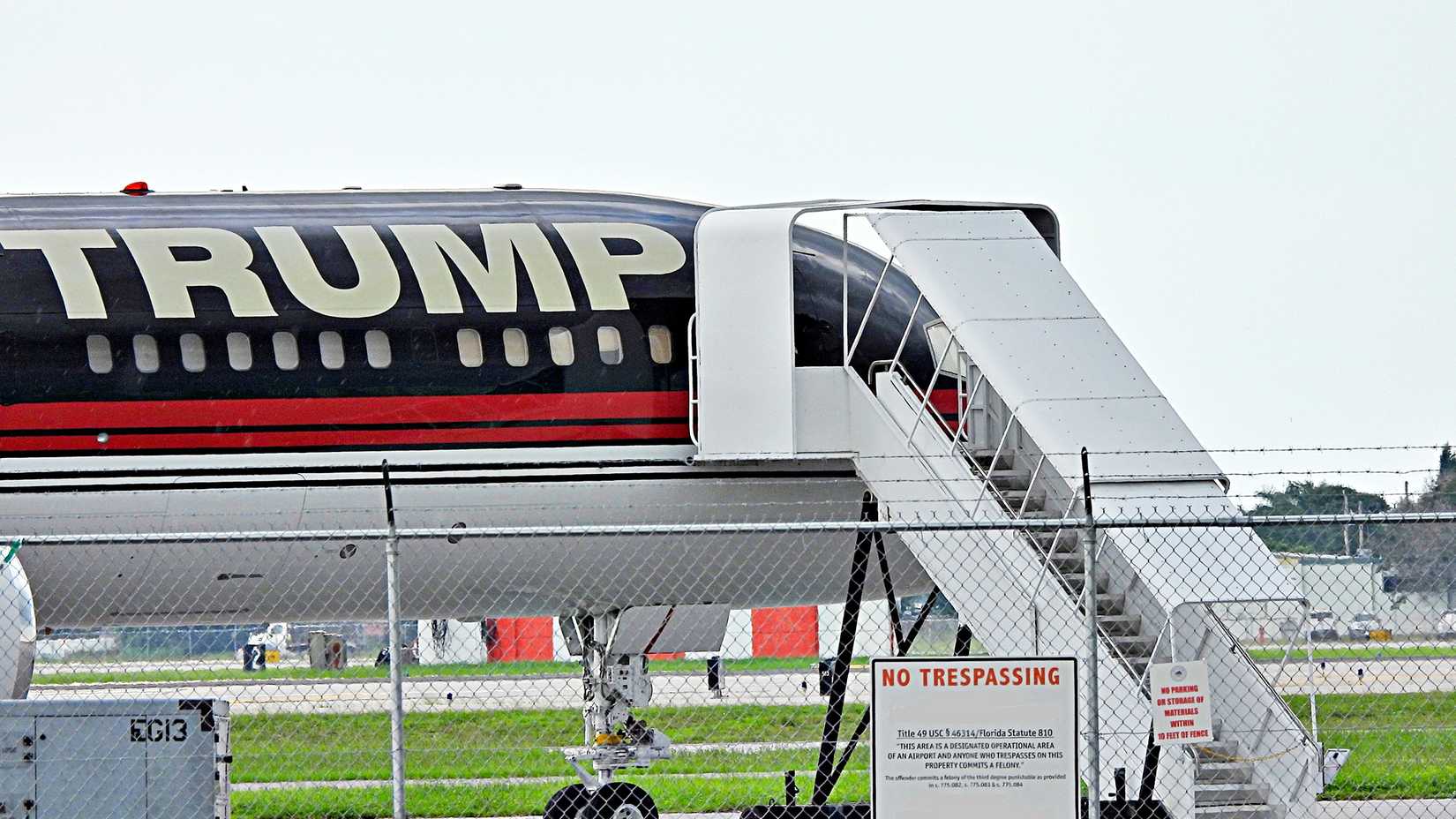
Ranking third on the valuation spectrum is the legendary Boeing 757-200 owned by United States President Donald Trump. Originally acquired in 2010 and frequently dubbed "Trump Force One," this narrowbody airliner commands a baseline market valuation of approximately $100 million, though its historical modifications and iconic status render it virtually priceless to aviation aficionados.
Registered as N757AF, the airframe has a storied commercial history, having first entered service with Danish carrier Sterling Airways in 1991 before passing through various corporate and private owners, including late Microsoft co-founder Paul Allen. Following its acquisition by Trump, the interior underwent a lavish, multi-million-dollar overhaul. Reports indicate that Trump invested roughly $250,000 solely into interior refurbishments, incorporating custom leather seating, suede wall panels, and rich mahogany woodwork.
Key features of the cabin include:
- Two private guest suites outfitted with high-end entertainment systems rivaling commercial private theaters.
- Three dedicated lavatories featuring 24-karat gold-plated fixtures and accents.
- Integrated private dining and executive conference spaces.
- Custom seats emblazoned with the Trump family crest.
Externally, the aircraft is unmistakable. Adorned with a metallic gold Trump signature across the fuselage, an American flag on the vertical stabilizer, and striking black, red, and white cheat lines, the plane served as a focal point during national election campaigns. Following a multi-year grounding and an extensive mechanical and cosmetic overhaul that concluded in 2022, the 757 continues to utilize its 3,915-nautical-mile (7,250-kilometer) range to navigate global itineraries.
2. Kim Kardashian’s Gulfstream G650ER (Valued at $150M)
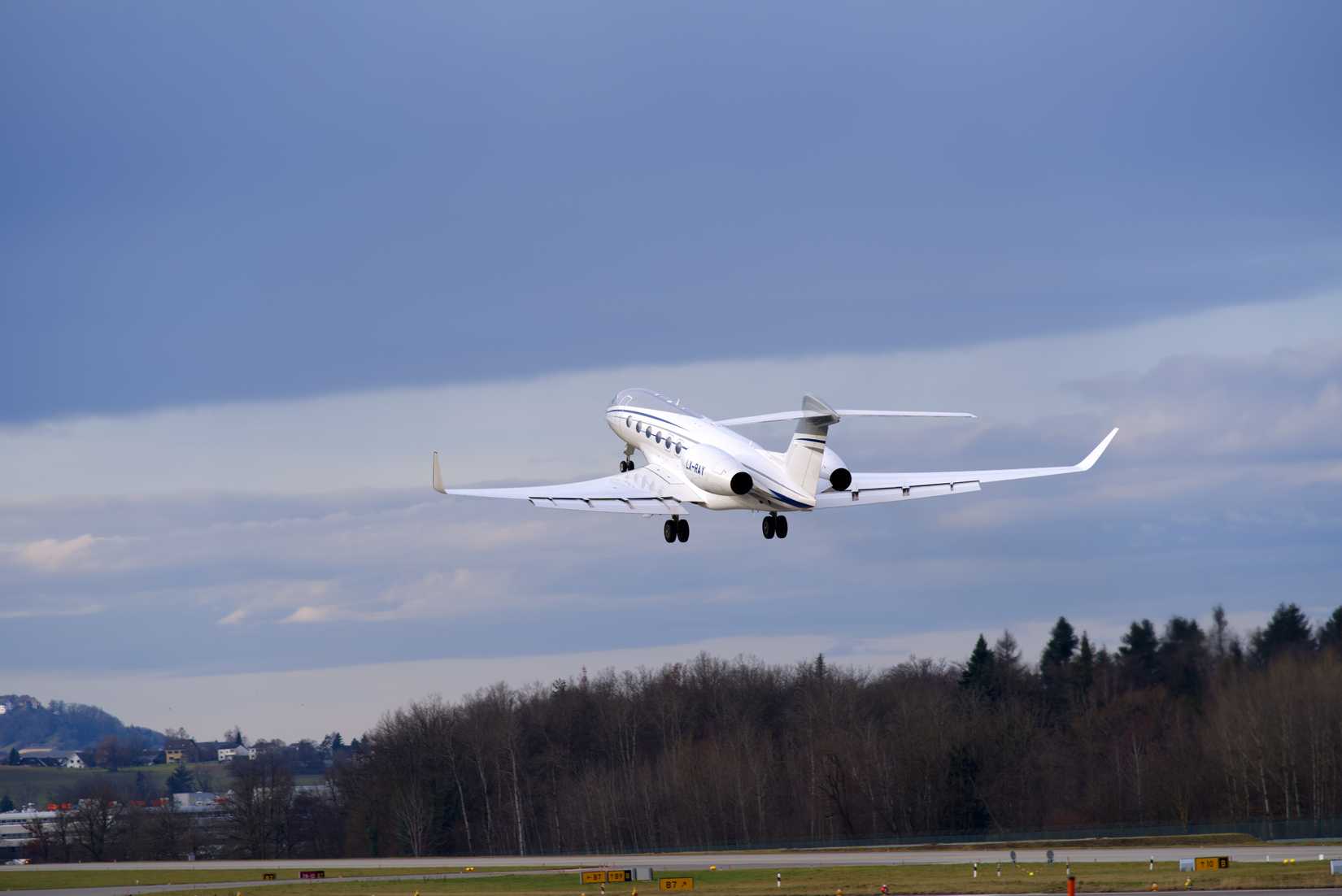
Pinching the runner-up spot is media mogul Kim Kardashian, whose custom-designed Gulfstream G650ER matches—and nearly exceeds—the financial investment seen in her half-sister Kylie Jenner’s fleet. Purchased brand new in 2022 under the corporate entity Noel Air LLC for an estimated base price of $95 million, Kardashian poured an additional $55 million into bespoke interior and exterior modifications, bringing the total tally to a staggering $150 million.
Registered as N1980K (a subtle nod to her birth year), the aircraft is affectionately referred to in pop culture as "Kim Air." In stark contrast to the flashy liveries favored by other celebrities, Kardashian opted for a minimalist aesthetic: a cream and light beige exterior finish that mirrors the signature color schemes of her luxury real estate properties and custom vehicle fleet.
To execute the interior design, Kardashian enlisted renowned interior designers Tommy Clements and Waldo Fernandez. The cabin boasts:
- Ultra-soft white leather upholstery paired with pale, natural wood accents spanning the ceiling panels, bulkheads, and storage compartments.
- A private master suite situated at the rear of the cabin.
- Two full bathrooms equipped with premium stone and metallic finishes.
- A central social and dining lounge capable of converting into lie-flat beds.
With a phenomenal range of 7,500 nautical miles (13,890 kilometers), the G650ER enables Kardashian to execute non-stop intercontinental flights between North America, Europe, and Asia with absolute discretion and comfort.
1. Drake’s Converted Boeing 767 (Valued at $185M – $200M)
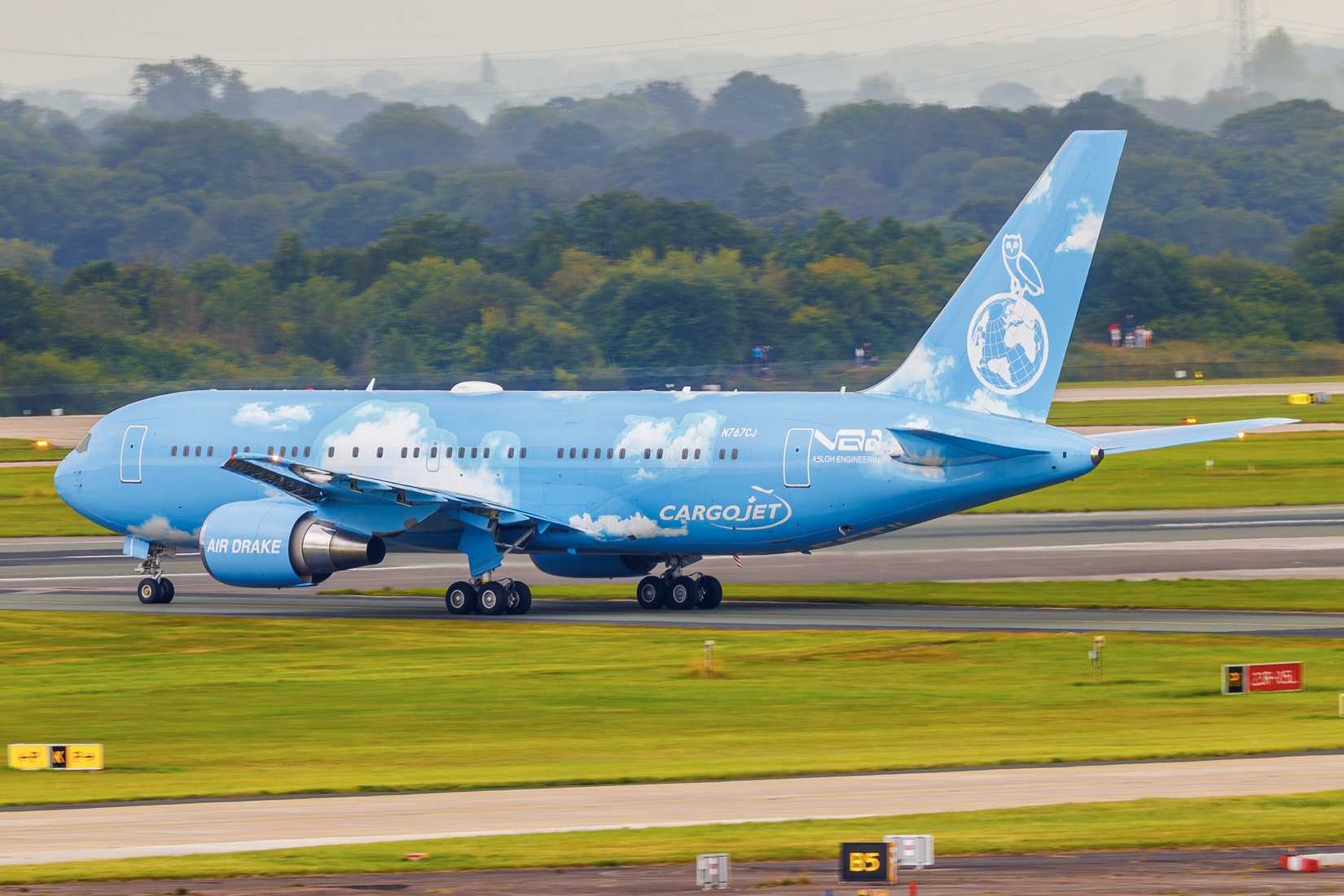
Sitting comfortably at the absolute summit of celebrity aviation is Canadian rapper Drake, whose private transport dwarfs traditional business jets in both physical scale and market valuation. Estimated to be worth between $185 million and $200 million, "Air Drake" is a widebody commercial airliner—specifically, a converted Boeing 767-200.
Crucially, unlike many of his celebrity peers who purchased their aircraft outright, Drake acquired his widebody through a unique corporate partnership with Canadian freighter airline Cargojet Airways, which gifted the aircraft to the artist in 2019 as part of a high-profile brand partnership.
The aircraft’s pedigree traces back to 1996, when it originally operated for Saudi Arabian charter outfit Mid East Jet. Today, it is leased via Cargojet under registration N767CJ. The exterior livery is a work of modern art, designed in 2020 by the late Virgil Abloh, former artistic director of Louis Vuitton menswear. The fuselage features a striking sky-blue and white cloud motif—reminiscent of album artwork associated with the artist—alongside Drake’s "October’s Very Own" (OVO) branding and the "Air Drake" moniker emblazoned across the engine cowlings.
Inside, the Boeing 767 functions less like an aircraft and more like a five-star airborne hotel. The sprawling cabin features:
- Multiple private master suites and VIP staterooms.
- Two distinct, full-sized living rooms outfitted with luxury lounge seating.
- A shower-equipped private bathroom.
- Dedicated zones for dining, executive entertainment, and leisure.
Following a multi-month grounding period for major interior refits, the cabin now showcases rich purple and deep pink LED mood lighting, bespoke gold-plated architectural detailing, and deep blue leather seating capable of accommodating nearly three dozen passengers in unprecedented luxury.
Supporting Context & Market Metrics
The existence of these elite aircraft underscores a broader macroeconomic reality within the aerospace sector. According to market intelligence reports from DataIntelo and industry analysts, the global private aviation sector is expanding rapidly, driven by heightened demand for safety, privacy, and time-efficiency among ultra-high-net-worth individuals (UHNWIs).
| Rank | Celebrity / Owner | Aircraft Model | Estimated Valuation | Key Customizations / Features |
|---|---|---|---|---|
| 1 | Drake | Boeing 767-200 | $185M – $200M | Widebody conversion, Virgil Abloh sky-blue livery, master suites, multiple lounges. |
| 2 | Kim Kardashian | Gulfstream G650ER | $150M | Minimalist cream/beige design, custom woodwork, master bedroom, global range. |
| 3 | Donald Trump | Boeing 757-200 | $100M | 24-karat gold fixtures, private theater system, executive conference room. |
| 4 | Jeff Bezos | Gulfstream G700 | $80M | Next-gen high-speed cruise (Mach 0.935), up to 5 distinct living zones. |
| 5 | Kylie Jenner | Bombardier Global 7500 | $72M – $75M | Pink branding exterior, full-size bed, stand-up shower, dedicated crew quarters. |
However, this luxury market does not exist in a vacuum. It faces intensifying scrutiny regarding sustainability, carbon emissions, and regulatory pressures. As international aviation bodies push toward mandatory sustainable aviation fuel (SAF) adoption and aggressive net-zero carbon targets by 2050, operators of ultra-large private jets—particularly widebody conversions like the Boeing 757 and 767—are finding themselves at the epicenter of environmental debates.
Official Statements and Industry Perspectives
The convergence of celebrity culture and heavy aviation assets has prompted numerous statements from aircraft manufacturers and charter brokerages regarding the changing nature of private flight.
In a recent industry briefing on ultra-long-range business aviation, a senior Bombardier executive emphasized the psychological shift among high-net-worth buyers:
"Our clients are no longer purchasing time-saving machines merely to travel from point A to point B. They are acquiring mobile ecosystems. The modern cabin is an extension of an estate or a corporate headquarters, where acoustic serenity, connectivity, and localized climate control are non-negotiable standards."
Similarly, representatives from Gulfstream Aerospace have repeatedly highlighted the technological leaps embedded in aircraft like the G700 and G650ER:
"The demand for ultra-long-range capability reflects a globalized elite who require uninterrupted connectivity across oceans. By pushing aerodynamic efficiency, cabin altitude comfort, and high-mach cruising speeds, modern business aviation redefines what is physically possible in the air."
Conversely, environmental advocacy groups and regulatory bodies have raised concerns over the disproportionate carbon footprint generated by private widebody airliners. While commercial airlines optimize seat-mile efficiency, private VIP conversions—such as those operated by Drake and Donald Trump—burn immense quantities of jet fuel relative to their passenger manifests, keeping the issue of private aviation emissions at the forefront of global policy discussions.
Future Outlook
Looking ahead toward the 2030s, the landscape of celebrity private aviation is poised for radical transformation. As the market marches toward its projected $68.4 billion valuation, several key trends are set to reshape how ultra-wealthy individuals fly:
- Stricter Environmental Compliance: As governments implement carbon-tax frameworks and mandate blending ratios for Sustainable Aviation Fuel (SAF), private jet owners will face higher operating overheads and increased pressure to offset their carbon footprints.
- Technological Advancements in Cabin Design: The integration of ultra-high-speed satellite internet (such as Starlink aviation integrations) will turn private jets into fully functional, high-bandwidth streaming and trading floors, reducing the need for physical travel even further while raising expectations for onboard connectivity.
- Transition to Next-Gen Airframes: As older commercial airliners used for VIP conversions (like legacy Boeing 757s and 767s) face tightening noise and emissions regulations at key global airports, the ultra-luxury market is expected to pivot increasingly toward ultra-long-range clean-sheet business jets from manufacturers like Bombardier, Gulfstream, and Dassault.
Ultimately, while the economic realities and environmental optics of flying private will continue to draw fierce public debate, the appetite among global A-listers and tech titans for airborne luxury remains unabated. As long as extreme wealth commands the global stage, the upper tiers of private aviation will continue to push the boundaries of engineering, design, and opulence.