









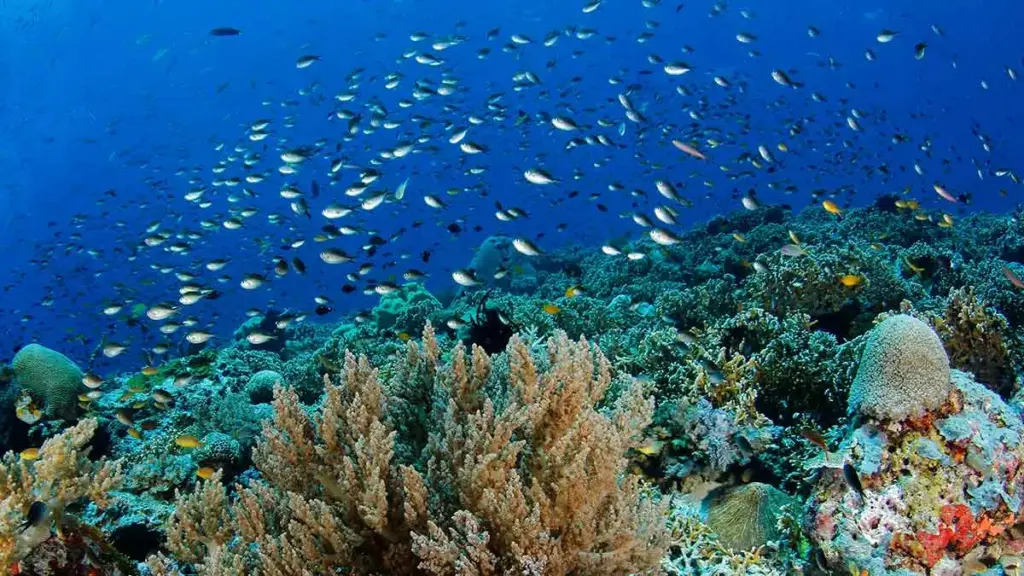
The planet is a theater of profound contrasts, stretching from the wind-scoured, snowy peaks of Mount Everest to the silent, crushing abyss of the Mariana Trench. Across these vast and varied geographies, humanity harbors a persistent, deep-seated fascination with the wild. Travelers cross continents to watch elephant herds traverse the undulating dust of the Serengeti, sit quietly in the humid embrace of the Amazon to absorb ancient forest management traditions from Indigenous communities, or don masks to marvel at the kaleidoscopic, fragile reefs of the Coral Triangle.
For decades, ecotourism has been championed as the intellectual and logistical bridge between human curiosity and ecological preservation. It offers a seductive promise: the chance to witness the Earth’s most awe-inspiring landscapes while simultaneously funding their defense.
However, in an era defined by climate anxiety and hyper-mobility, "ecotourism" has devolved into a ubiquitous corporate buzzword. Today, the term is routinely hijacked and weaponized by marketing departments to describe virtually any holiday involving trees, open air, or a passing glimpse of wildlife. This semantic dilution normalizes greenwashing—a practice where trips that actively disrupt fragile habitats, stress wildlife populations, or culturally exploit local communities are cloaked in the virtuous language of sustainability. This widespread commodification masks destructive practices and threatens to erode the foundational integrity of what true ecotourism was built to achieve.
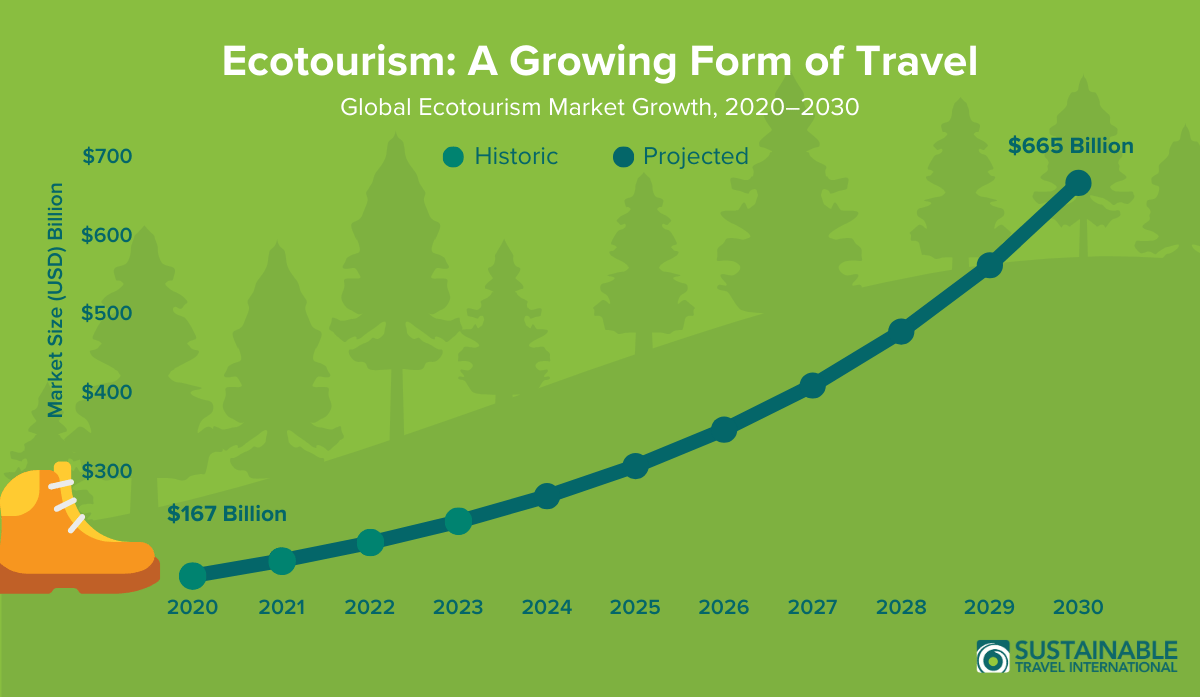
To reclaim the discipline, we must fundamentally re-examine the mechanics of travel. Authentic ecotourism is far more than simply existing in nature or booking a rustic lodge. At its core, it is an intentional, rigorous practice of responsible travel to natural environments that actively safeguards those ecosystems, uplifts host communities economically and socially, and cultivates a transformative, respectful appreciation for the landscapes and cultures that make them unique. As the global travel sector accelerates toward a projected $665 billion valuation by 2030, distinguishing between genuine conservation-driven tourism and superficial greenwashing has never been more urgent.
Detailed Chronology: The Roots and Rise of Responsible Travel
To understand where ecotourism is heading, one must trace its intellectual and institutional lineage. While human beings have long engaged in nature-adjacent travel, the formal architecture of ecotourism as a distinct socio-economic and environmental movement is relatively young.
The 1980s: Conception and the Architecture of Low-Impact Travel
The conceptual genesis of "ecotourism" is widely attributed to the 1980s, anchored by the pioneering work of Mexican architect, environmentalist, and planner Héctor Ceballos-Lascuráin. Seeking a viable framework to reconcile the booming global appetite for outdoor exploration with the accelerating degradation of pristine habitats, Ceballos-Lascuráin formally defined ecotourism. His vision was deceptively simple yet radically transformative: low-impact travel to relatively undisturbed natural areas designed to study, admire, and enjoy scenery and wild plants and animals, while actively promoting conservation, exerting a low visitor impact, and engendering socio-economically active benefit for local populations.
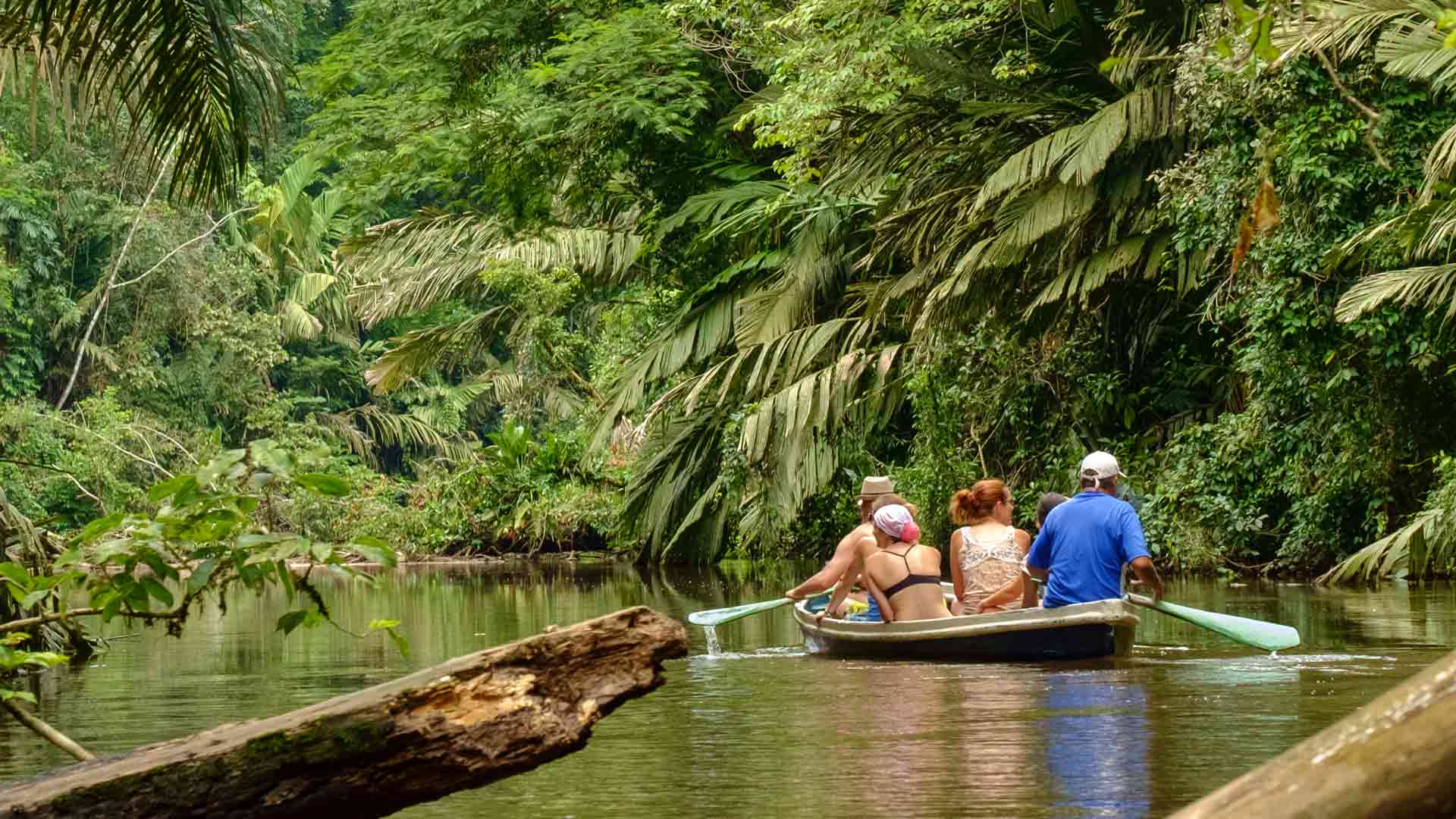
In its earliest iterations, the movement focused heavily on non-consumptive outdoor activities such as birdwatching, botany excursions, and low-impact hiking. The underlying premise was economic substitution—providing local communities with sustainable livelihoods derived from protecting biodiversity rather than exploiting it through logging, poaching, or conversion to agriculture.
The 1990s: Mainstreaming and Global Discourse
As the global environmental movement gained immense traction following the 1992 Earth Summit in Rio de Janeiro, the broader concept of sustainability became central to international development discourse. Ecotourism graduated from a niche academic and conservationist theory into a formalized strategy for rural economic development. Non-governmental organizations (NGOs), academics, and grassroots activists began establishing criteria, certifications, and operational guidelines to separate legitimate conservation travel from standard mass tourism operating in green settings.
2002: United Nations Recognition
A major institutional turning point arrived in 2002 during the United Nations International Year of Ecotourism, hosted in Quebec, Canada. The UN officially recognized ecotourism as a pivotal driver of sustainable development, poverty alleviation, and biodiversity protection. This milestone catalyzed a wave of governmental policy shifts, particularly in biodiversity-rich developing nations like Costa Rica, Kenya, and Indonesia, which began integrating ecotourism metrics into their national economic strategies.
Present Day: Rapid Expansion and the Scale Paradox
Today, ecotourism stands as one of the fastest-growing segments within the global tourism industry. Market analytics from Grand View Research indicate that the global ecotourism market is on a steep upward trajectory, projected to skyrocket toward $665 billion by 2030. This exponential growth reflects a profound cultural shift: modern travelers are increasingly seeking mindful, purposeful ways to explore the world. However, this massive commercial expansion has introduced a dangerous paradox. As the market value of ecotourism surges, so does the incentive for bad actors to falsely market conventional travel products as "eco-friendly," necessitating ever-stricter regulatory frameworks and consumer vigilance.
Supporting Context & Metrics: Defining the Spectrum of Travel
To navigate the contemporary travel landscape, one must parse the subtle yet critical distinctions between three frequently conflated categories: nature tourism, sustainable tourism, and ecotourism. While these terms are often used interchangeably in marketing brochures, they describe fundamentally different operational philosophies.
+---------------------------------------------------------------------------------------------------------+
|                                     THE SPECTRUM OF RESPONSIBLE TRAVEL                                  |
+------------------------------------+-----------------------------------+--------------------------------+
| NATURE TOURISM                     | SUSTAINABLE TOURISM               | ECOTOURISM                     |
| Focus: WHERE travel happens        | Focus: HOW travel is conducted    | Focus: CONSERVATION + COMMUNITY|
| (Natural environments & outdoors)  | (Holistic economic/social/green)  | (Active stewardship & impact)  |
+------------------------------------+-----------------------------------+--------------------------------+
Sustainable Tourism
Sustainable tourism is an overarching framework. It dictates how travel is conducted across any environment—whether urban, rural, coastal, or wilderness. It seeks to balance four key pillars: economic viability, community well-being, environmental health, and visitor satisfaction.
Sustainable tourism is not confined to the great outdoors. It can manifest as a zero-waste museum operating entirely on renewable energy, an urban hotel implementing rigorous fair-employment practices, or a metropolitan restaurant sourcing 100% of its ingredients from hyper-local cooperatives. It is a holistic operational standard designed to minimize negative footprints across all sectors of the hospitality industry.
Nature Tourism
In contrast, nature tourism defines where travel takes place. It encompasses any recreational travel that depends directly on natural environments and landscapes—such as skiing down a mountain resort, riding a jet ski across a coastal bay, or driving an RV through a national park.
Crucially, nature tourism is not inherently conservation-oriented or environmentally friendly. Unmanaged nature tourism can wreak ecological havoc, compacting fragile soils, polluting waterways, disrupting wildlife breeding cycles, and straining municipal resources. The environment is merely the backdrop for the activity, rather than the primary beneficiary of the enterprise.
Ecotourism
Ecotourism occupies the intersection of these two concepts, fused with an uncompromising ethical mandate. It combines a deep appreciation for wild, natural landscapes with an active commitment to their defense. Guided by strict principles, true ecotourism goes beyond merely "doing less harm." It actively funds habitat conservation, fiercely respects Indigenous and local cultures, and injects tangible economic dividends directly into the communities that steward those landscapes. Furthermore, the travel sector is increasingly pivoting toward regenerative travel—a philosophy that moves past sustainability to actively restore, heal, and leave destinations measurably better than they were found.
| Category | Nature Tourism | Ecotourism | Sustainable Tourism |
|---|---|---|---|
| Core Definition | Travel that depends on and takes place in natural settings. | Responsible travel in nature that drives conservation and community equity. | Travel that balances economic, social, and environmental health across all operations. |
| Primary Setting | Natural environments. | Natural environments. | Any destination—natural, urban, or cultural. |
| Primary Impact | Variable; can severely degrade or passively appreciate nature depending on management. | Highly positive; directly minimizes environmental degradation and funds active conservation. | Highly positive; systematically reduces negative impacts and enhances local well-being. |
Official Statements and Frameworks
To establish what constitutes authentic ecotourism, industry leaders and global authorities have spent decades harmonizing standards. Major international bodies—including the International Ecotourism Society (TIES), the International Union for Conservation of Nature (IUCN), the Global Ecotourism Network (GEN), and UN Tourism—have converged on a unified set of guiding principles.
According to these consensus frameworks, genuine ecotourism initiatives must adhere to the following operational commitments:
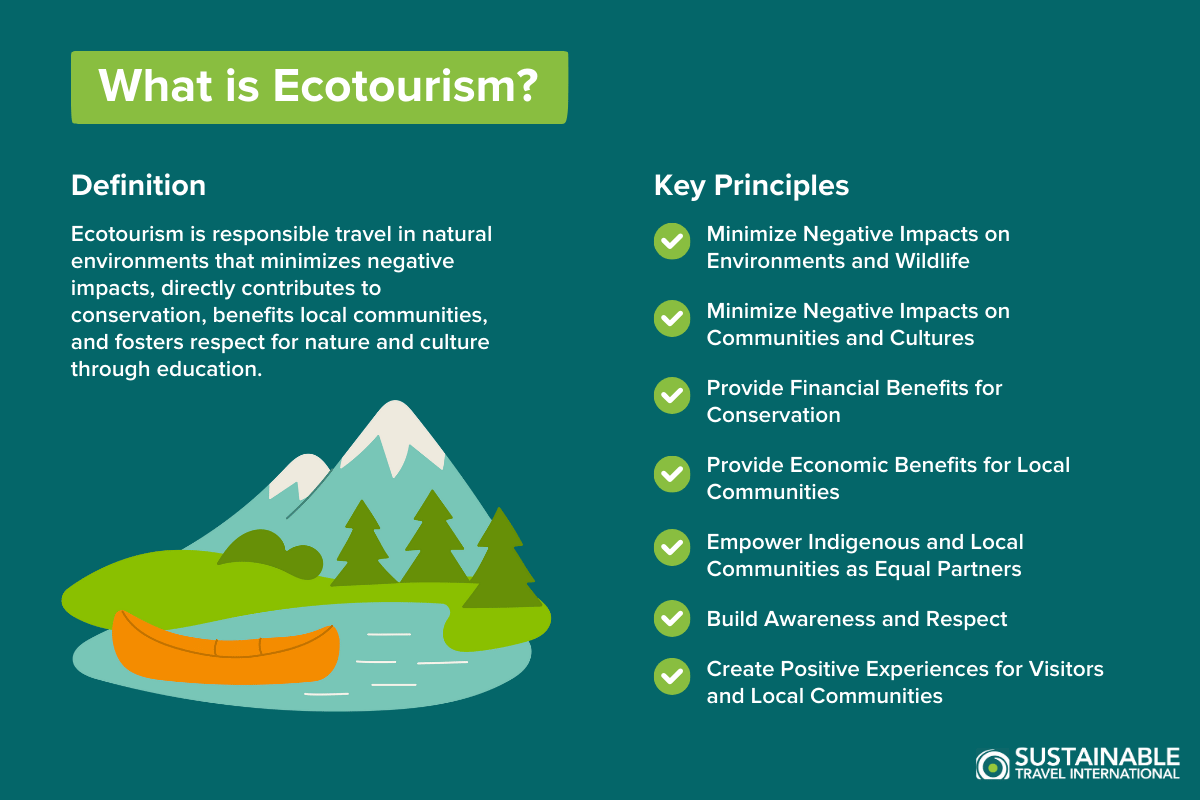
- Biological and Cultural Preservation: Minimizing the physical and cultural footprint of physical infrastructure and human presence.
- Environmental Education: Fostering profound respect for nature and indigenous traditions through interpretive programming for travelers.
- Direct Conservation Funding: Ensuring a direct financial pipeline from tourism revenue to the active management and expansion of protected areas.
- Empowerment and Fair Economics: Ensuring that host communities exercise self-determination and capture equitable economic rewards from tourism operations.
Ecotourism in Action: Global Case Studies
Ecotourism is not a monolithic enterprise; it adapts dynamically to the unique ecological and socio-cultural realities of the regions in which it is practiced. Across the globe, pioneering initiatives demonstrate how responsible travel can successfully marry conservation with economic vitality.
Costa Rica: The Pioneer of Biodiversity Management
Costa Rica stands globally as the poster child for institutionalized ecotourism. Confronting severe deforestation rates in the late 20th century, the nation made a bold political and economic pivot, placing over a quarter of its total landmass under strict legal protection within national parks and biological reserves.
Costa Rica also pioneered the Certification for Sustainable Tourism (CST), an elite regulatory framework that evaluates and incentivizes hundreds of tourism operators based on their ecological and social performance. In regions like Monteverde, expert-guided birdwatching walks immerse travelers in the fragile ecology of the cloud forests while directly funding the preservation work of local families. Similarly, in Tortuguero, community-led sea turtle monitoring programs transform visitors into financial and logistical assets. The revenue generated from guided night-tours funds professional anti-poaching patrols, drastically reducing illegal egg harvesting and giving endangered marine turtle populations a fighting chance.
Raja Ampat, Indonesia: Marine Conservation in the Coral Triangle
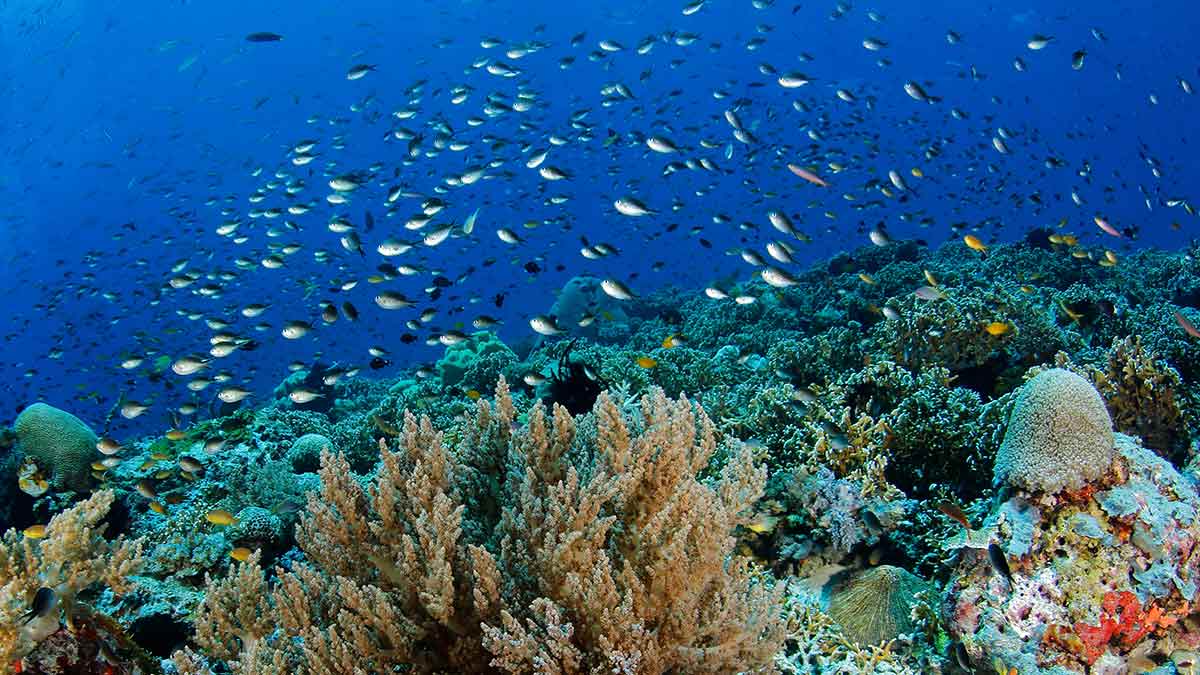
Deep within the Indonesian archipelago lies Raja Ampat, resting squarely inside the Coral Triangle—the global epicenter of marine biodiversity, frequently celebrated as the "Amazon of the Seas." Its crystalline waters harbor roughly 76% of all known coral species and over 1,700 species of reef fish.
For years, this aquatic paradise suffered under the weight of destructive fishing practices and rampant shark finning. The turning point arrived through marine-focused ecotourism models, such as the privately managed Misool Eco Resort in the region’s southern reaches. Misool successfully established a 300,000-acre no-take marine reserve, entirely financed by high-end, low-impact scuba diving tourism.
The economic model is entirely circular: tourism revenues directly fund armed ranger patrols, manta ray sanctuaries, turtle nurseries, and community-operated plastic recycling facilities. The ecological dividends have been staggering. Scientific monitoring reveals that within this privately protected reserve, total fish biomass has surged by over 250%, shark populations have multiplied twenty-fivefold, and coral cover has rebounded by 60%.
+---------------------------------------------------------------------------------------------------------+
|                               MISOOL ECO RESERVE (RAJA AMPAT) RECOVERY METRICS                          |
+---------------------------------------------------------------------------------------------------------+
|  FISH BIOMASS:  [ ██████████████████████████████ ]  +250%                                                 |
|  SHARK POPULATION: [ ████████████████████████████████████████ ]  25x Increase                           |
|  CORAL COVER:    [ ██████████████████████████████ ]  +60%                                                 |
+---------------------------------------------------------------------------------------------------------+
Bhutan: High-Value, Low-Impact State Policy
Rather than chasing high-volume mass tourism, the Kingdom of Bhutan operationalizes environmental protection through a strict state policy of "High Value, Low Volume" tourism. Working in tandem with international bodies such as the UNDP’s Biodiversity Finance Initiative (BIOFIN), Bhutan integrates conservation directly into outdoor adventure sectors, including river rafting. Certified local rafting guides double as environmental stewards, patrolling alpine rivers to intercept illegal fishing, manage waste disposal, and protect critically endangered species such as the white-bellied heron.
Kenya: The Rise of Indigenous Community Conservancies
Kenya holds the distinction of being the first African nation to establish a national ecotourism society, serving as the cradle for the community-conservancy movement. Today, over 200 community-owned conservancies protect vast landscapes where Indigenous pastoralists live alongside megafauna. These community-led initiatives safeguard roughly two-thirds of Kenya’s large mammal populations living outside state-run national parks.
At the LUMO Community Wildlife Conservancy, for instance, multiple local ranches united to protect vital wildlife migration corridors while continuing sustainable cattle grazing practices. Degraded rangelands have experienced dramatic ecological rebounds, once again supporting healthy populations of elephants, cheetahs, and rare antelopes. Tourism revenue generated from guided photographic safaris, cultural exchanges, and community-run camps funds local clinics, schools, and employment, aligning human survival with wildlife preservation. Furthermore, emerging financial tools like carbon offset frameworks—exemplified by initiatives like the Yaeda-Eyasi project in neighboring Tanzania—allow Indigenous communities to earn sustainable incomes by actively protecting their ancestral forests from deforestation.
Future Outlook: Navigating the Path Forward
As the global ecotourism market races toward its projected $665 billion valuation by 2030, the industry stands at a critical crossroads. The future of sustainable travel will not be determined by the sheer volume of travelers adopting eco-labels, but by the rigor, transparency, and accountability embedded within every journey.
For the modern traveler, this demands a shift from passive consumption to active interrogation. Planning an authentic ecotourism experience requires looking past slick marketing imagery to examine the operational reality of tour operators, lodge owners, and local guides. Travelers must ask probing questions: Does this operation actively fund habitat restoration? Are local community members holding leadership and ownership roles? Do the daily activities respect the behavioral boundaries of local wildlife?
Simultaneously, industry professionals and tour operators must embrace standardized metrics, third-party certifications, and regenerative design frameworks that go beyond simply reducing harm to actively healing damaged ecosystems. By anchoring trip planning in the foundational principles of conservation, community empowerment, and cross-cultural education, travelers and industry leaders alike can steer the future of tourism away from hollow greenwashing and toward a truly restorative relationship with the natural world.