










American Airlines is preparing to sunset its transborder service connecting Phoenix Sky Harbor International Airport (PHX) and General Mariano Escobedo International Airport (MTY) in Monterrey, Mexico. Originally heralded as a strategic bridge reconnecting the southwestern United States with one of Mexico’s premier industrial and economic powerhouses, the route’s final rotation is now scheduled to depart on December 1.
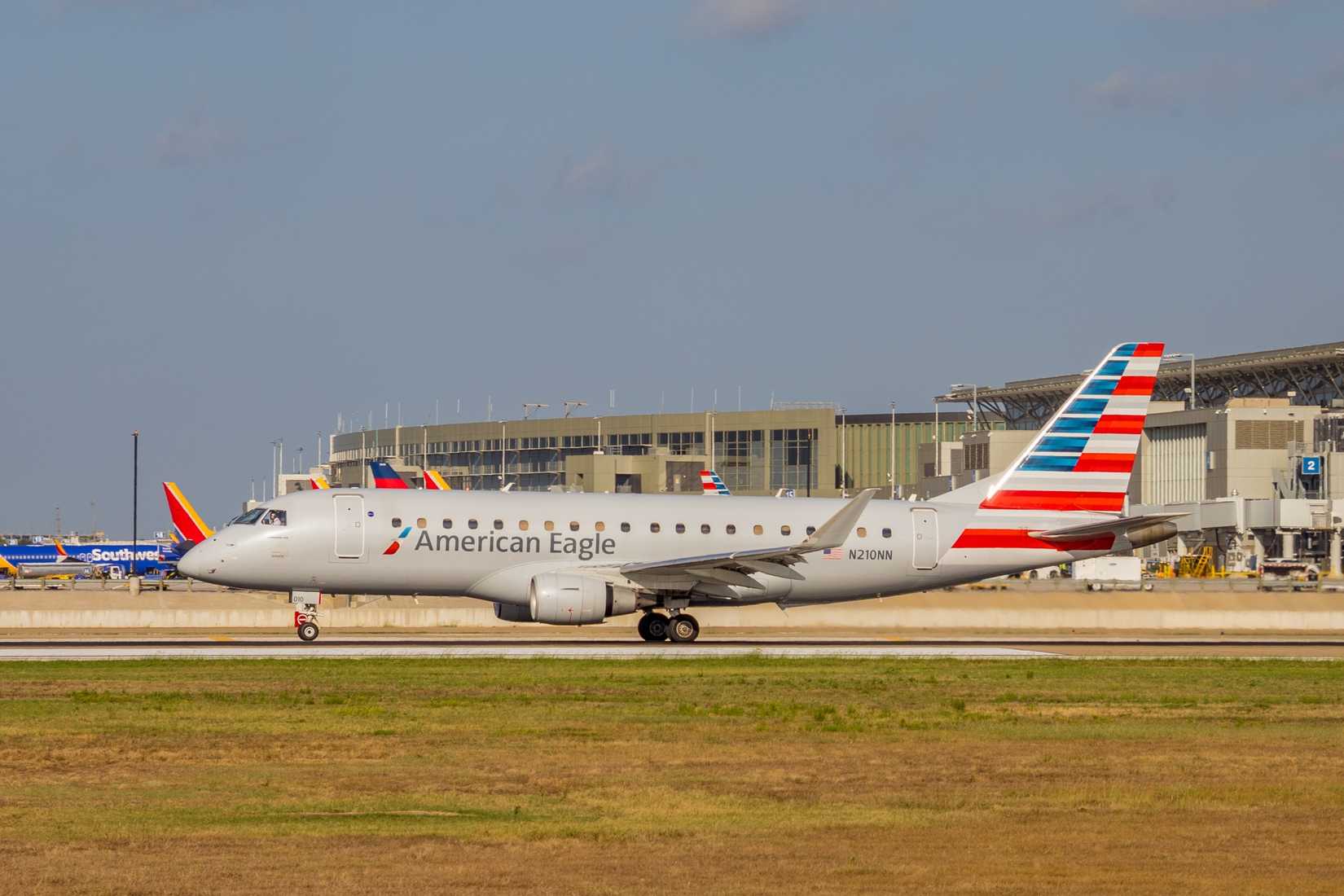
The cancellation marks the end of a relatively brief, three-year chapter for this particular corridor, which was resurrected in January 2023 after a 19-year hiatus. While Phoenix serves as a critical geographic staging ground for American’s footprint in Mexico, the PHX–MTY link ultimately fell victim to persistent underperformance. Despite utilizing appropriately sized regional equipment—specifically the 76-seat Embraer E175 operated by American Eagle partner Envoy Air—the route struggled to command the passenger volumes necessary to sustain commercial viability.
Aviation analytics derived from Cirium paint a stark picture of the route’s struggles, showcasing low load factors that struggled to crack the low-60% threshold over a 12-month monitoring period. Even though American had previously signaled ambitions to ramp up frequencies from five weekly flights to a daily schedule heading into the winter season, a swift and decisive network re-evaluation led planners to scrap the route altogether.
Yet, this contraction should not be misconstrued as a retreat from the Mexican market. American Airlines maintains a commanding and resilient footprint out of its Phoenix hub, preserving connections to ten other Mexican destinations as it optimizes its regional portfolio for maximum profitability.

Detailed Chronology: The Rise and Fall of PHX–MTY
To understand the sudden termination of the Phoenix–Monterrey service, one must look back at its fanfare-filled inception. When American Airlines officially inaugurated flights between PHX and MTY in January 2023, the move was celebrated as a milestone for regional connectivity. The route filled a glaring gap in the market, marking the first time in nearly two decades that scheduled commercial service had directly linked the Arizona desert with northeastern Mexico’s bustling business hub.
The Launch and Initial Momentum
At its outset, the route was tailored to capture both corporate travelers tied to Monterrey’s booming manufacturing sector and leisure passengers seeking seamless cross-border transit. Operating on a daily schedule, the flights utilized Envoy Air’s Embraer E175 regional jets. The aircraft choice was deliberate; the E175 offered a sweet spot for thin, developing international routes, providing a balanced two-class configuration featuring first class, main cabin extra, and standard economy without over-exposing the carrier to excessive operational costs.
For the first several months, the airline monitored the route closely, adjusting timings and frequencies to stimulate demand. However, the anticipated wave of corporate traffic failed to stabilize at levels that could guarantee year-round profitability.
The Scheduling Paradox
The trajectory of the route took a confusing turn in the weeks leading up to the cancellation announcement. According to weekly schedule data provided by aviation analytics firm Cirium, American Airlines planners had initially mapped out an aggressive expansion for the corridor. As recently as late summer, schedules indicated that the airline intended to elevate its frequency from five weekly flights to a full daily rotation starting in November, sustaining it through at least June.

This planned surge made the subsequent about-face all the more striking. Within a matter of days, updated filing data revealed that network planners had completely reversed course. Not only was the daily expansion canceled, but all operations beyond December 1 were summarily wiped from the system. No further rotations are planned for the winter peak or the subsequent summer season, sealing the fate of the 1,413-kilometer transborder link.
Supporting Context & Metrics: Unpacking the Load Factor Dilemma
In the hyper-competitive landscape of modern commercial aviation, network planners live and die by yield management and load factors. Even on regional routes where capacity is deliberately restricted, a persistent failure to fill seats will inevitably trigger a route cancellation. In the case of American’s Phoenix to Monterrey operation, the numbers tell a compelling story of chronic underperformance.
Analyzing the 12-Month Performance Data
Data compiled by Cirium for the 12-month period ending in April highlights the mathematical reality behind American’s decision. Across 319 outbound departures from Phoenix Sky Harbor (PHX) to Monterrey (MTY), the airline deployed a total of 24,244 seats. However, only 13,739 of those seats were actually filled by paying passengers. This resulted in an abysmal average load factor of 56.67%.
Breaking those figures down to a micro-level reveals how empty individual aircraft were. Given that the Embraer E175s deployed on the route feature a strict 76-seat layout, a 56.67% load factor means that each flight departed Phoenix carrying an average of just 43 passengers. Operating a regional jet with nearly half of its cabin empty is a heavy financial burden, eroding profit margins rapidly once fuel, landing fees, and crew costs are factored into the equation.

+--------------------------------------------------------------------------+
|                     PHX - MTY Route Performance (Annual)                 |
+--------------------------+-----------------------+-----------------------+
| Metric                   | Outbound (PHX -> MTY) | Inbound (MTY -> PHX)  |
+--------------------------+-----------------------+-----------------------+
| Total Departures         | 319                   | 320                   |
| Total Seats Offered      | 24,244                | 24,320                |
| Total Passengers Carried | 13,739                | 14,849                |
| Average Load Factor      | 56.67%                | 61.06%                |
| Average Pax per Flight   | ~43                   | ~46                   |
+--------------------------+-----------------------+-----------------------+
The return leg from Monterrey to Phoenix fared only marginally better. Across 320 inbound flights offering 24,320 seats, American carried 14,849 passengers, yielding a load factor of 61.06%. While an average of roughly 46 passengers per return flight represented an incremental improvement over the outbound leg, it still fell well short of the economic thresholds required to justify the deployment of aircraft and crew resources, especially when those assets could be redeployed to higher-yielding domestic or leisure corridors.
Fleet Layout Context: The Embraer E175 Configuration
The aircraft at the center of this operation, the American Eagle Embraer E175, has long been a workhorse for regional connectivity in North America. However, configuration changes across regional partners have occasionally created supply-and-demand friction. The typical layout deployed on these cross-border runs consists of:
- First Class: 12 seats
- Main Cabin Extra: 10 to 20 seats (depending on the specific sub-fleet variant)
- Main Cabin: 44 to 54 seats
When premium cabin demand underperforms—as is often the case on leisure-heavy or sluggish business routes—the revenue generated per flight drops precipitously. With only 76 total seats available, every empty seat represents a significant percentage point loss in total revenue potential.
Official Statements and Industry Reaction
As the aviation community processed the sudden schedule changes, industry observers quickly noted the broader implications for US-Mexico regional connectivity. Simple Flying formally reached out to American Airlines corporate communications to secure further clarification regarding the termination of the route, seeking to understand whether macroeconomic headwinds, currency fluctuations, or structural shifts in local business travel drove the final verdict.

While a formal statement detailing the specific strategic calculus is still pending, industry analysts point to a broader industry-wide trend: airlines are increasingly unwilling to prop up underperforming international routes simply for the sake of network completeness. With capacity constraints, pilot supply considerations, and rising operating expenditures remaining top of mind for legacy carriers, capital is being aggressively reallocated toward proven, high-demand markets.
Future Outlook: A Resilient Mexican Network from Phoenix
While the closure of the Monterrey route is a disappointment for travelers utilizing the specific northeastern corridor, it is important to contextualize the cut within the broader framework of American Airlines’ operational strategy in Arizona. Phoenix Sky Harbor International Airport remains one of the carrier’s most vital western fortresses, acting as a premier gateway to Mexico.
Sustained Strength Across the Border
The termination of PHX–MTY does not signal a retreat from Mexico as a whole. Cirium scheduling data for January 2027 indicates that American Airlines will maintain a robust, highly diversified network serving ten distinct airports across Mexico directly from Phoenix.
The crown jewel of this portfolio remains San Jose del Cabo (SJD), which will enjoy a commanding presence of up to four daily flights throughout January. This reflects a clear preference by network planners to double down on proven leisure hotspots where demand is resilient, yields are high, and load factors consistently clear internal profitability hurdles.
Other key Mexican destinations retaining strong service from Phoenix include:
- Guadalajara (GDL) & Puerto Vallarta (PVR): Both will maintain robust schedules with at least two daily flights each, serving both VFR (visiting friends and relatives) and heavy leisure demographics.
- Cancun (CUN), Mexico City (MEX), Hermosillo (HMO), Loreto (LTO), and Mazatlan (MZT): All will continue to benefit from stable, daily flight frequencies.
- Seasonal and Niche Leisure Markets: Lower-frequency routes, such as twice-weekly services to Ixtapa/Zihuatanejo (ZIH) and Manzanillo (ZLO), will round out the schedule, catering to targeted vacation demand during the winter travel peak.
Strategic Fleet Optimization
Ultimately, American’s decision to drop Monterrey serves as a textbook example of modern airline network management. By ruthlessly pruning a route plagued by mid-50% load factors and redeploying those Embraer E175 assets elsewhere, the carrier protects its bottom line while preserving a broad, highly profitable footprint across the rest of its Mexican network. For passengers affected by the December 1 cutoff, alternative routings via major hubs like Dallas/Fort Worth (DFW) or direct options via competing carriers will remain available, but the direct Arizona-to-Monterrey bridge will officially close its doors.