









Executive Overview
To the modern traveler, major international terminals are marvels of steel, glass, and algorithmic efficiency—hubs of jetways, security checkpoints, and automated baggage systems that connect continents in a matter of hours. Yet, beneath the veneer of contemporary commercial aviation lies a deep, tangible layer of history. Scattered across the United States are living museums: airfields that predate paved runways, commercial airliners, and even Federal airspace regulation.
These historic sites trace their origins to the earliest days of powered flight, when aviation was a perilous mix of barnstorming bravado, military experimentation, and mail-carrying daring. Originally cleared out of flat farmland, polo grounds, race tracks, and reclaimed waterfronts, these fields served as the proving grounds where aviation evolved from a fragile novelty into the backbone of global mobility.
Understanding which American airfields have remained active since the dawn of aviation offers profound insight into the industry’s transformation. This analysis examines ten continuously operating US airfields that began service during the pioneer era and remain active today. Drawing on historical archives, municipal records, and aviation compendia, we trace their evolution from dirt strips and early airmail outposts to modern-day commercial hubs and bustling general aviation facilities.
Detailed Chronology: The Top 10 Oldest Continuously Operating US Airfields
10. Albert Whitted Airport (St. Petersburg, Florida)
- Opened: Summer 1929
Constructed on reclaimed waterfront land along Tampa Bay, Albert Whitted Airport traces its lineage directly to St. Petersburg’s rich maritime aviation history. Named after local naval aviator Lieutenant James Albert Whitted, the field grew out of an area that had already cemented its place in history books. In 1914, St. Petersburg was the site of the world’s first scheduled airline flight—the St. Petersburg-Tampa Airboat Line operated by Tony Jannus.
Over the decades, Albert Whitted hosted everything from rigid airships and early commercial carriers like National Airlines in the 1930s to a thriving general aviation community. Its prime urban waterfront location has repeatedly made it a target for real estate redevelopment, sparking intense political battles. Fortunately, local voters and preservationists have consistently defended the field, leading to terminal and ramp upgrades in the 2000s. Today, it supports flight training, sightseeing, and charter operations, standing as a testament to downtown St. Petersburg’s deep-rooted aviation pedigree.
9. Spartanburg Downtown Memorial Airport (Spartanburg, South Carolina)
- Opened: 1927
Spartanburg Downtown Memorial Airport opened its doors in 1927 as a fully functional municipal facility designed to support both general aviation and the burgeoning United States airmail network. Its integration into early federal mail routes cemented the city’s status as a regional logistics node.
In its formative years, the airport played host to aviation royalty when Charles Lindbergh stopped by during his nationwide promotional tour following his historic transatlantic flight. Through the mid-20th century, the facility accommodated flight instruction, private flying, and early commercial operations. Memorial elements were later integrated to honor local pilots and veterans. Today, Spartanburg Downtown Memorial Airport functions as a vital general aviation asset, supporting corporate business travel, flight training, and community-focused air shows.
8. Cleveland Hopkins International Airport (Cleveland, Ohio)
- Opened: 1925
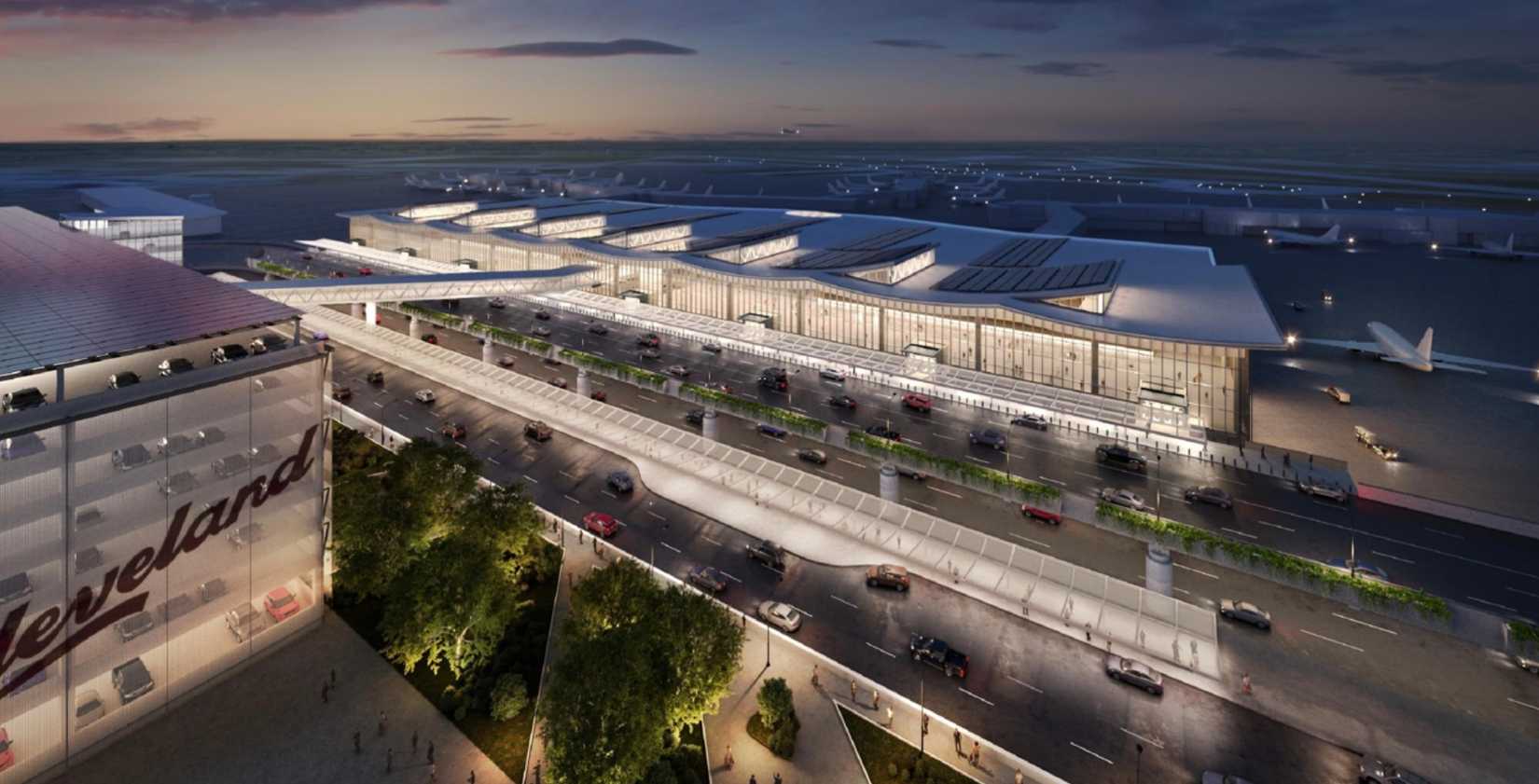
Cleveland Hopkins International Airport stands as a crown jewel of American aviation infrastructure. Opened in 1925, it was among the first municipally owned airports in the United States and quickly transformed into an incubator for global aviation standards.
Between the 1930s and 1960s, Hopkins pioneered innovations that are now universal across the industry. It deployed the nation’s first radio-equipped control tower, implemented advanced airfield lighting systems for night operations, and established one of the earliest integrated rail-to-terminal connections. Furthermore, between 1929 and 1949, the airport hosted prestigious National Air Races, drawing crowds of hundreds of thousands. Today, Hopkins remains a primary commercial gateway for the region, balancing ongoing terminal modernization, cargo operations, and aggressive sustainability goals.
7. Logan International Airport (Boston, Massachusetts)
- Opened: 1923
Originally opened in 1923 as Jeffrey Field on reclaimed harbor flats in East Boston, Logan International Airport began its life supporting military training and early airmail dispatches. Commercial passenger operations expanded steadily through the interwar period, and following World War II, the airport experienced explosive growth, establishing itself as New England’s premier international gateway.
Logan’s history is inextricably linked to ambitious land reclamation projects that expanded Boston Harbor’s footprint to accommodate longer runways and larger terminals. It was also an early pioneer in multi-modal transit connectivity, highlighted by the extension of the MBTA Blue Line in the 1950s. Navigating the jet-age transition, multiple terminal expansions, and post-9/11 security overhauls, Logan today operates as a high-volume international hub. It continues to carefully balance commercial expansion with environmental stewardship across surrounding wetlands and dense urban neighborhoods.
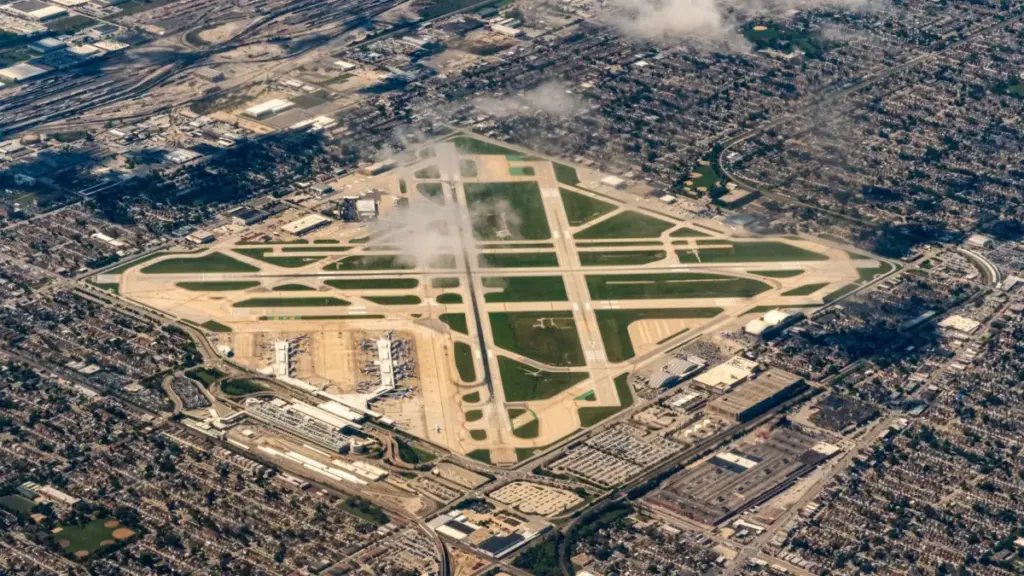
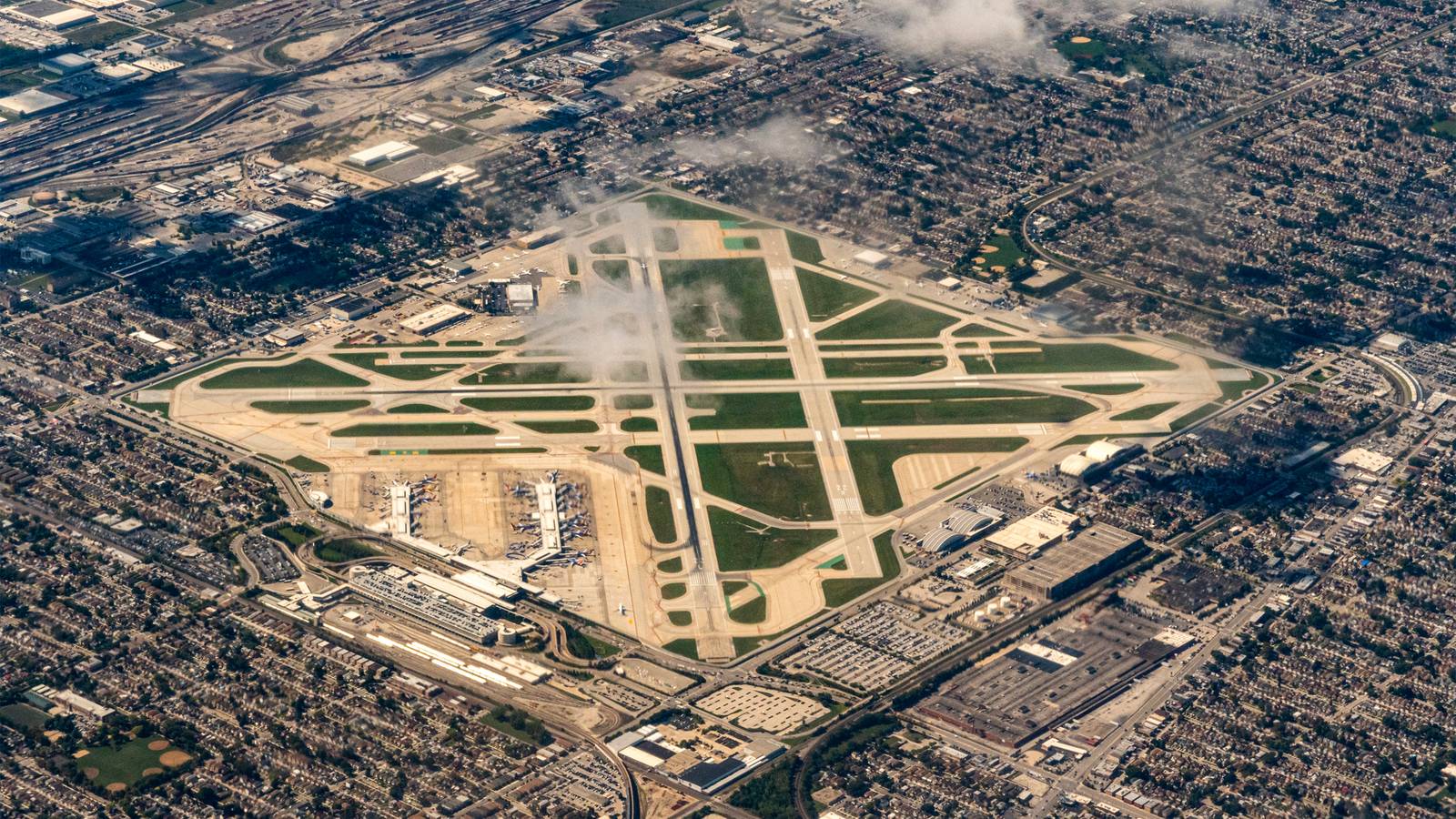
6. Midway International Airport (Chicago, Illinois)
- Opened: 1923
Originally established as Chicago Air Park in 1923 and designated as Chicago Municipal Airport in 1927, Midway International Airport sits on a remarkably compact, square-mile footprint dictated by Chicago’s urban grid. By the late 1940s, it held the title of the world’s busiest airport, managing an intense volume of piston-engine traffic. In 1949, it was officially renamed Midway to honor the pivotal World War II naval victory.
Midway was foundational to the establishment of the American commercial airline network, pioneering round-the-clock operations with illuminated runways. Although O’Hare International Airport eventually surpassed it as Chicago’s primary international hub, Midway pivoted successfully, carving out a massive market for low-cost carriers and short-haul domestic routes. Today, it remains an indispensable urban connector, preserving its storied past within historic terminal architecture and local archives.
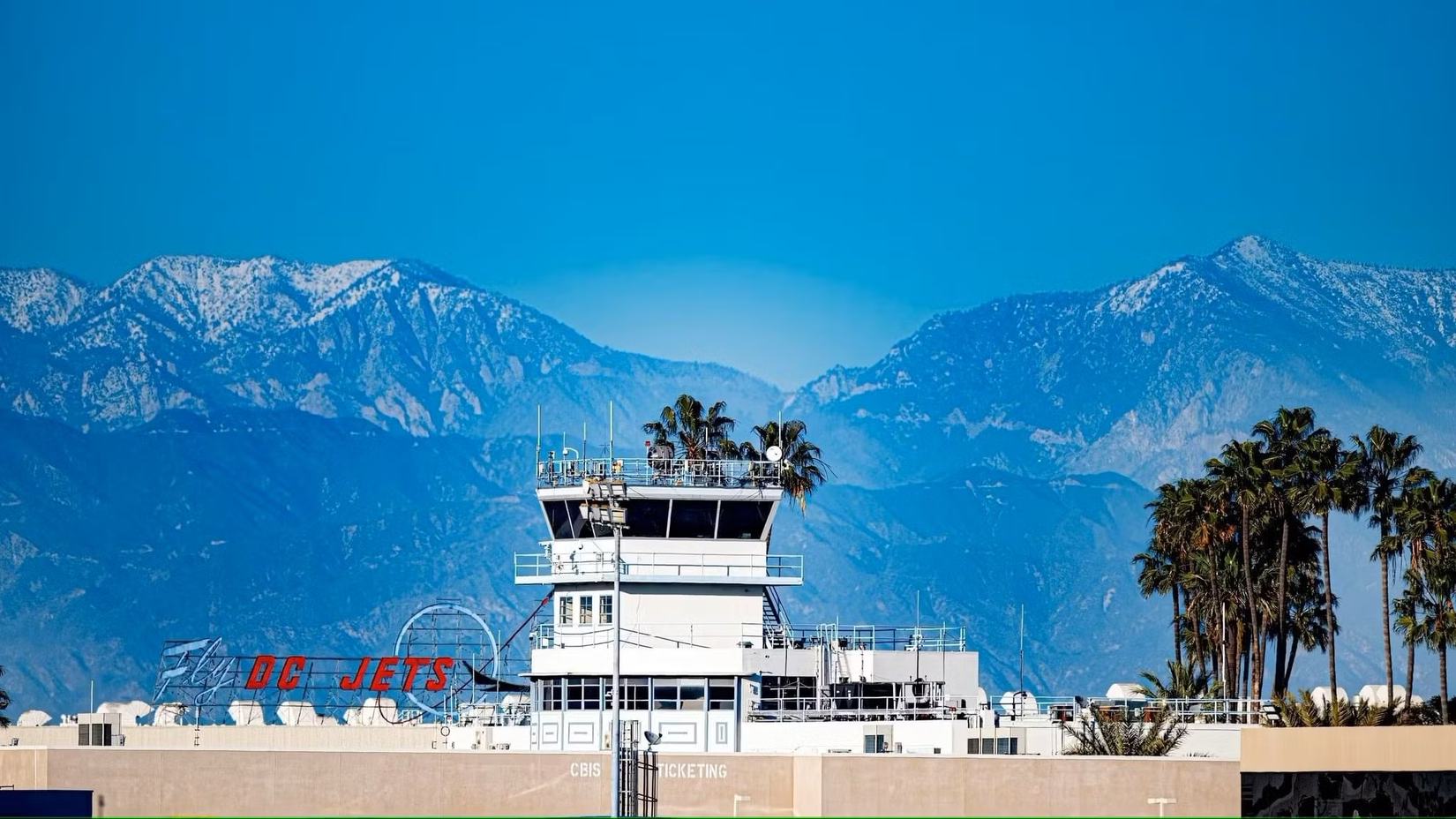
5. Long Beach Airport (Long Beach, California)
- Opened: 1923
Southern California’s aviation roots run deep, anchored by events like Calbraith Rodgers landing on the beach in 1911 following the first transcontinental flight. Formal municipal establishment arrived in 1923 with the creation of Daugherty Field. The airport rapidly evolved into a dual-threat facility: a bustling general aviation hub and the epicenter of industrial aircraft manufacturing, with nearby Douglas Aircraft plants churning out legendary military and commercial airframes.
Throughout the 20th century, Long Beach supported flight schools, regional carriers, and massive aerospace production lines. It remains world-renowned for its impeccably preserved Streamline Moderne terminal building—an architectural masterpiece from the Golden Age of flight. Today, Long Beach balances business aviation, select commercial airline service, and flight training while maintaining its profound ties to the aerospace sector.
4. Minneapolis–St. Paul International Airport (Minneapolis, Minnesota)
- Built: 1920
What is today Minneapolis–St. Paul International Airport (MSP) began its life in 1920 as Speedway Field, hastily constructed on the grounds of a bankrupt automobile race track. The erection of a modest wooden hangar to support airmail marked the beginning of commercial aviation in the Twin Cities, with passenger services following shortly thereafter. The airfield was later renamed Wold-Chamberlain Field in honor of two local World War I pilots.
MSP expanded aggressively through the mid-20th century, cementing its status as a premier Midwestern hub—historically for Northwest Airlines and subsequently for Delta Air Lines. Integrating civil and military operations, the airport added international capabilities following World War II while scaling up major cargo and maintenance infrastructure. Today, MSP stands as a thoroughly modernized international gateway, though its origins as an improvised racetrack airstrip highlight the scrappy resourcefulness of early aviation pioneers.
3. Stinson Municipal Airport (San Antonio, Texas)
- Opened: 1915
Founded in 1915 by the pioneering Stinson family—specifically siblings Marjorie, Katherine, and Eddie—Stinson Municipal Airport began as the Stinson School of Flying. It is widely recognized as the second-oldest continuously operating airport in the United States and the oldest west of the Mississippi River.
During its first decades, the field fulfilled crucial municipal, military, and exhibitionary roles, serving as a primary training ground during wartime while hosting barnstormers and aerial daredevils. The Stinson family’s entrepreneurial spirit firmly positioned the airport at the heart of Southwestern aviation lore. Listed on the National Register of Historic Places, Stinson today is a vibrant general aviation and flight-training hub within the San Antonio metropolitan area, preserving its storied heritage while meeting the needs of modern pilots.
2. Pearson Field (Vancouver, Washington)
- First flights recorded: 1911
Pearson Field’s rich history commenced with a 1905 dirigible landing on the Vancouver Barracks polo grounds, followed swiftly by the recording of its first fixed-wing flights in 1911. This nearly uninterrupted century of operation has earned it recognition as one of the nation’s oldest operating airfields and an officially designated AIAA historic aerospace site.
Throughout the 20th century, Pearson accommodated military aviation, pioneering transpolar expeditions, and historic international arrivals—most notably the 1937 landing of Soviet aviator Valery Chkalov after his groundbreaking transpolar flight aboard a Tupolev ANT-25. Today, Pearson Field operates as a dedicated general aviation facility serving the Pacific Northwest, with the adjacent Pearson Air Museum preserving vintage hangars and irreplaceable artifacts from the Fort Vancouver era.
1. College Park Airport (College Park, Maryland)
- Established: 1909
At the very summit of American—and global—aviation longevity sits College Park Airport in Maryland. Established in autumn 1909, the airfield was born when the US Signal Corps contracted Wilbur Wright to train the nation’s first military aviators on a Wright Model A biplane.
College Park’s ledger of "firsts" is peerless: it witnessed the first military flight instruction, the first controlled helicopter flight experiments, early airmail dispatches, and foundational radio navigation tests. Civilian flying commenced there in 1911, establishing a permanent community culture that persists today. Listed on the National Register of Historic Places in 1977 and accompanied by the opening of the College Park Aviation Museum in 1981, the airport maintains an active single runway. It continues to support general aviation, educational programming, and occasional heritage flights, standing as the ultimate physical link to the dawn of powered flight.
Supporting Context & Metrics
To truly comprehend the longevity of these ten historic airfields, one must examine the macroeconomic and technological shifts they have survived. When College Park opened in 1909, the global aviation industry consisted of a handful of experimental fabric-and-wood gliders. By the time Albert Whitted opened in 1929, the industry was transitioning into the golden age of commercial air transport, spurred by the Air Commerce Act of 1926.
| Airport Name | Location | Founding / Opening Year | Initial Primary Use | Modern Operational Status |
|---|---|---|---|---|
| College Park Airport | Maryland | 1909 | Military Training / Flight Testing | General Aviation & Living Museum |
| Pearson Field | Washington | 1911 | Military & Dirigible Landing Site | General Aviation & Museum Hub |
| Stinson Municipal Airport | Texas | 1915 | Flight Training / Exhibition | General Aviation & Flight Training |
| Minneapolis–St. Paul (MSP) | Minnesota | 1920 | Airmail / Racetrack Conversion | Major International Commercial Hub |
| Logan International Airport | Massachusetts | 1923 | Military & Airmail | Major International Commercial Hub |
| Midway International Airport | Illinois | 1923 | Municipal / Airmail | Major Domestic Commercial Hub |
| Long Beach Airport | California | 1923 | Flight School / Manufacturing | Commercial & Business Aviation |
| Cleveland Hopkins (CLE) | Ohio | 1925 | Municipal / Airmail | Major Commercial & Cargo Hub |
| Spartanburg Downtown | South Carolina | 1927 | Airmail / General Utility | General Aviation & Corporate Travel |
| Albert Whitted Airport | Florida | 1929 | Maritime Aviation / Blimps | General Aviation, Flight Training, Charter |
The survival of these facilities defies typical urban real estate economics. As American cities expanded aggressively throughout the 20th century, downtown airfields faced immense pressure from real estate developers seeking to convert flat, centrally located acreage into commercial and residential complexes. That facilities like Midway, Long Beach, and Albert Whitted survived this urban sprawl is a testament to fierce local advocacy, municipal foresight, and the enduring utility of decentralized aviation infrastructure.
Official Perspectives
Preservationists and aviation historians emphasize that these sites are more than mere concrete and asphalt—they are physical archives of human ingenuity.
According to municipal histories published by the City of Spartanburg, the designation of early fields as official air postal stops transformed isolated local landing strips into vital nodes of a national communications network. Similarly, statements from the Cleveland Hopkins International Airport archives note that early municipal investments in night-lighting and radio-equipped towers were foundational gambles that transformed aviation from a fair-weather daytime hobby into a reliable, 24/7 global transportation system.
Local preservation campaigns, such as those surrounding Albert Whitted Airport and Pearson Field, frequently highlight the cultural footprint these airfields impart upon their host communities. By offering flight training to younger generations and maintaining accessible public museums, these historic fields bridge the gap between abstract historical education and living, breathing aviation practice.
Future Outlook
As the aviation industry hurtles toward an era defined by electric vertical takeoff and landing (eVTOL) aircraft, sustainable aviation fuels (SAF), and advanced air mobility (AAM), the role of these historic airfields is evolving once again.
Far from being relics relegated to historical preservation societies, many of these fields are positioning themselves as testbeds for next-generation aviation technologies. Smaller general aviation facilities like Stinson, Pearson, and Albert Whitted provide essential infrastructure for light aircraft and flight training, maintaining a grassroots pipeline of pilots and engineers. Meanwhile, major commercial heavyweights like Cleveland Hopkins, Logan, and MSP continue multi-billion-dollar modernization initiatives focused on passenger experience, cargo efficiency, and carbon neutrality.
Ultimately, these ten airfields serve as physical time capsules connecting the era of wood-and-wire biplanes to the modern age of transcontinental jetliners. Having weathered world wars, economic depressions, technological revolutions, and urban encroachment, they stand ready to shepherd the next chapter of human flight into the decades ahead.