






Executive Overview
The unmanned aerial vehicle (UAV) industry has reached a technical watershed. For over a decade, consumer and professional aerial videography relied on multi-axis mechanical gimbals to stabilize single-lens cameras. While effective, this configuration imposed strict physical limitations: pilots could capture only what the lens pointed toward, demanding complex flight paths and precise operational control to frame cinematic shots.
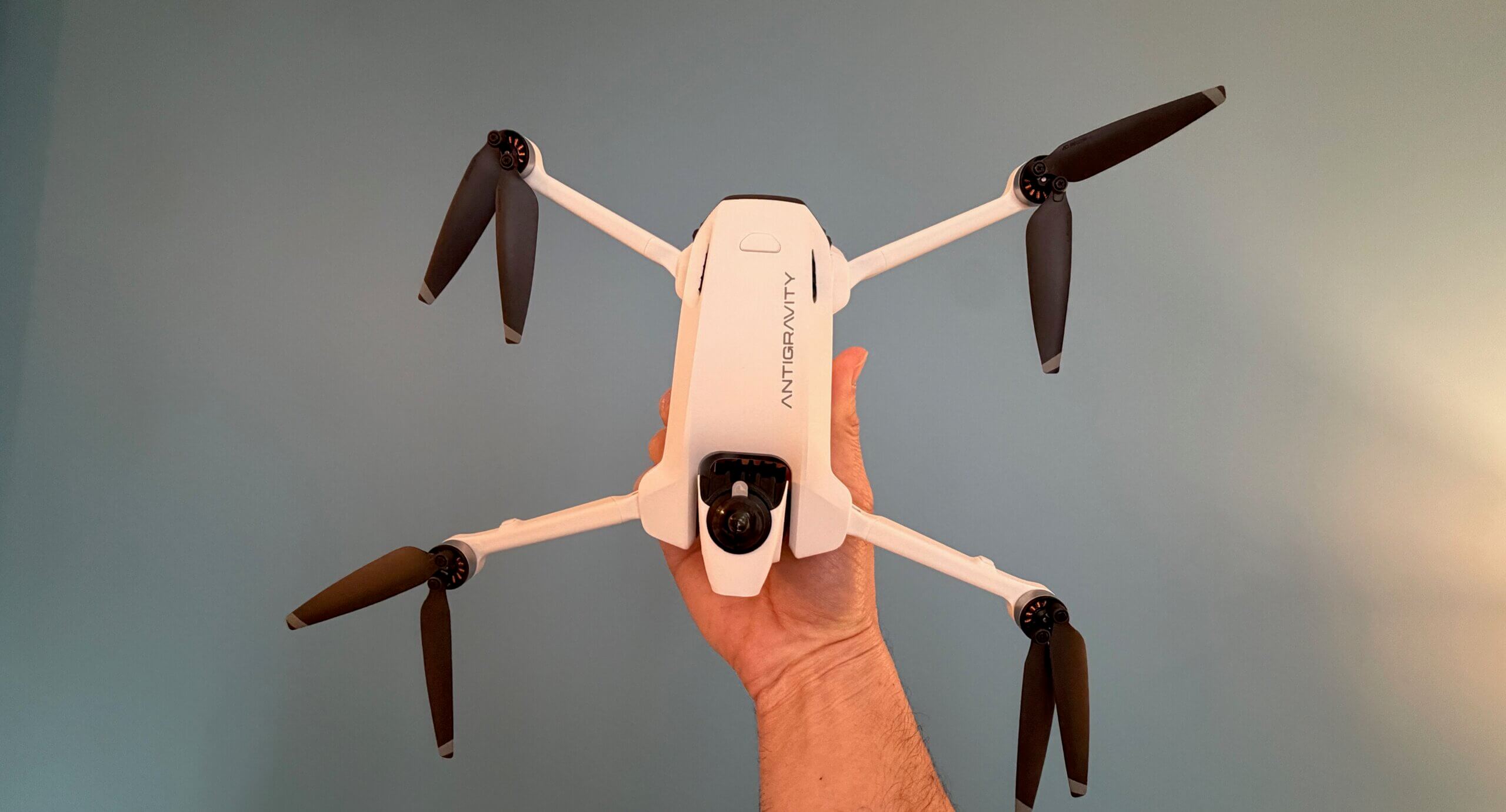
The launch of the Antigravity 360 (A1) in late 2025 represents a paradigm shift away from mechanical stabilization toward spatial capture architecture. By integrating a dual-lens 360-degree optical system into a ultra-lightweight frame, the A1 replaces mechanical panning with an all-encompassing "fly now, frame later" methodology. Instead of making critical composition decisions mid-flight, creators record an entire 360-degree environmental sphere simultaneously, allowing post-flight virtual camera repositioning.
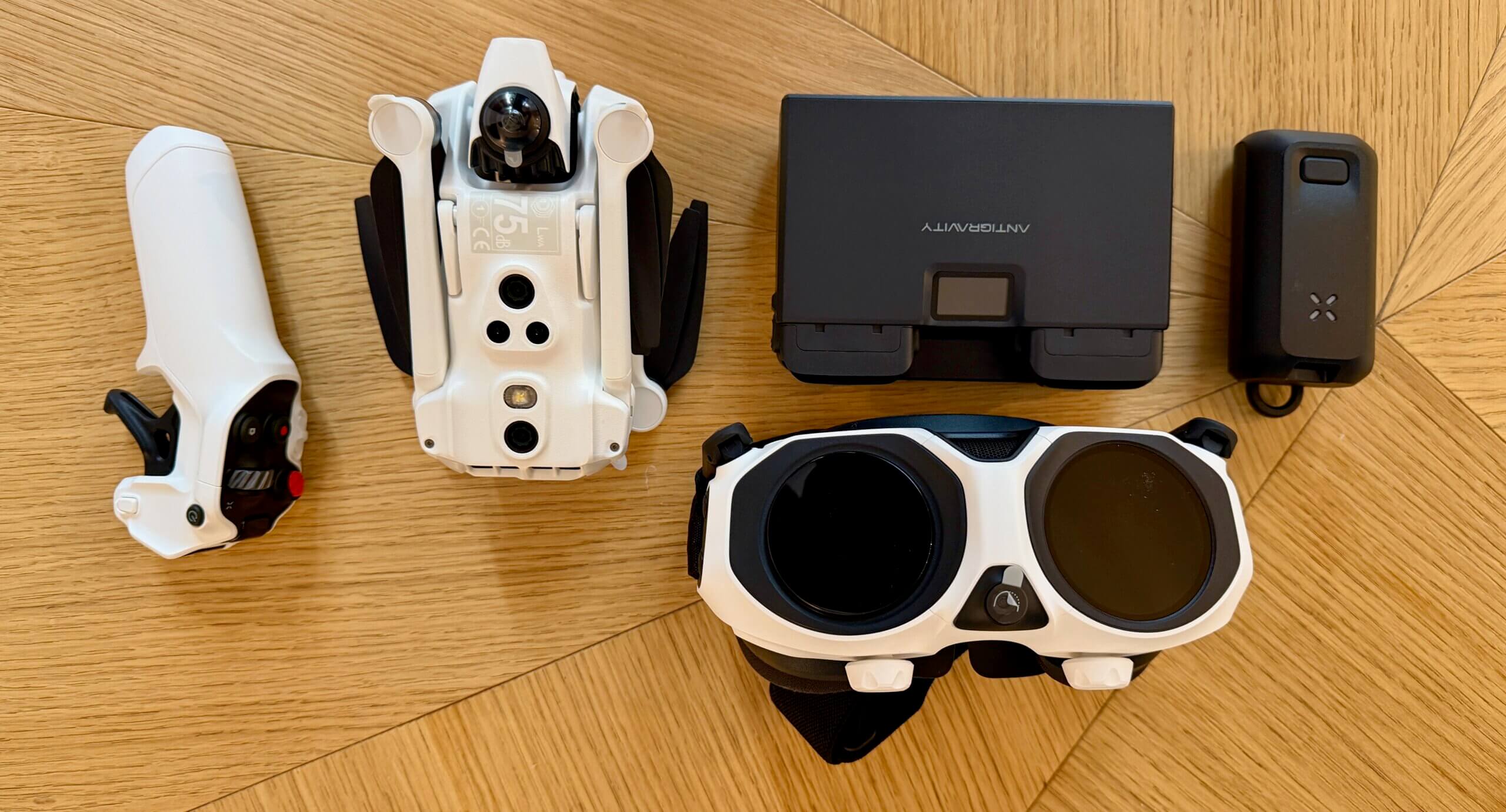
Engineered to weigh precisely 249 grams with its standard battery, the platform strategic circumventing stringent civilian aviation registration requirements—such as the Federal Aviation Administration’s (FAA) Part 107 micro-drone provisions and European Union Aviation Safety Agency (EASA) Open Category regulations—while delivering 8K spherical resolution, head-tracking FPV optics, and advanced AI-driven reframing workflows.
Detailed Chronology & Engineering Breakthroughs
[Early 2025]                          [Late 2025]                       [Present]
Research & Structural Optimization  --> Antigravity 360 (A1) Commercial Launch --> Industry Adoption & Spatial Workflow Transition
  • Carbon-polymer chassis synthesis     • Dual-lens 8K spherical array           • Virtual camera reframing standard
  • 249g sub-threshold engineering       • Micro-OLED 120Hz FPV deployment        • Regulatory displacement of gimbal platforms
The Origins of Spatial Flight Design
Throughout the early 2020s, aerial cinematography faced a technological trade-off. Standard quadcopters provided high dynamic range and resolution but lacked directional flexibility without complex dual-operator setups. Conversely, conventional first-person-view (FPV) drones offered maneuverability but were limited by fixed forward-facing lenses, making spatial awareness difficult for non-professional pilots.
Antigravity’s development team spent several years addressing this issue, aiming to synthesize high-resolution spatial video recording with micro-UAV airframe design. The challenge was twofold: creating an optical assembly capable of capturing a 360-degree image without prop-blade obstruction, and keeping takeoff weight under the international 250-gram regulatory threshold.
The Sub-250-Gram Engineering Threshold
Civil aviation authorities worldwide enforce strict operational boundaries based on takeoff mass. Drones weighing 250 grams or more require mandatory registration, remote ID broadcasting, and operational limits near populated areas.
To overcome these friction points, the Antigravity A1 was designed from the ground up to weigh exactly 249 grams inclusive of its standard Intelligent Flight Battery.
| Structural Component | Material / Specifications | Engineering Objective |
|---|---|---|
| Airframe Fuselage | Carbon-Fiber-Reinforced Polymer (CFRP) | High strength-to-weight ratio; impact absorption |
| Optical Assembly | Dual 200° Ultra-Wide CMOS Assemblies | Full spherical overlapping coverage |
| Folding Mechanism | Tactile Precision Hinge System | Smartphone footprint portability; fast deployment |
| Thermal System | Internal Heat-Sink & Air-Duct Array | Cools dual dual-sensor processors within sub-250g limit |
By utilizing high-grade carbon-fiber-reinforced polymer rather than standard Acrylonitrile Butadiene Styrene (ABS) plastic, engineers maintained structural rigidity under high torque while accommodating dual high-resolution camera modules and internal heating dissipation infrastructure.
Supporting Context & Comprehensive Metrics
               +-------------------------------------------+
               |  Antigravity A1 Spherical Optical Array   |
               +-------------------------------------------+
                                     |
           +-------------------------+-------------------------+
           |                                                   |
           v                                                   v
+-----------------------+                           +-----------------------+
|  Top Lens Assembly    |                           | Bottom Lens Assembly  |
|  200° Field of View   |                           | 200° Field of View    |
+-----------------------+                           +-----------------------+
           |                                                   |
           +-------------------------+-------------------------+
                                     |
                                     v
                       +---------------------------+
                       | Real-Time Algorithmic     |
                       | Stitching & Chassis Erase |
                       +---------------------------+
                                     |
                                     v
                       +---------------------------+
                       |  Seamless 360° Sphere     |
                       |  "Floating Camera" Output |
                       +---------------------------+
Optical Performance and Dynamic Range
The core of the A1 platform lies in its top-and-bottom dual-lens optical system. Each camera module incorporates an ultra-wide lens boasting a 200-degree field of view (FOV) over a 1/1.28-inch CMOS sensor.
- Sensory Surface Area: While slightly smaller than 1-inch sensors found on heavy industrial drones, the 1/1.28-inch footprint is significantly larger than conventional action camera sensors. This provides superior light-gathering capabilities per pixel, expanding dynamic range during high-contrast scenes (such as harsh midday sunlight over shadowed landscapes).
- Algorithmic Chassis Removal: Because the two optical cones overlap, real-time image processing stitches the opposing hemispherical feeds together while masking out the central fuselage. The final output renders the aircraft completely invisible, producing footage that mimics an unattached, floating camera moving through space.
       Dual 1/1.28" CMOS Sensors (200° FOV Each)
                         │
                         ▼
        360° Spherical 8K Raw Video Stream
                         │
                         ▼
       ┌─────────────────┴─────────────────┐
       │                                   │
       ▼                                   ▼
  10-Bit Log Profile               Vivid Profile
 (Post-Grading Workflow)        (Immediate Export)
       │                                   │
       └─────────────────┬─────────────────┘
                         │
                         ▼
       FlowState Algorithmic Image Stabilization
                         │
                         ▼
       Reframed Flat 4K / 2.7K Exported Aspect
The Mathematics of "8K Spherical" Resolution
The A1’s marketing emphasizes its 8K Resolution capture capabilities. However, a technical distinction must be drawn between traditional planar resolution and spatial capture resolution:
- Planar 8K Resolution: Packs ~33.2 million pixels into a fixed 16:9 rectangular image plane.
- Spherical 8K Resolution: Distributes ~33.2 million pixels across an entire 360-degree sphere.
When an editor crops or "reframes" an 8K spherical video into a conventional flat 16:9 frame, the localized viewable resolution equates to roughly 2.7K to 4K output. Despite this cropping factor, the high optical quality of the 1/1.28-inch sensors ensures that reframed shots retain sharp details, smooth gradients, and clear subjects suitable for professional broadcast or digital publication.
FPV Vision Goggles and Motion Telemetry
The piloting experience relies on an integrated high-bandwidth First-Person View (FPV) ecosystem:
- Dual Micro-OLED Displays: The accompanying Vision Goggles feature dual 4K micro-OLED screens running at a high 120Hz refresh rate, keeping end-to-end transmission latency low.
- Spatial Head-Tracking: Traditional FPV goggles force the pilot to look strictly where the aircraft nose points. The A1’s goggles utilize integrated orientation sensors tied directly to the 360-degree video capture. When a pilot turns their head left, right, up, or down, the goggle feed pans across the captured video sphere in real time, regardless of the drone’s actual flight trajectory.
- Single-Handed Motion Control: Flight navigation can be handled via a single-handed motion controller. Telemetry sensors map wrist tilt to roll/bank angles, nose pitch to altitude changes, and trigger pull to throttle acceleration. For technical FPV pilots, the system retains full compatibility with traditional dual-stick "Mode 2" radio transmitters.
+-------------------------------------------------------------------------+
|                    FLIGHT PERFORMANCE CHARACTERISTICS                   |
+-----------------------------------+-------------------------------------+
| Max Velocity                      | 36 mph (~58 km/h)                   |
+-----------------------------------+-------------------------------------+
| Chassis Architecture              | Cinewhoop (Enclosed/Stable)         |
+-----------------------------------+-------------------------------------+
| Wind Resistance Rating            | Sustained 20 mph (FlowState Active) |
+-----------------------------------+-------------------------------------+
| Standard Battery Flight Time      | 24 min (Nominal) / ~19-20 min (Real)|
+-----------------------------------+-------------------------------------+
| Pro Battery Flight Time (>250g)   | 39 min (Nominal)                    |
+-----------------------------------+-------------------------------------+
| Emergency Recovery                | Turtle Mode (Self-Righting Thrust)  |
+-----------------------------------+-------------------------------------+
Operating Efficiency & Post-Production Workflows
The "Work per Minute" Operational Metric
While the A1’s standard battery yields a real-world flight window of roughly 19 to 20 minutes (short of large cinematic drones), its operational efficiency is significantly higher per minute in the air.
TRADITIONAL GIMBAL DRONE WORKFLOW
 Flight 1: Forward Orbit  ──► Battery Swap ──► Flight 2: Vertical Rise ──► Battery Swap ──► Flight 3: Reverse Pullback
 [Total Flight Time: 45+ mins | High Risk of Missed Angles]

ANTIGRAVITY A1 SPATIAL WORKFLOW
 Single Flight Pass ──► Capture Full 360° Sphere ──► Reframe Unlimited Vectors in Post
 [Total Flight Time: 15 mins | Zero Risk of Missed Angles]
Under traditional workflows, obtaining multiple perspectives of an asset or scene requires multiple targeted flights. With full spherical capture, a single flight pass records every angle concurrently. A pilot can fly past a subject once and later export a forward tracking shot, a rear pullback, a downward top-down view, and side profile pans from that single set of flight data.
Software Ecosystem and AI Reframing
The post-production processing pipeline relies on the Antigravity Studio application, which handles raw spatial footage through high-speed wireless transfer protocols:
- Wi-Fi 6 Data Offloading: High-throughput internal hardware permits wireless offloading to mobile devices or workstations at speeds reaching 80MB/s.
- Gyroscope-Guided Framing: Editors can reframe spatial videos by using their smartphone’s internal gyroscope. Moving the phone physically acts as a virtual camera, recording new panning and tilting keyframes in real time.
- AI Auto-Frame Tracking: Machine-learning algorithms scan spatial video streams to isolate human subjects, vehicles, and points of interest, automatically generating smooth, centered tracking shots without manual keyframing.
- Color Grading Pipeline: Professional colorists can bypass consumer "Vivid" profiles in favor of a flat 10-bit Log color profile, maximizing dynamic range retention for integration into professional color-grading suites alongside cinema-grade cameras.
Industry Analysis & Official Statements
Industry analysts view the transition to spatial micro-drones as a major shift in aerial videography and consumer aviation tech.
A senior analyst in unmanned autonomous systems observed:
"The convergence of sub-250-gram chassis design with 360-degree optical capture effectively eliminates the technical friction of manual drone piloting. For years, creators faced a steep learning curve balancing flight control with manual camera framing. By decoupling flight direction from camera pointing, the hardware shifts the burden from real-time dexterity to post-production creativity."
Regulatory experts also emphasize the strategic timing of the release:
"Aviation authorities are continually tightening constraints on unmanned aircraft weighing 250 grams or higher due to kinetic impact calculations in congested areas. Engineering a dual-camera 360 platform below 250 grams allows users to operate within less restrictive categories while maintaining high video quality."
Comparative Product Analysis
                                DRONE CATEGORY COMPARISON

  Feature / Spec       Standard Gimbal Drone        Cinematic FPV Drone         Antigravity 360 A1
 ────────────────────────────────────────────────────────────────────────────────────────────────
  Weight Class          Sub-250g to >900g           >450g Average               249g (Standard)
  Blind Spots           High (Nose-focused)         High (Forward-focused)      Zero (Full 360°)
  Gimbal Failure Risk   Moderate (Mechanical)       Low (Fixed Mount)           None (Solid-State)
  Framing Flexibility   Pre-Flight / In-Flight      Pre-Flight / In-Flight      Post-Flight (Virtual)
  Head-Tracking         Fixed-Axis Only             Limited Flight Vector       Full 360° Spatial
Future Outlook & Technological Roadmap
The launch of the Antigravity 360 A1 signals a broader shift toward ambient, spatial recording across aerial platform design. As processing efficiency increases and sensor sizes shrink, several industry developments are anticipated over the coming product cycles:
- Sensor Scaling: Future iterations will likely incorporate larger 1-inch spatial sensors within sub-250g weight constraints, expanding low-light capabilities and native dynamic range.
- Autonomous Spatial Navigation: Integrating full spatial capture with real-time onboard computer vision will allow drones to construct dynamic 3D depth maps on the fly, improving collision avoidance without adding bulky stereo-vision hardware.
- Real-Time Spatial Streaming: As 5G-Advanced and satellite micro-data networks expand, spatial drone platforms will begin streaming live, interactive 360-degree video feeds directly to remote VR headsets and virtual production studios.
Ultimately, the Antigravity A1 demonstrates that mechanical gimbals are no longer essential for smooth, dynamic aerial camera movement. By moving camera stabilization and framing into software, spatial micro-drones offer greater creative freedom while keeping takeoff weight within accessible regulatory standards.