








Executive Overview
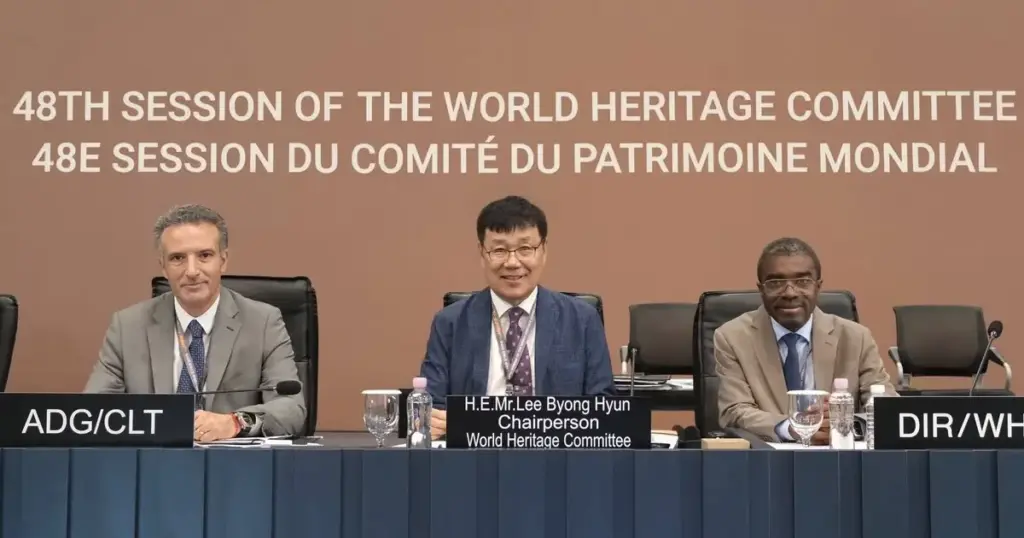
In a historic and long-overdue milestone for global conservation, the 48th session of the UNESCO World Heritage Committee, convened in the dynamic coastal metropolis of Busan, Republic of Korea, has formally adopted the World Heritage Strategy for SIDS 2026–2034. Approved on Tuesday, July 21, this sweeping framework represents a watershed moment for Small Island Developing States (SIDS), a bloc of nations that have historically been disproportionately underrepresented on the World Heritage List despite harboring some of the planet’s most fragile, irreplaceable, and culturally vibrant ecosystems.
Backed by a committed implementation budget of US$13 million, the newly minted strategy is much more than a bureaucratic declaration; it is a comprehensive, meticulously designed operational roadmap. Its primary objective is to guarantee the full, unhindered participation of SIDS within the global World Heritage system while directly confronting the existential threats imperiling their natural and cultural legacies. From accelerating sea-level rise and catastrophic, hyper-frequent tropical storms to chronic structural deficits in financial, technical, and human resource capacities, the strategy targets the intersection of ecological vulnerability and socio-economic isolation.
Witnessed by delegates from over 39 SIDS State Parties to the World Heritage Convention—with more than 20 national delegations present directly on the plenary floor—the adoption of the strategy signals a profound shift in global preservation philosophy. For decades, island nations have sounded the alarm that conventional conservation frameworks are poorly tailored to marine environments, remote geographies, and micro-economies. The 2026–2034 Strategy rectifies this imbalance by establishing four strategic pillars: environmental and climate resilience, capacity building, institutional governance, and deep community engagement.
By centering its methodologies on local populations, indigenous knowledge systems, women, and youth, the strategy transforms heritage preservation from a passive defensive exercise into an active driver of sustainable development. As these island nations stand on the front lines of global climate change, this multi-million-dollar commitment aims to ensure that their stories, landscapes, and ancestral waters are not lost to history, but instead preserved as foundational pillars of humanity’s shared legacy for generations to come.
Detailed Chronology: The Path to Busan and the Adoption of the SIDS Strategy
The journey toward the landmark adoption in Busan was neither swift nor straightforward; it was the culmination of years of persistent advocacy, rigorous scientific assessments, and exhaustive diplomatic negotiations led by UNESCO and island governments.
The Genesis of the SIDS Initiative
The historical underrepresentation of Small Island Developing States within the World Heritage system has long been recognized as a systemic flaw in international conservation. While SIDS span three major geographic regions—the Caribbean, the Pacific, and the Atlantic, Indian Ocean and South China Sea (AIS)—they share unique structural vulnerabilities that have historically hindered their ability to successfully nominate, manage, and protect World Heritage sites. Complex dossier requirements, expensive scientific baseline studies, and a shortage of specialized national conservation personnel often created insurmountable barriers to entry.
Recognizing these systemic inequities, UNESCO initiated a multi-year diagnostic phase to evaluate the specific needs of SIDS. The objective was to move beyond generalized conservation models and co-create a tailored strategy that directly addressed the realities of island ecosystems, which are defined by high biodiversity, fragile endemic species, vast maritime territories, and deep-rooted intangible cultural heritage intimately tied to the ocean.
The Extensive Consultation Phase
The formulation of the 2026–2034 Strategy was defined by an unprecedented, inclusive consultation process. Rather than imposing a top-down framework drafted in European or North American academic and administrative hubs, UNESCO engaged directly with all 39 SIDS State Parties.
Over the course of nearly two years, a series of regional workshops, virtual consultations, and technical symposia were convened. These gatherings brought together:
- National heritage officials and environmental ministries from island capitals ranging from Kingston and Suva to Port Louis and Apia.
- International experts in marine conservation, archaeology, and climate adaptation.
- Advisory Bodies to the World Heritage Committee, including the International Union for Conservation of Nature (IUCN), the International Council on Monuments and Sites (ICOMOS), and the International Centre for the Study of the Preservation and Restoration of Cultural Property (ICCROM).
- Grassroots community leaders, indigenous elders, and youth representatives whose daily lives are inextricably linked to the landscapes and seascapes under threat.
This bottom-up approach ensured that the final text of the strategy captured the nuanced challenges faced by distinct island regions. For instance, while Caribbean SIDS often grapple with intense hurricane seasons and coastal erosion threatening colonial-era fortifications and fragile coral reefs, Pacific SIDS face the existential threat of complete submergence due to rising sea levels, alongside the rapid degradation of ancient oceanic navigational traditions and sacred sites.
The Plenary Moment: July 21 in Busan
The culmination of this exhaustive participatory process occurred on Tuesday, July 21, at the 48th session of the World Heritage Committee in Busan. The atmosphere in the plenary hall was charged with anticipation as delegates from across the globe gathered to review the final draft of document WHC/25/48.COM/11.
With over 20 SIDS State Parties occupying seats in the chamber, the solidarity among island nations was palpable. Representatives took the floor to voice emotional and urgent testimonies regarding the state of their heritage sites. They highlighted how delays in international support translate directly into the physical loss of ancestral burial grounds, crumbling historic architecture, and bleached, dying marine ecosystems that sustain local economies through artisanal fishing and ecotourism.
When the gavel fell, adopting the World Heritage Strategy for SIDS 2026–2034 alongside its committed US$13 million budget, it was met with sustained applause. The moment marked a definitive transition from consultation to execution—setting the stage for an ambitious nine-year operational timeline designed to fortify island heritage against the cascading crises of the 21st century.
Supporting Context & Metrics: The Anatomy of Island Vulnerability
To fully understand the monumental significance of the Busan strategy, one must examine the stark empirical realities confronting Small Island Developing States. The intersection of environmental degradation, economic fragility, and historical marginalization creates a uniquely hostile environment for heritage preservation.
The Climate Frontlines
SIDS are universally recognized as the nations least responsible for global greenhouse gas emissions yet most vulnerable to their catastrophic consequences. According to data from the Intergovernmental Panel on Climate Change (IPCC) and UNESCO’s marine heritage programs, island nations face compounding environmental threats that directly compromise both natural and cultural World Heritage properties:
- Accelerated Sea-Level Rise: Global mean sea levels are rising at an accelerating rate, threatening low-lying coastal heritage sites, archaeological reserves, and indigenous settlements. In many Pacific SIDS, historic villages and sacred coastal shrines are already experiencing regular inundation during high tides and storm surges.
- Ocean Acidification and Warming: Marine World Heritage sites in SIDS—such as the Belize Barrier Reef Reserve System or the Phoenix Islands Protected Area—are suffering unprecedented coral bleaching events. Rising ocean temperatures and acidity destroy marine biodiversity, which in turn devastates the natural habitats that protect island shorelines from wave action.
- Hyper-Frequency and Intensity of Natural Disasters: Tropical cyclones, hurricanes, and torrential monsoons are striking island nations with greater frequency and destructive force. These events cause structural damage to historic buildings, destabilize geological formations, and wash away terrestrial archaeological sites before they can be properly documented or excavated.
Financial and Technical Constraints
Beyond ecological pressures, SIDS face severe structural impediments in managing their heritage portfolios. Operating within small domestic economies, island governments often must prioritize immediate human development needs—such as healthcare, education, and post-disaster humanitarian relief—over long-term heritage conservation.
- The Expertise Gap: Many SIDS lack specialized academic and technical institutions dedicated to heritage conservation, climate risk mapping, and structural engineering for historic architecture. Consequently, countries must frequently rely on expensive international consultants, draining local financial resources.
- The Nomination Bottleneck: Preparing a successful World Heritage nomination dossier is a notoriously rigorous, multi-year scientific and administrative undertaking. Historically, the complexity of these requirements has created a glaring disparity on the World Heritage List, where industrial and wealthy nations are disproportionately represented compared to the biodiversity and culture-rich islands of the global south.
- Management Plan Deficiencies: Even when sites achieve World Heritage status, maintaining continuous monitoring, visitor management, and maintenance programs requires sustained funding. Without robust institutional frameworks, sites frequently slip into "Danger" status or struggle to attract sustainable tourism revenue.
The Four Pillars of the 2026–2034 Strategy
To combat these interlocking crises, the US$13 million strategy is structured around four interconnected, highly operational priorities:
- Strengthening Environmental and Climate Resilience: Integrating heritage conservation directly into national and regional climate adaptation policies. This pillar focuses on deploying nature-based solutions—such as mangrove restoration, coral reef rehabilitation, and sustainable coastal zoning—to protect heritage sites from extreme weather events.
- Preserving and Enhancing Human, Technical, and Financial Capacities: Establishing targeted training programs, regional conservation hubs, and mentorship networks within SIDS. This priority aims to build a self-sustaining cadre of local heritage managers, conservators, and scientists, thereby reducing reliance on external aid.
- Improving Heritage Governance and Management: Reforming national legislative frameworks, streamlining the World Heritage nomination process for island properties, and fostering cross-sectoral collaboration between environmental ministries, cultural bodies, and tourism boards.
- Fostering the Engagement of Local Communities: Placing indigenous populations, local communities, women, and youth at the center of conservation governance. This pillar recognizes that sustainable heritage management cannot succeed without the active participation and traditional ecological knowledge of those who have inhabited these islands for generations.
Official Statements and Diplomatic Perspectives
The gravity of the Busan agreement was reflected in the impassioned statements delivered by international leaders, UNESCO officials, and SIDS delegates during and immediately following the plenary session.
In a central policy address delivered during the high-level segment of the 48th session, UNESCO leadership underscored the moral and practical imperatives driving the initiative. An official statement released by the organization articulated the core philosophy underpinning the nine-year framework:
"With this strategy, UNESCO and the States Parties reaffirm their commitment to ensuring that no country is left behind in benefiting from the opportunities of the World Heritage Convention and addressing the challenges facing their World Heritage sites. It also reminds us that, beyond borders and geographical realities, the World Heritage Convention is founded on a shared ambition: to preserve humanity’s cultural and natural heritage and pass it on to future generations."
This sentiment resonated deeply with national delegates from island nations, who have spent decades lobbying international bodies for tailored support. Speaking on behalf of the Pacific SIDS bloc, a senior delegate from the Republic of Fiji emphasized that the strategy is not merely an environmental document, but a matter of cultural survival:
"For our peoples, land and sea are not separate from identity; they are our archives, our libraries, and our ancestors. When a rising tide swallows an ancestral marae, or a warming ocean bleaches our sacred reefs, we are losing our history in real-time. The adoption of the SIDS Strategy in Busan gives us more than funding—it gives us a fighting chance to defend our past so that our children still know who they are and where they come from."
From the Caribbean perspective, representatives highlighted the economic dimensions of the strategy. A minister of culture from the region noted that sustainable heritage management must go hand-in-hand with economic viability:
"Our historic towns, colonial architecture, and indigenous archaeological sites are the bedrock of our sustainable tourism economies. Yet, every hurricane season threatens to erase decades of painstaking restoration work. The framework established today bridges the gap between conservation and economic resilience, ensuring that our heritage drives sustainable development rather than draining our limited national budgets."
Advisory bodies also welcomed the clarity and focus provided by the new strategy. Representatives from IUCN and ICOMOS praised the emphasis on bridging traditional indigenous knowledge with modern scientific methodologies, noting that the strategy sets a new global benchmark for inclusive, community-led conservation in vulnerable ecosystems.
Future Outlook: Transforming Heritage into a Driver of Sustainable Development by 2034
As the 48th session of the World Heritage Committee draws to a close in Busan, the real work of the World Heritage Strategy for SIDS 2026–2034 is just beginning. The establishment of the US$13 million funding baseline provides the critical initial momentum, but the ultimate success of the initiative will be measured by its tangible outcomes over the next nine years.
The 2034 Horizon: Key Deliverables and Milestones
Looking ahead, the strategy outlines several ambitious benchmarks to be achieved by the conclusion of its operational cycle in 2034:
- Balancing the World Heritage List: A measurable increase in the number of successful inscription dossiers submitted by SIDS, particularly from underrepresented regions and within natural-cultural mixed property categories. This will be achieved by streamlining technical assistance and providing hands-on drafting workshops led by international experts.
- Mainstreaming Climate Adaptation: Full integration of World Heritage conservation into national Nationally Determined Contributions (NDCs) and National Adaptation Plans (NAPs) under the Paris Agreement. Heritage sites will no longer be treated as isolated tourist attractions, but as vital components of national climate defense strategies.
- Empowering Youth and Gender Equity: Establishing dedicated fellowship programs and leadership grants for young islanders and women, ensuring they hold decision-making roles in heritage governance, site management, and scientific monitoring.
- Sustainable Financing Mechanisms: Leveraging the initial US$13 million baseline to attract additional public-private partnerships, philanthropic donations, and climate finance instruments, creating a self-sustaining trust fund for ongoing SIDS conservation efforts.
Conclusion: A Legacy Beyond Borders
The adoption of the World Heritage Strategy for SIDS in Busan marks a turning point in how the international community approaches global conservation. By directly confronting the structural inequalities and acute environmental threats faced by Small Island Developing States, UNESCO and its member states have sent an unmistakable message: the preservation of human heritage is a universal responsibility that brooks no geographical exclusions.
As rising tides lap at fragile shores and warming oceans test the limits of natural resilience, the 2026–2034 Strategy offers a beacon of hope. It ensures that the stories inscribed in island stone, coral, song, and soil will endure—transforming vulnerability into strength, and ensuring that the rich, diverse tapestry of island heritage remains vibrant, protected, and accessible for all future generations of humanity.