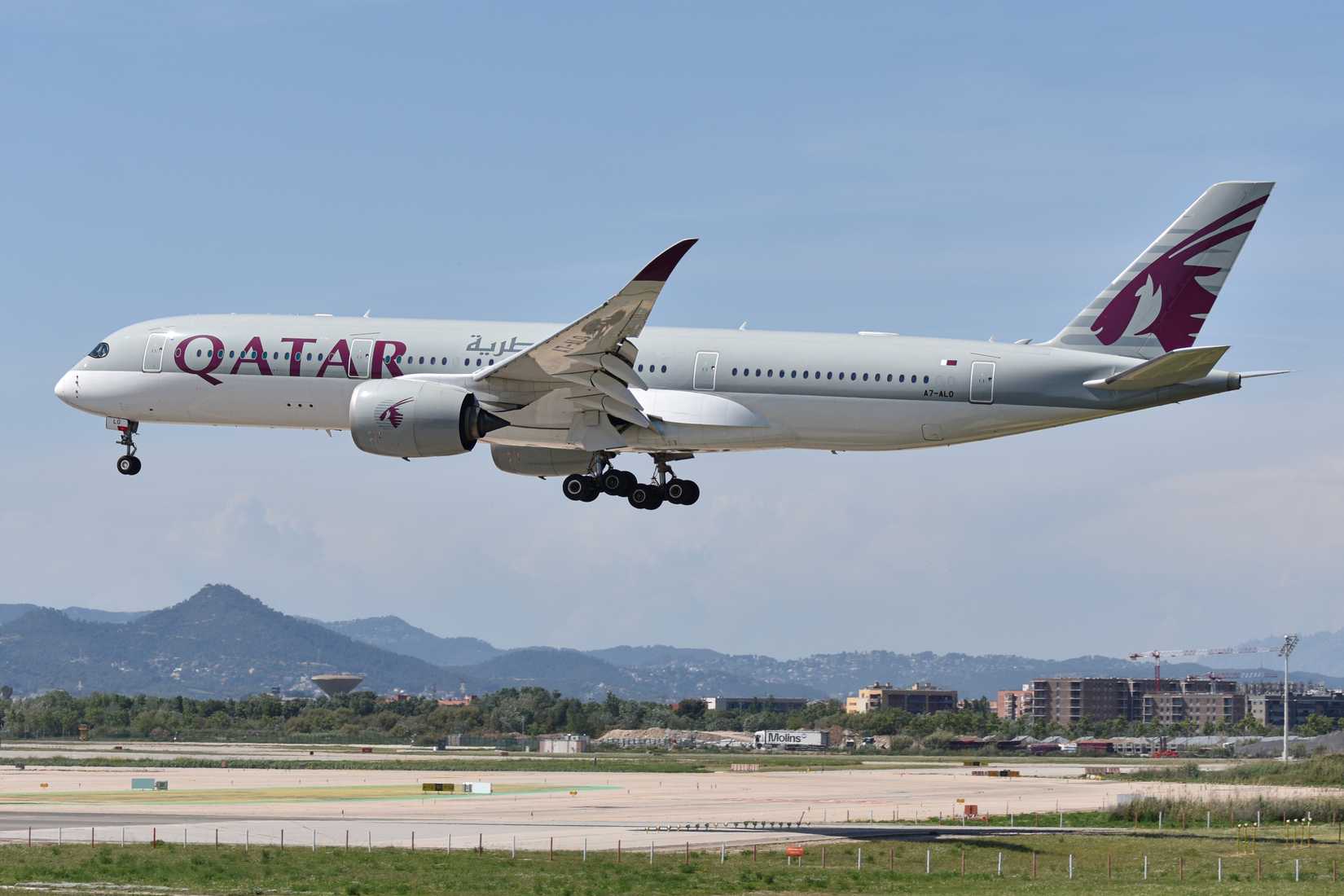
LONDON & NAGOYA — For the ninth consecutive year, the aviation industry’s most prestigious consumer accolade—the Flyers’ Choice Awards—has crowned Qatar Airways’ revolutionary "Qsuite" as the world’s premier business class product. Since its debut in 2017, the hard product has maintained absolute market dominance, routinely outperforming rivals such as Emirates, Singapore Airlines, and a constellation of Western legacy carriers.
Yet, the most fascinating aspect of Qatar Airways’ nearly decade-long reign is not simply that the Doha-based carrier has successfully defended its crown. Rather, it is the quiet, deliberate refusal of US legacy giants—Delta Air Lines, United Airlines, and American Airlines—to replicate its defining feature.
Despite spending the better part of a decade executing massive, multi-billion-dollar widebody retrofits to install enclosed, sliding-door single-passenger suites, North American network planners have consistently avoided the architectural cornerstone of the Qsuite experience: the four-passenger "quad" configuration. As Qatar Airways prepares to roll out its next-generation iterations on incoming Airbus A350-1000 and Boeing 777-9 deliveries, the strategic chasm between Middle Eastern flagships and US network carriers exposes a fundamental divergence in fleet economics, passenger demographics, regulatory hurdles, and cabin engineering.
Executive Overview: A Tale of Two Cabins
To understand why US carriers have effectively ceded the multi-passenger modular suite space to the Gulf, one must examine the baseline philosophy of modern long-haul aviation. The global market is divided into two distinct operating models:
The Mega-Hub Leisure-Business Hybrid: Epitomized by Qatar Airways, Emirates, and Etihad, this model relies on centrally located super-hubs (such as Doha Hamad International Airport). These networks funnel a diverse global tapestry of high-yield leisure travelers, multi-generational families, government delegations, and corporate executives from every corner of the globe through a single point.
The Point-to-Point Corporate Monoculture: Epitomized by Delta, United, and American, these carriers rely heavily on the transatlantic and transpacific corporate corridor. Their primary revenue driver is the solo business traveler—executives, consultants, and financiers who prioritize absolute isolation, predictability, and uninterrupted work environments.
Because of this foundational demographic divide, the structural engineering of an aircraft cabin becomes a high-stakes calculation of yield management, weight distribution, and safety compliance. While Qatar Airways happily sacrifices center-row privacy to create an airborne boardroom or dining room for four, US carriers view identical square footage through the unforgiving lens of corporate seat density and fuel burn optimization.
Detailed Chronology: The Evolution of the Modern Business Class Suite
2017: The Paradigm Shift
When Qatar Airways unveiled the Qsuite at ITB Berlin in March 2017, it fundamentally altered expectations for international business class. Designed originally by Collins Aerospace, the product introduced double beds and adjustable privacy panels that allowed four center seats to transform into an enclosed "quad" cabin. At the time, competitors dismissed it as an unsustainable gimmick that would inevitably lead to weight penalties and passenger scheduling nightmares.
2018–2023: The US Industry Response
As the years progressed, US legacy carriers realized that open-configuration business class seating (such as legacy herringbone layouts) was obsolete. Delta introduced the Delta One Suite, United rolled out Polaris, and American outfitted its Boeing 777 and Dreamliner fleets with custom staggered hardware. However, every single one of these products strictly adhered to a 1-2-1 layout featuring individual sliding doors. Not a single US airline attempted to build a modular, multi-passenger center section.
2024–2026: The Next-Gen Divide and the Flyers’ Choice Recognition
By the time Qatar Airways showcased its Qsuite Next Gen at the Farnborough International Airshow—switching its manufacturing partnership to Elevate Aircraft Seating (formerly Adient Aerospace) to utilize 4K OLED Panasonic Astrova screens and motorized privacy walls—the gap had widened into an unbridgeable chasm. US carriers completed their standard fleet retrofits just as Qatar Airways began redefining the baseline for connected, digitalized luxury in the sky.
Supporting Context & Metrics: Economics, Weight, and Regulations
The reluctance of US network planners to adopt quad configurations is not borne of a lack of imagination, but rather of hard-nosed balance sheet mathematics and engineering constraints.
1. The Yield and Demographic Realities
Placing two unacquainted corporate executives into a four-seat-facing quad creates a socially awkward dynamic that can actively degrade the premium travel experience. US transatlantic business cabins are packed with solo travelers. Conversely, Doha’s mega-hub model regularly feeds family groups and leisure-wealth travelers into the same cabin.
Furthermore, the seat geometry tells a clear story:
US Standard (Delta One / United Polaris): Utilizes staggered or herringbone arrangements with seat widths ranging from 20.5 inches (52 cm) to 22.5 inches (57 cm), optimized purely for solo lateral space.
Qatar Qsuite: Offers a 21.5-inch (55 cm) width and a 78-inch (198 cm) lie-flat bed, housed within a flexible center block designed to collapse into a communal environment.
2. The Weight and Fuel Penalty
A standard staggered business class seat—such as the Safran Optima or Thompson Vantage XL platforms favored by US carriers—weighs between 180 lbs (82 kg) and 220 lbs (100 kg).
By contrast, incorporating the reinforced mounting rails, dual-actuator privacy doors, motorized display arms, and drop-down partitions necessary for a quad configuration adds up to 30% more weight to the central seat block. Across a 15-year service lifecycle on an ultra-long-haul Boeing 777-300ER or Airbus A350, this added mass translates into significant additional fuel burn and lower payload capacities. Moreover, because mechanical housings consume critical longitudinal space, an airline installing a quad layout frequently sacrifices an entire row of business class seating capacity, translating to millions of dollars in foregone ticket revenue.
3. Regulatory and Airworthiness Nightmares
Perhaps the most formidable barrier to entry for a US carrier is civil airworthiness certification. Under FAA regulation 14 CFR 25.562, transport category aircraft seats must withstand dynamic crash loads of 16g forward deceleration. Test sleds must drop from a velocity of 44 feet per second (13.4 meters per second) to zero in less than 0.09 seconds.
In a four-passenger facing configuration, the structural load paths are intensely complex:
Forward-facing passengers hurl kinetic energy toward the center divider.
Rear-facing occupants load the seat back shell.
This requires massive structural reinforcements beneath the cabin floor to prevent track deformation.
Additionally, under federal evacuation mandates requiring an aircraft to be fully emptied within 90 seconds with half of the exits blocked, sliding suite doors and drop-down partitions must feature foolproof mechanical override latches. These must automatically lock open during taxi, takeoff, and landing to prevent jammed doors from trapping passengers during an emergency. US fleet planners view the risk of certification delays or grounding as an unacceptable financial gamble.
Official Statements and Industry Insights
Industry analysts have frequently underscored the strategic divide between Western and Middle Eastern network management. Speaking on the integration of proprietary hardware, aviation logistics experts note that relying on catalog seat models (such as Safran or Thompson platforms) guarantees fleet-wide manufacturing stability and simplified spare-parts inventories.
"Designing a proprietary suite from scratch exposes an airline to severe supply chain vulnerabilities," notes a recent fleet strategy brief. "A single delayed actuator or composite wall panel can stall an entire widebody delivery at the assembly plant. US carriers simply cannot take that risk across massive, standardized domestic fleets."
By pivoting to Elevate Aircraft Seating for the Qsuite Next Gen, Qatar Airways secured dedicated factory throughput and bespoke production bandwidth—a luxury afforded to an airline operating a hyper-focused long-haul fleet, but nearly impossible for US majors managing hundreds of diverse airframes.
Data from aviation tracking firms further validates Qatar’s aggressive product strategy. Despite fierce competition, Qatar Airways sustained load factors exceeding 85% on US routes, proving that premium travelers are more than willing to seek out superior hard products, even if it means connecting via Doha.
Future Outlook: Two Models of Modern Luxury
As the aviation industry pushes deeper into the late 2020s, the strategic split in long-haul business class will only crystallize further.
For North American legacy carriers, the roadmap is set: complete the multi-year standardization of individual sliding-door suites across Boeing 787s and Airbus A321XLRs, betting that corporate road warriors will remain loyal to predictable, private solo workspaces.
For Qatar Airways, the arrival of the Boeing 777-9 and Airbus A350-1000 fleets bearing Qsuite Next Gen—complete with motorized 4K OLED screens, Starlink high-speed connectivity, and window-side Companion Suites—will once again push the boundaries of what is possible at 35,000 feet.
Ultimately, the 2026 Flyers’ Choice Awards serve as a stark reminder: while sliding doors have become the baseline requirement for modern business class, true modularity remains an elite tier reserved for custom-built flagships. For the global traveler, the choice over the next decade is stark. One path offers reliable, private, corporate efficiency; the other continues to redefine the very concept of shared luxury in the sky.