For the modern air traveler, few moments match the sinking feeling of arriving at a departure gate with a confirmed ticket, only to be told that there is no physical seat available. Most passengers immediately associate this frustration with airline overbooking—the industry practice of selling more tickets than an aircraft has seats under the mathematical assumption that a certain percentage of travelers will simply fail to show up. When overbooking triggers a bottleneck, strict federal guidelines and mandatory compensation structures kick in to protect the consumer.
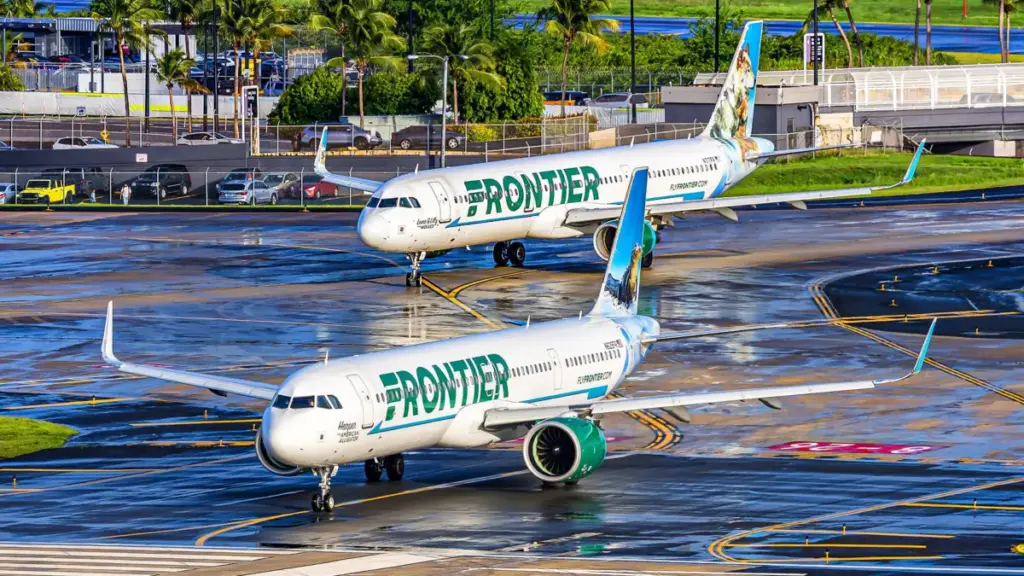
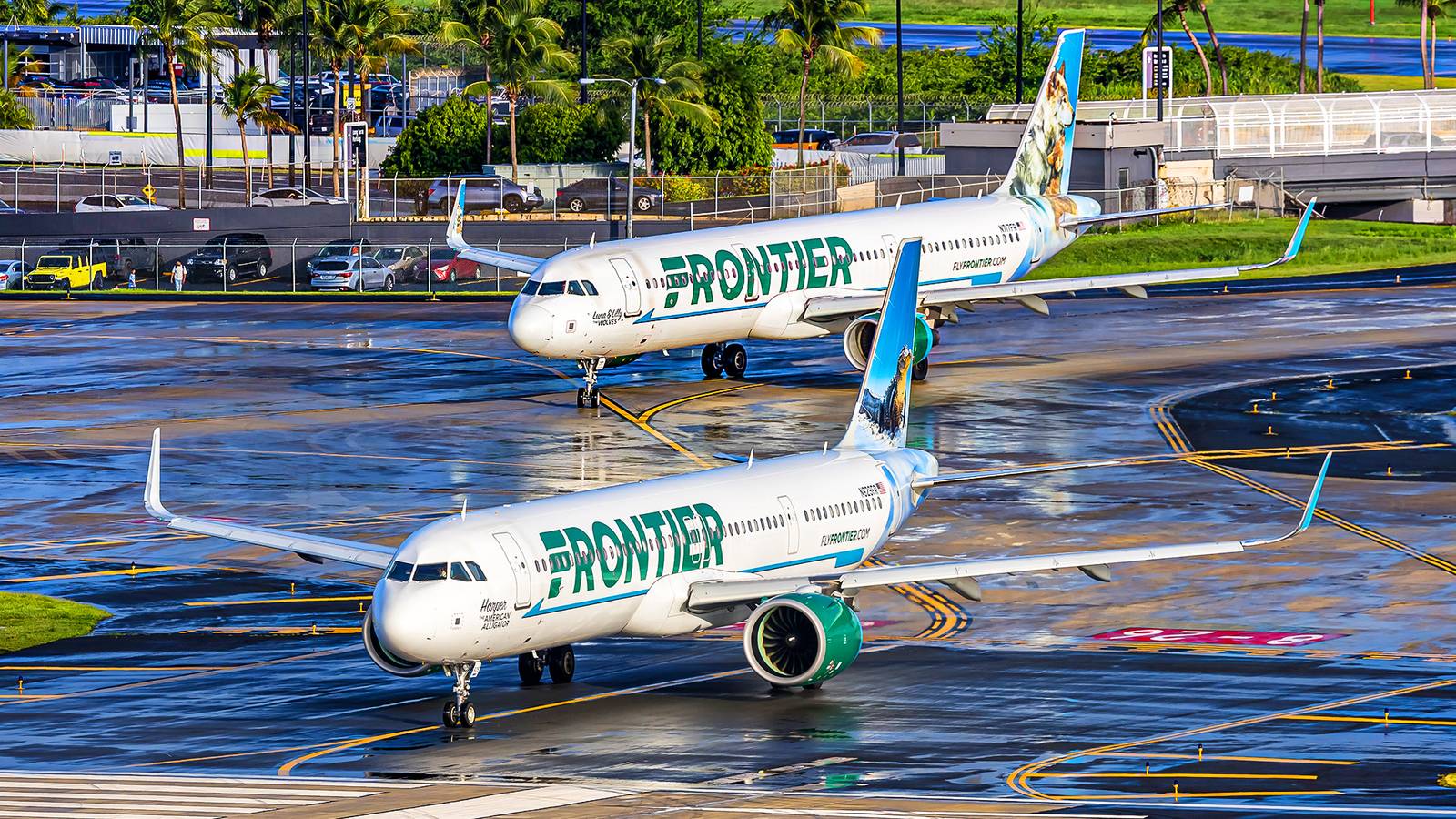
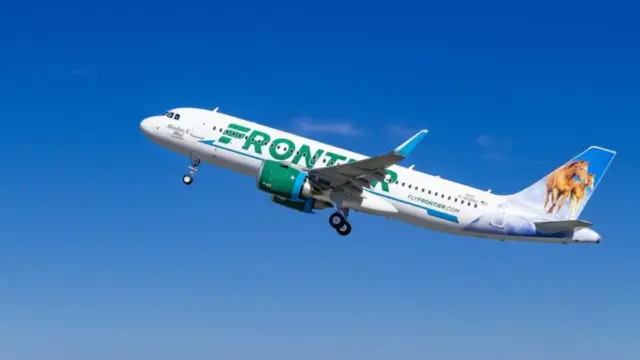
However, a recent high-profile incident involving a Frontier Airlines passenger at Harry Reid International Airport (LAS) in Las Vegas has thrust a lesser-known, highly controversial aviation loophole into the public spotlight. After Frontier swapped the aircraft scheduled to fly to Denver International Airport (DEN) with a smaller model, the resulting loss in capacity left a confirmed passenger stranded at the gate.
While the practical outcome for the traveler was identical to being "bumped" from an overbooked flight, federal regulations draw a hard, frustrating line based on the reason for the capacity shortage. According to the United States Department of Transportation (DOT), when a carrier replaces a larger aircraft with a smaller one due to operational or safety reasons, affected passengers are entirely excluded from mandatory involuntary denied-boarding compensation.
This deep-dive investigation examines the nuances of the Frontier Airlines incident, dissects the complex web of federal rules governing aircraft substitutions, explores the legal and operational grey areas that leave consumers unprotected, and evaluates what this means for the future of passenger rights in an increasingly strained aviation network.
Detailed Chronology: How an Operational Swap Left a Passenger Stranded
The incident unfolded on a busy travel day at Las Vegas’s Harry Reid International Airport, a major hub for low-cost carriers where tight turnarounds and high fleet utilization are standard operating procedures. The affected traveler, holding a fully confirmed reservation on a Frontier Airlines service bound for Denver International Airport, arrived at the gate anticipating a routine journey.
Instead, the passenger encountered a chaotic scene. Prior to boarding, Frontier operations had mandated a last-minute equipment swap. For reasons spanning routine maintenance requirements, upstream schedule disruptions, or aircraft positioning needs, the airline replaced the originally scheduled airframe with a smaller aircraft model from its fleet.
In commercial aviation, fleet commonality—such as Frontier’s heavy reliance on the Airbus A320 family (including the A320neo and A321neo)—is designed to make such swaps seamless. However, minor variations in cabin layout, seating configurations, and maximum certified passenger capacities can create dramatic discrepancies. In this specific case, the replacement aircraft possessed a significantly lower seat count than the original frame.
Because Frontier had already sold tickets up to the capacity limit of the larger aircraft, the arithmetic of the swap created an immediate deficit: there were more passengers holding confirmed reservations than there were physical seats on the newly assigned plane. When it came time to board, the traveler found himself locked out of the flight. Despite holding a valid ticket, checking in on time, and arriving at the gate within the designated window, he was informed he could not board due to lack of space.
From Screen to Screen: Media Exposure
The situation could have easily dissolved into the background noise of everyday airport frustrations had it not caught the attention of consumer investigative journalists. The incident was prominently featured in a report by 9NEWS (part of their consumer advocacy segment Steve on Your Side) and highlighted on the network’s official YouTube channel.
The media spotlight brought immediate public scrutiny to Frontier Airlines’ customer handling practices. While the passenger’s initial interactions with gate agents yielded little more than standard procedural denials and alternative rebooking options without financial recourse, the public airing of the case fundamentally shifted the corporate response. Recognizing the negative publicity associated with stranding a ticketed passenger, Frontier ultimately stepped in after the media inquiry, issuing a travel voucher as a goodwill gesture.
Nevertheless, aviation consumer advocates point out that relying on media intervention to secure restitution is not a sustainable policy for the millions of travelers who experience similar administrative and operational anomalies every year.
Supporting Context & Metrics: Decoding the U.S. DOT Involuntary Denied-Boarding Regulations
To understand why the Frontier passenger’s plight exposed a systemic regulatory gap, one must examine the legal framework established by the U.S. Department of Transportation under Title 14 of the Code of Federal Regulations (14 CFR Part 250).
Traditional Overselling vs. Aircraft Substitutions
Under normal circumstances, when an airline oversells a flight, federal law dictates a rigorous procedure:
Volunteers First: The airline must publicly solicit volunteers who are willing to give up their seats in exchange for compensation, travel vouchers, or other negotiated perks before anyone is forced off the plane.
Involuntary Bumping: If an insufficient number of passengers volunteer, the airline may involuntarily deny boarding based on its established, non-discriminatory boarding priorities (such as check-in time, fare class, or frequent flyer status).
Mandatory Compensation: For domestic flights, passengers who are involuntarily bumped and experience significant arrival delays at their final destination are legally entitled to cash or check compensation scaled to the length of the delay:
1 to 2 hours delay: 200% of the one-way fare, capped at a federally mandated maximum (historically around $1,075).
Over 2 hours delay: 400% of the one-way fare, capped at higher maximums (historically around $2,150).
However, the Department of Transportation embeds a crucial caveat within its consumer protection FAQs and regulatory guidelines. The DOT explicitly states:
"Bumped passengers are NOT eligible for compensation in the following situations: Aircraft Change – A smaller plane is substituted for the larger one the airline originally planned on using due to operational or safety reasons."
The Regulatory Gray Area
This exception creates a profound disconnect between consumer perception and legal reality. From the passenger’s perspective, the experiential outcome is identical: they paid for a seat, arrived at the airport, and were denied access to the aircraft due to a shortage of physical space caused by corporate planning or execution.
Yet, from a regulatory standpoint, the root cause dictates the legal remedy. If the airline sold 180 tickets for a 180-seat plane as a deliberate gamble on no-shows, it is considered traditional overbooking, triggering mandatory cash compensation. But if the airline originally scheduled a 230-seat Airbus A321 for a flight, sold 200 tickets, and then had to swap it out for a 180-seat Airbus A320 due to a hydraulic leak or maintenance hold, the shortfall is categorized as an "operational aircraft substitution." Under current DOT rules, the airline is legally off the hook for cash compensation, leaving passengers high and dry.
Official Statements and Industry Perspectives
The dichotomy between operational flexibility for airlines and consumer protection for passengers is a constant tug-of-war within the commercial aviation sector.
The Airline Perspective: Operational Imperatives
Airlines defend the aircraft-substitution exception as a vital tool for maintaining network integrity. In statements addressing similar operational disruptions, airline representatives and industry lobbying groups emphasize that safety and schedule reliability must remain paramount.
When an aircraft suffers an unexpected mechanical failure at an out-station or hub, dispatchers and maintenance controllers must make split-second decisions to keep the broader network moving. If an airline were legally penalized with heavy cash payouts every time a mechanical substitution resulted in a capacity deficit, carriers might be incentivized to cancel flights outright rather than attempt to salvage the itinerary with a smaller airframe.
A cancellation often causes cascading delays, stranding hundreds of passengers across multiple cities, disrupting crew pairings, and injecting massive financial inefficiencies into the carrier’s daily operations. From the carrier’s viewpoint, an aircraft swap that successfully transports 90% of passengers to their destination—even if it leaves a handful behind—is superior to a complete flight cancellation that strands 100% of them.
The Passenger Advocacy Perspective: The Need for Uniformity
Consumer rights organizations, such as AirAdvisor and various aviation legal clinics, argue that the current regulatory structure unfairly shifts the burden of airline operational failures directly onto the shoulders of blameless consumers.
Advocates point out that while airlines view safety and maintenance as unpredictable events, fleet planning, spare aircraft ratios, and maintenance scheduling are entirely within managerial control. When an airline fails to maintain adequate buffer capacity or spare aircraft fleets, the financial and logistical fallout should not be absorbed by a passenger holding a confirmed, legally binding contract of carriage.
Furthermore, consumer groups emphasize the Kafkaesque nature of DOT reporting data. Interestingly, the DOT does require airlines to log passengers denied boarding due to smaller-aircraft substitutions as "involuntary denied boardings" for statistical and reporting purposes. This creates an administrative paradox: the federal government formally recognizes that the passenger was involuntarily ejected from the flight, yet simultaneously strips them of any statutory right to financial compensation for that ejection.
Future Outlook: Will Passenger Protections Catch Up to Operational Realities?
As the U.S. aviation landscape continues to navigate post-pandemic passenger volumes, severe weather disruptions driven by climate change, and ongoing aircraft manufacturing bottlenecks, aircraft swaps are likely to remain a frequent occurrence.
Legislative and Regulatory Pressures
The Biden-Harris administration and the U.S. Department of Transportation have made significant strides in bolstering airline consumer protections, pushing for mandatory cash refunds for delayed or cancelled flights and cracking down on hidden junk fees. However, the specific loophole regarding aircraft substitutions has largely remained untouched by recent major regulatory overhauls.
Transportation policy experts suggest that future revisions to 14 CFR Part 250 could potentially close this gap by introducing tiered accountability measures. For instance:
Advance Notice Thresholds: Requiring airlines to provide advanced electronic notice if an equipment swap threatens a passenger’s seat, allowing them to voluntarily reschedule without penalty before arriving at the airport.
Duty of Care Mandates: While cash compensation might remain exempt under strict safety-related mechanical swaps, mandatory duty-of-care requirements—such as immediate hotel accommodations, meal vouchers, and guaranteed rebooking on competing carriers at no extra cost—could be heavily enforced.
Goodwill vs. Obligation: Standardizing compensation frameworks so that passengers do not have to rely on media exposure or consumer advocacy television segments to extract basic travel vouchers from low-cost carriers.
Practical Advice for Travelers
Until federal regulations evolve to bridge the gap between overbooking and operational aircraft swaps, travelers must navigate this complex regulatory terrain with proactive awareness. Industry experts recommend the following best practices to mitigate the risk of falling victim to the aircraft-swap loophole:
Monitor Equipment Changes: Use flight-tracking apps (such as FlightAware or airline proprietary apps) to monitor your assigned aircraft type from the moment you book until departure. If you notice a sudden shift from a larger aircraft type to a smaller one, contact customer service immediately.
Check-In Early: Many airlines process gate priorities and involuntary bumping lists based on check-in time and fare class. Checking in precisely at the 24-hour window can elevate your standing in the queue.
Document Everything: If you are denied boarding due to an aircraft swap, explicitly ask the gate agent for a written explanation detailing why you were bumped. Ensure the documentation explicitly notes whether it was classified as an oversale or an equipment substitution.
Know Your Rights to Rebooking: Even when cash compensation is legally exempt under the substitution rule, airlines are still obligated to transport you to your destination under the contract of carriage, either on the next available flight of their own or via interline agreements where feasible.
Conclusion
The Frontier Airlines incident at Harry Reid International Airport serves as a microcosm of the friction between corporate operational flexibility and consumer rights. By exposing the legal chasm between traditional overbooking and operational aircraft substitutions, the case highlights a regulatory blind spot that leaves travelers vulnerable to decisions entirely outside their control.
While airlines must retain the flexibility to substitute aircraft to maintain safety and network flow, the current framework places an unjustifiable burden on the individual passenger. Until the Department of Transportation or federal legislators reform these rules to guarantee equitable protections during equipment swaps, passengers would do well to remain vigilant, informed, and prepared to advocate for their rights at the departure gate.