Madrid, the capital and largest metropolis of Spain, stands as a pivotal nexus of European culture, political administration, and economic activity. Home to approximately 3.5 million residents within its municipal boundaries, the city attracts over 10 million international and domestic visitors annually. This immense inflow underscores Madrid’s position as a premier global destination, driven by its high-density concentration of fine arts institutions, historic architecture, world-renowned gastronomy, and a vibrant night-time economy that operates on a distinct daily rhythm.
Unlike many European capitals characterized by rapid, commuter-driven schedules, Madrid maintains a socio-cultural framework defined by extended meal hours, late-evening social gatherings, and a deliberate, pedestrian-centric pace of life. Embracing these local temporal norms is essential for travelers seeking to navigate the city efficiently while engaging meaningfully with its cultural fabric.
However, managing high tourist volumes while safeguarding historical assets presents complex challenges for urban planners and heritage managers. This report provides an exhaustive, five-day strategic analysis of Madrid’s urban landscape. It examines how the city integrates its UNESCO World Heritage corridors, historic Habsburg quarters, evolving culinary infrastructure, ex-urban royal retreats, and secluded institutional sanctuaries into a cohesive visitor experience.
Detailed Chronology: A Strategic Five-Day Urban Framework
  +---------------------------------------------------------------------------------+
  |                       MADRID 5-DAY CULTURAL FRAMEWORK                           |
  +---------------------------------------------------------------------------------+
  | DAY 1: Art Walk & Fine Arts (Prado, Thyssen, Reina Sofía, House Museums)        |
  | DAY 2: Habsburg Heritage (Puerta del Sol, Plaza Mayor, Royal Palace, Almudena)  |
  | DAY 3: Culinary Infrastructure (Historic Markets, Legacy Dining, Malasaña)       |
  | DAY 4: UNESCO Ex-Urban Satellites (El Escorial, Aranjuez, Alcalá de Henares)     |
  | DAY 5: Cloistered Sanctuaries & Green Space (Descalzas, Encarnación, Casa Campo)|
  +---------------------------------------------------------------------------------+
Phase I: Immersion in the UNESCO "Landscape of Light" Art Walk
The opening phase of an optimized Madrid itinerary focuses on the Paseo del Prado and El Retiro park corridor, officially inscribed on the UNESCO World Heritage list in 2021 under the designation Paisaje de la Luz (Landscape of Light). This urban zone encompasses over 40 historic monuments and 40 landmark buildings, representing a pioneer European model where municipal urban planning merged civic nature with public scientific and artistic enlightenment.
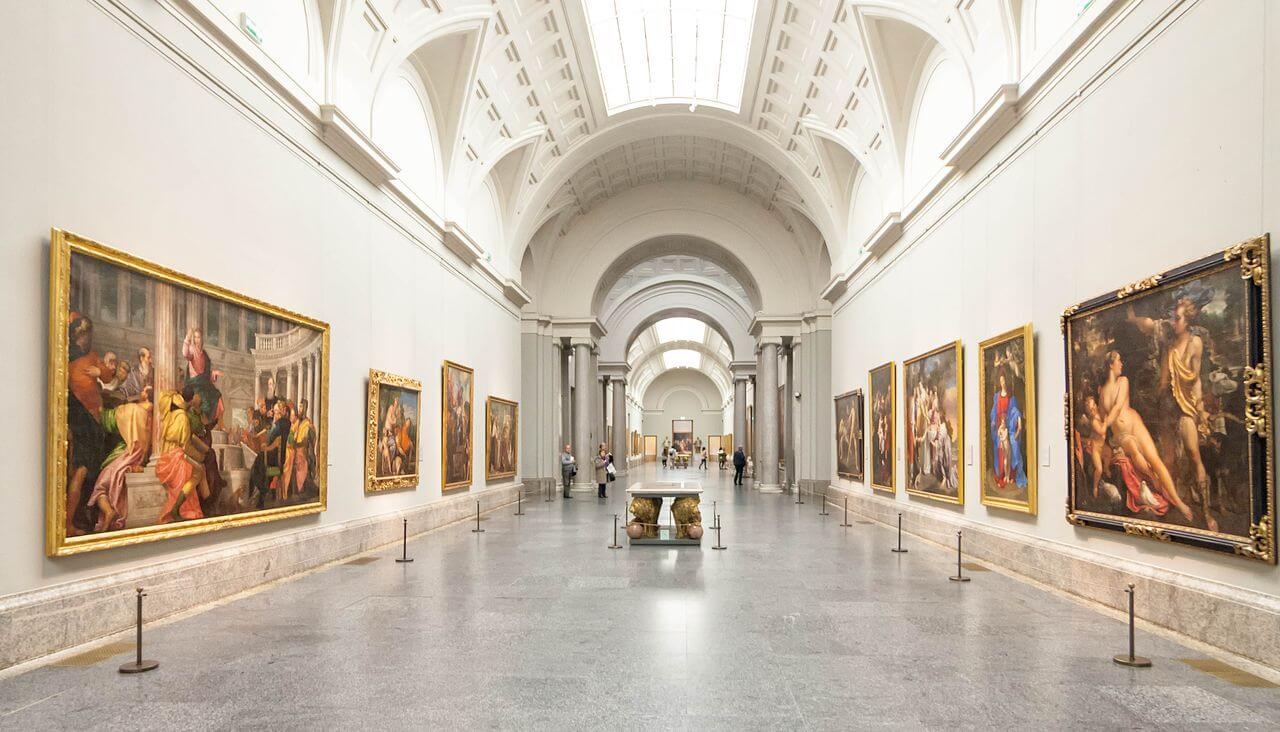
The Prado Museum (Museo del Prado): Serving as the institutional anchor of Spanish cultural heritage, the Prado ranks among the world’s paramount art institutions. Its galleries house foundational masterpieces by Diego Velázquez (including Las Meninas), Francisco Goya, and El Greco, alongside significant collections of Flemish and Italian masters such as Peter Paul Rubens, Sandro Botticelli, and Caravaggio. Due to the expansive scale of its permanent collection, standard archival recommendations mandate a minimum single-visit allocation of three hours.
Thyssen-Bornemisza National Museum: Located a ten-minute walk northward along the tree-lined Paseo del Prado, this museum fills the historical gaps of its sister institutions. Originating as a massive private collection, its holdings span eight centuries of Western art, bridging Italian Primitive works, Renaissance portraits, Dutch Masters, Impressionism, and mid-20th-century Pop Art.
Reina Sofía National Art Centre (Museo Nacional Centro de Arte Reina Sofía): Completing the core triangle, this facility specializes in late 19th- through 20th-century modern and contemporary art. Key holdings include pivotal works by Joan Miró, Salvador Dalí, Wassily Kandinsky, and Francis Bacon. The museum’s centerpiece remains Pablo Picasso’s 1937 monumental mural, Guernica, widely regarded as one of history’s most powerful artistic statements against war.
       ART WALK HISTORICAL METRICS
+--------------------+------------------------------------------+
| Institution        | Primary Artistic Focus                   |
+--------------------+------------------------------------------+
| Prado Museum       | Spanish Golden Age, Flemish, Renaissance |
| Thyssen-Bornemisza | 13th-20th C. European & American Masters |
| Reina Sofía        | Modern, Avant-Garde & Contemporary       |
+--------------------+------------------------------------------+
Culinary Integration and House Museums
Following exposure to high-density art venues, urban exploration pivots toward traditional culinary stops, such as Taberna La Fragua de Vulcano for regional stew (cocido madrileño), the terrace at Arzábal for artisan croquetas, or Bodega de los Secretos, where dining rooms are integrated into restored 17th-century subterranean wine vaults.
The afternoon shift highlights Madrid’s specialized "House Museums"—former private aristocratic residences preserved to display their original domestic architectures and private collections:
Sorolla Museum (Museo Sorolla): The sunlit studio and residence of Joaquin Sorolla ("the painter of light"). Following extensive structural and architectural renovations aimed at expanding gallery capacity and conserving its historic gardens, the institution is scheduled for a major public reopening in 2026.
Museum of Romanticism (Museo del Romanticismo): A quiet palace detailing 19th-century bourgeois life, complete with a secluded courtyard garden café.
Lázaro Galdiano Museum: A neo-Renaissance mansion housing an eclectic private repository featuring works by Hieronymus Bosch, Goya, and El Greco.
Phase II: Architectural Heritage of Habsburg Madrid
Day two centers on the political and architectural expansion of the city under the House of Habsburg (Madrid de los Austrias), charting the urban evolution from medieval settlement to imperial capital.
Puerta del Sol: Operating as Madrid’s central civic plaza, this space features Kilometer Zero—the official geographic origin point for Spain’s radial highway network. The plaza also houses the bronze statue of El Oso y el Madroño (The Bear and the Strawberry Tree), derived from the city’s 13th-century heraldic coat of arms, symbolizing municipal dominion over surrounding forestry and wildlife resources.
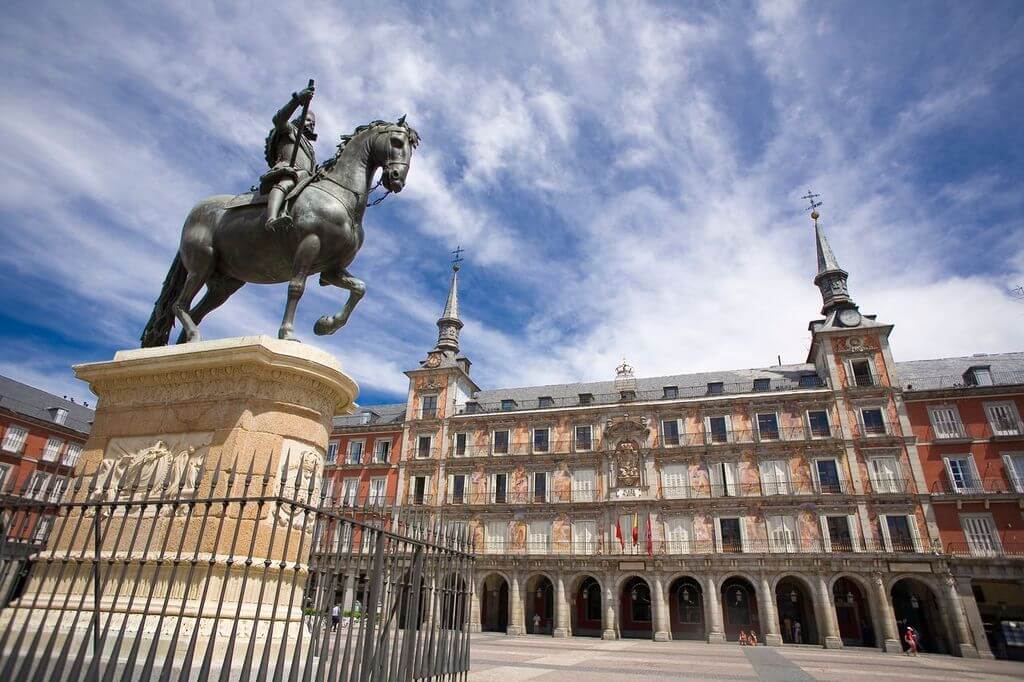
Plaza Mayor: Constructed during the Habsburg era, this grand porticoed square historically accommodated public spectacles ranging from royal coronations and theatrical tournaments to bullfights and Inquisition trials. Modern management has adapted the perimeter into retail, dining, and cultural space, anchored by the frescoed facade of the Casa de la Panadería. Local gastronomic customs along adjacent alleys highlight the humble bocadillo de calamares (fried squid sandwich), a key example of coastal seafood integration into inland capital food networks.
The Monarchy Axis: The Royal Palace and Almudena Cathedral
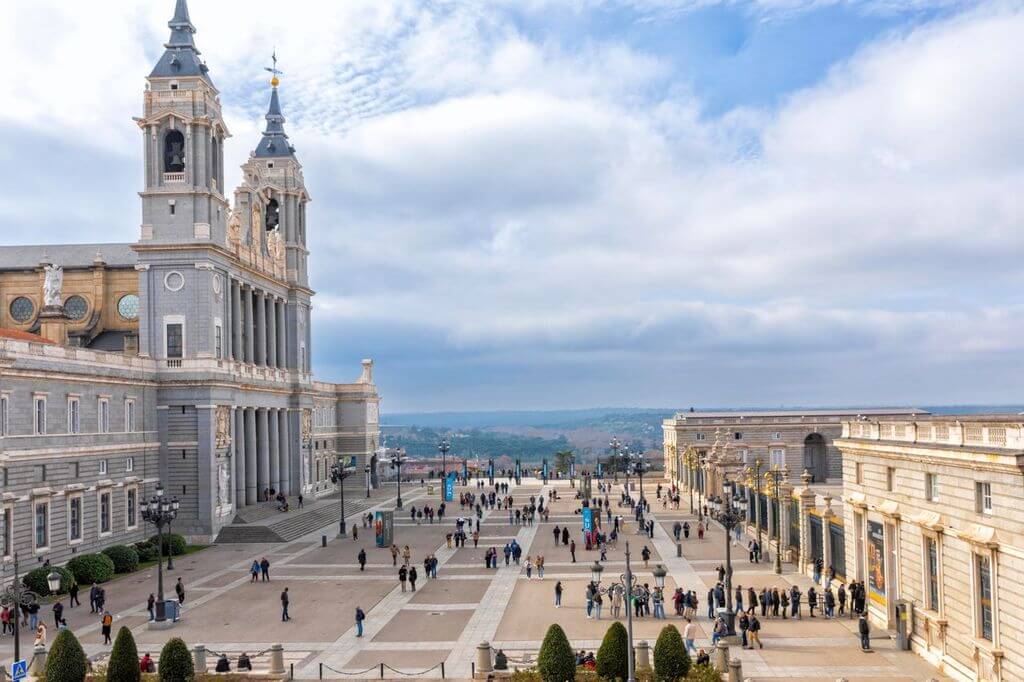
Royal Palace of Madrid (Palacio Real): Erected in the 18th century on the elevated site of a 9th-century Muslim fortress (alcázar), the Baroque structure stands as Western Europe’s largest royal residential complex by floor area, boasting over 3,400 rooms. Though the current royal family resides elsewhere, the palace is preserved for state events and functions as an active museum displaying works by Caravaggio and Goya, alongside the historic collections of the Royal Armory (Real Armería).
Almudena Cathedral (Catedral de la Almudena): Standing adjacent to the palace, the cathedral represents an extended architectural timeline. Initiated in the late 19th century in a Neo-Gothic style, it underwent structural revisions to match the palace’s Neo-Classical exterior, concluding with its final consecration by Pope John Paul II in 1993. The site includes a extensive Neo-Romanesque crypt housing over 400 carved columns and a central dome offering strategic high-altitude views of the city’s western perimeter.
Phase III: Gastronomic Evolution and Urban Culinary Infrastructure
Day three addresses Madrid’s historic and modern culinary infrastructure, analyzing how traditional public markets have transformed into high-yield gastronomic hubs.
   HISTORIC MARKET ECOSYSTEM
+-------------------------------------------------------+
| Mercado de San Miguel | Gourmet Tapas & Tourism       |
+-------------------------------------------------------+
| Mercado de San Antón  | Neighborhood Modernization    |
+-------------------------------------------------------+
| Mercado Vallehermoso  | Traditional Produce & Dining  |
+-------------------------------------------------------+
Historic Markets and Culinary Legacies
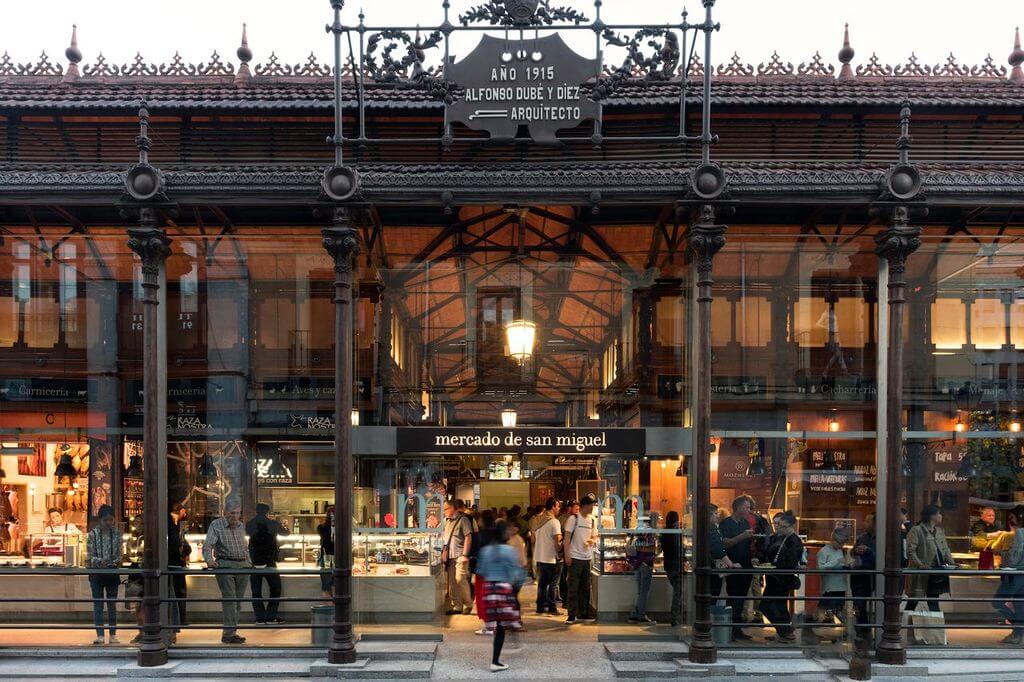
Mercado de San Miguel: Located adjacent to Plaza Mayor, this early 20th-century iron-and-glass structural market was revitalized in the 21st century to become Madrid’s premier gourmet market. It serves as an institutional blueprint for converting traditional produce markets into tourist-oriented tasting halls.
Mercado de San Antón & Mercado de Vallehermoso: Located respectively in the Chueca and Chamberí districts, these sites illustrate localized municipal market models, offering a mix of daily food shopping and international dining options.
Sobrino de Botín: Recognized by Guinness World Records as the world’s oldest continuously operating restaurant (founded in 1725), this establishment maintains its original wood-fired brick oven. It features a historic literary connection as a frequent dining location for American author Ernest Hemingway.
       GASTRONOMIC INFRASTRUCTURE PROFILE
+-----------------------+------------------+------------------------------------+
| Establishment         | Location/Type    | Historical / Strategic Value       |
+-----------------------+------------------+------------------------------------+
| Mercado de San Miguel | Plaza Mayor      | 1916 Cast-Iron Gourmet Food Hall   |
| Sobrino de Botín      | Calle Cuchilleros| World's Oldest Restaurant (1725)   |
| Gran Vía Rooftops     | Urban Corridor   | Adaptive Reuse of 20th C. Towers   |
| Malasaña District     | North-Central    | Modern Plant-Based Gastronomy Hub  |
+-----------------------+------------------+------------------------------------+
Rooftop Infrastructure and Plant-Based Evolution
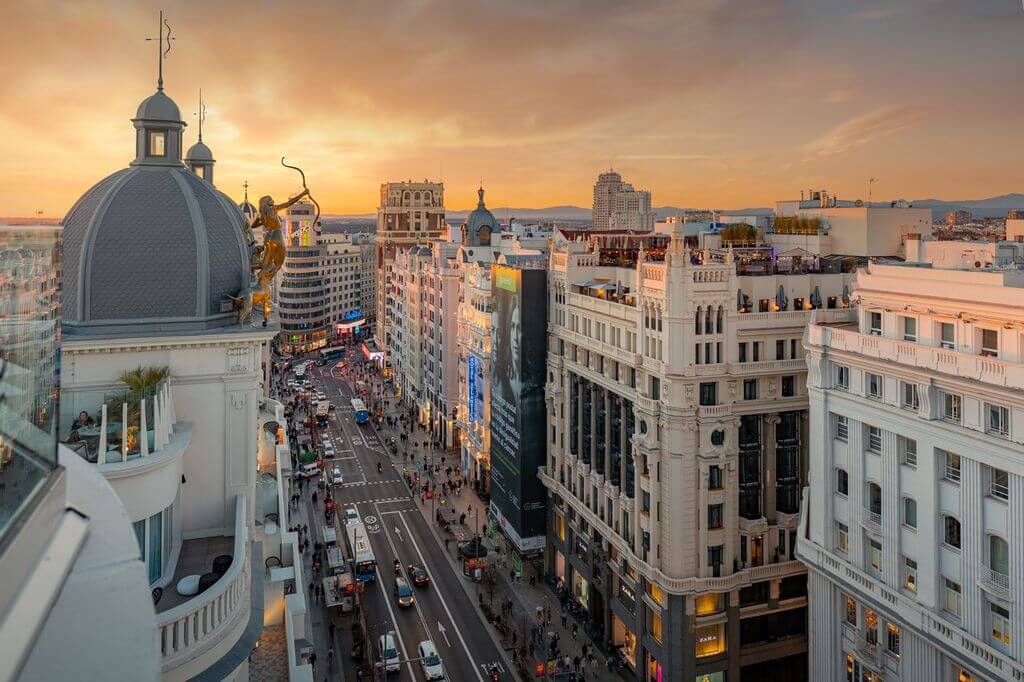
The city’s high-density urban core—specifically along the early 20th-century Gran Vía avenue—has increasingly relied on rooftop conversions to maximize spatial revenue. Destinations such as Picalagartos and the RIU 360° Sky Bar repurposed historical office buildings to provide public observation platforms and night-time hospitality venues.
Concurrently, shifting global dietary preferences have fueled an expansion of vegetarian and plant-based establishments, particularly within the alternative commercial districts of Malasaña, diversifying the city’s traditional pork- and seafood-centric culinary identity.
Phase IV: Ex-Urban UNESCO Landscapes and Golden Age Satellites
Day four broadens the spatial scope to analyze Madrid’s regional connections. A network of high-speed rail links and regional highways connects the capital to nearby satellite sites recognized by UNESCO for their historic and architectural value.
                      +-------------------------+
                      | MADRID URBAN REGION     |
                      +-------------------------+
                                   |
       +---------------------------+---------------------------+
       |                           |                           |
       v                           v                           v
[El Escorial]             [Aranjuez Palace]           [Alcalá de Henares]
(Granite Imperial Hub)    (Bourbon Spring Retreat)    (Golden Age University)
Regional Satellite Outposts
Monastery of San Lorenzo de El Escorial: Situated roughly one hour northwest of Madrid at the base of the Guadarrama mountains, this vast granite complex was commissioned by King Philip II in the 16th century. Serving simultaneously as a royal palace, monastery, basilica, library, and royal pantheon, its austere, symmetrical layout reflects the counter-reformation ideals of Spanish imperial rule.
Royal Palace and Gardens of Aranjuez: Located south along the Tagus River, Aranjuez served as the spring residence of the Bourbon monarchy. The estate features elaborate Baroque and Rococo interiors paired with extensive landscape gardens, reflecting French landscape influences designed to harmonize royal architecture with natural water systems.
Alcalá de Henares: Situated 45 minutes east, this medieval-origin university city is famed as the birthplace of Miguel de Cervantes, author of Don Quixote. As one of the world’s first planned university towns, it provided the academic and literary foundation for the Spanish Golden Age (Siglo de Oro, 1492–1659).
Phase V: Cloistered Sanctuaries and Urban Wilderness
The final phase explores Madrid’s hidden inner-city historic sites alongside its vast green infrastructure, illustrating how centuries of royal property ownership preserved open spaces for modern public use.
   INNER-CITY MONASTIC SANCTUARIES
+--------------------------------------------------------------+
| Las Descalzas Reales | Noble Dowries & Royal Tapestry Art    |
+--------------------------------------------------------------+
| La Encarnación       | Spanish Baroque Relics & Reliquaries  |
+--------------------------------------------------------------+
Cloistered Royal Monasteries
Monastery of Las Descalzas Reales (Monasterio de las Descalzas Reales): Founded in 1559 by Joanna of Austria, daughter of Emperor Charles V, this enclosed convent housed noblewomen who entered the Order of Saint Clare, bringing their personal family dowries. This practice created a vast internal collection of Renaissance art, tapestries, and religious artifacts within an active monastic setting.
Royal Monastery of La Encarnación (Real Monasterio de la Encarnación): Established in 1611 by Margaret of Austria, Queen of Spain, this active convent houses an expansive collection of Baroque artwork, frescoes, and sacred relics, including the preserved blood of Saint Januarius.
   URBAN PARK SCALE COMPARISON
+--------------------------------------------------------------+
| Casa de Campo: 1,700 Hectares (17 sq km)                     |
| [==========================================================] |
|                                                              |
| El Retiro Park: 125 Hectares (1.25 sq km)                    |
| [====]                                                       |
+--------------------------------------------------------------+
Metropolitan Green Infrastructure: Casa de Campo
Casa de Campo: Spanning over 1,700 hectares (17 square kilometers / 6.5 square miles), this expanse was originally set aside as a royal hunting estate by Philip II. Opened to the public in 1931, it is five times larger than New York’s Central Park. The area serves as a major ecological buffer and recreational asset, featuring an artificial lake, forest trails, public sports complexes, and elevated views of the Royal Palace and Almudena Cathedral across the Manzanares River valley.
                 METROPOLITAN PANORAMA FROM CASA DE CAMPO

           [ Almudena Cathedral ]    [ Royal Palace ]
                 |___ Dome ___|        |__ Facade __|
                       ||                    ||
~~~~~~~~~~~~~~~~~~~~~~~||~~~~~~~~~~~~~~~~~~~~||~~~~~~~~~~~~~~~~~~~~~~~~~~~
               Manzanares River Valley Buffer Zone
~~~~~~~~~~~~~~~~~~~~~~~~~~~~~~~~~~~~~~~~~~~~~~~~~~~~~~~~~~~~~~~~~~~~~~~~~
       [ Casa de Campo Waterfront / Lakeside Outdoor Terraces ]
Supporting Context & Quantitative Metrics
To contextualize Madrid’s operational scale as a global tourist destination, key urban, demographic, and economic metrics must be examined:
                  KEY METROPOLITAN INDICATORS
+-----------------------------------+-----------------------------------+
| Metric Indicator                  | Statistical Value                 |
+-----------------------------------+-----------------------------------+
| Municipal Population              | ~3.5 Million                      |
| Metropolitan Population           | ~6.7 Million                      |
| Annual Tourist Volume             | Exceeding 10 Million              |
| Royal Palace Rooms                | 3,418 Rooms                       |
| Casa de Campo Total Area          | 17 sq km (1,700 ha)               |
| UNESCO Site Inscription Year      | 2021 (Paisaje de la Luz)          |
+-----------------------------------+-----------------------------------+
Infrastructure and Economic Metrics
Transit Systems: Madrid features one of Western Europe’s most expansive metro networks, spanning over 290 kilometers across 12 lines. This transit grid carries millions of local commuters and international visitors daily, reducing reliance on surface vehicular transport within the historic center.
Economic Impact of Tourism: Tourism accounts for over 10% of the regional Gross Domestic Product (GDP). High-density cultural corridors—such as the Paseo del Prado—generate revenue that funds regional monument conservation, museum acquisitions, and urban infrastructure upgrades.
Institutional Perspectives and Strategic Policy Frameworks
Madrid’s urban management model relies on balancing heritage conservation with international tourism growth. According to statements and analytical frameworks published by municipal tourism authorities and UNESCO advisory bodies, maintaining this balance requires continuous regulatory management:
"The inscription of the Paisaje de la Luz on the UNESCO World Heritage list highlighted not merely historic monuments, but an integrated urban philosophy where civil society, scientific study, and natural landscapes converge. The primary policy mandate for the next decade centers on mitigating urban congestion while preserving the tangible and intangible heritage of our historical quarters."
— Regional Ministry of Culture and Tourism (Synthesized Policy Brief)
Municipal planners emphasize that pedestrianization projects—such as the transformation of the central Puerta del Sol into a vehicle-free plaza—have improved visitor flow and reduced carbon emissions near historic structures. Concurrently, heritage conservation bodies advocate for strict oversight regarding the commercial conversion of residential properties into short-term tourist rentals. This approach aims to protect the neighborhood social structures of districts such as La Latina, Chueca, and Malasaña.
Future Outlook: Heritage Conservation, Modernization, and Sustainability
Looking toward 2026 and beyond, Madrid’s urban and cultural master plan emphasizes sustainable infrastructure upgrades, spatial decentralization, and structural modernization of key institutions.
                     FUTURE STRATEGIC ROADMAP
+------------------------------------------------------------------------+
| 2024–2025: Expansion of Pedestrianization & Low-Emission Zones         |
+------------------------------------------------------------------------+
| 2026: Public Reopening of the Renovated Sorolla Museum Complex         |
+------------------------------------------------------------------------+
| Beyond: Regional Integration of Ex-Urban UNESCO Cultural Corridors     |
+------------------------------------------------------------------------+
Long-Term Urban Projections
Institutional Modernization: The projected 2026 reopening of the Sorolla Museum highlights a broader trend: updating historic house museums to meet modern accessibility, climate controls, and sustainability standards without compromising their historical interiors.
Sustainable Mobility: Municipal initiatives aim to expand low-emission zones (Madrid ZBEDEP) across the central district. Restricting non-resident vehicular traffic helps protect historical building facades from environmental damage caused by vehicular emissions.
Spatial Decentralization: To reduce crowding around central nodes like Plaza Mayor and the Prado, regional tourism boards are actively promoting ex-urban cultural assets—such as San Lorenzo de El Escorial, Aranjuez, and Alcalá de Henares—alongside peripheral green spaces like Casa de Campo.
By combining long-term municipal planning with preservation of its distinct daily rhythms, Madrid continues to solidify its role as an adaptable European capital. The city balances the demands of modern mass tourism with the preservation of its deep architectural, historical, and artistic heritage.