







Published August 6, 2026
By Investigative Reporting Team
In the quiet, climate-controlled interior of the Craig Thomas Visitor and Discovery Center in Grand Teton National Park, former National Park Service (NPS) ranger Melissa Dalley points to an empty rectangle of wall space. Where a plaque once stood, only a faint discoloration remains—an outline of institutional memory etched into the wood-paneled plinth.
“You could clearly see the ghost of the sign,” Dalley reflects. “The language was still imprinted on the plinth.”
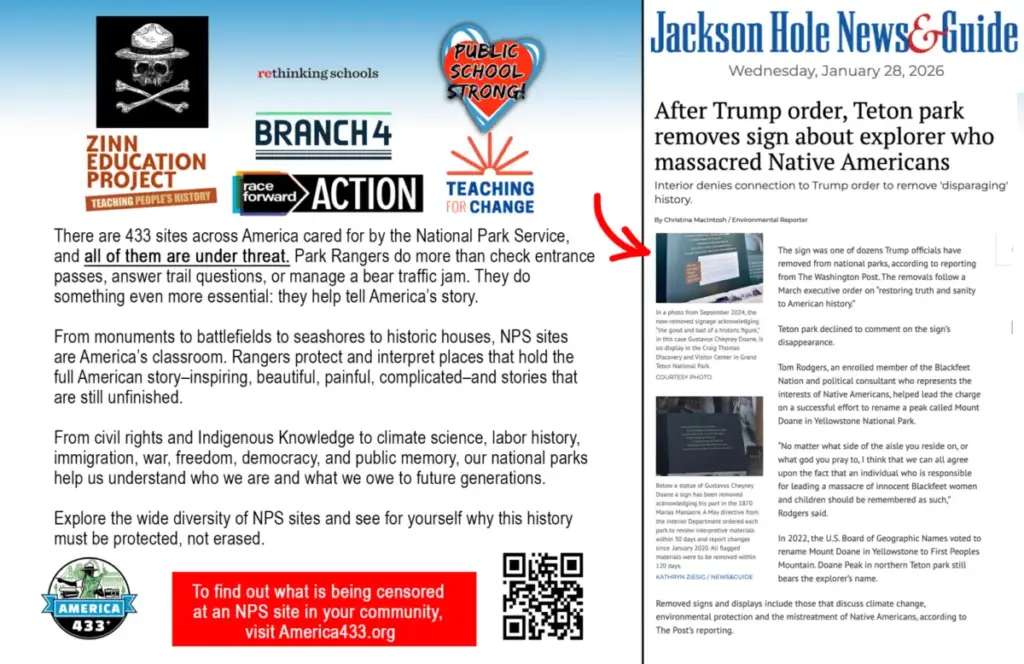
The missing display was far from benign administrative housekeeping. It had previously stood beneath a statue of Gustavus Cheyney Doane, a 19th-century U.S. Army officer celebrated for his exploration of the Teton region, but intentionally scrubbed of his darker legacy: his active participation in the massacre of more than 170 Piegan Blackfeet.
Today, Dalley is not waiting for the federal government to restore the context. Since April 2026, the 49-year-old veteran guide has visited 18 national parks across the United States, standing beside these bare walls to hand out printed flyers containing the exact text of the missing history to startled, curious visitors.
Dalley’s crusade is the sharp edge of a burgeoning cultural and constitutional conflict inside America’s public lands. Sparked by a cascade of executive directives signed in early 2025, the National Park Service has quietly stripped away hundreds of interpretive exhibits that touch upon the darker chapters of the American story—including slavery, forced Native American assimilation, climate change, and institutional violence. In response, a covert grassroots network of former and current public lands employees, activists, and park visitors has mobilized to document, archive, and aggressively counteract what they characterize as federally mandated historical erasure.
Detailed Chronology: How the Erasure Unfolded
The systematic removal of interpretive panels across America’s 433 national park sites did not happen overnight; it was the product of a deliberate, top-down bureaucratic realignment that transformed cultural interpretation within the Department of the Interior.

The Legislative Blueprint: 2025
The pivot in park programming can be traced directly to a March 2025 executive order signed by President Trump, titled "Restoring Truth and Sanity to American History." The directive mandated that all federal land-management agencies review how the nation’s past is presented to the public, setting the stage for a sweeping ideological overhaul.
By May 2025, the Department of the Interior followed suit by issuing Secretarial Order 3431. This administrative edict instructed the NPS to purge any exhibits, films, or plaques deemed to “inappropriately disparage Americans past or living.” Instead, the agency was ordered to pivot its interpretive lens toward celebrating the majestic beauty and unvarnished grandeur of the American landscape.
The First Wave of Purges
By June 2025, the directive trickled down to the park level. Frontline employees were instructed to audit their own visitor centers and field exhibits, flagging materials that could be construed as negative toward American history.
The first wave of physical removals hit the field in September 2025. Across the national park system—from the historic battlefields of the East Coast to the sweeping valleys of the West—maintenance crews unbolted panels. Among the first casualties were signs addressing the brutal realities of chattel slavery, climate science data on retreating glaciers, and massacres of Indigenous populations.
The Labor Crisis and the Birth of Resistance
The atmosphere within the agency had already reached a boiling point earlier that year. On February 14, 2025, roughly 1,000 workers across the NPS system were abruptly laid off, plunging morale to historic lows. Although federal courts ordered the reinstatement of the terminated workers in March 2025, the disruption triggered an exodus. Thousands more experienced park employees chose to leave voluntarily through early retirements and buyouts.
It was amid this climate of institutional trauma that Melissa Dalley reached her personal tipping point. After four years as a park guide at the Martin Van Buren National Historic Site in upstate New York, she made the decision to resign in 2026.
“I determined that I could serve the Park Service much better right now from the outside,” Dalley explains. “I wouldn’t be muzzled, and I wouldn’t face retaliation.”
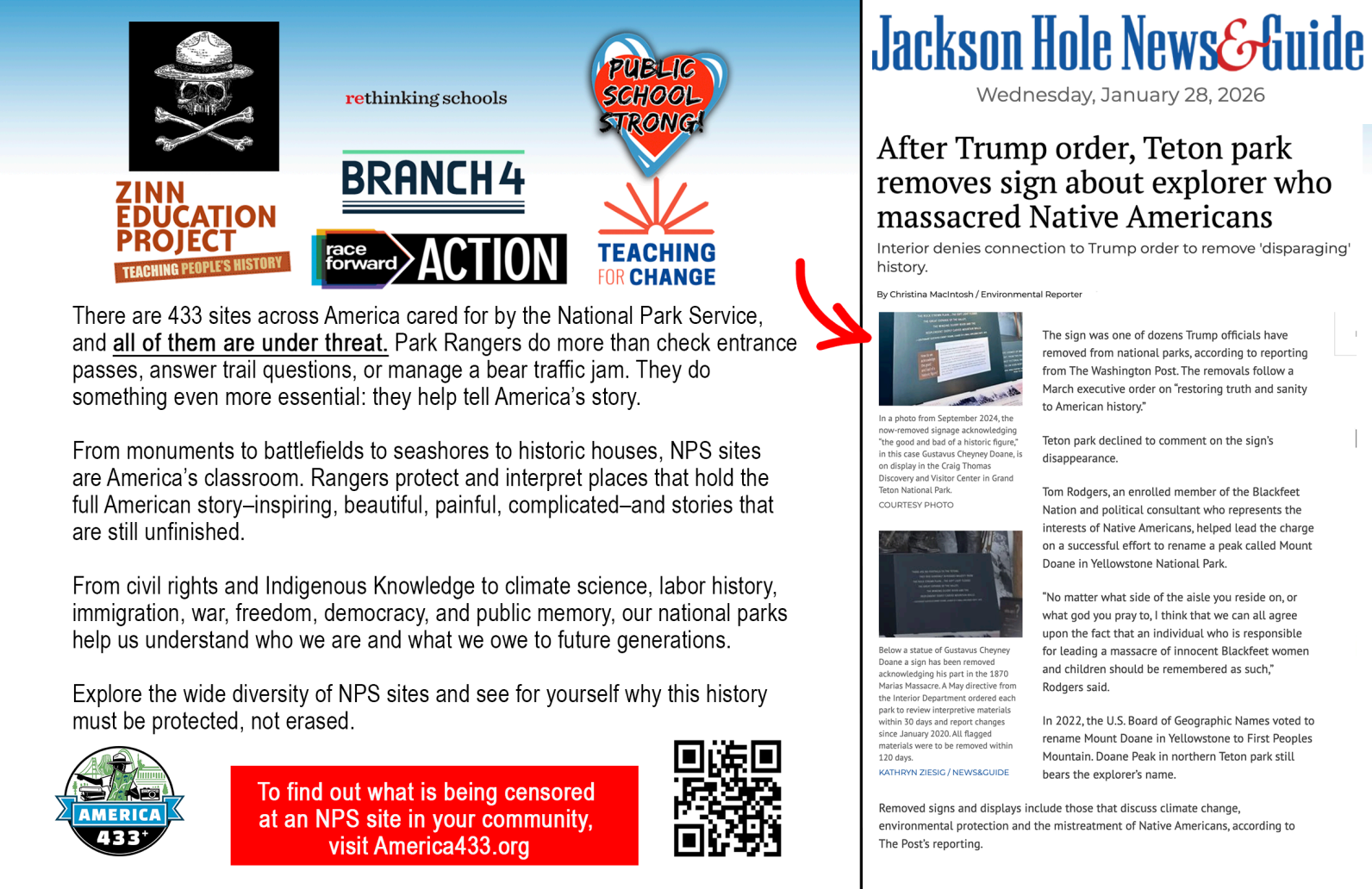
Dalley joined the Resistance Rangers, a mostly anonymous volunteer collective of off-duty and former NPS employees formed in the wake of the 2025 layoffs. Concurrently, she became a volunteer organizer with America 433+, an education coalition advocating against the censorship of historical displays across all 433 park sites.
Supporting Context & Metrics: The Scale of the Censorship
The geographical expanse of the removals is staggering. When Dalley began tracking the missing panels, she quickly became an informal clearinghouse for park staff and visitors from Alaska to Guam.
Mapping the "Ghost Signs"
Sites that historically operated in bureaucratic isolation began comparing notes. Employees who felt morally compromised by the scrubbing of historical facts reached out to Dalley, revealing a coordinated nationwide effort to sanitize park kiosks.
- The President’s House (Philadelphia, Pennsylvania): Once a powerful memorial dedicated to the enslaved people owned by George Washington—where Dalley previously gave educational tours—the site became a lightning rod for public defiance in May 2026. Finding the official interpretive framework compromised, visitors took matters into their own hands. They taped up photographs of the removed signs, affixed printouts of investigative journalism articles detailing the censorship, and strung up a massive roll of butcher paper. Armed with a single Sharpie, international tourists and domestic travelers alike penned emotional reactions to the scrubbing of historical truth.
- Harpers Ferry National Historical Park (West Virginia): In June 2026, Dalley utilized the historic site to host a Juneteenth teach-in, directly addressing the erasure of abolitionist history and the systemic whitewashing of Civil War antecedents.
- Grand Teton and Glacier National Parks: During family vacations in the summer of 2026, Dalley expanded her flyer-distribution model to high-traffic western reserves, turning routine tourist stops into impromptu civics lessons.
“Basically, the public took on the mantle of what the Park Service should be doing,” Dalley observes regarding the grassroots response at the President’s House. “They just spontaneously, grassroots, recreated an audience-centered interpretation.”
Official Statements and Administrative Reality
The Department of the Interior has consistently defended Secretarial Order 3431 as a necessary corrective measure to restore civic pride and re-center public lands on recreation and national unity. Proponents of the policy argue that federal parks should serve as unifying spaces rather than academic battlegrounds over historical grievances.
In official correspondence and public briefings, agency representatives have maintained that interpretive updates are a standard part of park management designed to refresh aging exhibits and align programming with statutory mandates.
However, historians, civil liberties groups, and conservation organizations view the initiative through a starkly different prism. Legal watchdogs argue that the wholesale removal of historical plaques without public notice or academic peer review violates the spirit of the National Historic Preservation Act and strips citizens of their full educational experience on public lands.
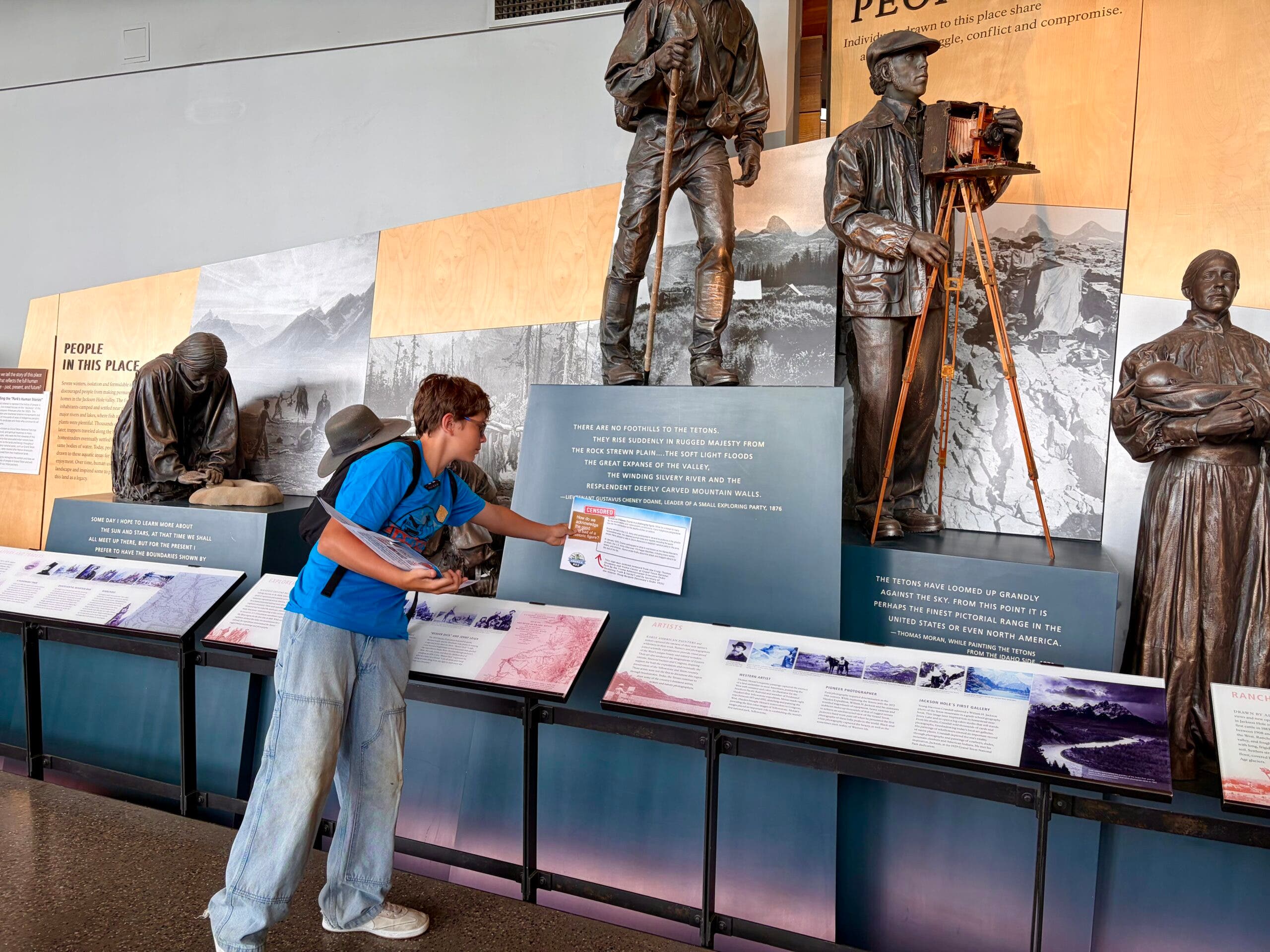
“There is an irreparable loss associated with some of this information being censored,” Dalley notes. She emphasizes that physical signage serves a critical psychological and pedagogical function: it anchors historical understanding directly to the physical landscape at the precise moment a visitor is emotionally primed to absorb it, regardless of whether the narrative flatters modern sensibilities.
Future Outlook: Building a Digital Archive of Resistance
As the federal review of public lands interpretation continues, the resistance movement is pivoting from physical protests to digital preservation.
Dalley is currently developing a comprehensive, downloadable toolkit designed to help citizens and sympathetic park staff systematically catalogue removed signs across the country. The initiative aims to create an immutable, decentralized digital archive of the redacted history—ensuring that the deleted words can be accessed via QR codes, mobile apps, and independent educational networks even if the physical metal plates never return to their plinths.
Despite her departure from the federal payroll, Dalley’s emotional ties to the service remain profound. “Being a park ranger unlocked something in me,” she says softly. “I miss it so much.”
For now, her workspace is no longer a designated visitor center podium, but the empty floor space beside a shadow on a wall. Armed with stacks of paper and an unwavering commitment to historical integrity, Melissa Dalley continues to patrol the ghost towns of American memory—ensuring that what was meant to be forgotten remains unwritten only in stone, but alive in the public consciousness.