






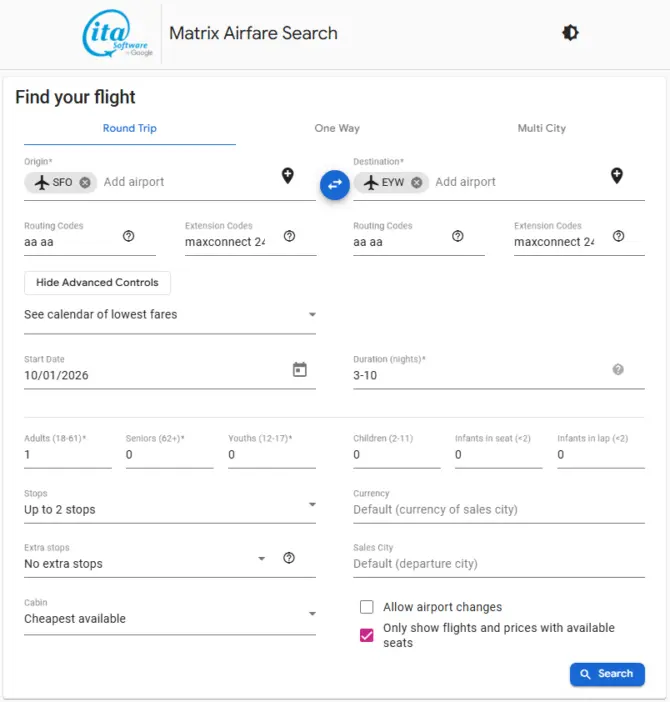
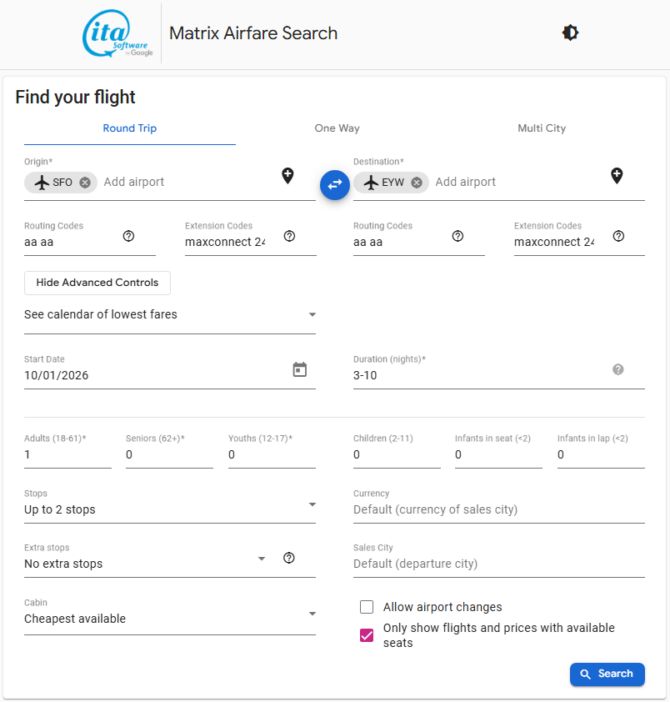
The domestic airline industry in the United States continues to experience dynamic shifts in pricing models, route optimization, and fare class segmentation. Recent ticketing data analyzed across major carrier networks highlights a compelling pricing phenomenon centered on transcontinental and regional connectivity—specifically examining routes connecting Key West International Airport (EYW) and San Francisco International Airport (SFO).
At the center of this pricing analysis is a striking dichotomy introduced by legacy carriers like American Airlines. Travelers evaluating flights between these destinations are presented with a choice: a $300 ultra-restrictive Basic Economy fare or a $410 regular Economy fare. While an upfront savings of $110 may initially appeal to budget-conscious flyers, a deeper examination of the restrictions, ancillary costs, and hidden implications of Basic Economy reveals a much more nuanced economic landscape.
This report provides an authoritative, in-depth evaluation of current airfare trends on the Key West–San Francisco corridor. By dissecting fare class mechanics, airline yield management strategies, and consumer booking behavior, this analysis equips travelers, industry analysts, and frequent flyers with the insights necessary to make financially sound and strategically optimized travel decisions.

Detailed Chronology
The Evolution of Tiered Airfares
To understand the current pricing structure that pits a $300 fare against a $410 regular economy ticket, one must examine the chronological implementation of Basic Economy structures by major U.S. carriers over the past decade.
- 2015–2017 (The Introduction Phase): Major network airlines—led by Delta Air Lines and quickly followed by American Airlines and United Airlines—introduced Basic Economy as a defensive maneuver against the rapidly expanding market share of ultra-low-cost carriers (ULCCs) such as Spirit Airlines and Frontier Airlines. The goal was simple: unbundle the ticket to compete aggressively on headline price search engines (OTAs and aggregators) while preserving higher-margin business travel revenue.
- 2018–2020 (Expansion and Normalization): Basic Economy fares expanded rapidly from domestic short-haul routes to transcontinental corridors and select international markets. Airlines refined restrictions, progressively stripping away perks such as overhead bin access and advance seat assignments to drive passengers toward higher-tier fares.
- 2021–2024 (Post-Pandemic Restructuring): Following the disruptions of the global pandemic, airlines leveraged dynamic pricing algorithms to optimize revenue per available seat mile (RASM). The gap between Basic Economy and Main Cabin fares widened or narrowed dynamically depending on demand elasticity, seasonal routing, and leisure versus corporate travel mix.
- Current State: The present marketplace—exemplified by current routings between Key West and San Francisco—demonstrates a mature, highly calculated dual-tier pricing model. Airlines now utilize sophisticated machine-learning models to predict which consumers will accept restrictive conditions for a lower sticker price versus those who require flexibility and standard amenities.
The Anatomy of the Route: Key West (EYW) to San Francisco (SFO)
Operating flights into and out of Key West International Airport presents unique operational challenges. Due to runway length limitations (historically restricted to 4,800 feet, though subject to ongoing regional modifications), EYW primarily handles regional jets and narrowbody aircraft operating under strict payload constraints. Consequently, airfares originating or terminating in Key West often carry a structural premium compared to high-volume hub-to-hub routes.
When pairing EYW with a major West Coast hub like San Francisco (SFO), passengers typically encounter multi-leg itineraries involving connection points in Charlotte (CLT), Dallas/Fort Worth (DFW), Chicago (ORD), or Miami (MIA). These complex routings introduce variable pricing architectures, where minor adjustments in connection sequencing can trigger shifts in fare basis codes.
Supporting Context & Metrics
Comparative Fare Breakdown: $300 vs. $410
A granular financial and operational comparison of the two primary fare tiers available on this route underscores the importance of looking beyond the initial headline price:
| Feature / Amenity | Basic Economy ($300 Fare) | Regular Economy ($410 Fare) |
|---|---|---|
| Headline Price | $300.00 | $410.00 |
| Price Difference | Baseline | +$110.00 premium |
| Advance Seat Assignment | Not allowed (assigned at check-in) | Included (select standard seats free of charge) |
| Carry-On Baggage | Personal item only (overhead bin prohibited) | Normal-size carry-on + one personal item |
| Checked Baggage | Standard fees apply | Standard fees apply |
| Changes & Cancellations | Strictly non-changeable and non-refundable | Subject to standard main cabin rules (often changeable with credit) |
| Boarding Priority | Groups last (Zone 8 or equivalent) | Standard main cabin boarding |
| Loyalty Program Earnings | 0 Loyalty Points / Redeemable Miles | Full earn rate based on distance and elite status |
The Hidden Costs of Basic Economy
While saving $110 upfront appears attractive, consumers must evaluate potential secondary expenses:
- Seat Selection Penalties: Families or groups traveling together on Basic Economy tickets are systematically scattered across the cabin by automated assignment systems. Securing seats together requires paying individual seat selection fees, which can quickly erode the $110 savings.
- Baggage Restrictions: Basic Economy tickets on carriers like American Airlines generally restrict passengers to a single personal item that fits under the seat ahead. Bringing a standard roller bag intended for the overhead bin can result in heavy gate-check fees, neutralizing the cost advantage of the lower fare.
- Inflexibility Costs: Life events and travel plans are inherently unpredictable. Because Basic Economy fares do not permit changes or cancellations, a last-minute schedule alteration results in the total forfeiture of the ticket value—turning a $300 "savings" into a 100% loss if plans change.
- Opportunity Cost of Loyalty: Frequent flyers and business travelers forfeit valuable redeemable miles and elite-qualifying status credits when purchasing Basic Economy. For frequent travelers, the loss of loyalty currency diminishes the overall return on investment of their travel spend.
Official Statements & Industry Perspectives
Airline Yield Management and Revenue Strategy
Industry executives and aviation economists frequently defend tiered fare structures as a consumer-friendly mechanism that democratizes air travel. According to commercial aviation spokespersons, unbundling allows budget-conscious travelers who pack light and do not care where they sit to fly at lower price points, while business and leisure travelers who value convenience can purchase enhanced services.

"The introduction of segmented fare classes has fundamentally transformed capacity utilization," notes a prominent airline industry analyst. "Carriers are no longer operating under a one-size-fits-all model. Every seat on an aircraft is treated as an individual inventory unit priced according to immediate supply, historical demand, and consumer willingness to pay for ancillary features."
Consumer Advocacy and Regulatory Scrutiny
Conversely, consumer advocacy groups and regulatory bodies have scrutinized the opacity of unbundled pricing. Critics argue that headline prices displayed on third-party aggregators and metasearch engines disproportionately favor Basic Economy fares, misleading consumers regarding the true cost of travel once mandatory fees for bags and seats are factored in.
In response to consumer pressure, regulatory agencies worldwide have increasingly moved toward mandatory ancillary fee transparency, requiring airlines to display the total expected cost of travel—including standard baggage and seat selection—earlier in the booking funnel. Despite these regulatory shifts, the fundamental mechanics of Basic Economy remain a core pillar of legacy carrier profitability.

Future Outlook
Emerging Trends in Airfare Distribution and Pricing
As the aviation sector looks toward the remainder of the decade, several key developments are poised to reshape how routes like Key West to San Francisco are priced and sold:
- Dynamic Ancillary Personalization: Airlines are rapidly adopting artificial intelligence and machine learning to price ancillary services (such as priority boarding, exit row seating, and premium snacks) dynamically based on individual consumer profiles and historical purchasing habits. Rather than fixed fees, expect ancillary pricing to fluctuate in real-time alongside base fares.
- Expanded Fare Tiers: Beyond the binary choice of Basic Economy versus Regular Economy, carriers are experimenting with intermediate tiers (often termed "Economy Plus" or "Preferred Economy") that offer selective unbundling—such as guaranteed overhead bin space without advance seat selection—to capture surplus consumer willingness to pay.
- Distribution Evolution through NDC (New Distribution Capability): The proliferation of NDC standards allows airlines to offer customized bundles directly through travel agencies and corporate booking tools. This technology will enable corporate travel managers and independent bookers to view comprehensive total-cost comparisons instantly, mitigating the surprise factor of hidden Basic Economy restrictions.
- Environmental and Sustainable Aviation Fuel (SAF) surcharges: As regulatory mandates concerning carbon emissions tighten globally, carriers may introduce sustainability-linked surcharges across all fare classes. How these costs are absorbed—whether distributed evenly across base fares or itemized as optional green offsets—will significantly influence future ticket pricing architecture.
Strategic Recommendations for Travelers
For consumers navigating transcontinental and regional itineraries such as the Key West to San Francisco route, adopting a strategic approach to booking is essential:
- Audit Total Trip Requirements: Before selecting the $300 Basic Economy fare, calculate whether you require a rolling carry-on bag, specific seating arrangements, or trip flexibility. If any of these apply, the $410 regular economy fare frequently provides superior overall value.
- Monitor Fare Volatility: Airfare pricing is notoriously fluid. Utilizing real-time flight tracking alerts and subscribing to specialized fare notification newsletters allows travelers to capture sudden market corrections or promotional sales before inventory is depleted.
- Leverage Loyalty Ecosystems: Frequent flyers should consistently weigh the long-term value of elite status accumulation and mile earnings against short-term cash savings, ensuring that penny-wise decisions do not compromise long-term travel rewards.
In conclusion, while the $300 price point for Key West-San Francisco itineraries catches the eye, informed travelers who weigh the restrictive conditions of Basic Economy against the comprehensive inclusions of the standard $410 fare will consistently achieve a more comfortable, predictable, and economically sound travel experience.