






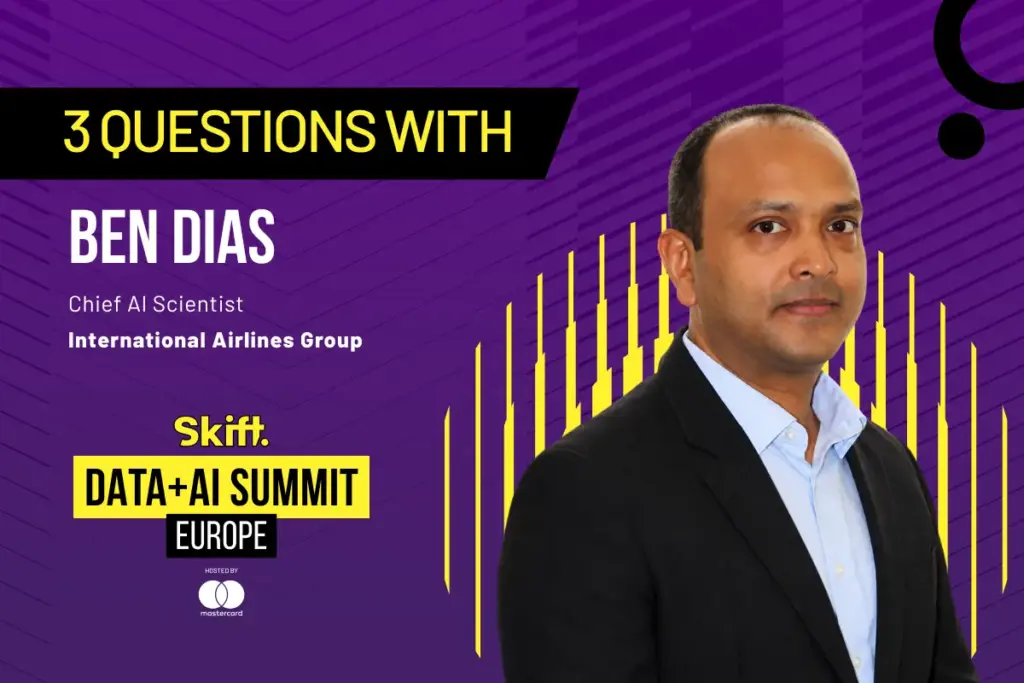
Managing a global airline conglomerate presents one of the most complex operational challenges in modern business. For International Airlines Group (IAG), this challenge is multiplied by the distinct identities, operational models, and customer bases of its subsidiary airlines. Operating British Airways, Iberia, Aer Lingus, and Vueling under a single corporate umbrella means that any technological initiative must reconcile the premium, long-haul demands of a legacy flag carrier with the lean, high-frequency requirements of a low-cost operator.
When it comes to integrating artificial intelligence into this multi-faceted ecosystem, the primary strategic question is not just what to build, but where to begin.
Ben Dias, IAG’s Chief AI Scientist, advocates for a highly disciplined, sequential approach to technology deployment. Rather than attempting to launch sweeping, group-wide AI platforms from day one, Dias champions a methodology that begins with a single airline, establishes a clear proof of concept, and then scales the proven value across the rest of the group.
Ahead of his upcoming appearance at the Skift Data + AI Summit Europe in London on October 6, 2026, Dias shared insights into how IAG sequences its AI initiatives, navigates the stringent European regulatory landscape, and focuses technology where it can deliver the most significant operational impact.
The Power of Sequential Scaling: One Airline at a Time
In large corporate structures, the temptation to build enterprise-wide, one-size-fits-all software solutions is strong. However, in the aviation sector—where legacy IT systems, varying fleet compositions, and distinct regional markets coexist—this approach often leads to bloated timelines and unrealized value.
[Identify Business Problem]
           │
           ▼
[Select Single Pilot Airline] ──► [Establish Operational Baseline]
           │
           ▼
[Iterate & Prove Value]
           │
           ▼
[Scale across IAG Portfolio] (British Airways, Iberia, Aer Lingus, Vueling)
For IAG, the strategy is deliberately incremental. By focusing AI development on a single airline first, the data science team can isolate variables, understand the nuances of the operational data, and establish a clear performance baseline.
"The single most important factor is starting with a real business problem and proving value before scaling," Dias explains. "At IAG, we’ve found it’s far more effective to begin with one airline, establish a baseline, learn what works, and then expand across the Group."
This sequential methodology serves several practical purposes:
- Risk Mitigation: Testing a new AI model on a subset of operations limits the potential fallout if the system requires calibration.
- Speed to Market: Developing a localized solution is significantly faster than trying to accommodate the API requirements and operational workflows of four different airlines simultaneously.
- Proof of Concept: Demonstrating tangible financial or operational improvements in one brand makes it much easier to secure buy-in from leadership teams across the other business units.
"Trying to build the full solution from day one often slows progress," says Dias. "By scaling incrementally, you generate value faster and gain insights that improve the solution as it grows."
Governance by Design: Navigating the European Regulatory Landscape
Operating primarily within Europe means that IAG must design its AI systems under some of the strictest regulatory frameworks in the world. The European Union’s General Data Protection Regulation (GDPR) and the landmark EU AI Act have established rigorous standards for data privacy, algorithm transparency, and risk management.
For many organizations, these regulations are viewed as hurdles that slow down innovation. At IAG, however, compliance is treated as a foundational design requirement rather than an afterthought.
"Regulation has reinforced the importance of governance from the start," Dias notes. He points to the group’s "AI Creative Studio" as a prime example of how responsible AI practices are woven directly into the development pipeline. "With initiatives such as our AI Creative Studio, legal compliance, intellectual property considerations, and responsible AI governance were built into the design process from day one."
By establishing a robust governance framework at the inception of a project, IAG ensures that any tool developed for one airline can be seamlessly transitioned to another without running into regulatory roadblocks. This proactive stance on compliance gives the group the confidence to scale successful use cases across multiple European markets and highly regulated brands, secure in the knowledge that their data pipelines and model architectures are fully compliant.
Human-in-the-Loop: Augmenting Aviation Expertise
While generative AI and automated customer service often dominate public discussion, some of the most profound business impacts of AI in aviation occur behind the scenes, far from the passenger terminal.
Aviation is an industry defined by volatility. Weather patterns, air traffic control restrictions, supply chain disruptions, and maintenance anomalies create an incredibly complex, fast-moving operational environment. In this high-stakes arena, Dias believes the true value of AI lies in its ability to support, rather than replace, human decision-makers.
"The biggest opportunities are where AI helps experts make better decisions in highly complex environments," Dias says.
Optimizing Maintenance Planning
Aircraft maintenance is a highly regulated, capital-intensive aspect of airline operations. Unscheduled maintenance can cause cascading delays across an airline’s network, resulting in high costs and frustrated passengers. By utilizing predictive AI models, IAG can analyze vast streams of sensor data from aircraft components to identify potential maintenance needs before they lead to operational disruptions. This allows maintenance teams to plan servicing proactively during scheduled downtime, maximizing fleet availability.
Improving Operational Resilience
When severe weather or air traffic control restrictions disrupt flight schedules, operations centers must make rapid decisions regarding flight cancellations, aircraft rerouting, and crew rescheduling. AI systems can process millions of data points—including real-time weather forecasts, crew duty limitations, and passenger connection data—to simulate millions of potential recovery scenarios in seconds.
"The real value isn’t replacing human expertise," Dias emphasizes. "It’s combining that expertise with AI to help people make better decisions, faster and with greater confidence."
┌────────────────────────────────────────────────────────┐
│                  Aviation Complexity                   │
│  (Weather, ATC, Crew Limits, Maintenance, Connections) │
└───────────────────────────┬────────────────────────────┘
                            │
                            ▼
┌────────────────────────────────────────────────────────┐
│                  AI Scenario Engine                    │
│      (Simulates millions of options in seconds)        │
└───────────────────────────┬────────────────────────────┘
                            │
                            ▼
┌────────────────────────────────────────────────────────┐
│                     Human Experts                      │
│     (Applies context, empathy, and final decision)     │
└───────────────────────────┬────────────────────────────┘
                            │
                            ▼
┌────────────────────────────────────────────────────────┐
│             Optimized Operational Outcome              │
└────────────────────────────────────────────────────────┘
Collaborative Innovation at the Skift Data + AI Summit Europe
The insights shared by Ben Dias offer a pragmatic blueprint for how large travel enterprises can approach the deployment of advanced technologies. Rather than chasing abstract technological trends, IAG’s strategy focuses squarely on solving concrete operational problems, ensuring regulatory compliance from day one, and empowering human workers with superior data-driven insights.
Dias will expand on these strategies during a live session at the Skift Data + AI Summit Europe on October 6, 2026, in London.
The summit will bring together a diverse lineup of industry leaders to discuss how data and artificial intelligence are transforming the travel ecosystem. Attendees will hear from a wide range of experts, including:
- Filip Filipov of OAG, discussing the evolving role of aviation data and analytics.
- Peer Bueller of KAYAK, sharing insights on how AI is reshaping the travel search and booking experience.
- Sheena Varma of Amex GBT, exploring the integration of intelligent systems within corporate travel management.
- Nicolas Maynard of Accor, detailing the impact of data-driven personalization in the hospitality sector.
As travel companies transition from the initial experimentation phase of artificial intelligence to full-scale operational implementation, the lessons learned by IAG will serve as a vital guide for organizations seeking to deliver real, measurable value through technology.