







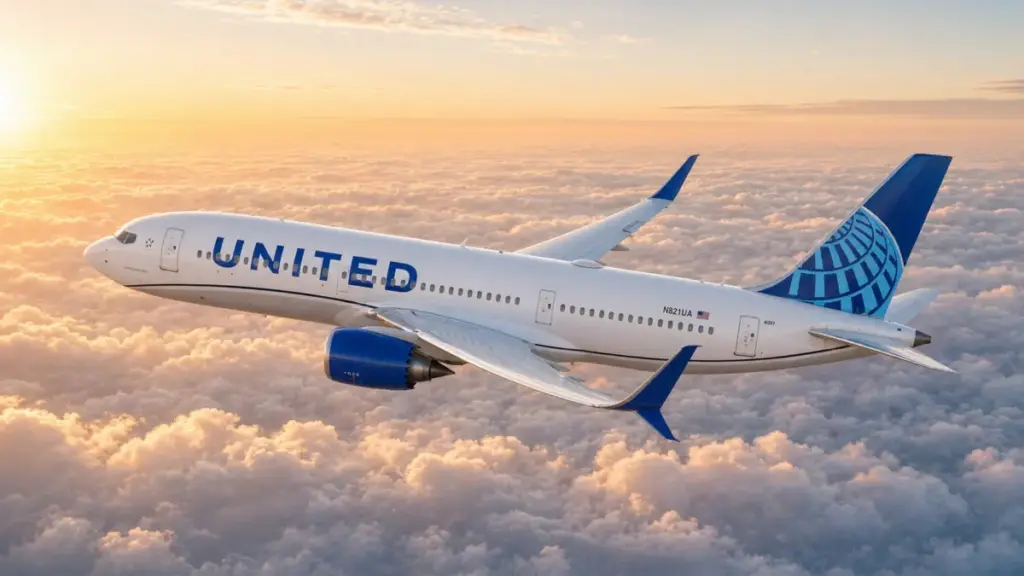
The competitive landscape of the American aviation industry is shifting, and the latest battleground is not found in airport lounges or seat pitch, but in the upper atmosphere. United Airlines has launched an aggressive marketing campaign aimed directly at its primary rivals, American Airlines and Delta Air Lines. By offering a targeted status match program, United is inviting the most frequent and valuable flyers from competing carriers to experience its rapidly expanding fleet of Starlink-equipped aircraft.
The move represents a calculated play to exploit a growing technological gap between United and its peers. As business travelers increasingly view reliable, high-speed internet as a non-negotiable utility rather than a luxury, United is positioning its adoption of SpaceX’s Starlink satellite network as a primary differentiator. With more than 600 of its aircraft already equipped with the low-Earth-orbit (LEO) satellite technology, and a target of 1,000 retrofitted planes by the end of the year, United is moving at a pace that its competitors are currently unable to match.
A Bold Play for Loyalty: United’s Elite Status Match Campaign
Airline loyalty programs are the lifeblood of carrier profitability. The frequent flyers who hold elite status—earned through hundreds of thousands of miles flown and tens of thousands of dollars spent annually—are the highly coveted customers that airlines fight fiercest to retain. United’s new status match initiative is a direct attempt to disrupt this loyalty loop.
Under the terms of the status match offer, premium tier frequent flyers on American Airlines and Delta Air Lines can seamlessly transition their elite status to United’s MileagePlus program. This lowers the barrier to entry for travelers who might otherwise be hesitant to switch carriers due to the loss of perks like complimentary upgrades, priority boarding, free checked bags, and dedicated customer service lines.
The timing of this offensive is deliberate. By offering an easy pathway to equivalent status, United is giving disgruntled or curious competitors’ customers a risk-free opportunity to test-drive its domestic and international network. The primary hook to keep them there? An in-flight Wi-Fi experience that finally mirrors the speed and reliability of ground-based broadband.
The Starlink Revolution: Why LEO Satellite Technology is Changing the Game
For more than a decade, in-flight connectivity has been a source of near-constant frustration for travelers. Traditional airline Wi-Fi systems have relied on geostationary (GEO) satellites orbiting approximately 35,786 kilometers (22,236 miles) above the Earth. Because of this immense distance, data transmission suffers from high latency—often exceeding 600 milliseconds.
This latency, combined with limited bandwidth shared among hundreds of passengers on a single aircraft, results in the familiar, sluggish experience of dropped connections, endless buffering wheels, and the inability to stream video or participate in live video conferences.
The Technical Edge of Low Earth Orbit
SpaceX’s Starlink operates on a fundamentally different architecture. Utilizing a constellation of thousands of satellites orbiting in Low Earth Orbit (LEO) at altitudes of roughly 550 kilometers (340 miles), Starlink dramatically reduces the physical distance data must travel.
This proximity yields several critical advantages for aviation:
- Ultra-Low Latency: Latency is reduced to a mere 25 to 90 milliseconds, making real-time applications like Zoom calls, online gaming, and live virtual private network (VPN) connections seamless.
- Massive Bandwidth: Each aircraft receives a dedicated, high-capacity beam, ensuring that even on a fully loaded widebody jet, every passenger can stream high-definition video simultaneously without bottlenecking the system.
- Continuous Global Coverage: Unlike older systems that experience dead zones over oceans or polar regions, Starlink’s interconnected mesh network offers unbroken coverage across virtually the entire globe.
Erasing the Pain Points of Legacy In-Flight Connectivity
Frequent flyers understand the psychological toll of unreliable cabin technology. For business travelers, a five-hour transcontinental flight with spotty internet represents lost productivity, missed emails, and delayed projects.
By delivering a connection that does not require passengers to log in repeatedly, wait for pages to load, or pay exorbitant fees for dial-up-era speeds, United is betting that the physical experience of working seamlessly at 35,000 feet will convert even the most loyal Delta or American flyers.
Speed to Market: United’s Aggressive Fleet Upgrades
A technological advantage is only useful if it is widely available to customers. To that end, United Airlines has embarked on one of the fastest fleet-wide connectivity retrofits in aviation history.
Currently, more than 600 aircraft in United’s mainline and regional fleet have been outfitted with Starlink receiver antennas and internal cabin distribution systems. The airline is on track to hit its target of 1,000 Starlink-equipped planes by the end of this year. This rapid deployment ensures that a passenger booking a flight on United has a high probability of stepping onto an aircraft featuring the upgraded service.
This aggressive rollout schedule minimizes the "lottery effect" that often plagues airline product launches, where passengers only occasionally experience the upgraded cabin amenities they were promised in marketing materials. By quickly establishing a critical mass of upgraded planes, United can confidently build its entire brand narrative around superior connectivity.
Competitors in the Slow Lane: American’s Delayed Timeline and Delta’s Amazon Gamble
United’s aggressive push highlights the starkly different technological paths and timelines chosen by its primary domestic rivals, American Airlines and Delta Air Lines.
| Airline | Connectivity Partner | Technology Type | Rollout Status / Timeline |
|---|---|---|---|
| United Airlines | SpaceX Starlink | Low Earth Orbit (LEO) | 600+ aircraft active; targeting 1,000 by end of year |
| American Airlines | Various / Undecided | To Be Determined | Rollout of next-gen system scheduled to begin in 2027 |
| Delta Air Lines | Amazon Project Kuiper | Low Earth Orbit (LEO) | Partnership announced; system currently untested on commercial flights |
American Airlines: A Multi-Year Connectivity Gap
American Airlines finds itself in a challenging defensive position. The carrier has built a robust domestic network, but its timeline for next-generation satellite internet integration lags significantly behind United.
American’s scheduled rollout for its upgraded high-speed Wi-Fi systems is not slated to begin until 2027. This leaves a multi-year window during which American’s most lucrative business travelers will have to contend with older, slower connectivity options while watching United passengers enjoy seamless, high-speed access. In the fast-moving corporate travel sector, a three-year technological deficit could result in a permanent loss of premium market share.
Delta Air Lines: A Risky Bet on Untested Tech
Delta Air Lines has long prided itself on being the premium leader among US legacy carriers. The airline made headlines by offering free Wi-Fi to all members of its SkyMiles loyalty program, utilizing a mix of Viasat and legacy providers. However, as demand for bandwidth skyrocketed, Delta recognized the need to transition to a LEO-based network to support its long-term digital ambitions.
Rather than partnering with the established Starlink network, Delta elected to align itself with Amazon’s nascent Project Kuiper (often referred to as Amazon Leo).
This decision has drawn considerable industry skepticism and criticism. Unlike Starlink, which has thousands of operational satellites in orbit and years of proven commercial aviation performance, Amazon’s Project Kuiper is still in its early developmental stages. The satellite constellation is not yet fully deployed, and the technology remains entirely untested on commercial passenger flights.
By choosing an unproven partner, Delta risks facing lengthy certification delays, hardware supply chain bottlenecks, and performance uncertainties—all while United continues to actively scale its operational Starlink fleet.
The High Stakes of Premium Passenger Retention
The financial ramifications of this connectivity war are profound. Business and premium leisure travelers contribute a disproportionate share of airline revenue. According to industry analysts, corporate travelers can make up as much as 50% of a legacy carrier’s passenger revenue despite representing a much smaller percentage of physical flyers.
For these passengers, time is quite literally money. If United can successfully demonstrate that a flight on its aircraft allows a corporate attorney, investment banker, or software engineer to remain as productive in the air as they are in their office, the corporate contracts will inevitably shift.
Corporate travel managers, tasked with maximizing the efficiency and comfort of their traveling workforces, are highly sensitive to amenities that directly impact employee productivity. A status match program removes the administrative and personal friction of making that switch, allowing corporate road warriors to transition their travel spend to United without sacrificing their personal travel comfort.
Looking Ahead: A New Standard for In-Flight Connectivity
The era of treating slow, expensive, and unreliable airplane Wi-Fi as an acceptable industry norm is rapidly drawing to a close. United Airlines’ bold decision to couple a massive, rapid deployment of SpaceX’s Starlink technology with an aggressive customer-poaching strategy has effectively forced the hands of its competitors.
As United’s Starlink fleet nears the 1,000-aircraft mark, the pressure on Delta to deliver on its untested Amazon partnership will intensify, and American will face growing scrutiny over its conservative 2027 timeline. In the modern aviation industry, the carrier that controls the best connection to the ground may very well control the skies. For now, United has the superior technology, the faster rollout, and a highly compelling narrative to pitch to the industry’s most valuable flyers.