



In the modern hospitality landscape, a quiet but profound transformation has reshaped how hotels are built, owned, and valued. For decades, the strength of a hotel company was measured by the physical bricks and mortar it held on its balance sheet. Today, the global lodging industry is dominated by a different philosophy: the "asset-light" business model. By divesting from physical real estate and focusing strictly on brand management, intellectual property, and operational expertise, boutique hotel creators have unlocked unprecedented avenues for rapid global scale.
This strategic shift has turned the traditional hospitality playbook on its head. While real estate ownership requires massive capital expenditure, slow development cycles, and exposure to property market volatility, an asset-light strategy allows brands to expand across continents with minimal capital. What these brands leave behind for real estate developers to own is precisely what the world’s largest hotel conglomerates are desperate to buy: the brand itself, the cultural relevance, and the fierce consumer loyalty that comes with it.
Nowhere is this dynamic more clearly illustrated than in the career of Sharan Pasricha. Over the course of a decade, Pasricha took a single, quirky hotel in East London and leveraged it into a global lifestyle hospitality powerhouse valued in the billions. Yet, in a telling twist that highlights the dual nature of modern luxury, Pasricha is simultaneously quietly building a secondary, highly exclusive empire that embraces the exact opposite philosophy—proving that in the high-stakes world of hospitality, there are two distinct paths to capturing the hearts and wallets of the modern traveler.
The Shoreditch Genesis: Reimagining The Hoxton
The story of Pasricha’s rise begins in London in 2011, when he founded the hospitality developer and operator Ennismore. A year later, in 2012, Pasricha made a move that would define his career: he acquired The Hoxton.
At the time, The Hoxton was not the global household name it is today. It consisted of a single, pioneering property in Shoreditch, an East London neighborhood that was then transitioning from an edgy artistic enclave into a tech and creative hub. The hotel had been opened by Sinclair Beecham, the co-founder of the British sandwich giant Pret a Manger. Beecham had applied a no-nonsense, value-driven approach to the hotel, offering clever design, comfortable beds, and practical amenities without the inflated prices of traditional luxury hotels.
                       [ 2011: Ennismore Founded ]
                                    │
                       [ 2012: Buys The Hoxton ]
                         (Single Shoreditch Site)
                                    │
                [ Developed into Premier Lifestyle Brand ]
                                    │
             [ 2021: Merged with Accor's Lifestyle Business ]
               (Ennismore Name Kept; 16 Brands, 200 Hotels)
                                    │
          ┌─────────────────────────┴─────────────────────────┐
          ▼                                                   ▼
[ Accor Holds ~62% Stake ]                          [ Pasricha Holds ~1/3 Stake ]
          │
[ Hired Goldman Sachs & 3 Banks ]
[ Exploring New York IPO Listing ]
[ Valuation: $3.4B - $5.8B ]
Pasricha recognized the latent potential in Beecham’s concept but saw an opportunity to elevate it into something much larger. He envisioned The Hoxton not just as a place for travelers to sleep, but as a community hub where locals and visitors could mix. Under his leadership, Ennismore transformed the hotel lobby into a vibrant, open-door living room filled with neighborhood creatives, freelancers, and bustling food and beverage concepts.
By focusing heavily on design, local integration, and curated cultural programming, Pasricha turned The Hoxton into one of the defining lifestyle hotel brands of its generation. It was a template that proved highly replicable, soon expanding to Holborn, Amsterdam, Paris, New York, and beyond, proving that the "lifestyle" concept could be successfully exported to diverse global markets.
The Power of Going Asset-Light
To understand how a single hotel in Shoreditch evolved into a multi-billion dollar enterprise, one must understand the mechanics of the asset-light model.
In a traditional hotel setup, the owner of the hotel brand also owns the land and the building. This requires immense capital, making rapid expansion difficult. Under the asset-light framework, the brand creator sells the physical real estate—or partners with third-party real estate developers from the outset—while retaining the long-term management contract or franchise agreement.
| Business Dimension | Asset-Heavy Model (Traditional) | Asset-Light Model (Modern Boutique) |
|---|---|---|
| Capital Requirement | Extremely high; tied up in land and buildings | Low; capital focused on brand, tech, and talent |
| Expansion Speed | Slow; limited by debt capacity and construction | Rapid; scaled via management and franchise deals |
| Revenue Stream | Direct room sales, F&B, subject to property cycles | Predictable management fees, licensing, and royalties |
| Key Value Driver | Real estate appreciation and physical assets | Brand equity, loyalty programs, and customer experience |
For boutique brands like Ennismore, this model represents the ultimate growth engine. It allows creative founders to focus entirely on what they do best: designing spaces, crafting food and beverage experiences, building digital communities, and cultivating brand loyalty.
For the giant legacy hotel companies of the world, such as Marriott, Hilton, IHG, and Accor, these lifestyle brands are highly coveted prizes. Legacy operators excel at the plumbing of the hotel industry—global distribution systems, massive loyalty reward programs, and corporate procurement. However, they historically struggle to manufacture the organic cool factor, design sensibility, and community connection that define boutique properties.
By acquiring or partnering with asset-light boutique brands, global giants can instantly add culturally relevant, high-margin lifestyle properties to their distribution systems, offering their loyalty members more exciting destinations while leaving the heavy lifting of real estate ownership to local developers.
The Landmark Merger with Accor
This industry dynamic culminated in a game-changing move in 2021. Recognizing the explosive demand for lifestyle hospitality, French hotel giant Accor struck a deal to merge its own lifestyle brands with Ennismore.
The transaction was structured as a joint venture under the Ennismore name, creating an unrivaled lifestyle hospitality powerhouse. Under the terms of the initial merger, Pasricha retained a one-third stake in the combined entity, while Accor took a two-thirds majority share.
Merged Ennismore Portfolio (Select Brands):
├── The Hoxton (Boutique & Neighborhood-focused)
├── Gleneagles (Historic Luxury & Country Estates)
├── Mondrian (Design-forward & Art-centric)
├── SLS (High-energy Luxury & Nightlife)
├── Delano (Iconic Miami-born Luxury)
├── Mama Shelter (Playful, Eclectic, & Accessible)
└── Jo&Joe (Youthful, Social, & Co-living)
By bringing together Accor’s existing lifestyle portfolio (which included brands like Mondrian, SLS, Delano, and Mama Shelter) with Ennismore’s brands, the newly unified company instantly became a global leader. Today, Ennismore boasts a sprawling portfolio of approximately 200 hotels operating across 16 distinct brands, spanning the globe from London and Miami to Dubai and Seoul.
The merger allowed Ennismore to plug into Accor’s massive global distribution network and loyalty program, accelerating its pipeline of new openings. Currently, Accor maintains an ownership stake of approximately 62% in the joint venture, which remains one of the fastest-growing divisions within the French multinational’s global ecosystem.
Target: Wall Street
The rapid growth and high-margin profile of the asset-light Ennismore platform have now positioned it for its next major financial milestone. Accor has hired Goldman Sachs alongside three other major investment banks to explore a potential public listing for Ennismore on the New York stock market.
A New York listing is highly strategic. U.S. capital markets have historically awarded significantly higher valuation multiples to asset-light, brand-heavy hospitality companies compared to European exchanges. American investors are highly receptive to the scalable, tech-enabled fee streams generated by franchise and management contracts.
Industry analysts have floated wide-ranging valuations for Ennismore ahead of the potential listing, with estimates spanning from $3.4 billion to $5.8 billion.
A successful public debut at these figures would represent an extraordinary return on investment for both Accor and Pasricha, cementing Ennismore’s status as the gold standard of lifestyle hospitality and validating the thesis that brand equity, rather than physical real estate, is the ultimate value creator in the modern hospitality sector.
The Estelle Community: A Study in Contrasts
While Pasricha’s journey with Ennismore demonstrates the immense wealth-generating power of scaling an asset-light brand, his secondary venture offers a fascinating counter-narrative.
Parallel to his work with Ennismore, Pasricha runs a much smaller, highly exclusive company called Estelle Community. In stark contrast to the mass-scale, asset-light, 200-hotel footprint of Ennismore, Estelle Community focuses on an intimate, asset-heavy, owner-operator model.
                  ┌────────────────────────────────────────┐
                  │       SHARAN PASRICHA'S PORTFOLIO      │
                  └───────────────────┬────────────────────┘
                                      │
          ┌───────────────────────────┴───────────────────────────┐
          ▼                                                       ▼
┌───────────────────────────────────┐   ┌───────────────────────────────────┐
│             ENNISMORE             │   │         ESTELLE COMMUNITY         │
├───────────────────────────────────┤   ├───────────────────────────────────┤
│ • Asset-Light Model               │   │ • Asset-Heavy/Owner-Operator      │
│ • ~200 Hotels / 16 Brands         │   │ • 3 Ultra-Exclusive Properties    │
│ • Global Scale                    │   │ • High Barrier to Entry           │
│ • Targeted Val: $3.4B - $5.8B     │   │ • Private Members' Club Model     │
└───────────────────────────────────┘   └───────────────────────────────────┘
Estelle Community currently owns and operates just three ultra-premium properties in England, each catering to a highly discerning, affluent clientele:
- Maison Estelle: Located in London’s ultra-exclusive Mayfair district, this private members’ club offers a discreet, highly curated sanctuary for high-net-worth individuals, creatives, and tastemakers.
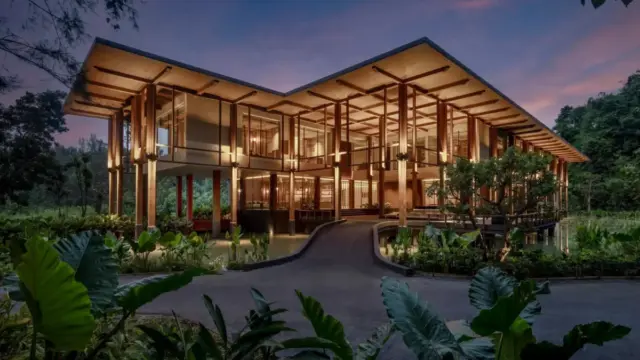
- Estelle Manor: Situated in the rolling hills of Oxfordshire, this sprawling country house hotel and club offers a luxurious, multi-layered estate experience that combines historic architecture with contemporary, high-end amenities.
- Celeste: Nestled in the fashionable London neighborhood of Notting Hill, this refined property continues the brand’s commitment to intimate, design-forward, and deeply personalized hospitality.
The contrast between these two businesses is illuminating. With Ennismore, Pasricha built a brand designed to be scaled globally, eventually handing over majority control to a multinational corporation to unlock mass distribution. With Estelle Community, he has embraced the opposite ethos: owning the underlying real estate, maintaining absolute control over every detail of the physical environment, and prioritizing scarcity and exclusivity over rapid growth.
The Future of Hospitality Valuation
The parallel trajectories of Ennismore and Estelle Community highlight a fundamental truth about the future of the hospitality industry: there is no single path to success, but the market values scale and exclusivity in very different ways.
For brands aiming for multi-billion dollar public valuations, the asset-light model remains the undisputed champion. By decoupling the brand from the physical real estate, companies like Ennismore can achieve the kind of exponential growth and high operating margins that Wall Street craves. This approach transforms hospitality from a capital-intensive property business into a high-margin intellectual property and platform business.
At the same time, the enduring appeal of ventures like the Estelle Community proves that there will always be a place for the high-barrier-to-entry, asset-heavy model. For ultra-luxury and private members’ concepts, owning the real estate ensures that the brand’s uncompromising standards are never diluted by third-party interests, creating a tangible asset value that is deeply tied to the land itself.
As Ennismore prepares for a potential landmark Wall Street debut, the hospitality world will be watching closely. A multi-billion dollar valuation will not only be a personal triumph for Sharan Pasricha, but a definitive proof of concept for the asset-light revolution—proving that in the modern economy, the intangible power of a great brand is worth far more than the bricks and mortar that house it.