






Executive Overview
For decades, the specialty grocery store occupied a sacred space in the cultural geography of the urban food lover. Long before the coinage of terms like "shoppy shop," these establishments were havens of discovery. They were places where one could encounter delightfully eccentric graphic design, small-batch provisions crafted by passionate artisans, and obscure European cheeses championed by bearded, enthusiastic mongers. These markets functioned as low-stakes cultural portals; they offered a glimpse into a wider world of flavor and culinary potential that required nothing more than a curious palate to unlock.
Today, however, that landscape has undergone a radical and disquieting transformation. The earnest, idiosyncratic neighborhood market has been largely supplanted by the luxury grocer—a sleek, heavily capitalized, and algorithmically optimized archetype pioneered by temples of consumption like Los Angeles’s Erewhon. What has emerged in place of culinary curiosity is a homogenized, hyper-monetized landscape driven less by gastronomic passion than by wellness anxiety, class signaling, and wellness-industrial complex orthodoxy.
This deep dive investigates the cultural shift from bougie benevolence to exclusionary elitism. We will explore how modern specialty retail has swapped a genuine appreciation for agriculture for a neurotic fixation on ingredient purity, how corporate consolidation has warped our baseline expectations of grocery economics, and why the normalization of $32 ice and $45-per-pound tuna salad represents a profound moral and cultural rot at a time when millions of Americans struggle to afford basic sustenance.
Detailed Chronology: The Evolution of the Specialty Market
To understand how we arrived at an era of $12 bottled water and tallow-fried tortilla chips, it is necessary to trace the trajectory of specialty food retail over the past thirty years.
Phase 1: The Golden Age of Discovery (Late 1990s–2010s)
In the late 20th and early 21st centuries, specialty grocery stores were defined by their regional specificity and mom-and-pop charm. These were spaces that celebrated the "ugly" side of artisanal production—hand-drawn Comic Sans price tags, slightly dusty shelves stacked with imported olive oils, and proprietors who could tell you the exact provenance of a farmstead cheddar.
- The Consumer Experience: Shopping here was an exercise in hedonism and education. Consumers went to be surprised, to find ingredients that normal supermarkets deemed too niche to stock.
- The Cultural Footprint: These stores democratized fine dining by making specialized ingredients accessible to home cooks. They were engines of culinary curiosity. Even mega-institutions like Eataly, while massive, retained a bazaar-like energy centered on the sheer joy of eating and drinking.
Phase 2: The Whole Foods Paradox and Corporate Democratization (2010s–2020)
As the locavore movement matured, Whole Foods Market—once affectionately or derisively nicknamed "Whole Paycheck"—came to define the apex of mainstream luxury grocery spending. For years, Whole Foods was the cultural punching bag for ostentatious, wellness-driven consumption.
- The Shift: However, following its acquisition by Amazon in 2017, a strange inversion occurred. While critics lamented the corporate standardization of Whole Foods, the retail giant gradually drifted toward the center of the pricing spectrum.
- The Irony: Today, in markets like New York City, Whole Foods frequently undercuts local competitors, offering surprisingly accessible pricing on everyday goods. This democratization left a vacuum at the top of the market. Consumers with immense disposable incomes needed a new, more exclusive status symbol because Whole Foods had become, in the eyes of the ultra-wealthy, "too accessible."
Phase 3: The Erewhonification of Retail (2020–Present)
Into this vacuum stepped the modern luxury grocer. Embodying a minimalist aesthetic that strips away the warmth of the old-school market, these spaces prioritize Instagrammable interior design, celebrity-endorsed collaborations, and aggressively curated aisles.
- The Aesthetic: The shelves are dominated by "tasteslopped" buzzwords—microplastic-free salt (ironically housed in plastic packaging), grass-fed tallows, and raw milk derivatives.
- The Ethos: The focus has shifted decisively from what a food is (locally grown, skillfully made) to what it omits (seed oils, gluten, microplastics). The specialty grocery store has transformed from a temple of pleasure into a fortress of dietary anxiety.
Supporting Context & Metrics: The Economics of Exclusion
The rise of the luxury grocer does not occur in a vacuum; it is happening against a backdrop of severe economic polarization within the broader American food system.
The Macroeconomic Contrast
While the luxury grocery sector booms on the back of products like $250-a-jar limited-edition celebrity honey (single-sourced from the gardens of public figures like Will Ferrell or Ai Weiwei) and $21 functional smoothies, the macro-level reality for the average American consumer looks entirely different. Recent data from consumer research firms indicates that a growing percentage of U.S. households are actively buying fewer groceries simply because they can no longer afford historical volumes.
| Economic Indicator | Luxury Grocery Sector | Mainstream Consumer Reality |
|---|---|---|
| Pricing Strategy | Premium markup justified by exclusivity and "wellness" optics. | Heightened sensitivity to inflation; volume reduction. |
| Product Innovation | $32 artisanal ice, $45/lb tuna salad, celebrity smoothies. | Expansion of private-label value brands and discount retailers. |
| Consumer Motivation | Status signaling, bio-hacking, aesthetic curation, "optimization." | Basic sustenance, budget management, value seeking. |
The Rise of "Orthorexic" Merchandising
The inventory of the modern luxury grocer reflects a fundamental ideological shift. Sourcing is rarely evaluated through the lens of supporting local agricultural economies or regional farmers; instead, it is marketed through the hyper-fixation on nutritional exclusion.
- The Seed Oil Panic: The near-total demonization of seed oils has created a lucrative market for alternative fats, allowing obscure brands to charge triple-digit percentage markups for basic pantry staples.
- The Plastic Paradox: The marketing of "microplastic-free" artisanal salts packaged in single-use plastics highlights the performative nature of modern wellness culture. Here, the product’s value is derived entirely from the psychological comfort it provides to an anxious consumer, rather than any coherent ecological or nutritional benefit.
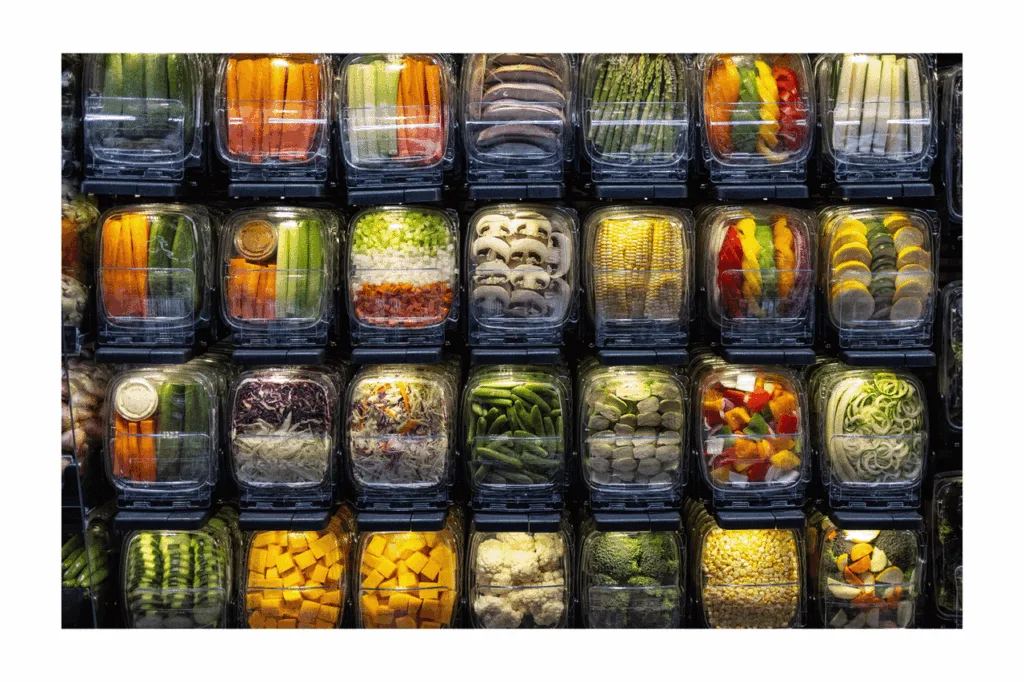
- Pre-Cut Pretentiousness: The proliferation of hyper-processed convenience items—such as a handful of pre-cut Brussels sprouts packaged in plastic for $17—exposes the contradiction at the heart of the luxury grocery movement. It serves a clientele that claims to value whole, farm-fresh integrity, yet demands absolute frictionless convenience, packaging the raw product in ways that actively undermine environmental sustainability.
Official Statements and Industry Insights
Cultural critics, retail analysts, and disillusioned food writers have increasingly spoken out against the commodification of dietary anxiety. While corporate entities in the luxury retail space prefer to frame their business models around "purity," "sustainability," and "community wellness," external observers point to a darker underlying current.
"What I see on these postmodern shelves is food less driven by curiosity and creativity than by fear. Fancy grocery stores have become a nexus for laundering conservative ideology under the guise of pantry goods that are nice to look at."
— Culinary Essayist & Food Critic
Industry analysts note that the merchandising strategy of stores like Erewhon relies heavily on the principles of Veblen goods—products for which demand increases as the price rises, because the high price itself functions as a primary utility (status signaling).
"When a jar of water costs $12 or a smoothie costs $21, you are no longer paying for agricultural inputs or labor costs. You are paying for membership in an exclusive club of the wellness-optimized. It is the grocery store equivalent of carrying a luxury handbag; the food is almost incidental to the badge of wealth it confers."
— Retail Culture Researcher
Future Outlook: Can We Reclaim the Grocery Aisle?
As we look toward the future of food retail, the cultural tension between hyper-exclusive luxury markets and accessible community provisioning will likely intensify.
The Two-Tiered Food System
We are rapidly approaching a bifurcated retail reality. On one side are the discount grocers and value-driven supply chains struggling to feed an increasingly price-sensitive population. On the other side is the stratosphere of luxury wellness markets, where food is treated as a lifestyle accessory, a bio-hacking toolkit, and a backdrop for social media content creation.
The Case for Resistance
For the everyday food lover, navigating this landscape requires a conscious resistance to the normalization of algorithmic excess. The allure of the luxury grocery store is undeniable—there is a hypnotic, intoxicating appeal to the polished presentation of a $21 strawberry smoothie or the fantasy of achieving a dewy, optimized self through consumption.
Yet, as consumers, we must ask ourselves what we are endorsing when we accept these inflated premises. The luxury grocery store has evolved from a place of gastronomic joy into an enclave of orthorexia and conspicuous consumption.
The ultimate goal for the culinary community should not be the total eradication of high-end specialty markets, but a return to sanity. Let the luxury temples cater to those who measure their self-worth in milligrams of electrolytes and microplastic-free certifications. For the rest of us, it is time to demand that the rest of the grocery world remember what food was always meant to be: a source of pleasure, connection, and shared humanity, free from the heavy toll of wellness anxiety and moral rot.