





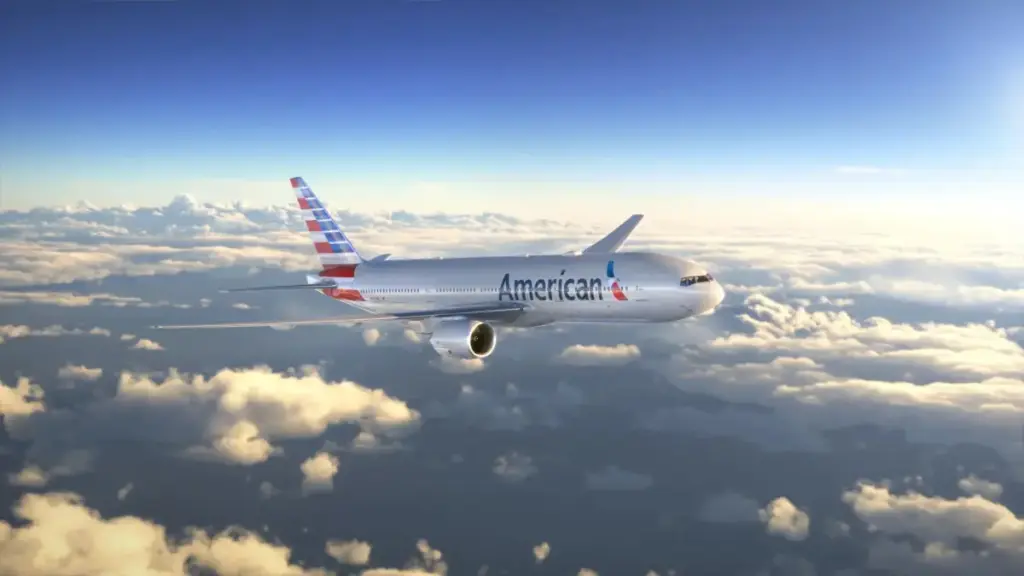
In the complex calculus of sustainable aviation, airlines frequently find themselves balancing immediate economic realities against long-term environmental commitments. This delicate balancing act was thrown into sharp relief recently when American Airlines quietly suspended its pioneering contrail-avoidance research program.
The decision to halt the trials, which occurred during a period of volatile fuel price spikes in the spring, underscores a persistent and frustrating paradox at the heart of green aviation: sometimes, reducing the immediate warming impact of flights requires burning more fossil fuel. For American Airlines, the financial pressure of surging jet fuel prices ultimately forced a temporary retreat from one of the industry’s most promising non-carbon climate initiatives.
A Clash of Environmental and Economic Priorities
The decision to pause the program highlights the operational friction that occurs when environmental idealism meets the harsh realities of airline economics. When global fuel prices spiked during the spring, airlines across the industry scrambled to implement aggressive cost-cutting measures. At American Airlines, fuel is historically one of the largest operating expenses, alongside labor. When fuel markets experience high volatility, conserving every drop of jet fuel becomes an operational imperative.
It was in this high-pressure environment that airline executives looked closely at their ongoing contrail-avoidance trials. The fundamental issue with contrail avoidance is that it is not a free lunch. To avoid the atmospheric conditions that create these warming clouds, aircraft must often deviate from their most fuel-efficient flight paths—either by climbing higher, descending lower, or taking slightly longer routes. Each of these maneuvers carries a "fuel penalty," requiring the aircraft to burn more fuel than it otherwise would on a standard, optimized flight plan.
For American Airlines’ management, the situation created an untenable operational contradiction. The carrier did not want to send its pilots and dispatchers conflicting instructions. On one hand, flight crews were being urged to conserve fuel at all costs to mitigate the impact of volatile fuel prices. On the other hand, the contrail-avoidance trial was asking them to potentially burn additional fuel to bypass specific atmospheric zones. To eliminate this operational confusion and protect its bottom line during a period of market instability, the airline chose to pause the trials.
The Science Behind the Smoke: How Contrails Warm the Planet
To understand why American Airlines was conducting these trials in the first place, it is necessary to examine the unique atmospheric science of aviation. While public attention is almost exclusively focused on carbon dioxide emissions from jet engines, a significant portion of aviation’s total climate impact actually comes from non-CO2 effects—specifically, condensation trails, or "contrails."
Contrails are the white, cloud-like lines that form behind high-altitude aircraft. They are created when hot, humid water vapor from jet engine exhaust mixes with extremely cold, humid ambient air at high altitudes. This water vapor quickly condenses around soot and other tiny particles in the exhaust, freezing into ice crystals.
Under certain atmospheric conditions—specifically when the air is "ice-supersaturated"—these contrails do not dissipate. Instead, they linger, spread out, and form thin, artificial cirrus clouds known as contrail-cirrus. These persistent contrails act like a thermal blanket around the Earth. While they reflect some incoming solar radiation during the day, their primary effect is to trap outgoing longwave infrared radiation (heat) that would otherwise escape into space.
Scientists estimate that these persistent warming contrails could be responsible for a substantial portion of aviation’s net climate impact, with some studies suggesting their warming effect is comparable to, or even greater than, the cumulative warming caused by the CO2 emitted by the industry. However, unlike CO2, which remains in the atmosphere for hundreds of years, contrails are short-lived climate pollutants. They typically persist for only a few hours. This means that if airlines can successfully avoid creating contrails today, the climate benefit is almost immediate.
The Operational Calculus of Flight Path Adjustments
Because contrails only form in specific, localized regions of the sky where the air is both very cold and highly humid, avoiding them is theoretically straightforward: aircraft simply need to fly around or under these ice-supersaturated regions.
However, translating this scientific theory into daily airline operations is incredibly complex. It requires highly sophisticated predictive modeling to identify where these supersaturated zones exist in real time. Flight dispatchers must then collaborate with pilots to adjust flight plans, altering altitudes or lateral routes to steer clear of these zones.
Conflicting Mandates in the Cockpit
This is where the operational conflict arises. Modern commercial aviation is built on the concept of maximum efficiency. Flight planning software is designed to calculate the absolute most fuel-efficient route, taking into account wind patterns, aircraft weight, and air traffic control constraints.
When a contrail-avoidance protocol is introduced, it disrupts this optimization. A flight dispatcher might see that a flight from Chicago to San Francisco can avoid a massive contrail-forming zone by flying 4,000 feet lower than its optimal altitude. However, flying at a lower altitude means flying through denser air, which increases aerodynamic drag and, consequently, fuel consumption.
During a fuel price spike, this extra fuel burn represents a direct, immediate financial cost. For an airline operating thousands of flights a day, even a fractional percentage increase in fuel burn across a portion of its fleet can translate into millions of dollars in additional expenses. Asking pilots and dispatchers to balance these competing priorities—saving fuel to lower costs versus burning fuel to reduce short-term atmospheric warming—creates operational friction that American Airlines ultimately decided to halt.
Charting American Airlines’ Contrail Experiments
Despite the recent pause, American Airlines has been a pioneer among commercial carriers in exploring contrail-avoidance technologies. The airline’s journey into this space began in earnest in 2023, when it partnered with researchers and technology providers to conduct its very first contrail-avoidance flight trials.
These early tests were designed to prove the basic concept: could predictive models successfully identify contrail-forming regions, and could flight crews successfully adjust their flight paths to avoid them? The initial trials yielded promising results, showing that small adjustments to flight altitudes could indeed prevent the formation of persistent contrails with only a minimal fuel penalty.
Building on the success of the 2023 initiative, American expanded the scope of this work significantly in 2025. The scale of the 2025 program was ambitious, encompassing approximately 2,400 flights. By scaling up the number of flights involved, researchers hoped to move past the proof-of-concept phase and begin gathering the massive datasets required to understand how contrail avoidance would function as a routine, systemic part of daily airline operations.
The expansion was designed to test the limits of predictive modeling, air traffic control coordination, and pilot workload. However, the sudden volatility in global fuel prices in the spring disrupted this momentum, forcing the airline to put the expanded 2025 trials on hold before they could be fully completed.
Economic Realities and the Path Toward 2026
The suspension of the trials is not intended to be permanent, but rather a tactical pause dictated by market conditions. American Airlines remains committed to the research, provided the economic environment allows for it.
According to American Airlines spokesperson Chris D’Aloia, the carrier is actively planning for the next phases of the research, though the timeline remains contingent on external economic factors.
"We are hoping to resume this fall, and our goal for the 2026 trial is to obtain a sample of sufficient size to allow us to more accurately measure the additional fuel burn," D’Aloia said. However, he emphasized that actually resuming the trial is highly dependent on fuel prices normalizing.
The focus on the 2026 trial highlights what is perhaps the most critical missing piece of data in the contrail-avoidance conversation: a precise, large-scale measurement of the "fuel penalty." While small-scale tests can provide estimates, only a massive, statistically significant sample size—such as the one American hopes to gather in 2026—can reveal the true operational cost of contrail avoidance across a global network.
Airlines and atmospheric scientists need to know exactly how much extra CO2 is being emitted in the effort to avoid contrails. If the fuel penalty is too high, the extra carbon dioxide emitted by burning more fuel could end up canceling out the climate benefits of avoiding the short-lived contrails. Having precise data on this trade-off is essential for creating future regulatory frameworks and industry standards.
The Broader Implications for Aviation’s Green Transition
The challenges faced by American Airlines illustrate a broader truth about the aviation industry’s path to net-zero emissions: there are no easy wins. Every technological and operational lever available to reduce emissions comes with significant trade-offs, whether in the form of high capital costs, resource scarcity, or operational complexity.
Sustainable Aviation Fuel (SAF), widely seen as the primary pathway to decarbonizing flight, remains scarce and costs up to three to four times more than conventional jet fuel. Hydrogen and electric propulsion technologies are still decades away from being viable for long-haul commercial flights. In this landscape, operational improvements like contrail avoidance have been viewed as low-hanging fruit—a relatively inexpensive way to make a major dent in aviation’s climate footprint using existing aircraft and technology.
Yet, as American’s paused trials demonstrate, even "low-hanging fruit" can be dropped when economic winds shift. For contrail avoidance to become a permanent, industry-wide standard, airlines will likely need more than just voluntary initiatives. They will need stable fuel markets, highly accurate predictive technologies that minimize the fuel penalty, and potentially, regulatory incentives or carbon-accounting frameworks that recognize and reward carriers for reducing non-CO2 warming impacts, even if it means burning a fraction more fuel in the process.
For now, the aviation industry will be watching American Airlines closely. If fuel prices normalize and the carrier is able to resume its trials this fall, the data gathered leading into 2026 could provide the aviation world with the clearest picture yet of how to navigate the delicate balance between burning fuel and cooling the planet.