





In the upper echelon of modern global travel, the definition of luxury has undergone a profound psychological and architectural evolution. Gone are the days when a grand resort vacation was defined by expansive public spaces, bustling main swimming decks, and the early-morning scramble to secure a prime lounger by the water. Today, the currency of high-end travel is privacy, autonomy, and seamless integration with nature. At the absolute apex of this paradigm shift is the private plunge pool—a design element that has swiftly transitioned from an ultra-exclusive novelty into the single most sought-after amenity across the Caribbean and the wider tropical belt.
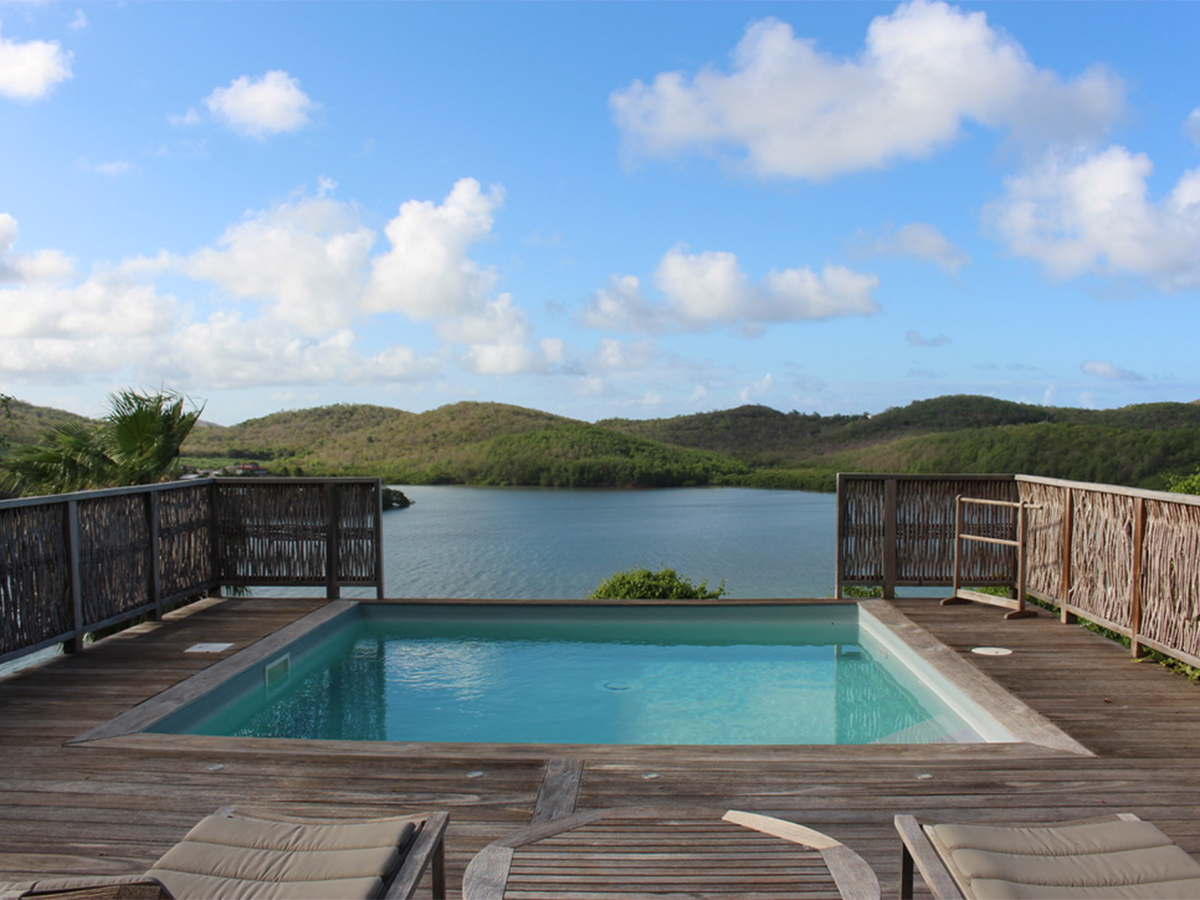
Open the terrace door of a modern luxury suite, and the pool is already there, shimmering just a few feet from the bed. Surrounded by manicured tropical gardens, facing a pristine white-sand beach, framing a majestic volcano, or hovering over turquoise waters, these personal aquatic sanctuaries redefine the resort experience. Guests can leave a book open on a private lounger, order in-room dining directly to their terrace at a moment’s notice, and slip into the water under the stars before dinner—all without ever interacting with a crowded pool deck.
This design philosophy is reshaping how resorts are conceptualized, constructed, and marketed. Destinations across the Caribbean basin—most notably Antigua, which boasts an extraordinary concentration of private-pool villas, alongside Saint Lucia, Grenada, Curaçao, Dominica, Turks and Caicos, and the Mexican Caribbean—are leaning heavily into this trend. Even beyond island borders, regions like Costa Rica have adapted the concept, pairing private plunge pools with sweeping views of dense rainforests and the imposing Arenal Volcano.
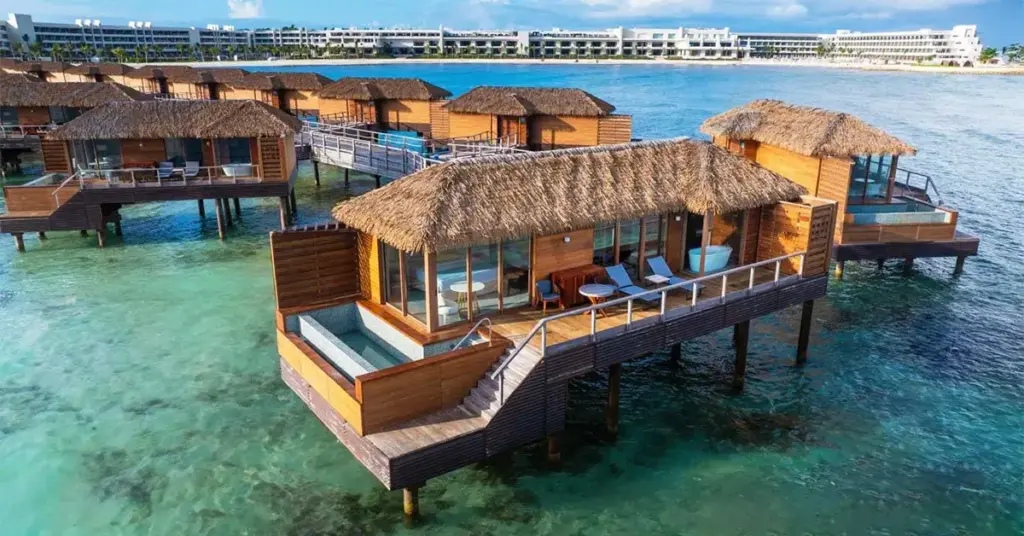
Among this elite tier of hospitality developments, properties are pushing the envelope even further, fusing the private plunge pool concept with overwater architecture. A prime example is Jamaica’s newly prominent Princess Senses The Mangrove, where overwater bungalows elevate the personal pool experience to unprecedented heights. This report investigates the cultural, economic, and architectural forces driving the private plunge pool boom, offering a comprehensive analysis of why seclusion has become the ultimate luxury for the contemporary traveler.
Detailed Chronology: The Evolution of the Resort Swimming Pool
To understand the dominance of the private plunge pool, one must trace the architectural evolution of the resort swimming pool over the past century. The trajectory of how humans recreate in water while traveling reflects broader shifts in societal values, wealth distribution, and the psychology of leisure.
The Era of the Collective Oasis (Early to Mid-20th Century)
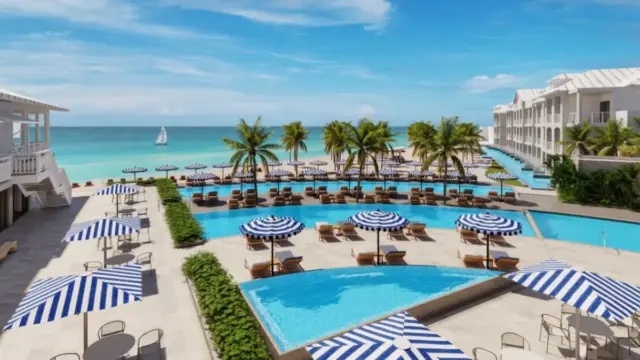
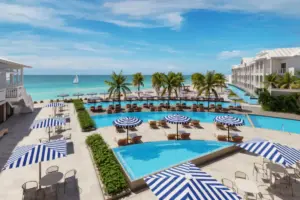
In the early days of international resort development—sparked by the glamorous expansion of travel to the French Riviera, Miami Beach, and early Caribbean outposts in the 1920s through the 1950s—the swimming pool was conceived as a purely communal stage. These large, rectangular, or kidney-shaped basins were architectural centerpieces designed to bring guests together.
The social hierarchy of the resort was visibly displayed around the pool deck. Cabanas, cocktail service, and proximity to the water’s edge were status symbols, but the environment was inherently shared. Privacy was limited to the interior of one’s hotel room, while the outdoors was communal, vibrant, and energetic. For decades, this model satisfied travelers who viewed a vacation as an opportunity to see and be seen.
The Rise of the Suite and the Semi-Private Patio (Late 20th Century)
As global wealth expanded in the 1980s and 1990s, luxury hospitality began to fragment. High-net-worth individuals increasingly sought escapes from the pressures of public life, leading to the development of boutique resorts and exclusive-use villas. During this era, luxury hotel groups began introducing garden suites with private walled-in patios, outdoor showers, and occasionally, small soaking tubs or shared lagoon pools accessed directly from a ground-floor terrace.
While these early iterations provided a measure of isolation, they rarely offered the full aquatic experience. A soaking tub was not a pool; a shared lagoon still required sharing space with neighboring guests. Nevertheless, these architectural experiments laid the groundwork for the structural and plumbing innovations that would soon make widespread private plunge pools feasible.
The Millennium Shift: The Plunge Pool Revolution (2000s–2010s)
The turn of the 21st century marked a definitive turning point in resort design. Driven by the explosive growth of ultra-luxury brands—such as Aman, Six Senses, and Rosewood—architects began to treat the boundary between indoor and outdoor living space as permeable.
Driven by advancements in waterproofing technology, compact filtration systems, and sustainable heating and cleaning protocols, engineers found it increasingly viable to install small, independent pools directly onto elevated terraces, balconies, and rooftops. What began as an ultra-exclusive feature reserved for presidential suites and multi-million-dollar villas steadily trickled down to standard-tier luxury rooms. Destinations like Antigua and Saint Lucia capitalized on this trend early, retrofitting and designing hillside properties where every room could feature a view and a pool.
The Contemporary Era: Hyper-Personalization and Overwater Integration (Present Day)
Today, the private plunge pool is no longer merely an amenity; it is the primary anchor of the guest experience. Modern travelers, particularly post-pandemic, place an unprecedented premium on health, safety, spatial autonomy, and mental decompression.
Resorts across the Caribbean and Central America are competing not on the grandeur of their main pools, but on the ingenuity, scale, and placement of their private waters. The apex of this evolution is best witnessed in destinations like Jamaica’s Princess Senses The Mangrove, where the private plunge pool is integrated directly into an overwater bungalow structure—marrying the absolute privacy of a personal pool with immediate access to the open sea.
Supporting Context & Metrics: The Economics and Psychology of Seclusion
The rapid proliferation of private plunge pools is underpinned by solid economic data and deep psychological shifts within the consumer base. Understanding why resorts are investing heavily in these architectural features requires examining travel trends, guest satisfaction metrics, and market valuations.
The Shift in Traveler Priorities
According to recent hospitality industry analyses, over 68% of luxury travelers rank "privacy and seclusion" as a top-three factor when selecting a high-end resort, frequently outpacing proximity to nightlife or traditional resort activities. The global luxury travel market, valued at over $1.2 trillion, is increasingly driven by consumers seeking transformational wellness and emotional recharge.
Public resort pools, while aesthetically pleasing, often generate low-level friction for guests: competition for loungers, noise from neighboring families, and a lack of spontaneous intimacy. By contrast, a private plunge pool eliminates friction entirely. Guests can utilize the water at 3:00 AM or 3:00 PM without adhering to social norms or resort schedules.
Premium Pricing and Return on Investment (ROI)
For property developers and hotel operators, installing private plunge pools is a high-cost, high-reward proposition.
- ADR (Average Daily Rate) Premium: Data from Caribbean hospitality consultancies indicates that rooms equipped with private plunge pools command an ADR premium of 35% to 60% compared to standard ocean-view rooms without pools.
- Length of Stay: Properties featuring private water amenities report a measurable increase in average length of stay. When a room features an exceptional terrace, a private pool, and integrated dining options, guests are significantly less inclined to leave the property, increasing in-resort spend on food, beverage, and spa treatments.
- Resort Footprint Efficiency: Traditionally, ultra-luxury resorts required vast tracts of land to spread out freestanding villas. Modern engineering allows resorts to build multi-story or clustered low-rise luxury blocks where every unit maintains acoustic and visual privacy, maximizing land utilization while preserving the illusion of complete isolation.
Geographic Hotspots: Where Private Pools Dominate
While private plunge pools can be found globally, certain regions have become synonymous with the trend due to their topography and climate:
- Antigua: Renowned for its stunning coastline and rolling hills, Antigua boasts an extraordinary concentration of private-pool suites, making it a global hub for romance-focused travel.
- Saint Lucia & Grenada: The dramatic volcanic peaks of Saint Lucia and the lush, mountainous terrain of Grenada lend themselves perfectly to hillside suites where infinity pools visually merge with the Caribbean Sea or surrounding rainforest canopy.
- Costa Rica: Expanding beyond island geography, Costa Rica’s rainforest lodges utilize private plunge pools to offer guests an immersive wildlife-viewing experience, where visitors can spot toucans and monkeys from the comfort of their personal water basin.
Official Statements and Industry Insights
Industry leaders, resort architects, and hospitality executives frequently emphasize the transformative power of private water features in modern destination design.
Elena Vance, a leading tropical resort architect based in Miami, explains the design philosophy behind the trend:
"When we design a modern Caribbean suite, the bed is no longer oriented strictly toward the interior television or closet; it is deliberately angled toward the exterior frame. The private plunge pool acts as a visual bridge between the intimate human space and the vast, untamed beauty of the natural environment. It creates an immediate sensory anchor for the guest."
Hospitality analysts note that the demand for these spaces accelerated significantly following global lifestyle shifts toward remote work and heightened health consciousness. Marcus Sterling, senior analyst for Caribbean tourism development, points out:
"The definition of luxury has fundamentally shifted from service-heavy opulence to time-space sovereignty. Travelers do not just want someone to fetch them a drink; they want the space to exist undisturbed. The private plunge pool is the physical manifestation of that desire—it provides a controlled, beautiful, and completely autonomous zone of relaxation."
Resort operators also report that properties featuring private pools experience significantly higher rates of direct bookings and social media engagement. User-generated content featuring infinity plunge pools overlooking Caribbean sunsets serves as organic, high-value marketing that traditional advertising campaigns struggle to replicate.
Future Outlook: The Next Generation of Aquatic Luxury
As the hospitality sector looks toward the next decade, the integration of private plunge pools is poised to evolve in response to technological advancements, environmental sustainability demands, and shifting consumer expectations.
Sustainable Engineering and Water Conservation
One of the primary historical criticisms of private plunge pools in tropical and island environments has been their environmental footprint, particularly concerning water consumption and energy usage for filtration and heating. In response, the next generation of resort engineering is heavily focused on sustainability:
- Advanced Closed-Loop Filtration: Modern pools utilize UV and ozone purification systems that dramatically reduce the need for chemical treatments and constant water replenishment.
- Solar-Powered Climate Control: Utilizing integrated solar panel arrays embedded within villa roofs, resorts are increasingly powering pool pumps and heating systems entirely off-grid.
- Smart Water Management: IoT (Internet of Things) sensors monitor evaporation rates, automatically adjusting covers and recycling greywater from showers to maintain pool levels without straining local municipal resources.
Architectural Innovations: The Evolution of Overwater Living
The boundary-pushing design seen at properties like Jamaica’s Princess Senses The Mangrove points the way forward for the industry. By merging the private plunge pool with overwater bungalow architecture, resorts are creating hyper-immersive aquatic environments.
Guests at Princess Senses The Mangrove occupy overwater villas featuring a 151-square-foot infinity plunge pool directly on the expansive terrace. Crucially, the design allows guests to step effortlessly from their private pool down into the open Caribbean Sea via dedicated sea access stairs. Supplemented by outdoor showers, partial glass floor viewing panels, and dedicated butler service across its exclusive 14 overwater villas (including two expansive Princess Overwater Villas), this model represents the absolute pinnacle of what modern aquatic luxury can achieve.
The Ultimate Destination: A Glimpse at Princess Senses The Mangrove, Jamaica
To truly appreciate the future of this trend, one must examine how properties are curating the complete guest journey around private water. At Princess Senses The Mangrove, the room is no longer just a place to sleep—it is a self-contained sanctuary.
Guests wake up above the water, step onto a sun-drenched deck, float in an infinity plunge pool that seemingly drops off into the horizon, and descend directly into the marine ecosystem below. This seamless transition between private luxury and wild nature encapsulates why the private plunge pool has conquered the travel world.
Conclusion
The private plunge pool has decisively conquered the Caribbean and tropical luxury markets, transforming from an architectural indulgence into an essential benchmark of modern hospitality. By offering unmatched privacy, seamless indoor-outdoor integration, and a profound sense of personal sanctuary, these aquatic features fulfill the ultimate modern travel aspiration: the luxury of unhurried, uninterrupted time in breathtaking natural surroundings. As engineering innovations make these pools more sustainable and resort designs push boundaries into overwater and cliffside realms, the reign of the private plunge pool is only just beginning.