







The modern commercial aviation landscape is a complex ecosystem driven by dynamic pricing models, ancillary revenue strategies, and the constant balancing act between operational costs and consumer demand. In this intricate environment, finding a competitive transcontinental airfare can yield significant savings for travelers navigating the vast expanse between the West Coast and Upstate New York. A notable new fare offering has emerged within the domestic market, highlighting a route that connects two vastly different economic and cultural hubs: San Francisco International Airport (SFO) and Greater Rochester International Airport (ROC).
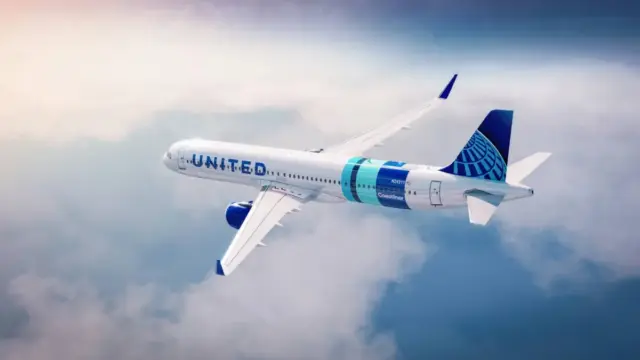
At the heart of this market development is a standard economy fare priced at $398, contrasted sharply with a lower-cost, highly restrictive Basic Economy alternative priced at $288 by United Airlines. This pricing disparity underscores a broader industry trend: the unbundling of air travel services. While airlines pitch Basic Economy as a mechanism for democratizing air travel through lower headline prices, it often introduces a labyrinth of hidden fees, restrictions, and compromises that travelers must carefully evaluate. Conversely, standard economy tiers preserve traditional travel flexibilities, such as advance seat assignments and full carry-on allowances, at a moderate premium.
This comprehensive report provides an in-depth examination of the $398 standard economy and $288 Basic Economy options currently available between San Francisco and Rochester. By dissecting the structural mechanics of these fare classes, analyzing the true cost of unbundled travel, and offering strategic guidance for frequent flyers and casual travelers alike, this article serves as an authoritative guide to modern airfare navigation. Furthermore, we explore how travelers can leverage co-branded credit cards, elite status tiers, and specialized alert platforms to maximize value and minimize friction in their travel planning.
Detailed Chronology: The Evolution of Transcontinental Pricing Between SFO and ROC
To fully comprehend the significance of the current $398 and $288 fare offerings between San Francisco and Rochester, one must examine the chronological progression of domestic airline pricing over the past two decades. The route connecting the tech-driven, Pacific-facing innovation hub of the San Francisco Bay Area with Rochester—a historical center of manufacturing, medical innovation, and higher education in Upstate New York—has long been characterized by thin direct-service demand and heavy reliance on connecting hubs.
The Era of Bundled Simplicity
Historically, domestic airfares operated on a largely bundled model. A ticket purchased between SFO and ROC included a checked bag, a carry-on item, an advance seat selection, and full frequent flyer mileage accrual, regardless of the price paid. Throughout the early 2000s, transcontinental travel of this distance frequently commanded premium prices well exceeding $500 to $800 each way, driven by high fuel costs and the consolidation of legacy carriers. As airline route networks consolidated through mergers and acquisitions, carriers sought new ways to optimize yield management.

The Introduction of Ancillary Fees
The watershed moment in domestic pricing occurred in the late 2000s and early 2010s with the introduction of checked baggage fees across major U.S. carriers. This unbundling strategy allowed airlines to advertise lower base fares while capturing additional revenue from passengers requiring checked luggage. Over the subsequent decade, this unbundling philosophy expanded progressively inward, ultimately breaching the cabin space with the creation of the "Basic Economy" fare class.
The Rise of Basic Economy and the Dual-Tier Market
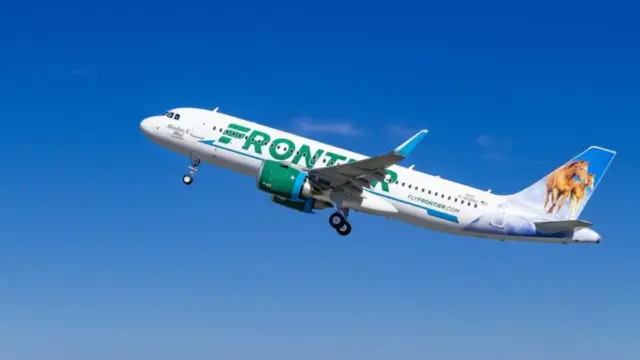
United Airlines, alongside its primary legacy competitors, institutionalized Basic Economy as a direct response to ultra-low-cost carriers (ULCCs) such as Spirit Airlines and Frontier Airlines. By stripping away traditional amenities—most notably advance seat selection, full-sized carry-on baggage privileges, and mileage accrual—legacy carriers created a loss-leader tier designed to capture price-sensitive consumers who might otherwise defect to low-cost competitors.
In the contemporary market exemplified by the SFO-ROC route, this evolution has crystallized into two distinct purchase paths:
- The $288 Basic Economy Fare: Designed strictly for the minimalist traveler willing to gamble on seat assignments and travel exclusively with a personal item that fits beneath the seat ahead.
- The $398 Standard Economy Fare: Retaining the traditional hallmarks of legacy air travel, offering peace of mind, physical comfort, and predictable out-of-pocket costs.
Supporting Context & Metrics: Decoding the True Cost of Air Travel
When evaluating the $288 Basic Economy fare against the $398 standard economy fare on United Airlines for travel between San Francisco and Rochester, consumers must look beyond the initial headline price. The mathematics of modern air travel frequently reveal that a cheaper base fare can quickly eclipse a standard fare once ancillary penalties are applied.
The Mechanics of the $398 Standard Economy Fare
Priced at $398, the standard economy offering represents a balanced middle ground for transcontinental travel. The structural inclusions of this fare class provide substantial value:

- Normal-Size Carry-On Allowance: Passengers are permitted one standard overhead bin-compatible carry-on bag in addition to a personal item (such as a backpack, purse, or briefcase) that fits under the seat in full compliance with Federal Aviation Administration (FAA) safety regulations.
- Advance Seat Assignment: Travelers can select their preferred seating location—whether aisle, window, or extra-legroom preferences (subject to upgrade fees)—at the time of booking, ensuring that parties traveling together can secure adjacent seating without anxiety.
- Predictability and Peace of Origin: The absence of hidden restrictions minimizes airport stress, allowing passengers to proceed through security and boarding without the threat of unexpected gate-check penalties.
The Anatomy of the $288 Basic Economy Fare
While the $288 price tag represents a $110 savings on the surface, the restrictions embedded within United’s Basic Economy fare class demand rigorous scrutiny:
- Randomized Seat Assignments: Passengers cannot select seats in advance. Seat allocation occurs automatically during the check-in window. This creates a high probability of receiving middle seats and virtually guarantees that families or traveling companions will be separated unless they pay additional seat-selection fees (where permitted) or rely entirely on gate-agent goodwill.
- The Carry-On Baggage Penalty: This is perhaps the most financially punitive aspect of Basic Economy. Passengers are restricted to a single personal item that must fit entirely under the seat in front of them. Bringing a standard rolling carry-on bag to the gate incurs a steep $50 fee each way, supplemented by applicable gate-check fees. For a round-trip journey, this unexpected fee adds $100 or more to the travel cost, entirely erasing the $110 savings of the base fare and creating a negative financial outcome for the unwary traveler.
- Exclusion of Mileage Accrual and Elite Qualification: Basic Economy fares traditionally do not earn redeemable frequent flyer miles or Premier Qualifying Credits toward elite status on United Airlines, depriving frequent business and leisure travelers of long-term loyalty investments.
Exemptions and Loopholes: Mitigating Basic Economy Penalties
Savvy travelers can bypass certain Basic Economy restrictions by leveraging specific financial tools and loyalty statuses:
- Co-Branded Credit Cards: Holders of select United co-branded credit cards retain their standard baggage privileges, meaning the standard carry-on fee may be waived even when purchasing a Basic Economy ticket. Furthermore, co-branded cardholders often retain mileage-earning capabilities that are otherwise forfeited.
- United Elite Status: Passengers holding Premier Silver, Gold, Platinum, or 1K status are shielded from many Basic Economy penalties, maintaining their baggage allowances, priority boarding privileges, and seating flexibilities regardless of the underlying fare class purchased.
Official Statements and Industry Perspectives
Airline executives, consumer advocacy groups, and aviation economists hold polarized views regarding the proliferation of multi-tiered fare architectures. Understanding these perspectives provides vital context for how airlines price transcontinental corridors like San Francisco to Rochester.
The Airline Perspective: Yield Management and Consumer Choice
Industry representatives from legacy carriers consistently argue that unbundled fare structures democratize air travel. According to airline revenue management philosophies, a passenger traveling light for a weekend trip should not subsidize the baggage capacity or seat-selection preferences of a passenger traveling with multiple bags and specific seating requirements.
In official investor communications and industry panels, airline leadership emphasizes that Basic Economy provides an essential weapon in combating low-cost carriers while simultaneously offering a lower entry price point for budget-constrained consumers. By providing a clear menu of options—ranging from the $288 stripped-down fare to the $398 fully inclusive standard economy fare—airlines assert that they are placing the purchasing power directly into the hands of the consumer.

The Consumer Advocacy Perspective: Transparency and Hidden Costs
Conversely, consumer protection organizations and travel advocacy groups view Basic Economy as a masterclass in obfuscation and "drip pricing." Critics argue that headline pricing strategies intentionally mislead unsophisticated travelers who fail to read the fine print regarding carry-on luggage limitations and seat assignments.
Consumer watchdogs point out that the psychological anchor of a low headline price ($288) successfully draws in buyers who ultimately suffer financial penalties at the departure gate when their standard luggage fails to meet the strict under-seat dimensions. Furthermore, advocacy groups have frequently petitioned regulatory bodies to mandate greater transparency at the initial point of sale, ensuring that total projected costs—including mandatory baggage and seat fees—are prominently displayed before payment is finalized.
Future Outlook: Trends in Transcontinental Air Travel and Fare Distribution
As the commercial aviation sector looks toward the future, several technological, economic, and operational shifts are poised to reshape how routes like San Francisco to Rochester are priced, booked, and experienced.
The Rise of NDC (New Distribution Capability) and Personalized Pricing
Airlines are rapidly transitioning away from legacy Global Distribution Systems (GDS) toward New Distribution Capability (NDC) protocols. This technological shift enables airlines to offer highly personalized, dynamic bundles rather than rigid, static fare classes. In the future, a traveler searching for flights from SFO to ROC may encounter customized dynamic bundles that adjust pricing based on historical booking behavior, corporate contracts, and real-time inventory pressures.
Premium Leisure Demand and Cabin Evolution
While basic and standard economy fares dominate the discussion of low-cost travel, the post-pandemic travel boom has permanently altered consumer preferences. Airlines are observing sustained, high demand for premium leisure travel—passengers willing to pay extra for Premium Economy, domestic First Class, or Business Class cabins. Consequently, mainline carriers are redesigning aircraft interiors to expand premium seating footprints at the expense of standard economy space, potentially tightening seat availability and influencing future fare baselines across secondary markets like Rochester.

The Role of Real-Time Deal Platforms and Algorithmic Tracking
In an era of hyper-dynamic pricing where airfares can fluctuate by the hour, travelers increasingly rely on specialized intelligence platforms to secure optimal pricing. Services such as The Flight Deal’s Real Time and Premium newsletters have become vital infrastructure for frequent flyers, alerting subscribers to fare drops, mistake fares, and unadvertised promotions long before they appear on mainstream search engines.
For routes connecting secondary markets like Rochester to major global gateways like San Francisco, utilizing real-time notification systems will remain the single most effective strategy for bypassing artificial pricing inflation and securing genuine travel value.
Conclusion
The airfare dynamics between San Francisco and Rochester encapsulated by United Airlines’ $398 standard economy and $288 Basic Economy offerings serve as a microcosm of modern commercial aviation. While the allure of a lower headline price is undeniable, the hidden costs, strict carry-on penalties, and seating restrictions associated with unbundled fares demand rigorous evaluation by every traveler.
By understanding the structural differences between fare classes, recognizing the exemptions afforded by co-branded credit cards and elite status, and utilizing real-time deal alerts, passengers can navigate the complexities of transcontinental pricing with confidence, ensuring that their journey from the Golden Gate to the Flower City remains both economically sound and stress-free.