










Executive Overview
In an era dominated by corporate burnout, unrelenting digital connectivity, and the pursuit of socially prescribed milestones, a quiet revolution is taking shape. Millions of professionals find themselves trapped in a cycle of high-stress employment, suburban obligations, and quiet desperation—achieving conventional success while suffering from profound internal erosion. Enter the concept of the Travel Reset: a deliberate, extended departure from the familiar designed not merely for leisure, but as an adult vision quest for personal metamorphosis.
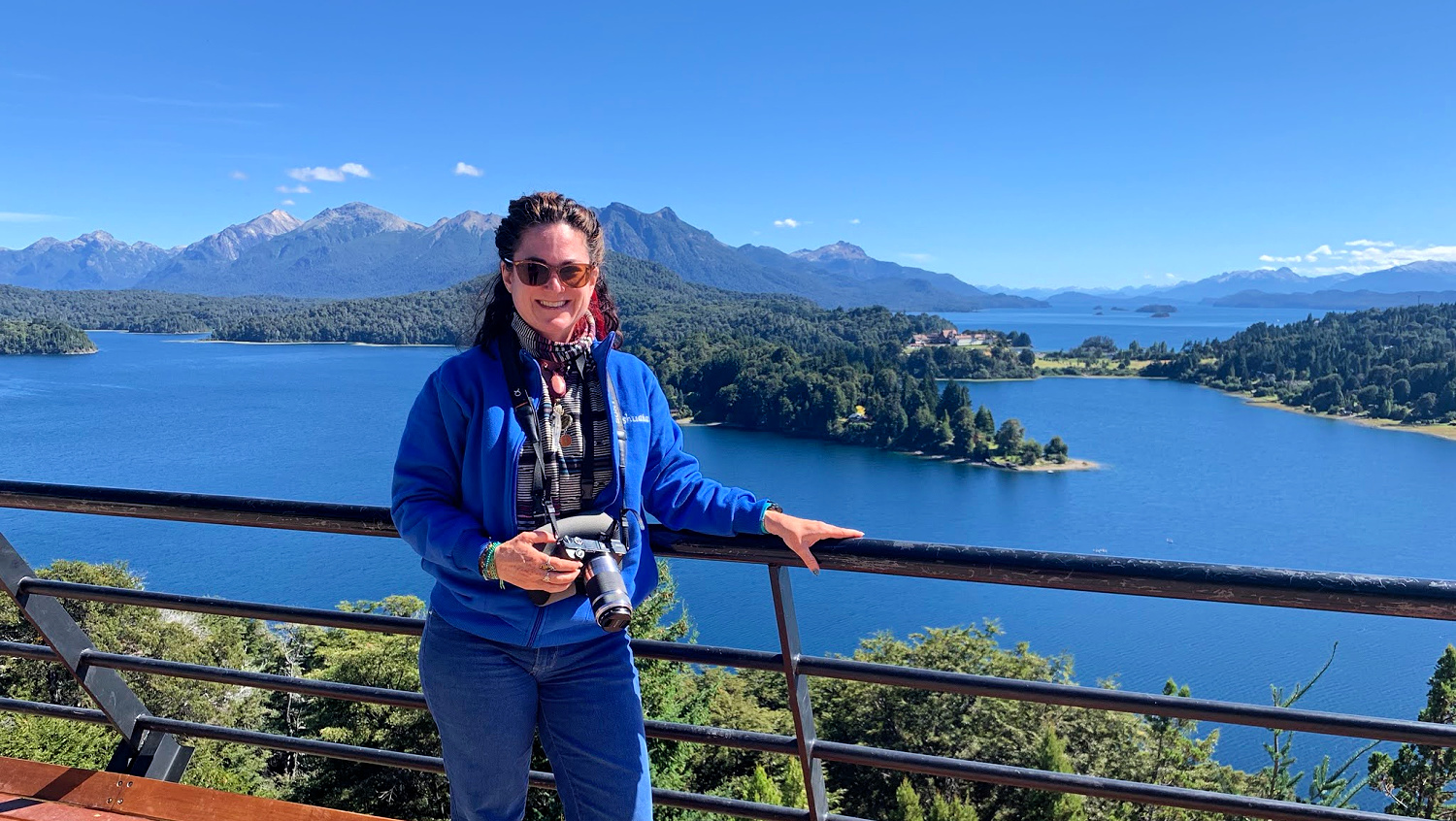
At the vanguard of this movement is Heather Markel, a full-time solo traveler, certified professional coach, and self-described "Travel Reset Catalyst." Markel’s journey from a six-figure corporate career at AT&T to a nomadic existence spanning 45 countries across six continents offers a compelling blueprint for anyone seeking to break free from the conventional mold. Unlike a standard vacation—which often serves as a fleeting, expensive bandage for systemic exhaustion—a Travel Reset is an immersive, intentional immersion meant to recalibrate identity, dismantle self-limiting patterns, and construct a life aligned with authentic values. This report explores Markel’s personal evolution, the mechanics of the Travel Reset philosophy, and how intentional, long-term solo travel serves as a powerful catalyst for profound life transformation.
Detailed Chronology: From Corporate Captive to Global Nomad
To understand the transformative mechanics of a Travel Reset, one must examine the trajectory of its chief architect. Markel’s relationship with travel began not as a glamorous choice, but as an unwelcome disruption.
- 1986 (The Catalytic Summer): As an only child growing up in New York City, Markel was sent "kicking and screaming" to live with a host family in rural France. Thrust into a bustling household with eight children, a dairy farm full of cows, and two dogs, the cultural shock eventually gave way to a life-altering awakening. She returned to the United States fluent in French and harboring an enduring passion for deep cultural immersion.
- The Corporate Detour: Early career choices initially reflected her linguistic and cultural passions. However, through a series of corporate mergers and acquisitions, Markel found herself entrenched at AT&T. She married—a union she now recognizes was ill-suited for her—and steadily climbed the corporate ladder.
- The Mid-Career Crisis: By her late thirties, Markel had spent nearly two decades in the corporate grind. Despite earning a six-figure salary, enjoying reliable healthcare, and respecting her colleagues, her soul felt stagnant. Her multilingual capabilities (she speaks six languages) sat idle. Waking up simply to sit in a chair for eight hours daily to collect a paycheck began to exact a toll.
- The Search for Alternative Relief: Before summoning the courage to walk away, Markel exhausted conventional remedies. She pursued therapy, took self-improvement classes, earned a professional coaching certification, joined community boards, and participated in sports leagues. The result? Pure exhaustion. She realized she was demonstrating greater loyalty to her external responsibilities than to her own internal well-being.
- The Breaking Point: The emotional anguish of living an inauthentic life eventually manifested as physical pain—a dangerous tipping point that Markel now warns others against reaching. Recognizing that the life she had meticulously constructed belonged to someone else, she made the pivotal decision to resign.
- The Nomadic Leap: Initially envisioned as a six-month career break, Markel’s departure catalyzed a nomadic lifestyle that has now spanned nearly a decade. Her journey has redefined her understanding of success, resilience, and personal autonomy.
Supporting Context & Metrics: Vacation vs. Travel Reset
The modern tourism industry encourages frantic, short-term getaways marketed as cures for burnout. However, Markel argues that traditional vacations often exacerbate the very problems travelers seek to escape.
To quantify the divergence between conventional time off and transformative travel, consider the following structural differences:
| Metric / Attribute | Traditional Vacation | The Travel Reset |
|---|---|---|
| Duration | 1 to 2 weeks | 1 month to several years |
| Primary Objective | Escape, relaxation, sightseeing, and temporary distraction | Self-reflection, identity reconstruction, and strategic life alignment |
| Pace | Rapid ("see Europe in 9 days"), highly scheduled | Slow, immersive, and intentional |
| Post-Trip Effect | Often requires a "vacation from the vacation"; immediate regression into pre-trip routines | Permanent shift in perspective; actionable life plans derived from newfound clarity |
| Financial Impact | High daily spend due to compressed timelines, tourist pricing, and rushed logistics | Lower overall daily costs through slow travel, local living, and budget optimization |
The Psychological Trap of the Short Vacation
When an individual embarks on a standard two-week holiday, the first week is typically spent decompressing from work-induced adrenaline. By the second week, the impending dread of returning to the office begins to cloud the experience. Upon landing back home, the individual is immediately thrust back into their "normal life." Any creative epiphanies or epiphemic insights regarding personal happiness are quickly discarded under the weight of accumulated emails and domestic obligations.
Conversely, a Travel Reset removes the individual from their familiar environment long enough for temporary daydreams to solidify into concrete ideas, which subsequently transform into actionable life strategies. By stepping outside the global "rat race" for an extended duration, travelers realize that hyper-employment and suburban compliance are not universal mandates for human existence.
Official Insights & Philosophy: The Power of the Solo Journey
In interviews detailing her philosophy, Markel emphasizes that solo travel acts as an uncompromising mirror. Far from home, stripped of familiar social circles, cultural safety nets, and daily distractions, travelers are forced to confront their internal landscapes.

Dismantling the Illusion of Victimhood
One of Markel’s most profound revelations occurred while she was traveling alone in Europe. Surrounded by breathtaking scenery and entirely removed from her home life, she noticed a jarring recurrence: the very same personal drama that plagued her in New York had seemingly followed her across the Atlantic Ocean.
"Why do I keep attracting the same drama? Why does this keep happening to me over and over?" she recalled asking herself aloud in an empty room.
The realization that followed was painful yet liberating: nobody else was in the room. She was not a passive victim of circumstance; she had actively manufactured the chaos. This epiphany delivered a powerful counter-realization: if she possessed the subconscious capacity to create her own drama, she possessed an identical, empowering capacity to walk away from it and engineer an entirely different reality.
Building Resilience Through Adversity
Extended solo travel strips away modern cushions, testing an individual’s adaptability in ways controlled environments cannot replicate. Markel’s own resume of resilience includes:

- Navigating South America entirely by bus over a grueling six-month period.
- Walking a mile across a tense, uncertain border between Costa Rica and Nicaragua without absolute certainty of recovering her passport.
- Surviving being marooned in New Zealand for two years during the COVID-19 pandemic without knowing a single soul in the country.
These trials taught her that human beings—particularly those who step out of their comfort zones—are infinitely more resourceful, creative, and adaptable than they give themselves credit for. Furthermore, immersion in 45 countries across six continents—from Easter Island and Peru to Namibia, Vietnam, and Mauritius—shattered ethnocentric biases. Markel notes that her global interactions repeatedly proved a timeless truth: a nation’s political regime rarely reflects the warmth, character, and humanity of its ordinary citizens.
Future Outlook: Guiding Others Out of Stagnation
Having navigated her own profound transition, Markel has formalized her methodology into a professional practice. As a Travel Reset Catalyst, she bridges the gap between paralyzing dissatisfaction and purposeful mobility. Her work focuses on three core pillars:
- Introspection and Intention-Setting: Helping clients audit their current lives, acknowledge who they have become beneath their corporate or societal titles, and define precise psychological and emotional goals for their journey.
- Geographic Strategy: Mapping out specific global destinations tailored to the client’s unique healing or developmental objectives—matching the environment to the inner work required.
- Re-Entry and Application: Designing a structural pathway for clients to take the self-knowledge acquired abroad and successfully apply it to their post-reset lives, ensuring that transformation is not treated as a temporary vacation, but as a permanent upgrade in life architecture.
For those paralyzed by the logistical hurdles of extended travel, Markel leverages her nearly decade-long nomadic expertise to demystify logistics, financial planning, safety, and remote work integration. Her mission is clear: to prevent others from waiting for their bodies to break down from corporate stress before they muster the courage to listen to their own hearts.
As the appetite for remote work and alternative lifestyles continues to surge globally, the Travel Reset movement stands out as a rigorous, psychological antidote to modern burnout. It is an invitation to step off the treadmill, trade the security of a cage for the expansive uncertainty of the open road, and discover that the most important destination of any journey is a life built entirely on one’s own terms.