








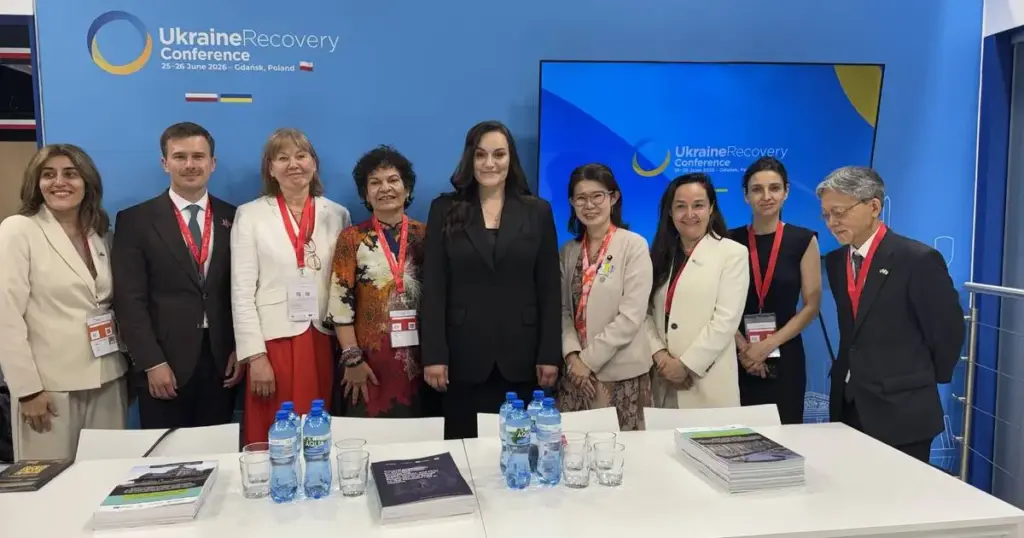
GDAŃSK / PARIS — In a pivotal moment for international cultural diplomacy and crisis management, UNESCO formally unveiled and handed over a comprehensive suite of strategic, field-tested tools dedicated to the safeguarding and long-term management of Ukraine’s imperiled World Heritage sites. The official handover took place on June 25, 2026, during the high-profile Ukraine Recovery Conference (URC) held in Gdańsk, Poland.
This historic delivery marks a monumental milestone in UNESCO’s sustained, multi-year mandate to protect cultural heritage trapped in active conflict zones. Developed through more than three years of painstaking collaboration between UNESCO, the Ministry of Culture of Ukraine, and two key Advisory Bodies to the World Heritage Committee—the International Council on Monuments and Sites (ICOMOS) and the International Centre for the Study of the Preservation and Restoration of Cultural Property (ICCROM)—the initiative is a testament to what multilateral cooperation can achieve under extreme duress.
Crucially, the operational framework was forged not behind closed doors in European capitals, but on the ground in close consultation with a robust national network of over 150 Ukrainian heritage professionals, architects, conservators, and site managers. Generously funded by the Government of Japan—a steadfast global champion of cultural preservation—these newly minted tools are designed to be immediately operational, practical, and resilient in the face of relentless wartime destruction.
: A New Standard for Heritage Protection in Wartime
The ongoing conflict in Ukraine has inflicted catastrophic damage upon the nation’s cultural fabric, turning historic urban centers, centuries-old sacred architecture, and invaluable archives into frontlines of war. In response, the international community has long recognized that physical rebuilding alone is insufficient; what is required is a systematic, institutionalized approach to risk mitigation, emergency response, and post-conflict recovery.
The suite of strategic tools handed over at the Gdańsk conference fills this critical operational gap. Moving far beyond abstract theoretical guidelines, the package provides Ukrainian authorities, municipal planners, and site managers with a coherent, multi-layered framework. It spans the entire crisis lifecycle: from immediate emergency first-aid and rapid damage assessment to early recovery and complex, long-term reconstruction planning.
By integrating modern emergency preparedness methodologies with the rigorous standards of the 1972 UNESCO World Heritage Convention, this initiative establishes a groundbreaking precedent. As cultural properties worldwide face escalating threats from geopolitical conflict, climate change, and disasters, the Ukrainian framework is poised to serve as a vital global reference model for heritage protection in extreme crisis situations.

Detailed Chronology: Three Years of Collaborative Resilience
The road to the June 25 handover in Gdańsk was paved by a relentless, multi-year effort involving relentless coordination across international borders, war zones, and institutional divides. A chronological examination of this partnership highlights the urgency and dedication required to bring these tools to fruition:
- Early 2023: In the wake of widespread devastation across Ukraine’s cultural landscape, UNESCO accelerates its emergency operations. Recognizing that ad-hoc responses are insufficient for protracted conflict, planning begins for a systematic, nationwide capacity-building and strategic tool-development initiative, catalyzed by financial backing from the Government of Japan.
- Mid-2023 to Late 2024: UNESCO convenes a series of technical workshops, stakeholder consultations, and field missions alongside experts from ICOMOS and ICCROM. Concurrently, a vital national network of more than 150 Ukrainian heritage professionals is mobilized. These local experts provide critical on-the-ground insights regarding the realities of protecting sites under constant threat of artillery fire, drone attacks, and infrastructural collapse.
- 2025: Draft frameworks undergo rigorous pilot testing across several high-risk Ukrainian properties, including the historic core of Odesa and major monastic complexes in Kyiv. Feedback from local site managers directly shapes the final iterations of the Emergency Response Preparedness (ERP) plans and management strategies.
- June 25, 2026: The culmination of this three-year endeavor arrives at the Ukraine Recovery Conference in Gdańsk. UNESCO formally transfers the complete strategic package to Ukrainian authorities, setting a new benchmark for international solidarity and technical assistance in recovery contexts.
Supporting Context, Metrics, and Operational Frameworks
The newly delivered package is structured around several distinct, highly tailored operational modules, each addressing specific vulnerabilities inherent to Ukraine’s most treasured cultural assets.
1. Emergency Response Preparedness (ERP) Plans
The framework introduces bespoke ERP methodologies for some of Ukraine’s most irreplaceable cultural landmarks, notably Kyiv: Saint-Sophia Cathedral and Related Monastic Buildings, Kyiv-Pechersk Lavra (World Heritage ID 527) and the transnational Wooden Tserkvas of the Carpathian Region in Poland and Ukraine (World Heritage ID 1424).
These plans equip site administrators with structured protocols for:
- Rapid Risk Analysis: Identifying specific vulnerabilities to missile strikes, concussive blasts, fires, and structural destabilization.
- Advanced Documentation: Utilizing 3D laser scanning, photogrammetry, and digital cataloging to ensure that every architectural element is digitally preserved should physical destruction occur.
- Stakeholder Coordination: Establishing clear lines of communication between local emergency services, municipal authorities, national ministries, and international humanitarian networks.
2. Odesa’s Revised Management Plan and the Danger List Roadmap
For the Historic Centre of Odesa (World Heritage ID 1703)—a vibrant port city repeatedly targeted by aerial bombardments—the tools provide specialized recommendations for overhauling the site’s overarching Management Plan. This revised plan seamlessly integrates urban governance, heritage conservation, and active risk management within a wartime paradigm.
Furthermore, UNESCO has formulated a strategic roadmap outlining the Desired State of Conservation for the Removal (DSOCR) of Odesa from the List of World Heritage in Danger. This roadmap establishes clear-cut priorities, measurable indicators, and realistic timelines designed to guide the property safely from emergency stabilization toward full recovery and long-term safeguarding.
3. Alignment with the CURE Framework
All tools are anchored in UNESCO’s overarching Culture in Emergencies (CURE) Framework. This holistic approach ensures that crisis response does not operate in a vacuum but serves as a bridge toward sustainable reconstruction. By strengthening national capacities while maintaining strict fidelity to international conservation principles, the framework optimizes resource mobilization and donor coordination.
Official Statements and International Perspectives
The significance of the Gdańsk handover resonated deeply among leaders of the partnering institutions, who emphasized both the immediate utility of the project for Ukraine and its broader legacy for global heritage protection.
Speaking on the collaborative achievement, a senior UNESCO representative highlighted the transformative nature of the initiative:
"This initiative demonstrates the value of sustained international cooperation. Thanks to the support of Japan and the tireless collaboration of all partners, including ICOMOS and ICCROM, UNESCO has been able to develop tools that not only support Ukraine, but also provide valuable reference models for other countries facing crisis situations worldwide."
Representatives from the Ukrainian Ministry of Culture echoed these sentiments, stressing that culture is not a secondary luxury in times of war, but the very bedrock of national identity and resilience. Ukrainian officials noted that the ability to systematically document, protect, and plan for the restoration of their heritage sites serves as a powerful psychological and cultural counterweight to the erasure attempted by invading forces.
International conservation bodies also lauded the participatory nature of the project. Experts from ICOMOS and ICCROM pointed out that empowering the 150-strong national network of Ukrainian professionals ensures that the tools are not imposition-driven, but locally owned, sustainable, and directly responsive to the unique operational realities on the ground.
Future Outlook: A Call to Action for the Global Community
While the delivery of these strategic frameworks represents a monumental leap forward, UNESCO has issued an urgent call to action to Member States, international organizations, and private donors. The existence of operational plans is only the first step; their large-scale implementation requires continuous, robust technical and financial backing.
As the conflict in Ukraine persists, the preservation of cultural heritage remains an immense logistical challenge. Sustained international investment is urgently needed to translate these operational blueprints into boots-on-the-ground interventions: procuring fire-suppression equipment, reinforcing architectural structures, funding expert training programs, and executing rapid post-strike repairs.
By rallying behind the implementation of these tools, the international community does much more than safeguard bricks, mortar, and sacred icons. It reaffirms an unshakeable commitment to human dignity, international law, and the foundational principles of the 1972 World Heritage Convention. Ultimately, this comprehensive effort ensures that culture endures not merely as a relic of the past, but as a dynamic, resilient driver of peace, recovery, and sustainable development for the future of Ukraine and the world.