The landscape of fine dining in the United Kingdom’s picturesque Lake District is undergoing a quiet yet profound transformation. Nestled between the bustling market town of Kendal and the serene shores of Windermere lies the esteemed Gilpin Hotel & Lake House, a sanctuary of rural luxury renowned for its uncompromising hospitality and world-class gastronomy. While the estate’s culinary credentials have long been anchored by its commitment to excellence—symbolized by its distinguished accolades, including two AA Rosettes—recent months have signaled a compelling chapter of creative renewal.
At the heart of this evolution is Gilpin Spice, the estate’s vibrant Pan-Asian restaurant. The venue has recently welcomed a new culinary captain: Head Chef Ralph Rojas, an alumnus of Gordon Ramsay’s high-octane London establishment, Lucky Cat. Tasked with steering Gilpin Spice’s ambitious spice-route concept, Chef Rojas has introduced an entirely reimagined menu that merges Asian culinary traditions with premier British produce.
To evaluate the impact of this high-profile appointment, a return visit to the estate offered an immersive look at the new direction. From welcome aperitifs on the newly unveiled Laurent-Perrier Terrace to front-row seats at the open-kitchen pass, the evening served as an authoritative masterclass in flavor balancing, technical precision, and modern luxury dining. This report provides a detailed examination of Chef Rojas’s inaugural menu, an exploration of the restaurant’s operational philosophy, and an assessment of what this pivotal hire means for the future of luxury dining in Cumbria.
Detailed Chronology: An Immersive Evening at Gilpin Spice
The culinary journey began in the late afternoon sun on the estate’s newly minted Laurent-Perrier Terrace. Designed to elevate the pre-dinner experience, the terrace offers an intimate outdoor setting overlooking the meticulously manicured Cumbrian grounds. Here, guests are invited to decompress with exceptional champagne pairings and meticulously crafted amuse-bouches. Among the early highlights was a delicate presentation of Cornish crab paired with smoked pike roe—a masterclass in coastal flavors that established an immediate benchmark for the evening’s seafood offerings. During this opening act, Chef Ralph Rojas took time away from the pressurized environment of the kitchen pass to converse with diners, discussing his culinary philosophy, his transition from the capital to the Lake District, and his vision for harmonizing ancient spice routes with local ingredients.
Front-Row Seats at the Pass: The Open-Kitchen Spectacle
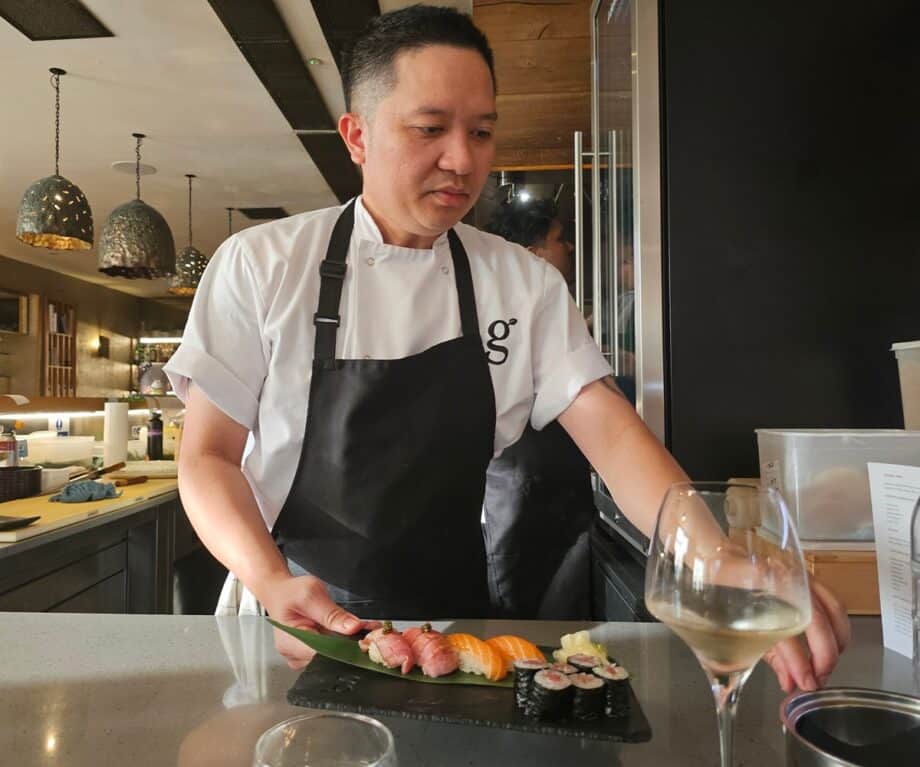
Transitioning indoors, the dining experience shifted gears from relaxed outdoor elegance to high-energy theatricality. Securing seats directly at the chef’s table counter immediately adjacent to the open kitchen provided a privileged vantage point. In contemporary fine dining, the invisible boundary between kitchen and dining room is increasingly dissolving, and Gilpin Spice embraces this transparency wholeheartedly.
From this front-row perspective, the kinetic energy of a brigade at the height of their powers was palpable. Woks flared with sudden bursts of flame, charcoal grills radiated intense dry heat, sushi chefs executed knife work with monastic focus, and plates were assembled with surgical precision. This sensory immersion—the hiss of steam, the aroma of toasted spices, and the rhythmic clatter of service—infused the room with an electrifying momentum that set the tone for the meal.
The Small Plates: A Tapestry of Spice and Umami
The structural core of Chef Rojas’s menu relies heavily on small plates, sharing dishes, and precision-cut sushi designed to reflect the historical and geographical sweep of the spice route, complemented by a select tier of substantial main courses.
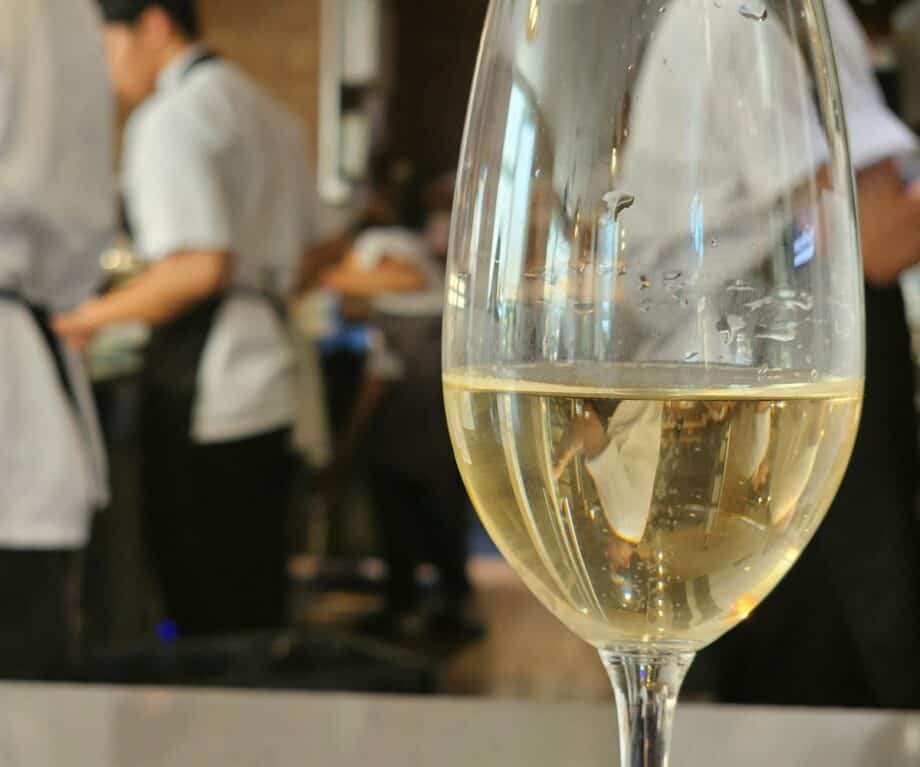
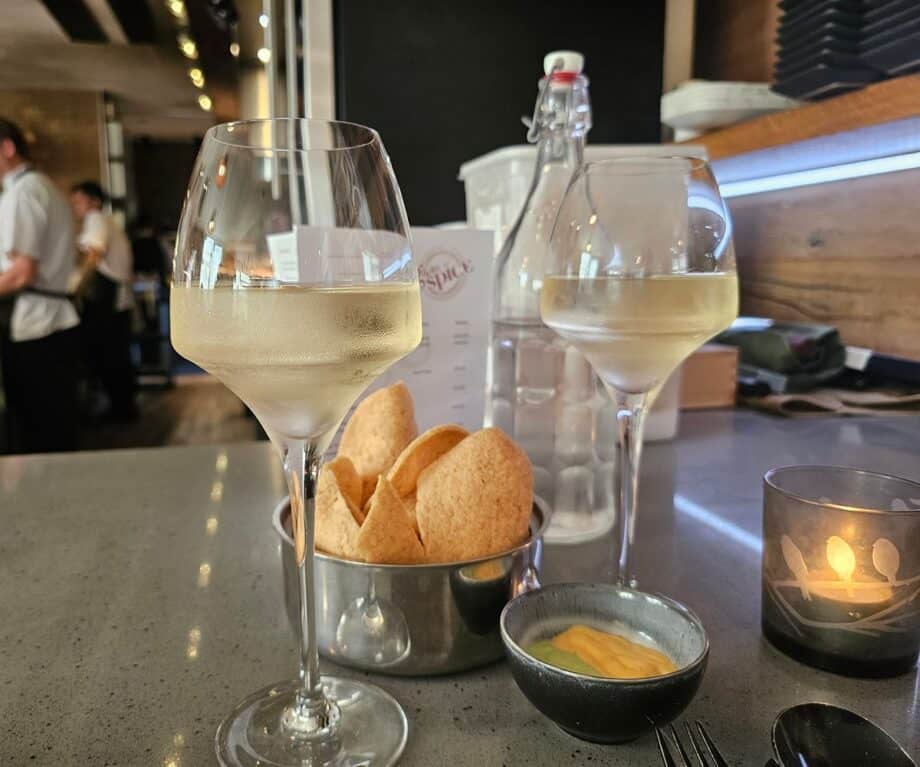
The meal commenced with an understated yet deeply satisfying snack: house-made Prawn Crackers served alongside a vibrant coriander and sweet chilli emulsion. Light, crisp, and devoid of the grease often associated with lesser iterations, they offered a bright, herbaceous crunch that paired effortlessly with a crisp, flinty glass of New Zealand Sauvignon Blanc.
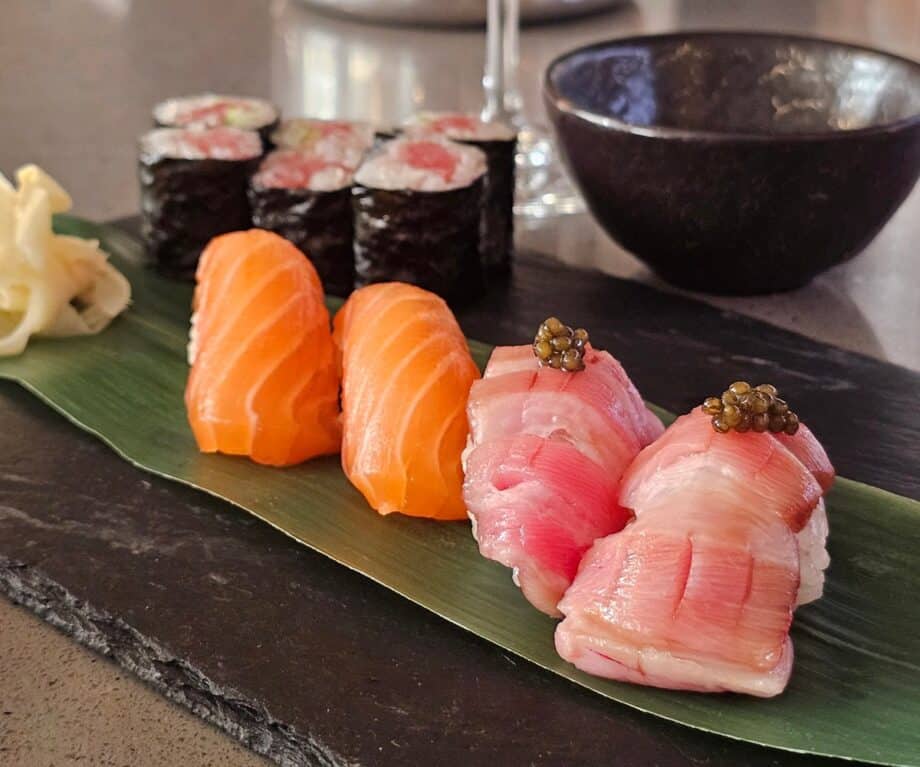
Following the crackers came a selection of premium sushi. The standout was undeniably the otoro—the prized, heavily marbled fatty underbelly of the bluefin tuna. Sourced with meticulous attention to provenance, the fish offered a rich, buttery consistency that dissolved almost instantaneously on the palate, elevated simply by the warmth of seasoned sushi rice and a whisper of wasabi.
The small plates menu spans an accessible pricing tier—ranging from £7 for a fragrant Tomato Cha Saar Soup to £17 for sophisticated creations like Scallop paired with a sweetcorn hot sauce.
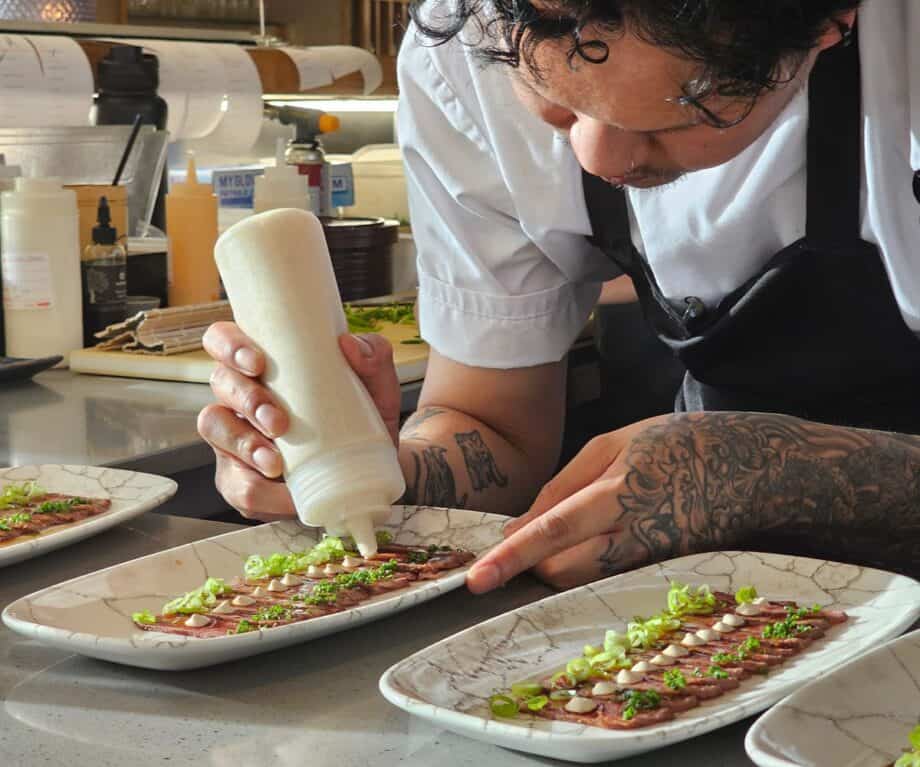
Wagyu Tataki: Prepared directly across the counter, this dish featured thinly seared Wagyu beef finished with a complex truffle ponzu and a velvety truffle emulsion. The dish was an exercise in pure umami—rich, deeply savory, and texturally weightless.
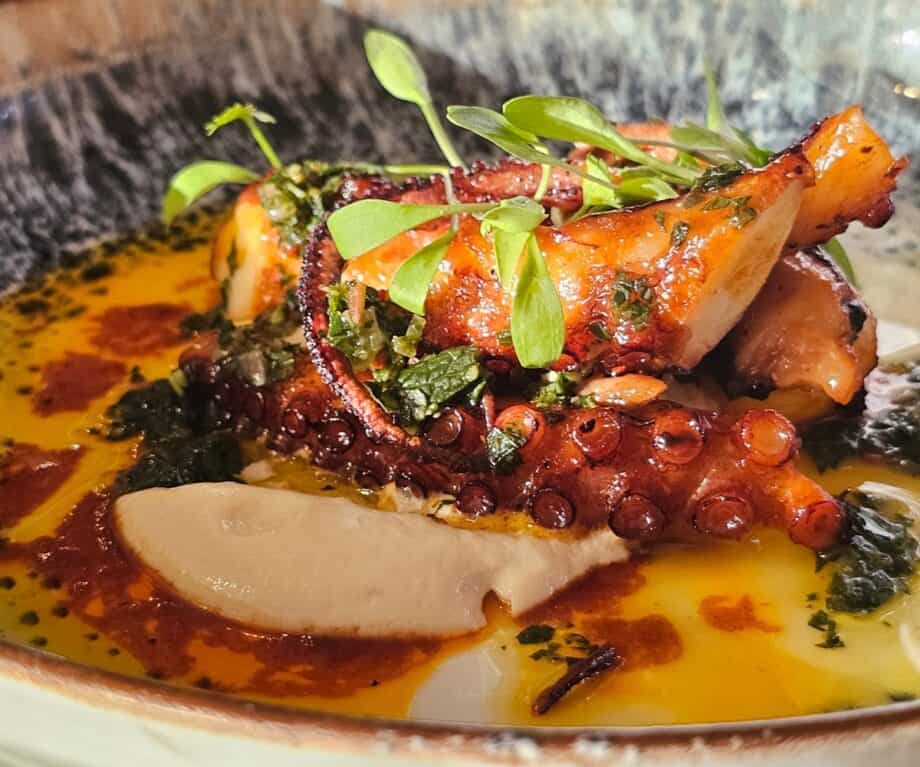
Grilled Octopus: A personal favorite of the evening, this cephalopod offering showcased a masterclass in cooking times. The octopus possessed a desirable exterior char from the robata grill, coated in a punchy, caramelized Korean BBQ glaze, and anchored by a delicate tofu foam and a herbaceous chimichurri that cut through the richness.
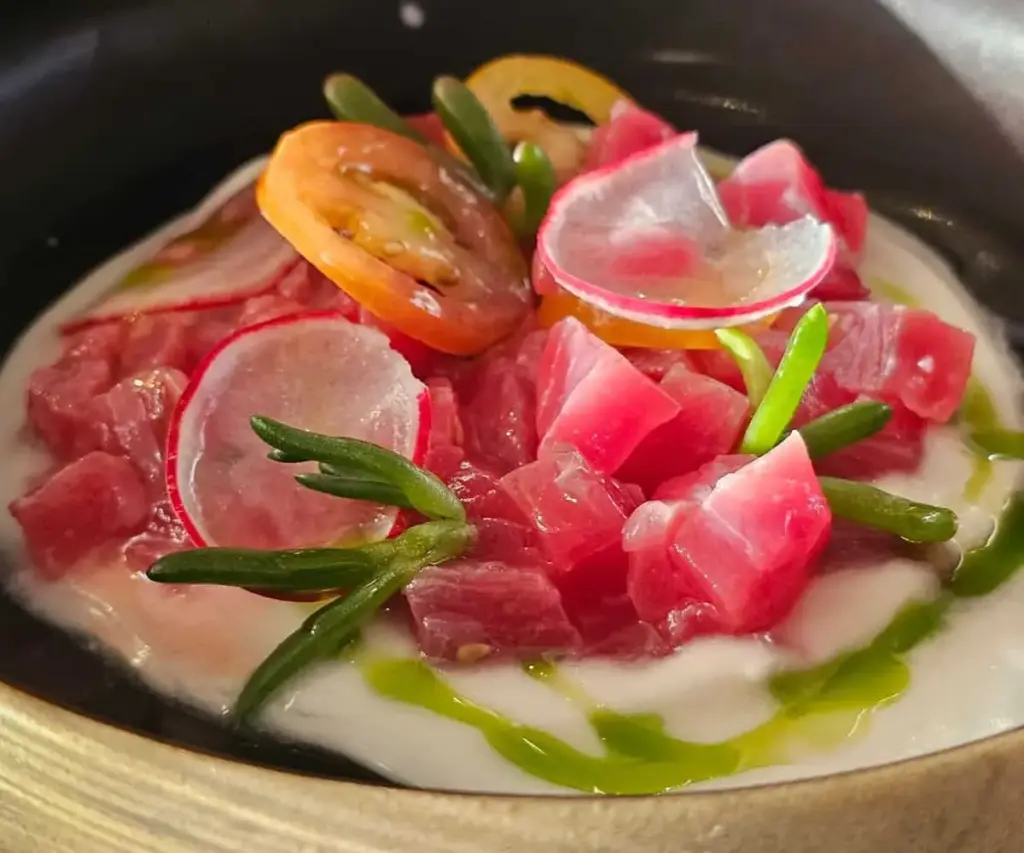
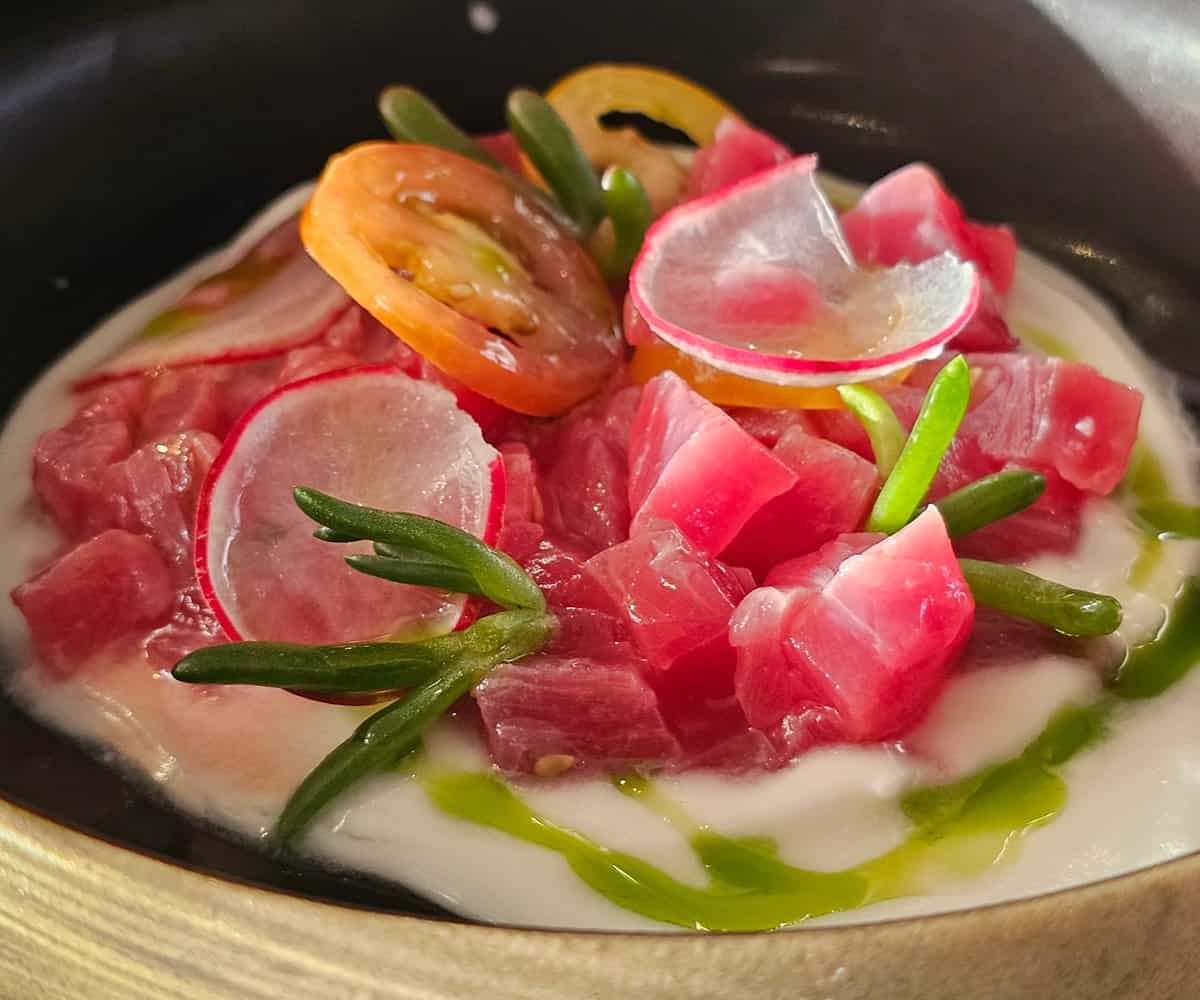
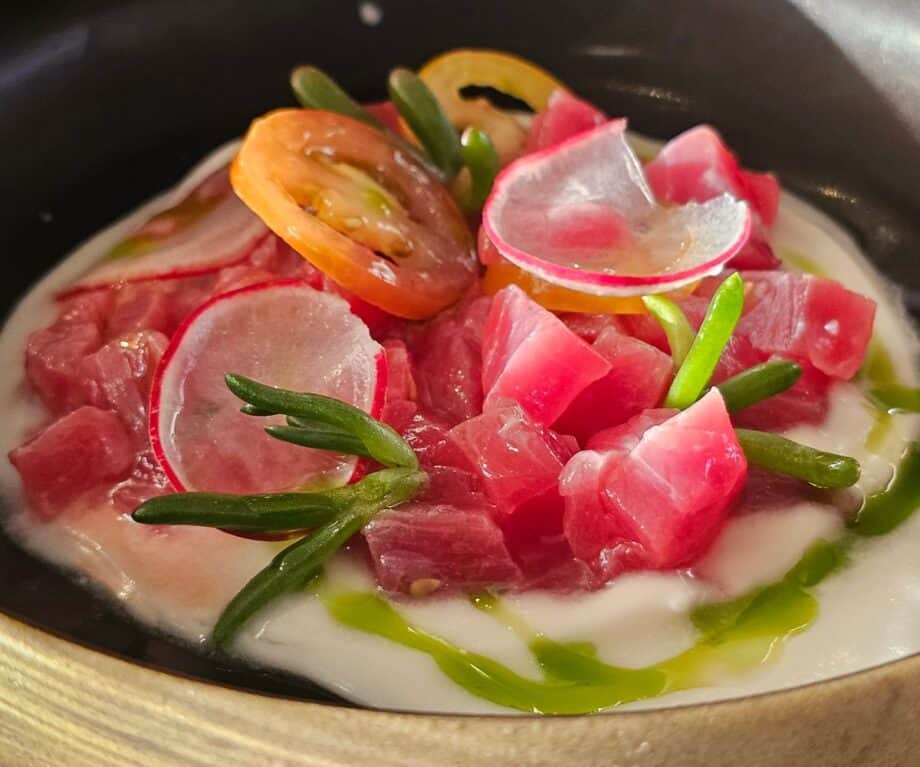
Kinilaw of the Day: Representing a nod to Filipino culinary heritage, this island-style ceviche combined ultra-fresh tuna with rich coconut milk, sharp vinegar, calamansi (the highly aromatic citrus native to the Philippines), fiery chillies, fresh ginger, and crispy shallots. The interplay of bright acidity and creamy coconut milk was nothing short of brilliant.
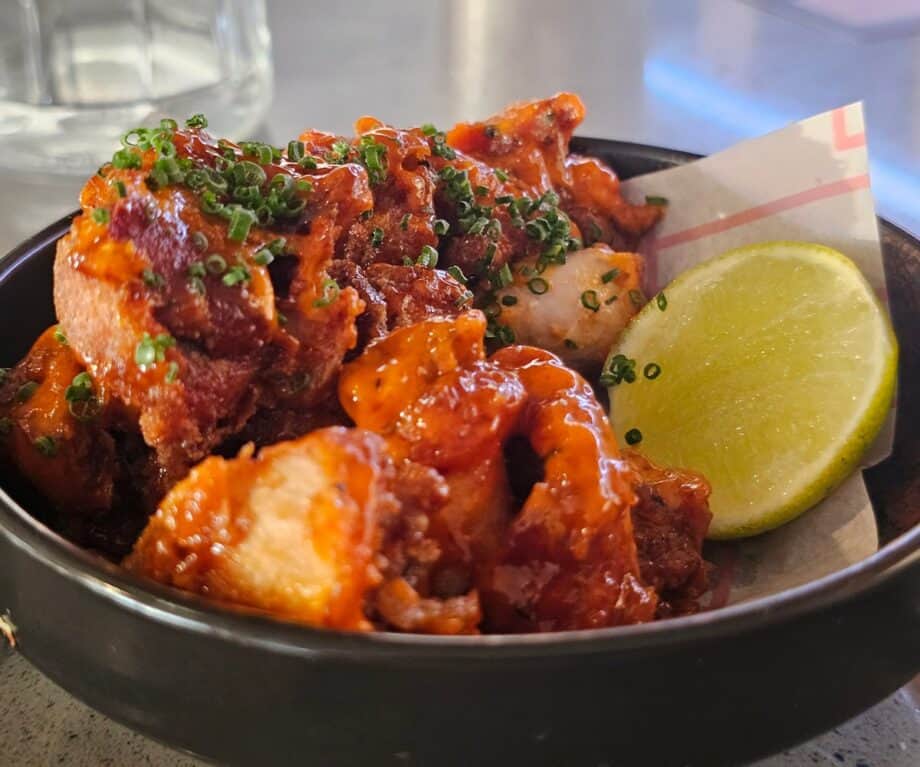
Spice Fried Chicken (SFC): Proving that comfort food can be elevated to fine-dining standards, this dish featured exceptionally crunchy chicken tossed in a fiery Korean hot sauce. Crucially, Chef Rojas maintained the restaurant’s overarching philosophy: delivering complex, warming spice profiles without resorting to palate-numbing heat.
Main Courses: Substantial Tributes to Cumbrian Produce
While small plates anchor much of the menu, the large plates—priced from £21 for Tandoori Spiced Hispi Cabbage to £42 for a 30-day aged British rib-eye—demonstrate an equal command of heavier proteins.
The selection of the evening was the Beer-Brined Cumbrian Pork Steak. The rigorous brining process ensured the local pork retained optimal moisture, yielding a cut of extraordinary tenderness. Crowned with earthy wild mushrooms and swathed in a fragrant Thai Phat Phet glaze, the dish bridged the gap between British livestock farming and the assertive, aromatic flavor profiles of Southeast Asia.
To accompany the proteins, the table was served Gilpin Spice’s legendary Egg Fried Rice—a returning favorite from previous visits that continues to deliver comforting reliability—alongside a vibrant portion of Tenderstem Broccoli tossed with crunchy arare (roasted Japanese rice crackers) and an airy tofu foam that added a sophisticated modern finish to the brassica.
The Grand Finale: Cleansing the Palate
Despite the volume of courses, refusing dessert proved impossible. The Coconut and Lime Sorbet served as the definitive structural punctuation mark for the evening. Tart, intensely refreshing, and texturally silken, it provided the precise enzymatic palate cleanser required to conclude a rich and multifaceted dining experience.
Supporting Context & Metrics: The Business and Culture of Gilpin Spice
To fully appreciate the significance of Chef Ralph Rojas’s arrival at Gilpin Spice, it is necessary to examine the broader operational and economic metrics that define the upper echelon of British hospitality today.
Metric / Indicator
Contextual Detail
Establishment Location
Between Kendal and Windermere, Lake District, UK
Hotel Accolades
Multi-award-winning luxury estate; Gilpin Spice holds 2 AA Rosettes
Chef Background
Head Chef Ralph Rojas, formerly of Gordon Ramsay’s Lucky Cat (London)
Small Plates Pricing Range
£7.00 (Tomato Cha Saar Soup) to £17.00 (Scallop with sweetcorn hot sauce)
Main Courses Pricing Range
£21.00 (Tandoori Spiced Hispi Cabbage) to £42.00 (30-Day Aged British Rib Eye)
Beverage Highlights
Laurent-Perrier Terrace partnership; curated international wine list
The strategic recruitment of a chef with high-level metropolitan experience—specifically from a high-profile, internationally recognized concept like Gordon Ramsay Restaurants’ Lucky Cat—underscores a broader trend in regional UK hospitality. Destination hotels can no longer rely solely on rural seclusion and scenic vistas to attract discerning travelers; they must offer world-class, cosmopolitan dining programs that rival anything found in London, Edinburgh, or Manchester.
Chef Rojas’s menu successfully navigates the delicate tightrope of modern Pan-Asian cuisine: honoring authentic techniques and flavor bases (such as Filipino kinilaw and Korean gochujang-based glazes) while remaining deeply respectful of hyper-local Cumbrian provenance (utilizing regional pork, British beef, and local dairy). This cross-pollination of global spice trade history with British agricultural excellence defines the modern identity of Gilpin Spice.
Official Statements and Industry Perspective
Reflecting on the appointment and the evolution of the estate’s culinary offerings, industry observers have noted a distinct elevation in both technique and ambition.
While specific corporate soundbites from the Gilpin family management emphasize a continuous pursuit of unpretentious luxury, the culinary direction speaks louder than press releases. In conversation during the service, Chef Ralph Rojas articulated his core philosophy regarding spice integration:
"When working with spice, the objective is never to overwhelm or exhaust the palate. Spice should be a vehicle for awakening different dimensions of an ingredient—highlighting the natural sweetness of a scallop, the richness of Wagyu beef, or the earthiness of wild mushrooms. By marrying traditional Asian flavor structures with the incredible produce available here in Cumbria, we are creating something that feels both adventurous and entirely at home in the Lake District."
Culinary critics and frequent visitors alike have echoed this sentiment. The ability to shift seamlessly from delicate raw fish preparations—such as bluefin tuna otoro and citrus-cured kinilaw—to robust, robata-grilled meats demonstrates a technical versatility that justifies the restaurant’s standing as one of the premier dining destinations in northern England.
Future Outlook: What’s Next for Gilpin Spice?
As Gilpin Spice steps into the latter half of the year, the appointment of Chef Ralph Rojas marks a defining moment of stability and progressive ambition. The successful integration of high-end Pan-Asian small plates with the relaxed, welcoming atmosphere of the Lake District proves that regional dining need not adhere to rigid, old-world paradigms.
Looking ahead, several key developments are anticipated to shape the restaurant’s trajectory:
Seasonal Menu Adaptations: With autumn and winter approaching, diners can expect the menu to pivot toward heartier spice-laden curries, root vegetable infusions, and deeper umami profiles, all while maintaining the hallmark precision of the open kitchen.
Terrace Enhancements: The newly established Laurent-Perrier Terrace is expected to play a central role in pre- and post-dinner programming, weather permitting, anchoring the estate’s outdoor hospitality offerings.
Culinary Accolades: Industry insiders are watching closely to see whether the refined direction under Chef Rojas will propel Gilpin Spice toward further national recognition and elevated scoring within major culinary guides.
Ultimately, the evening at Gilpin Spice reaffirmed a vital truth about modern luxury travel: the most memorable destinations are those that refuse to stand still. Under the stewardship of Chef Ralph Rojas, Gilpin Spice remains a vibrant, evolving sanctuary where global flavors meet Cumbrian warmth—securing its position as an unmissable stop on any discerning traveler’s itinerary.