Montreal’s culinary landscape is a masterclass in cultural synthesis, an offbeat, vibrant collision of traditions where French technique, Jewish heritage, Italian comfort, and Caribbean soul exist side-by-side. Recognized globally as a powerhouse of urban agriculture and homegrown culinary talent, Montreal does not bend to a single governing influence. Instead, its foodways coalesce, old traditions are continually upheld and upended, and imported cooking techniques are meticulously tailored to local flora and fauna.
Curated by lifelong local food writer Valerie Silva, this definitive guide spans neighborhoods, price points, and eras. It captures the essence of a city where ordering an "entrée" strictly means receiving a starter, and where natural wine bars share streets with century-old casse-croûtes. Updated for July 2026, this compendium highlights the newest openings driving critical conversation, the persistent trends defining modern award lists, and the generational icons that complete the city’s identity.
Detailed Chronology of Montreal’s Culinary Evolution
The city’s dining scene is built upon a profound lineage of generational markers interspersed with dynamic modern arrivals. Tracing this timeline reveals how Montreal evolved from a meat-and-potatoes European outpost into a global food capital.
The Pioneers and Generational Icons (1919–1980)
Fairmount Bagel (1919): Founded by Russian immigrant Isadore Shlafman, this 24/7 institution pioneered the Montreal-style bagel: hand-rolled, boiled in honey water for a distinct sweetness, and baked in a wood-fired oven. Its enduring legacy was cemented when it became the first bagel launched into space.
Chez Ma Tante (1929): Originally operating out of a horse-drawn carriage before evolving through a camper van into its iconic Fleury Street location, this quintessential Quebec-style diner remains a gold standard for all-dressed steamés (steamed-bun hot dogs) and poutine.
Snowdon Deli (1946): A bastion of Jewish deli culture, offering legendary smoked meat on mustard-smothered rye, matzo ball soup, and latkes without the multi-hour tourist queues found elsewhere.
Paul Patates (1958): A Pointe-Saint-Charles fixture serving up classic casse-croûte fare alongside its famous in-house brewed spruce beer, tracing its recipe back over a century.
L’Express (1980): Opening its doors on Saint-Denis Street to cater to the local theater crowd, this timeless French bistro has spent decades serving impeccable steak frites and chicken liver pâté to locals and late-night industry crowds alike.
The Modern Renaissance & Cultural Expansion (2013–2021)
Ma Poule Mouillée (2013): Revolutionized the local comfort food circuit by injecting fiery, Portuguese piri-piri flare into the city’s love for rotisserie chicken, famously heavy-lifting the local poutine with grilled chouriço and São Jorge cheese.
Montréal Plaza (2015): Chefs Charles-Antoine Crête and Cheryl Johnson injected whimsy and global influences into the market-driven French bistro format, transforming Plaza St-Hubert into a major culinary corridor.
Automne Boulangerie (2016): Founded by Seth Gabrielse and Julien Roy, this bakery elevated the city’s bread culture through meticulous sourdough and seasonal pastries, supplying many of Montreal’s top fine-dining kitchens.
Casse-Croûte Sissi & Paul (2015) & Les Filles Fattoush (2017): These establishments deepened the city’s embrace of its immigrant communities—specializing in Haitian griot and Syrian pantry staples, respectively—proving that the city’s strongest culinary pulses originate from diaspora integration.
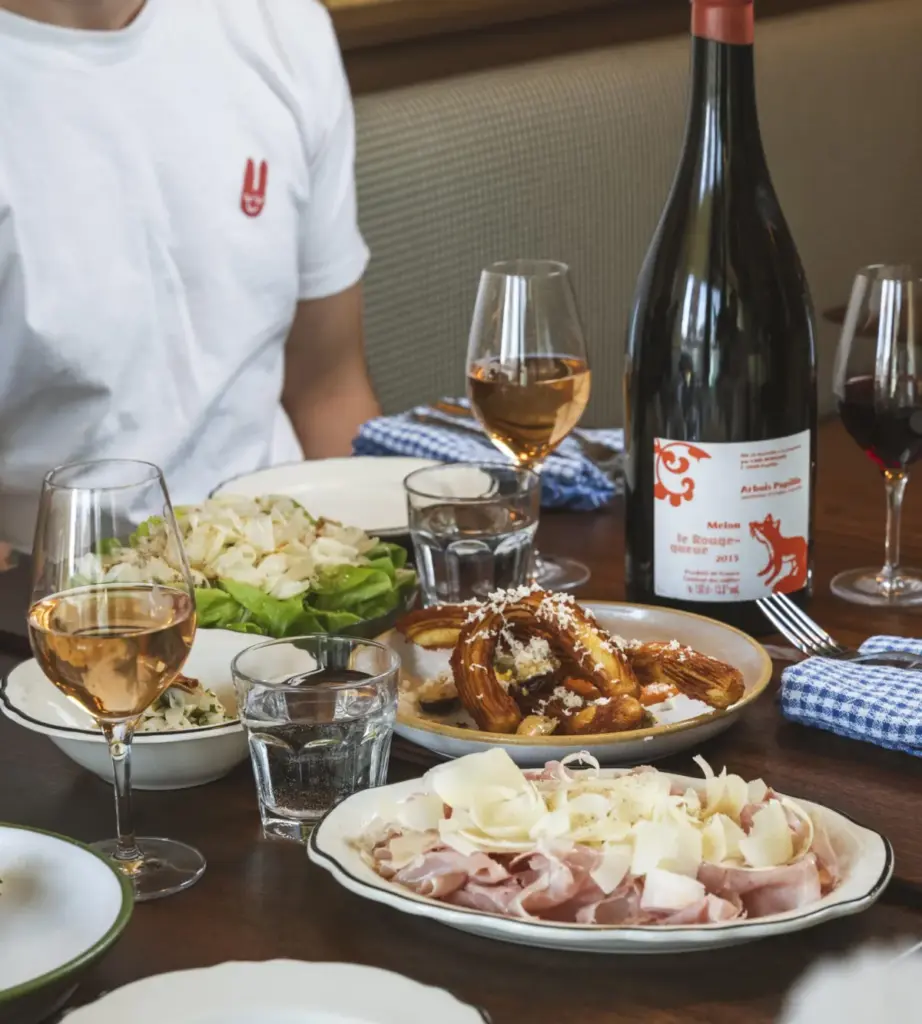
Vin Mon Lapin (2018) & Pichai (2021): Mon Lapin redefined the natural wine bar format to claim top spots on Canada’s 100 Best lists, while Pichai set the benchmark for Isaan Thai cooking in a wine-bar setting.
The Contemporary Wave (2022–2026)
Bar Vivar & Restaurant Beba (2019–2024): Beba brought Argentine-Spanish-Italian confluence to Verdun, while Bar Vivar established a vibrant Basque pintxo culture in the Plateau.
Aylwin Barbecue & Bruce (2026): Aylwin graduated from a seasonal Atwater Market stall to a permanent smokehouse-deli hybrid, while newcomer Bruce challenged local palates with elevated Scottish dining, featuring dishes like leeks in kale pesto and Sunday roast dinners.
To navigate Montreal’s diverse dining landscape effectively, diners reference a standardized pricing rubric alongside geographical concentrations:
$ (Inexpensive): Quick meals, street food, and casse-croûte classics where dishes largely run under $10 USD (equivalent CAD). Highlights include Fairmount Bagel, Chez Ma Tante, Pizza Bouquet, and Dosa Pointe.
$$ (Moderate): Casual sit-down spots, bakeries, and vibrant neighborhood joints where mains range between $10 and $20 USD. Standouts include Ma Poule Mouillée, Lulu Épicerie, Bar Minou, and Restaurant Dobe & Andy.
$$$ (Upscale): Serious wine bars, contemporary bistros, and specialized dining rooms where mains land between $20 and $30 USD. Key destinations feature Moccione, Limbo, Le Violon, Gia Vin & Grill, and Bruce.
$$$$ (Fine Dining): Multi-course tasting menus and high-end gastronomic destinations where mains exceed $30 USD. Industry titans include Montréal Plaza, Vin Mon Lapin, Damas, and Alma.
Official Statements and Culinary Philosophy
Local food writer and curator Valerie Silva emphasizes that Montreal’s culinary identity thrives on boundary-pushing rather than rigid preservation.
"No single influence governs Montreal’s distinct, ever-evolving culinary terrain, and that’s what makes eating here so special. Foodways coalesce, traditions get upheld and upended, and imported techniques are tailored to local flora and fauna."
This philosophy is mirrored across the city’s newest heavy hitters. For instance, Harrison Shewchuk of the Michelin Bib Gourmand-winning restaurant Limbo describes his culinary approach as an "in-between" space—grounded in classical French technique while remaining entirely unfettered by convention, evidenced by creative strokes like a mille-feuille layered with Avonlea cheddar and salted caramel pastry cream.
Similarly, chef Juan Lopez Luna of Alma highlights the importance of ancestral roots, importing nixtamalized corn directly from Tlaxcala to anchor modern Mexican gastronomy within the rich agricultural output of Quebec.
Future Outlook: The Next Frontier of Montreal Dining
As Montreal steps further into the mid-2020s, the city’s culinary trajectory points toward two distinct paths: a deeper celebration of hyper-regional micro-cuisines and an increasing fluidity between casual neighborhood hangouts and high-end execution.
The successful integration of unconventional concepts—such as the Scottish offerings at Bruce, the innovative pantry-to-plate models pioneered by Les Filles Fattoush, and the zero-tipping, transparent pricing structures at modern wine bars like Bar Minou—signal a maturing dining public. Diners are increasingly willing to discard traditional geographical boundaries in favor of culinary authenticity, ethical supply chains, and spaces that foster genuine community interaction.
Whether grabbing a wood-fired bagel at 3:00 AM from Fairmount, ordering a multi-course choix du chef at Limbo, or sharing a table of arrosticini at Gia Vin & Grill, Montreal’s restaurant scene remains an inexhaustible, ever-accelerating experiment in taste, culture, and community.