







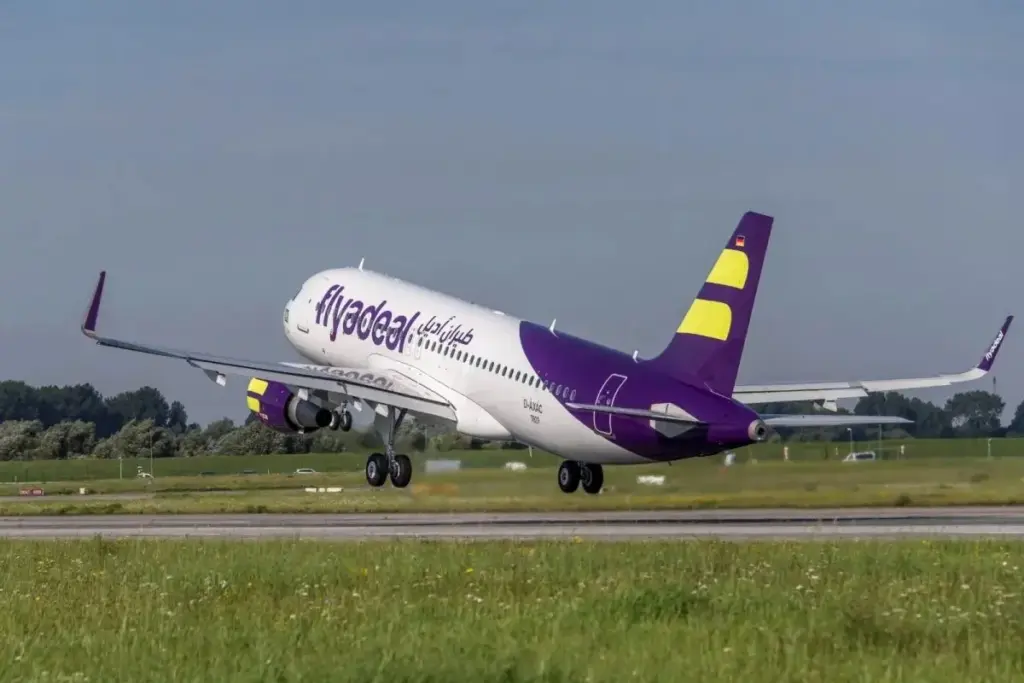
Saudi Arabia’s aviation sector is undergoing a rapid and profound transformation, driven by the kingdom’s ambitious economic diversification plans. At the heart of this evolution is Flyadeal, the low-cost subsidiary of the national carrier Saudia. In a significant departure from its traditional operating model, the budget airline is preparing to transition from a strictly point-to-point carrier into an airline that supports connecting flights.
The strategic shift, scheduled to roll out in the coming weeks, represents a major milestone for the low-cost carrier (LCC). By offering seamless connections and dedicated origin and destination (O&D) fares, Flyadeal aims to capture a larger share of regional transit traffic and better integrate with the broader travel ecosystem of the Middle East.
According to Flyadeal’s acting CEO, Sanjiv Kapoor, the decision marks a natural evolution for the airline as it matures and expands its footprint.
“Until now, the model for Flyadeal has been a point-to-point airline where connections were not part of our strategy,” Kapoor told Skift. “But in the coming weeks, we’re going to introduce connecting flights with origin and destination fares and seamless connections.”
This operational pivot comes at a crucial time. The airline is preparing for a major fleet expansion, which will include the introduction of larger narrowbody aircraft and its first-ever widebody jets. However, like many of its global peers, Flyadeal must navigate these expansion plans against a backdrop of persistent aircraft delivery delays that continue to disrupt the global aviation supply chain.
The Mechanics of the Pivot: Moving Beyond Point-to-Point
Since its launch in 2017, Flyadeal has operated on a classic low-cost business model. This strategy focused on point-to-point routes, high aircraft utilization, single-class cabins, and keeping operational complexity to a minimum. By flying passengers directly from one city to another without offering transfers, the airline minimized the risk of baggage loss, reduced ground handling times, and kept overhead costs low.
However, as the airline has scaled, the limitations of a pure point-to-point model in a geographically strategic region like Saudi Arabia have become apparent. By introducing connecting flights, Flyadeal is moving toward a hybrid LCC model. This approach has been successfully pioneered by other global budget giants, such as AirAsia with its "Fly-Thru" service and EasyJet through its "Worldwide" platform.
The introduction of origin and destination (O&D) fares will allow passengers to book a single ticket for travel across multiple segments of Flyadeal’s network. For example, a passenger traveling from a secondary city in Saudi Arabia to an international destination in the Gulf or North Africa will be able to transfer seamlessly through one of Flyadeal’s primary hubs, such as Jeddah or Riyadh.
Under the new system, passengers will benefit from through-checked baggage and protected connections. This means that if a traveler misses their connecting flight due to a delay on the first leg, the airline will be responsible for rebooking them on the next available service. This level of convenience is expected to make Flyadeal a far more attractive option for budget-conscious international travelers and expatriate workers who require multi-leg journeys.
Fleet Evolution: Preparing for the Next Generation of Aircraft
To support this network transformation, Flyadeal is aggressively expanding and diversifying its fleet. Historically reliant on the Airbus A320 family, the airline is preparing to integrate larger, more versatile aircraft capable of supporting both high-density regional routes and longer-haul international operations.
The Arrival of the Airbus A321neo
In the second half of next year, Flyadeal is scheduled to take delivery of its first single-aisle Airbus A321neo aircraft. The A321neo is highly regarded in the low-cost aviation sector for its superior fuel efficiency, reduced carbon footprint, and increased passenger capacity compared to the standard A320.
For Flyadeal, the A321neo will provide a dual advantage:
- Capacity Enhancement: The aircraft allows the airline to add more seats on high-demand domestic routes—such as the busy corridor between Riyadh and Jeddah—without increasing the number of flight slots.
- Extended Range: The increased range of the A321neo opens up new potential destinations in Southern Europe, Central Asia, and deeper into Africa, allowing the carrier to expand its international network from Saudi Arabia.
Stepping Into Widebody Operations with the A330neo
Perhaps the most significant shift in Flyadeal’s long-term fleet strategy is its planned entry into widebody operations. The airline is scheduled to receive Airbus A330neo widebody aircraft in the fourth quarter of 2027.
Introducing widebody aircraft is a bold move for a low-cost carrier, as twin-aisle jets carry higher operating and maintenance costs. However, for a carrier based in Saudi Arabia, the economics of widebody aircraft can be highly favorable. The A330neo will allow Flyadeal to target high-density religious tourism markets, transporting large volumes of pilgrims arriving for Hajj and Umrah from South Asia, Southeast Asia, and Africa.
Furthermore, the A330neo will enable the airline to offer low-cost, long-haul flights to destinations that are beyond the reach of its narrowbody fleet, establishing Flyadeal as a formidable competitor in the medium-to-long-haul budget travel segment.
Navigating the Global Aviation Supply Chain Crisis
While Flyadeal’s fleet roadmaps are clearly defined, the airline’s plans are subject to the realities of a highly strained global aviation supply chain. Aircraft manufacturers, most notably Airbus and Boeing, have struggled to meet delivery schedules due to a combination of labor shortages, engine supply bottlenecks, and regulatory scrutiny.
These delays are clipping the wings of airlines worldwide, forcing carriers to delay route launches, extend leases on older aircraft, or reduce flight frequencies. The impact is being felt acutely across the region and the wider industry:
- Air India: The Indian flag carrier, which placed a historic order for 470 aircraft from both Airbus and Boeing in 2023, is still waiting on its massive orderbook to fully materialize. The delays have slowed its aggressive international and domestic expansion plans, forcing the airline to rely on leased aircraft to fill immediate capacity gaps.
- Riyadh Air: Saudi Arabia’s highly anticipated new national carrier, backed by the Public Investment Fund (PIF), has also had to navigate these headwinds. The airline’s commercial launch timeline has been repeatedly pushed back and adjusted as a result of supply chain constraints and complex regulatory certification processes.
For Flyadeal, managing the delivery timelines for the A321neo and A330neo will require careful planning. Any delays in the arrival of the A321neo next year could slow down the full implementation of its new connecting flight network, as the airline relies on these incoming aircraft to provide the necessary capacity and frequency to support seamless transfers.
Supporting Saudi Arabia’s Vision 2030
Flyadeal’s strategic pivot and fleet expansion are closely aligned with Saudi Arabia’s Vision 2030, a sweeping national initiative aimed at reducing the country’s reliance on oil and developing public service sectors such as tourism, infrastructure, and recreation.
Under the kingdom’s National Aviation Strategy, Saudi Arabia aims to:
- Triple its annual passenger traffic to 330 million by 2030.
- Increase the number of direct international destinations to over 250.
- Establish itself as a leading global transportation and logistics hub connecting East and West.
To achieve these lofty targets, the kingdom is employing a multi-carrier strategy. While Riyadh Air is being positioned as a premium global carrier based out of the capital city of Riyadh, and Saudia continues to serve as the legacy flag carrier with a focus on religious tourism and premium international traffic, Flyadeal plays a critical role as the high-volume, budget-friendly engine of growth.
By offering connecting flights, Flyadeal will be able to funnel budget-conscious travelers from international markets into Saudi Arabia’s secondary and tertiary cities, supporting the development of emerging tourism destinations such as AlUla, the Red Sea Project, and Neom.
What Lies Ahead for Flyadeal
The transition from a pure point-to-point model to a connecting network is a complex undertaking. It requires significant upgrades to passenger service systems, reservation software, airport ground handling operations, and baggage tracking technologies.
For Sanjiv Kapoor and his leadership team, the coming weeks will be a critical test of Flyadeal’s operational agility. Successfully executing this pivot will not only elevate Flyadeal’s competitive standing against regional budget rivals like Flydubai, Air Arabia, and Flynas, but it will also solidify the airline’s position as a key player in the realization of Saudi Arabia’s aviation ambitions.
If Flyadeal can successfully navigate the impending fleet arrivals and mitigate the impacts of global supply chain disruptions, its new hybrid model could serve as a blueprint for how low-cost carriers in the Middle East adapt to meet the demands of a rapidly changing travel landscape.