






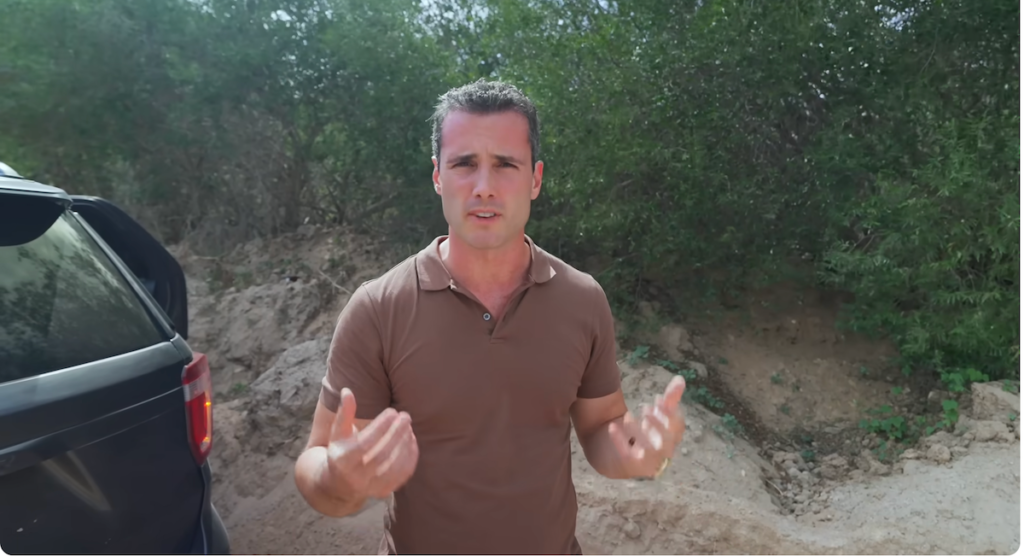
In the highly insular world of ultra-luxury hospitality, discretion, flawless service, and ironclad security are the pillars upon which multi-thousand-dollar-a-night reputations are built. However, a recent incident at Amanvari—the highly anticipated Aman resort nestled on the East Cape of Mexico’s Baja California peninsula—has exposed a jarring friction point between traditional luxury gatekeeping and the modern creator economy.
Ryan Walker, an established luxury hotel reviewer with a YouTube following of approximately 150,000 subscribers, was abruptly turned away at the resort’s secure entrance gate despite possessing a confirmed reservation and a verification email sent by the property’s reservations team that very morning. The situation escalated rapidly when resort security guards—who acknowledged Walker by name but claimed to have no internal record of his booking—refused his requests to speak with an on-duty manager and threatened to summon local law enforcement.
Walker subsequently documented the ordeal in an 11-minute video titled "Amanvari Called the Police on Me." Within days, the video garnered nearly 700,000 views and generated more than 5,000 comments, triggering a public relations crisis for the Aman brand. The incident raises critical questions about operational communication failures, security overreach, and how ultra-luxury brands navigate the presence of independent digital journalists and content creators who hold immense power over consumer perception.
Detailed Chronology: The Two-Hour Drive to a Closed Gate
The conflict began on what was supposed to be a routine site visit and stay for Walker, whose channel is dedicated to providing meticulous, high-production-value reviews of the world’s most exclusive properties.
[Morning of Arrival]
   │
   ├──► Walker receives written confirmation email from Amanvari Reservations
   │
   ├──► Embarks on a 2-hour drive to the East Cape of Baja California
   │
   └──► Arrives at the Amanvari Main Security Gate
         │
         ├──► Security guards recognize Walker by name immediately
         ├──► Guards state there is "no record" of his booking in the daily manifest
         ├──► Walker presents the morning's confirmation email on his phone
         │
         └──► [The Escalation]
               ├──► Walker requests to speak with a Front Office Manager
               ├──► Security flatly denies the request to contact management
               └──► Security threatens to call local police if Walker does not vacate the entrance
The Arrival and Confrontation
According to video footage and correspondence shared by Walker, his journey to Amanvari required a two-hour drive across the rugged, arid terrain of the Baja Peninsula. He arrived at the resort’s heavily fortified outer gate expecting the seamless, personalized welcome for which Aman is globally renowned.
Instead, he was met by a security detail that was visibly prepared for his arrival but operationally hostile. In the video recorded by Walker, the guards immediately addressed him by name before he had introduced himself or handed over his identification. Despite this explicit recognition, the guards informed him that his name was not on the arrival manifest and that he would not be permitted entry.
The Refusal of Escalation
Walker attempted to resolve the discrepancy by presenting his smartphone, which displayed a confirmation email sent directly from Amanvari’s reservation desk earlier that morning. In standard hospitality protocols, a discrepancy between a guest’s confirmation and the gate manifest is resolved by a quick radio call to the front desk or the guest relations manager.
However, the security personnel at Amanvari refused to contact resort management. When Walker insisted on speaking with a manager to clear up the administrative error, the guards denied the request.
The Threat of Law Enforcement
As the impasse continued, the tone of the interaction shifted from bureaucratic obstruction to active hostility. Rather than attempting to de-escalate the situation or offer a holding area while the booking was verified, a member of the security team informed Walker that they were calling the police to have him removed from the perimeter. Realizing that further dialogue was futile and potentially unsafe, Walker filmed the final moments of the encounter and departed the property.
Supporting Context & Metrics: The Digital Backlash
The speed with which the incident went viral underscores the vulnerability of even the most prestigious luxury brands to swift, crowd-sourced reputational damage.
| Metric | Detail |
|---|---|
| Creator | Ryan Walker |
| Subscriber Base | ~150,000 |
| Video Title | "Amanvari Called the Police on Me" |
| Video Length | 11 minutes, 14 seconds |
| Views (approx.) | 700,000+ |
| Comments | 5,000+ |
| Key Audience Sentiment | Highly critical of Aman; protective of the creator |
The Impact of the Reviewer Economy
Unlike casual travelers, professional luxury reviewers like Walker operate in a highly specialized niche. Their audiences are composed of high-net-worth individuals (HNWIs), travel advisors, and aspiring luxury consumers who rely on these long-form video reviews to make booking decisions that often run into tens of thousands of dollars per stay.
The comment section of Walker’s video quickly became a forum for broader criticisms of the luxury hospitality industry’s gatekeeping practices. Many viewers pointed out the profound irony of an ultra-luxury resort—where the brand promise is built on intuitive, warm, and accommodating service—using police threats as a primary tool for guest relations.
The Aman Brand Identity and the "Aman Junkie" Culture
To understand the gravity of this incident, one must understand the unique position Aman occupies in the global travel landscape. Founded by Adrian Zecha in 1988, Aman built its reputation on "understated luxury," peerless service, and properties that feel like private homes rather than hotels. The brand’s loyalists, self-described "Aman junkies," are known to plan their global travels exclusively around Aman locations, paying premium rates that frequently exceed $2,000 to $5,000 per night.
Historically, Aman properties have shunned traditional advertising, relying instead on word-of-mouth whisper networks and extreme privacy to maintain their allure. The brand’s entry into the Baja Peninsula with Amanvari was highly anticipated, representing a major footprint in a region increasingly dominated by ultra-luxury competitors like One&Only, Rosewood, and Montage. A viral video depicting a breakdown in basic hospitality at the front gate threatens to alienate the very demographic the resort needs to capture.
Investigative Analysis: Operational Failure or Intentional Exclusion?
An analysis of the incident suggests several potential failure points within Amanvari’s operational structure.
                  ┌────────────────────────────────────────┐
                  │  POSSIBLE ROOT CAUSES OF THE INCIDENT   │
                  └───────────────────┬────────────────────┘
                                      │
         ┌────────────────────────────┼────────────────────────────┐
         ▼                            ▼                            ▼
┌─────────────────┐          ┌─────────────────┐          ┌─────────────────┐
│  IT / PMS Sync  │          │ Security-First  │          │   Intentional   │
│     Failure     │          │    Protocol     │          │   Gatekeeping   │
├─────────────────┤          ├─────────────────┤          ├─────────────────┤
│Reservations and │          │Guards trained   │          │Management       │
│gate manifest    │          │for threat       │          │blacklisted      │
│failed to sync   │          │mitigation, not  │          │creator due to   │
│in real-time.    │          │hospitality.     │          │filming policy.  │
└─────────────────┘          └─────────────────┘          └─────────────────┘
Scenario A: The Real-Time PMS Sync Failure
The most charitable explanation is a systemic failure of the resort’s Property Management System (PMS). In many remote or newly opened luxury developments, local server infrastructure can experience latency. If the reservations team processed or modified Walker’s booking on the morning of his arrival, that update may not have synced with the security gate’s local database.
However, this does not explain why the security guards already knew Walker’s name before checking his documentation, nor does it excuse their refusal to call the front desk to manually verify his booking.
Scenario B: Security-First Protocol Over Hospitality
In high-end Mexican destinations, security is paramount. Wealthy travelers demand absolute safety, and resorts employ highly trained security teams, often composed of former military or federal law enforcement personnel.
A common operational flaw occurs when these security teams are managed as entirely separate entities from the resort’s hospitality operations. If the guards are trained strictly in threat mitigation rather than guest services, they may view any administrative discrepancy as a security breach rather than a customer service issue to be resolved.
Scenario C: Intentional Creator Blacklisting
A more controversial possibility is that Amanvari’s management team decided, post-confirmation, that they did not want an independent videographer filming on the property. Aman resorts have historically maintained strict policies regarding commercial photography and videography to protect the privacy of their high-profile guests.
If the resort decided to cancel or deny Walker’s booking to prevent him from filming a review, the execution of that decision—delegating the cancellation to gate guards rather than a manager contacting the guest proactively—represents a massive departure from standard luxury PR practices.
Official Statements and Corporate Silence
At the time of writing, Aman’s corporate communications team and the management of Amanvari have maintained a posture of strict public silence.
- Aman Corporate: Has not issued a formal press release or public apology regarding the video.
- Amanvari Management: Did not respond to multiple requests for comment from industry publications, including Skift.
- Social Media Channels: Aman’s official Instagram and digital platforms have seen a surge in critical comments referencing the incident, many of which have been systematically moderated or deleted.
This strategy of "strategic silence" is a common crisis-management tactic for ultra-luxury brands, which often prefer to let digital news cycles burn out rather than risk validating a critic by engaging in a public back-and-forth. However, in the modern media landscape, silence can easily be interpreted by the public as indifference or an admission of guilt, potentially compounding the damage to the brand’s reputation among younger, digitally native luxury consumers.
Future Outlook: The Intersection of Luxury and the Creator Economy
The confrontation at the gates of Amanvari is emblematic of a broader, systemic tension within the travel industry. As traditional travel journalism declines, luxury brands are forced to navigate a decentralized media landscape dominated by independent creators who command highly engaged, specialized audiences.
   TRADITIONAL MEDIA MODEL                 MODERN CREATOR MODEL
 ┌─────────────────────────┐             ┌─────────────────────────┐
 │ • Highly Controlled     │             │ • Independent & Candid  │
 │ • Pre-Approved Itinerary│     VS.     │ • Real-Time Reporting   │
 │ • Polished PR Narrative │             │ • Direct Audience Trust │
 └─────────────────────────┘             └─────────────────────────┘
The Death of the Controlled Narrative
Historically, luxury hotels controlled their public narrative through curated press trips, glossy magazine features, and highly managed relationships with travel editors. Under that model, any negative experience could often be smoothed over behind closed doors before publication.
Today, independent reviewers like Walker purchase their own stays to maintain editorial independence. Because they are paying customers, they are under no obligation to protect the brand’s image. When a breakdown in service occurs, it is broadcast directly to hundreds of thousands of potential guests in real-time, completely bypassing corporate PR filters.
Re-Evaluating Gatekeeping Protocols
To prevent similar public relations crises, luxury brands must modernize their operational protocols at the gate level:
- Integrated Communications: Gate security must have direct, real-time communication channels with front-desk managers. Security personnel should never be allowed to deny entry to a guest holding a written confirmation without a manager personally coming to the gate to intervene.
- Hospitality Training for Security: Security staff at ultra-luxury properties must receive rigorous hospitality and de-escalation training. Their primary objective should be to welcome guests safely, not to treat paying customers as hostile intruders.
- Clear Creator Policies: Resorts must establish clear, transparent policies regarding independent videography that are communicated at the time of booking, rather than resorting to ad-hoc, aggressive gatekeeping when a creator arrives at the property.
As Amanvari continues its rollout in the highly competitive Mexican luxury market, the resort’s ability to recover from this early operational stumble will depend on its willingness to address these systemic vulnerabilities. For the wider luxury hospitality industry, the incident serves as a stark reminder: in the digital age, the quality of a brand’s service is only as strong as the gatekeepers at its front entrance.