





When the global spotlight of the FIFA 2026 World Cup descends upon North Texas, the region expects an unprecedented economic and cultural influx. Millions of international visitors, soccer enthusiasts, and casual tourists will converge on the Dallas-Fort Worth metroplex, eager to experience American culture alongside the world’s most popular sport. While major metropolitan hubs like Dallas and Arlington prepare their stadiums, transit systems, and hotels, a culinary crucible is quietly heating up just a few miles away in Grand Prairie, Texas.
In this installment of the acclaimed series Large Format, viewers are given an exclusive, behind-the-scenes look at how Zavala’s Barbecue—a beloved local institution known for its fusion of traditional Texas pit-mastercraft and rich Mexican heritage—is tackling the monumental challenge of the upcoming tournament. Facing an estimated wave of 3 million tourists visiting the town, the small yet ambitious barbecue operation has decided to attempt the impossible: staying open for 30 consecutive days straight, obliterating all previous operational records for the business.
This is not merely a test of endurance; it is an exercise in logistical mastery, culinary precision, and unwavering community spirit. With an anticipated consumption of 20,000 pounds of prime brisket and hundreds of pounds of house-made sausage, the team at Zavala’s is gearing up for the busiest month in the establishment’s history. Behind the smoke, the late-night prep sessions, and the relentless heat of six synchronized offset smokers lies a compelling narrative of grit, teamwork, and the timeless appeal of authentic Texas barbecue served with unmatched hospitality.
Detailed Chronology: Anatomy of a 30-Day Barbecue Marathon
To understand the sheer magnitude of Zavala’s World Cup operation, one must examine the daily and weekly cadence required to sustain a continuous, month-long service without compromising the legendary quality that put the restaurant on the map.
The Weekly Rhythms: Brisket Mastery
At the heart of any Texas smokehouse is the beef brisket—a cut notorious for its unforgiving nature and the immense patience required to render it tender. For Zavala’s, the weekly baseline during this high-stakes period involves an exhaustive pipeline of meat preparation.
Approximately 200 beef briskets must be meticulously trimmed every week. This trimming process is both a science and an art, requiring the pitmasters to shave away excess hard fat while leaving a uniform fat cap that will protect the meat during its long, arduous journey in the smoke chamber. Once trimmed, the briskets receive a signature dry rub. Eschewing overly complex, trendy seasoning blends that mask the natural flavor of the beef, Zavala’s relies on a time-honored, minimalist approach: coarse black pepper and kosher salt. This simple barrier allows the high-grade beef and the aromatic post-oak smoke to take center stage, creating the coveted dark, peppery bark that defines elite Texas barbecue.
The Dawn Shift: Sausage and the 4:00 AM Call
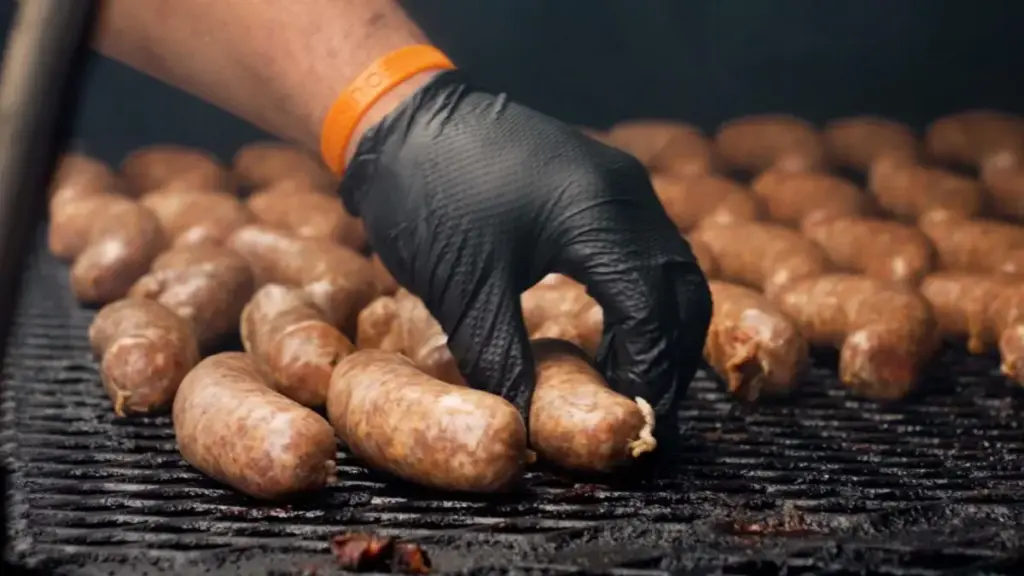
While the briskets dominate the longer smoking cycles, the dawn hours bring a different kind of culinary choreography. Beginning promptly at 4:00 a.m. every day, the kitchen staff initiates the daily production of house-made sausage.
Unlike establishments that outsource their links, Zavala’s takes immense pride in crafting its sausage entirely in-house. Throughout the day, an additional 250 pounds of freshly stuffed sausage links are transferred to the grills. Achieving the ideal texture requires vigilance. Once the sausage links reach their optimal temperature and develop that signature "snap" upon biting, they are immediately plunged into an ice-water bath. This rapid thermal shock halts the cooking process instantly, locking in the juices and ensuring that the casing retains its crisp, snappy integrity when reheated or finished on the grill for customers.
The Fusion Twist: Carnitas, Coke, and Oranges
Zavala’s distinct identity stems not just from classic Central Texas barbecue traditions, but also from a profound celebration of Mexican-American flavors. A prime example of this culinary fusion is their signature carnitas preparation, which undergoes a multi-stage transformation during the World Cup marathon.
The process begins by grilling pork for hours to render the fat and build a deep, savory foundation. Afterward, the meat is submerged in a rich bath of Mexican Coca-Cola—infused with real cane sugar—and fresh oranges, then returned to the smoker for another three hours. The citric acid from the oranges helps tenderize the protein, while the cane sugar caramelizes under the gentle heat, resulting in a rich, meltingly tender meat that easily falls apart, bridging the gap between traditional Mexican carnitas and Texas pit-smoking techniques.
Supporting Context & Metrics: The Logistics of Large Format
Running a small-scale craft barbecue joint requires an incredible amount of manual labor. Scaling that operation up to handle a global tournament like the 2026 FIFA World Cup demands enterprise-level precision within a mom-and-pop framework.
The Numbers Behind the Smoke
To appreciate the scale of Zavala’s 30-day continuous operation, consider the raw logistical metrics driving the kitchen:
- Duration: 30 consecutive days of uninterrupted service—a historic record for the business.
- Visitor Influx: An estimated 3 million tourists expected to flood Grand Prairie and the surrounding Dallas-Fort Worth metroplex during the tournament window.
- Beef Volume: Approximately 20,000 pounds of prime beef brisket destined to be trimmed, seasoned, and smoked.
- Sausage Production: A continuous daily output of 250 pounds of house-made sausage links.
- Hardware: Six massive offset smokers operating in a synchronized rotation to maintain consistent heat and smoke profiles around the clock.
Managing Six Smokers: The Collective Eyeball Philosophy
Maintaining consistency across six different smokers simultaneously is a logistical nightmare for a single pitmaster. Hot spots, wind shifts, wood variances, and fluctuating ambient temperatures can easily ruin hundreds of pounds of meat in a matter of hours.
To overcome this hurdle, owner Joe Zavala has cultivated an operational philosophy rooted in shared responsibility rather than hierarchical control. In many traditional kitchens, the head chef or lead pitmaster hoards authority, but Zavala empowers every member of his team to act as a guardian of quality.
"Everybody walks by the smoker, they’re looking at the temperature, they’re looking at the fire," Joe Zavala explains, highlighting the collaborative ethos that keeps the operation afloat under pressure. "So it’s multiple eyes on it to hold all of us accountable, because it’s not just one person, it’s all of us."
This collective mindfulness transforms the kitchen into a self-correcting organism. If a fire burns too hot in smoker number four, or if a smoke stack needs adjusting, any staff member—from dishwasher to prep cook—is authorized and expected to take corrective action. This decentralization of quality control is the secret weapon that allows Zavala’s to maintain artisanal standards at industrial volumes.
Official Statements & Industry Perspectives
The decision to remain open for 30 days straight during the World Cup has drawn attention not only from food critics and documentary crews, but also from regional economic developers and tourism boards.
Local hospitality experts view establishments like Zavala’s Barbecue as cultural ambassadors for Texas. When international travelers arrive for the World Cup, they are seeking more than just 90 minutes of soccer inside a stadium; they are searching for authentic local experiences that tell the story of the host region. Barbecue in Texas is more than a meal—it is a community ritual, a slow-cooked craft passed down through generations.
"When you have millions of people visiting from every corner of the globe, food becomes the ultimate universal language," notes a representative close to the regional tourism sector. "Places like Zavala’s don’t just feed people; they provide an entry point into the culture of North Texas. By staying open for a month straight, they are stepping up to represent the very best of what our local culinary scene has to offer."
Joe Zavala himself views the marathon not as an exhausting burden, but as a historic opportunity to showcase his team’s hard work to an international audience. For a business rooted in family recipes and community connection, the World Cup represents a unique convergence of global sports and hyper-local hospitality. The goal, according to the ownership team, is to ensure that every single international guest who steps up to the counter leaves with a profound appreciation for what Texas barbecue truly means.
Future Outlook: A New Benchmark for Craft Barbecue
As the countdown to the 2026 FIFA World Cup continues, the preparations at Zavala’s Barbecue offer a fascinating glimpse into the future of independent food establishments operating in major event zones. The pressures of modern tourism require small businesses to innovate, scale, and adapt without losing the soul that made them popular in the first place.
By successfully executing this 30-day continuous service, Zavala’s is poised to set a new benchmark for what independent smokehouses can achieve under extreme demand. The strategies forged during this crucible—ranging from collective pit-monitoring protocols to streamlined house-made sausage workflows—will undoubtedly leave a lasting imprint on the business long after the final match has been played and the tourists have returned home.
For food enthusiasts, documentary lovers, and aspiring restaurateurs alike, the journey captured in this episode of Large Format serves as an inspiring masterclass in resilience. It demonstrates that when passion meets meticulous planning, and when a team operates with absolute mutual accountability, even the most daunting culinary mountains can be conquered—one brisket, one batch of sausage, and one perfectly smoked slice at a time.