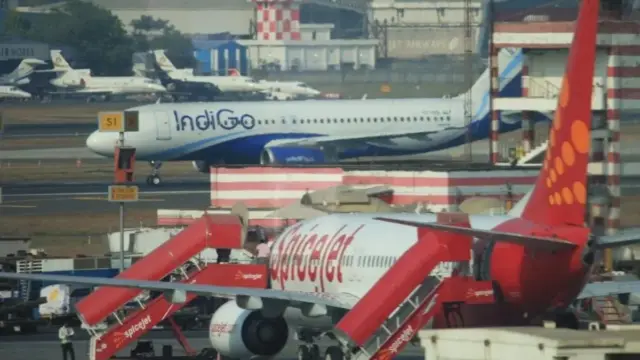





A sudden equipment malfunction on Monday afternoon prompted the Federal Aviation Administration (FAA) to issue a series of ground stops across the highly congested airspace of the New York metropolitan area and Philadelphia. The disruption immediately halted departing flights and left thousands of travelers stranded on tarmacs and inside terminals, underscoring the fragile nature of the nation’s aviation infrastructure.
The ground stops affected several of the busiest transit hubs in the United States, including John F. Kennedy International Airport (JFK) and LaGuardia Airport (LGA) in New York, Newark Liberty International Airport (EWR) in New Jersey, and Philadelphia International Airport (PHL) in Pennsylvania. As Monday afternoon progressed, the FAA worked to resolve the technical issues, but the resulting backlog of delayed flights threatened to ripple across the global aviation network for the remainder of the day.
Technical Failure Silences the Skies
The disruption began when the FAA identified an equipment outage that compromised air traffic control capabilities in the region. To maintain safety margins, air traffic controllers quickly implemented ground stops—a tactical traffic management initiative used to slow or halt the flow of aircraft incoming to or departing from specific regions when safety or capacity is compromised.
Under a ground stop, aircraft destined for the affected airports are held at their points of departure, while planes already on the ground at the impacted hubs are prevented from taking off. This prevents an unsafe accumulation of aircraft in the skies above a congested region, especially when communication, radar, or flight-planning systems are operating at reduced capacity.
While the FAA did not immediately release the exact technical specifications of the failed equipment, the agency’s command center confirmed that the outage directly impacted air traffic control operations in the Northeast corridor. Engineers and technical teams were deployed immediately to troubleshoot and restore the offline systems, but the localized nature of the outage did not prevent it from having immediate, national consequences.
Why a Localized Glitch Paralyzes the National Network
The airspace over New York and Philadelphia is widely considered the most complex and heavily congested in the world. The close proximity of JFK, LaGuardia, Newark, and Philadelphia creates a highly interdependent web of flight paths. A delay at one of these airports inevitably affects the others, as they share arrival and departure routes, airspace sectors, and air traffic control resources.
When a major disruption occurs in this region, the impact is rarely confined to the East Coast. The US aviation network operates on a hub-and-spoke model, meaning that aircraft and flight crews constantly rotate through major metropolitan centers. A plane scheduled to depart Newark for Chicago O’Hare in the afternoon may be slated to fly from Chicago to Los Angeles later in the evening. If that aircraft is held on the tarmac in New Jersey due to an FAA ground stop, the subsequent flights in Illinois and California are pushed back as well.
Furthermore, these Northeast hubs serve as primary gateways for international travel. A prolonged ground stop at JFK or Newark can delay transatlantic flights heading to Europe, disrupting international connections and leaving airlines scrambling to accommodate passengers across multiple continents.
Legacy Infrastructure in a Digital Era
The outage on Monday is part of a broader, ongoing conversation regarding the state of the FAA’s technological infrastructure. Over the past decade, the aviation industry has repeatedly called for accelerated modernization of the country’s air traffic control systems. Many of the systems currently in use rely on legacy technology that, while highly redundant and safe, can be vulnerable to hardware failures and software glitches.
The FAA has been working on a multi-billion-dollar modernization program known as NextGen (Next Generation Air Transportation System). This initiative aims to transition air traffic control from ground-based radar systems to satellite-based GPS tracking, which would allow for more direct routing, reduced fuel consumption, and greater system resilience. However, the rollout of NextGen has faced numerous delays, budget overruns, and political hurdles in Congress.
Incidents like Monday’s outage highlight the high stakes of these modernization efforts. When critical systems fail, even temporarily, the economic cost to airlines, businesses, and travelers accumulates rapidly. Industry analysts estimate that air traffic delays cost the US economy billions of dollars annually in lost productivity, wasted fuel, and increased operational expenses for carriers.
The Operational Toll on Airlines
For commercial airlines, a ground stop in the New York-Philadelphia corridor is an operational nightmare. Carriers must quickly adjust their schedules, manage gate capacity, and make difficult decisions regarding flight cancellations.
One of the most immediate challenges during a ground stop is managing crew duty-time limitations. Federal regulations strictly limit the number of hours pilots and flight attendants can work in a single day to ensure safety and prevent fatigue. When flights are delayed on the tarmac or held at the gate for hours, flight crews risk "timing out." Once a crew reaches their legal duty limit, they can no longer operate the aircraft, forcing the airline to find a replacement crew. In a major disruption, reserve crews are quickly exhausted, leading to further cancellations even after the initial technical issue has been resolved.
Additionally, airlines face severe logistical challenges regarding aircraft positioning. If planes cannot land at their scheduled destinations, they must sometimes divert to alternative airports, leaving both the aircraft and its passengers out of position for the next scheduled leg of the journey.
Passenger Rights and the Frustration of Travel Disruptions
For the thousands of passengers caught in Monday’s delays, the outage was a source of immense frustration. Terminals quickly filled with travelers staring at departure boards displaying mounting delays, while those trapped inside aircraft on the tarmac faced hours of uncertainty.
Under current U.S. Department of Transportation (DOT) guidelines, passenger rights during an air traffic control or government equipment outage differ significantly from delays caused directly by an airline (such as mechanical issues or scheduling errors). Because FAA equipment failures are classified as "extraordinary circumstances" beyond the control of individual carriers, airlines are generally not legally obligated to provide passengers with compensation, hotel vouchers, or meal allowances.
Most airlines will, however, work to rebook affected passengers on the next available flights at no additional charge. However, during periods of high passenger volume, finding empty seats on subsequent flights can take days, leaving many travelers to cover their own lodging and food expenses while they wait out the disruption.
The DOT, under the leadership of the Secretary of Transportation, has pushed for greater airline accountability and transparency regarding passenger rights. While the focus has largely been on holding airlines accountable for controllable delays, events like Monday’s outage serve as a reminder of the systemic vulnerabilities that lie entirely outside the airlines’ control.
Navigating the Path to a More Resilient Airspace
As FAA technicians worked to bring the offline equipment back to full operational status on Monday, the focus of the aviation community began shifting toward prevention. Preventing recurring outages requires not only immediate technical fixes but also long-term capital investment and political resolve.
Aviation safety experts emphasize that the FAA’s primary mandate is safety, and the agency will always err on the side of caution—including halting all flights—when a system failure occurs. However, the frequency of these disruptions has raised questions about the adequacy of the agency’s backup systems and disaster-recovery protocols.
To build a truly resilient airspace, industry advocates argue that Congress must ensure consistent, multi-year funding for the FAA, avoiding the stopgap funding measures and threat of government shutdowns that have periodically disrupted long-term planning and hiring at the agency. Furthermore, recruiting and training the next generation of air traffic controllers and technical engineers remains a critical priority, as staffing shortages have compounded the operational strains caused by technical outages.
As the ground stops were gradually lifted and flights slowly resumed in New York and Philadelphia, the immediate crisis began to ease. Yet, the systemic challenges exposed by the afternoon’s silence in the skies will continue to challenge policymakers, airlines, and travelers alike for years to come.