







However, new data suggests that the travel industry was looking in the wrong direction. While brands were busy defending their digital storefronts from OTAs, a much larger, quieter competitor was quietly taking over the consumer’s loyalty.
According to the latest Global Travel Insights survey from Skift Research, the ultimate battleground for traveler loyalty is no longer the hotel front desk or the airline mobile app. Instead, it is the consumer’s wallet. The financial institutions and credit card issuers that facilitate travel payments have successfully disrupted the traditional loyalty paradigm, positioning themselves as the most rewarding programs in the eyes of modern travelers.
The New Hierarchy of Traveler Loyalty
The Skift Research survey reveals a stark realignment in consumer preferences. When travelers were asked to identify which loyalty programs they find the most rewarding, credit card and bank loyalty programs emerged as the clear leader, capturing 32% of the responses.
This performance places financial institutions comfortably ahead of traditional travel brands. Hotel loyalty programs, historically considered some of the most robust and sticky marketing vehicles in the business world, came in second at 26%. Airline frequent flyer programs—the very pioneers of modern loyalty marketing—placed third with 20% of the vote.
Most Rewarding Loyalty Programs, According to Travelers
(Share of travelers surveyed)

┌─────────────────────────────────────────┬─────────────┐
│ Loyalty Program Type                    │ Share (%)   │
├─────────────────────────────────────────┼─────────────┤
│ Credit card / bank                      │    32%      │
│ Hotel                                   │    26%      │
│ Airline                                 │    20%      │
│ Online travel agency (OTA)              │     8%      │
│ Retail or lifestyle                     │     5%      │
└─────────────────────────────────────────┴─────────────┘
Perhaps the most surprising revelation from the data is the performance of online travel agencies. Despite decades of market dominance, massive consolidated marketing budgets, and the launch of unified loyalty schemes, OTAs managed to secure just 8% of the traveler vote. Retail and lifestyle loyalty programs trailed at the bottom of the spectrum, capturing a mere 5%.
This distribution of consumer sentiment points to a fundamental shift in how travelers calculate value. The traditional model of loyalty—where consumers earned rewards by consistently patronizing a specific brand—has been superseded by an ecosystem that rewards consumers for their everyday spending habits.
Decoupling Loyalty from the Act of Travel
To understand why financial institutions have captured the lead in travel loyalty, one must examine the fundamental mechanics of how points are earned and redeemed. Historically, earning a free flight or a complimentary hotel night required physical travel. A consumer had to spend nights in hotel beds or fly thousands of miles in pressurized cabins to accumulate enough currency for a meaningful reward.
Credit card and banking loyalty programs dismantled this barrier by decoupling the accumulation of travel rewards from the act of travel itself.
By tying points accumulation to everyday transactions—such as buying groceries, dining at restaurants, purchasing fuel, or paying monthly utility bills—banks have democratized the travel rewards space. A consumer no longer needs to be a corporate road warrior flying weekly business routes to earn a luxury vacation. Instead, a household spending its normal monthly budget can accumulate a balance of flexible points sufficient for international business-class flights or five-star resort stays.
Furthermore, bank-issued points offer a level of flexibility that single-brand programs cannot match. Proprietary bank currencies allow consumers to transfer points to a variety of airline and hotel partners, often at a 1:1 ratio, or redeem them directly for travel bookings through bank-branded portals. This flexibility immunizes consumers against the devaluation of any single airline or hotel currency, offering a hedge against the frequent program changes that plague traditional travel loyalty schemes.
The OTA Conundrum: Why Convenience Does Not Equal Loyalty
For online travel agencies, the survey results represent a sobering reality check. For a generation, OTAs have served as the starting point for travel planning, offering unparalleled comparison-shopping capabilities, vast inventory, and seamless booking interfaces. Yet, this utility has not translated into deep consumer affection.
At just 8% of the vote, OTA loyalty programs struggle because the consumer relationship with these platforms is fundamentally transactional rather than emotional or experiential. Travelers use OTAs to find the cheapest rate or the most convenient flight path; once the transaction is complete, the connection ends.
While major OTAs have attempted to counter this by launching sophisticated, multi-brand loyalty programs designed to reward cross-vertical bookings (such as earning rewards on a car rental that can be spent on a vacation rental), they face an uphill battle. The average consumer travels only a few times a year, making it difficult to accumulate meaningful value within a pure OTA ecosystem. In contrast, a credit card is used multiple times a day, providing a continuous loop of positive reinforcement and value accumulation.
The Frenemy Dynamics of Co-Branded Credit Cards
The rise of bank loyalty does not mean traditional travel brands are entirely left out in the cold. In fact, the relationship between banks, airlines, and hotels is one of the most lucrative, complex, and deeply integrated alliances in modern commerce.
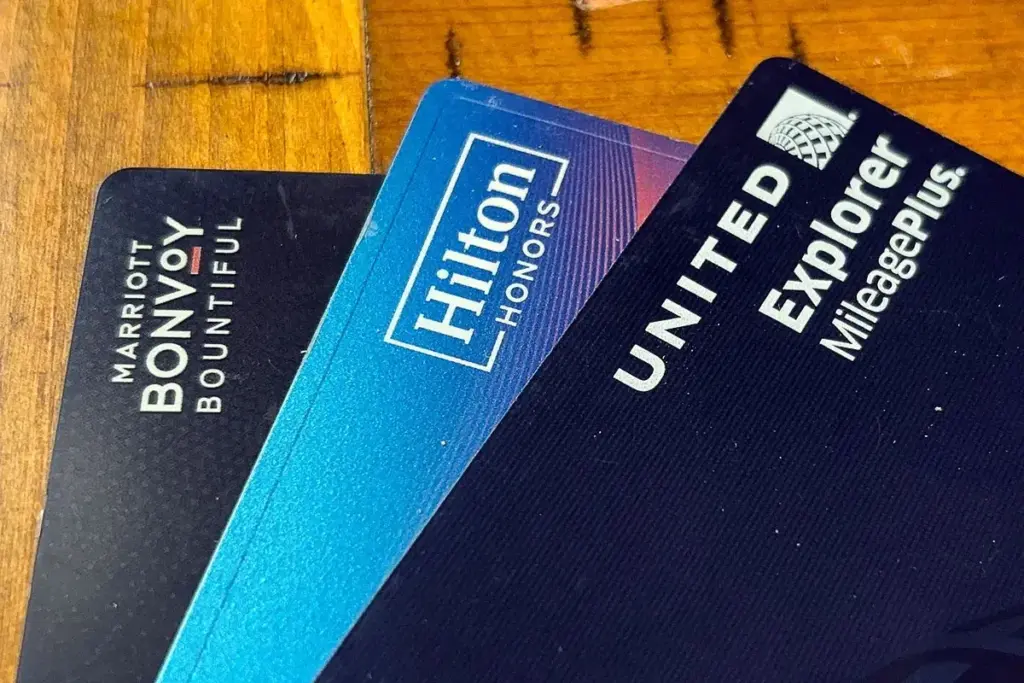
A significant portion of the loyalty that credit cards command is driven by co-branded partnerships. Major airlines and hotel chains partner with financial giants to issue co-branded credit cards. Under these agreements, banks purchase billions of dollars worth of loyalty points from airlines and hotels to distribute to cardholders as spending incentives.
For airlines in particular, selling miles to banks has evolved from a secondary revenue stream into a primary driver of corporate profitability. During industry downturns, these loyalty divisions are frequently valued higher than the actual flying operations of the airlines.
However, this partnership is a double-edged sword. While co-branded credit cards generate highly profitable, recurring revenue for travel brands, they also dilute direct brand loyalty. When a consumer values their credit card program above all else, the bank—not the airline or the hotel—owns the primary customer relationship.
If a consumer decides to switch their primary spending from a co-branded airline card to a premium, bank-proprietary rewards card that offers flexible transfer options, the airline loses its direct lock on that customer’s future travel choices. The traveler is no longer loyal to the airline; they are loyal to the ecosystem that allows them to choose the airline.
Financial Institutions as the New Travel Gatekeepers
The ambition of major financial institutions does not stop at rewarding everyday spend. Over the past decade, banks have actively transitioned from payment processors into full-fledged travel ecosystem players.
Recognizing that travel is one of the largest discretionary spending categories for premium cardholders, banks have made massive investments to control the entire travel journey:
- Proprietary Booking Engines: Major banks have built or acquired sophisticated travel booking portals, partnering with travel technology providers to offer seamless flight, hotel, and car rental bookings directly within their banking apps.
- Airport Lounge Networks: To capture the physical travel experience, financial institutions have bypassed traditional airline lounges to build their own proprietary airport lounge networks. These spaces offer premium amenities, dining, and workspace, serving as a highly visible, physical manifestation of the bank’s brand value.
- Exclusive Travel Portals and Curated Collections: Banks have curated their own luxury hotel programs, offering cardholders elite-like benefits—such as free breakfast, room upgrades, and late checkouts—regardless of whether the traveler holds elite status with the hotel chain itself.
By replicating the perks of traditional travel loyalty programs and pairing them with the earning power of everyday transactions, banks have successfully positioned themselves as the ultimate gatekeepers of the premium travel experience.
How Travel Brands Must Pivot to Reclaim the Relationship
To stay competitive in an era dominated by financial institutions, hotels and airlines must re-evaluate how they define and reward loyalty. Trying to compete directly with the earning power of everyday credit card spend is a losing battle for a company whose primary product is hotel rooms or airline seats. Instead, travel brands must focus on the areas where banks cannot compete: the physical, on-the-ground travel experience.
While a bank can issue points, fund airport lounges, and offer statement credits, it cannot upgrade a traveler to a suite, provide a warm welcome from a familiar concierge, or guarantee a smooth recovery when a flight is canceled. The future of travel brand loyalty lies in personalization, experiential rewards, and operational excellence.
Travel brands must leverage their proprietary data to deliver seamless, personalized experiences that make the traveler feel recognized and valued in real-time. By shifting their focus from transactional point-accumulation to emotional connection and superior service delivery, airlines and hotels can ensure that even if the bank owns the payment, the brand still owns the traveler.